

What if the treatment plan you were just handed is actually designed to mask your symptoms rather than repair your damaged nerves? If you experience the relentless burning, tingling, or “pins and needles” of peripheral neuropathy, you’ve likely felt the frustration of being told to simply “live with it.” According to data from the Foundation for Peripheral Neuropathy, nearly 30 million Americans struggle with these sensations, yet many remain stuck in a cycle of temporary fixes. You aren’t alone in feeling dismissed by general practitioners or terrified that your mobility is slipping away.
We agree that a diagnosis shouldn’t be a dead end; it should be the start of a recovery mission. This guide empowers you with the exact questions to ask a neuropathy specialist to ensure your medical team focuses on cellular health and nerve regeneration. You deserve a partner in health who looks past the prescription pad to find the source of your nerve damage. We’ve compiled a strategic 21 point checklist that shifts the conversation from basic pain management to a comprehensive, root-cause diagnostic strategy. This roadmap provides the clinical clarity needed to move toward lasting relief and physical freedom.
Key Takeaways
- Learn to transition from a passive patient to a proactive advocate by using strategic questions to uncover a specialist’s true treatment philosophy.
- Understand why standard EMG tests often miss the full picture and which metabolic markers are essential for identifying the root cause of your tingling and numbness.
- Master the specific questions to ask a neuropathy specialist to ensure your care plan focuses on biological nerve regeneration rather than just masking symptoms with medication.
- Discover how to align your daily lifestyle habits and exercise routines to support long-term nerve health and prevent further cellular damage.
- Prepare for your first consultation with a high-value screening checklist designed to help you find a dedicated partner in your recovery project.
Why Your Questions Are the Key to Nerve Relief
If you have spent months or years dealing with the burning, pins-and-needles sensations of nerve damage, you know that traditional medicine often falls short. Many patients are told to simply manage the discomfort. We believe in a different approach. Your recovery begins when you stop being a passive recipient of care and start acting as a lead investigator in your own health. The specific questions to ask a neuropathy specialist act as a diagnostic tool to reveal the doctor’s underlying treatment philosophy.
Neuropathy is not a final destination; it is a signal. According to the National Institute of Neurological Disorders and Stroke, there are over 100 types of peripheral neuropathy. This means “neuropathy” is a symptom, not a root cause. We view your journey as a Project, a collaborative research effort between you and a clinical team to uncover the metabolic, mechanical, or toxic “why” behind your nerve dysfunction. By asking the right questions, you shift the focus from merely surviving the pain to actively revitalizing your cellular health.
Breaking the Cycle of Dismissive Healthcare
Watch for red flags during your initial consultation. If a provider suggests that you “just have to live with it” or offers only a prescription for gabapentin without testing for underlying deficiencies, they are masking symptoms rather than pursuing nerve regeneration. A 2022 study in the Journal of Pain Research highlighted that nearly 50% of neuropathy patients feel their emotional and sensory experiences are misunderstood by clinicians. You deserve a specialist who validates the reality of your burning feet or numb hands while offering a scientific path toward restoration. Never accept a diagnosis that stops at the name of the condition without exploring the biological triggers causing it.
Setting Your Goals Before the Appointment
Success in the Neuropathy Relief Project requires clarity. Instead of a vague desire for “less pain,” define what restoration looks like for your daily life. Distinguishing between symptom suppression and functional recovery is vital. Consider these specific benchmarks:
- Can you walk for 20 minutes on a hard surface without resting?
- Can you feel the texture of the floor or the temperature of water accurately?
- Can you sleep for 6 consecutive hours without a “burning” sensation waking you?
Write down specific “If I experience…” scenarios to share. For example, “If I stand for more than 15 minutes, my toes go completely numb.” Bring a detailed history of your lifestyle, including exposure to toxins or previous failed treatments. This preparation ensures that the questions to ask a neuropathy specialist lead to a structured, data-driven solution rather than another dead-end prescription.
Questions to Uncover the Root Cause of Your Symptoms
If you feel a persistent buzzing or a sharp, electric sensation in your limbs, you’re likely searching for more than just a label. You’re searching for a reason. Approximately 30% of neuropathy cases are currently classified as idiopathic, meaning the cause remains unknown. This often happens because standard evaluations don’t look deep enough into the cellular environment. These specific questions to ask a neuropathy specialist are designed to push for a more granular understanding of your nerve health and move beyond a surface-level diagnosis.
Diagnostic Accuracy and Testing
Standard Electromyography (EMG) and Nerve Conduction Velocity (NCV) tests are the industry norm, yet they have significant limitations. These tests primarily measure large, myelinated nerve fibers. Research shows that EMG results can be normal in up to 50% of patients who actually have small fiber neuropathy. To get a complete picture, you must ask about the health of your smaller sensory fibers.
- What specific tests will you use to determine the extent of my nerve damage?
- Are these tests measuring nerve function or just nerve structure?
- How will we identify the primary driver (diabetes, toxins, ischemia) of my neuropathy?
Understanding Your Specific Neuropathy Type
Neuropathy isn’t a single condition; it’s a collection of symptoms with diverse origins. If you experience dizziness when standing or digestive issues, your autonomic fibers might be involved. If you struggle with balance, it’s likely your sensory or motor fibers. Identifying the temporal profile is equally vital. Damage that occurs over 48 hours requires a different clinical response than degradation that has progressed over 10 years.
- Is my condition classified as polyneuropathy or a more localized mononeuropathy?
- Are my motor, sensory, or autonomic fibers most affected?
- What is the temporal profile; is this acute damage or chronic degradation?
Nerve health depends heavily on microcirculation. The vasa nervorum are the tiny blood vessels that supply oxygen and nutrients to your nerves. If these vessels are compromised, your nerves effectively starve. Clinical data suggests that even a 15% reduction in capillary blood flow can trigger significant nerve fiber loss. Ask your specialist how they evaluate your vascular health and whether they’re looking at metabolic factors like mitochondrial dysfunction or oxidative stress. You can learn more about how we address these underlying factors at the Neuropathy Relief Project to help revitalize damaged tissue.
The physical pattern of your deficits tells a specific story. If your numbness started in your toes and moved upward in a “stocking-glove” distribution, it suggests a length-dependent polyneuropathy often linked to metabolic issues like the type seen in 30 million Americans with diabetes. If the symptoms are patchy or localized to one limb, the cause might be structural or inflammatory. You should ask your specialist to map the exact anatomical pattern of your symptoms to rule out mechanical compressions or localized vascular issues.
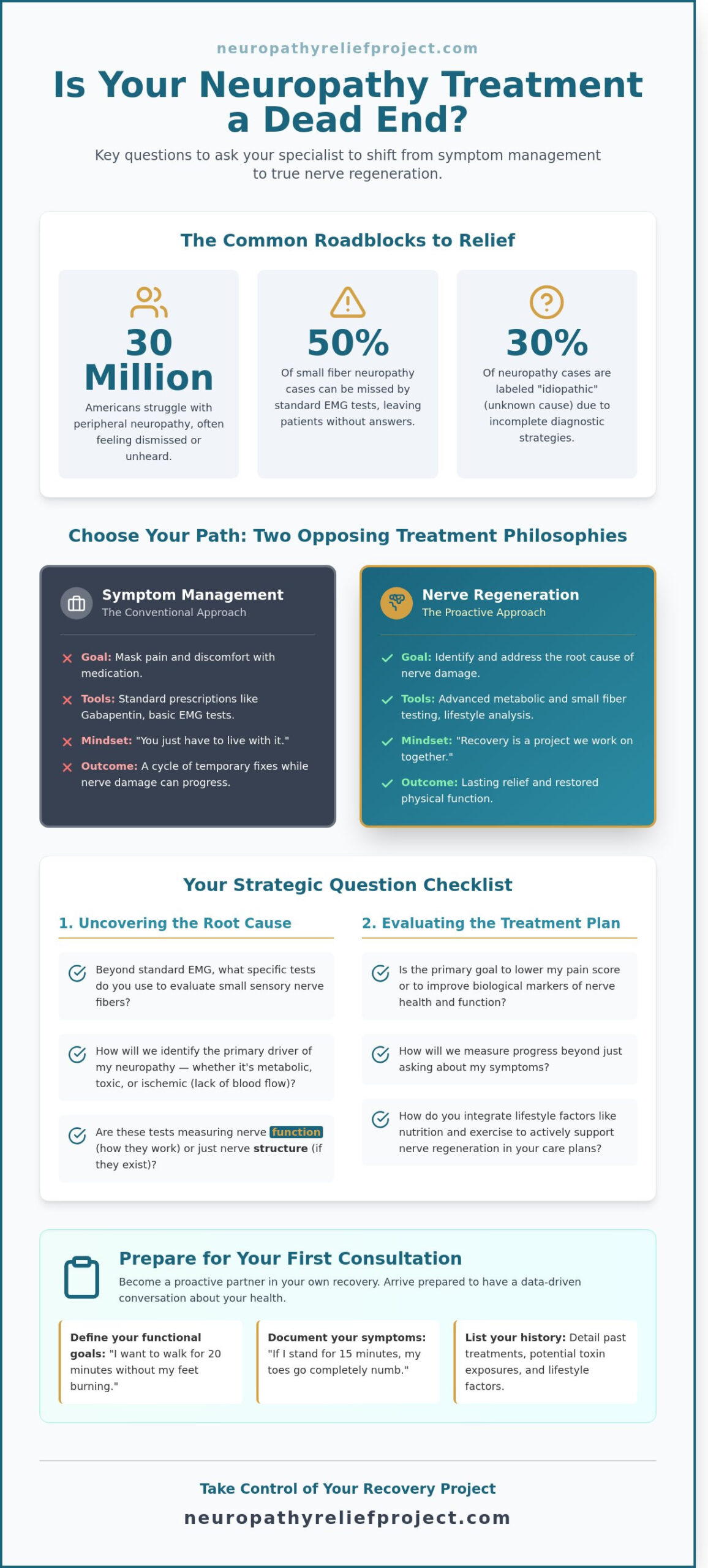
Comparing Treatment Paths: Management vs. Regeneration
If you experience the persistent fire of burning feet or the unsettling “dead” feeling of numbness, you’ve likely been offered a prescription for Gabapentin or Lyrica. These medications act as a chemical veil, dulling the brain’s perception of pain without addressing the dying nerve fibers. At the Neuropathy Relief Project, we believe the distinction between masking symptoms and biological restoration is the most critical factor in your recovery. You deserve to know if your doctor is simply “managing” your decline or actively working to revitalize your cellular health.
Crucial questions to ask a neuropathy specialist should focus on the mechanism of action behind their recommendations. According to a 2023 clinical review, nearly 50% of patients on standard neuropathy medications report significant side effects like brain fog or fatigue, while the underlying nerve damage continues to progress. True regeneration requires a shift toward non-invasive protocols that increase blood flow and stimulate mitochondrial activity. When nerves receive oxygen and nutrients, they have the biological capacity to repair themselves. This is why inquiring about the specialist’s success rate with reversing sensory loss, rather than just stabilizing pain levels, is vital for your long-term freedom.
Evaluating the Proposed Treatment Plan
You need to understand the goal of every pill or therapy. Does this protocol aim to heal the nerve or just dull the pain signal? If a treatment only blocks calcium channels to stop pain, it isn’t fixing the “short circuit” in your nervous system. Ask about the long-term side effects of recommended medications, as some can lead to balance issues or cognitive decline over several years. Inquire about non-drug options that support microcirculation, such as low-level light therapy or specialized nutritional protocols. These natural, science-based approaches focus on the 60% to 70% of nerve health that depends on proper blood flow and glucose regulation.
Measuring Progress and Success
Objective data is the only way to move past guesswork. Ask your provider how you’ll track if your nerves are actually regenerating. This might involve periodic sensory testing or comparing your ability to feel specific vibrations over time. It’s also important to establish a realistic timeline. Peripheral nerves typically grow at a rate of roughly 1 millimeter per day under optimal conditions, so a 90-day window is often necessary to see structural change. If you don’t notice a shift in your “burning” or “tingling” within the expected timeframe, you should have a clear contingency plan. Knowing the next steps ensures you don’t feel lost if the initial approach needs adjustment. These are the essential questions to ask a neuropathy specialist to ensure you’re on a path toward genuine restoration.
Questions About Lifestyle and Long-Term Nerve Health
Healing doesn’t stop when you leave the clinic. Your daily habits act as the primary fuel for nerve survival. If you experience burning or “pins and needles” that intensify at night, your lifestyle choices might be impacting your nerve’s ability to repair itself. You need to know how to support your body’s natural restorative processes through deliberate action. Your specialist should provide a roadmap for how you live, eat, and move between appointments.
One of the most vital questions to ask a neuropathy specialist involves the “Z-factor,” which includes sleep and stress management. Clinical data suggests that deep sleep is the primary window for cellular repair. High cortisol levels from chronic stress can inhibit the growth of new nerve endings and increase pain sensitivity. Ask your specialist how to optimize your sleep hygiene to ensure you’re getting the 7 to 9 hours required for nerve regeneration. You also need to discuss exercise. While movement is essential, you must determine which activities are safe and which might cause mechanical damage to already sensitized peripheral nerves.
Home Care and Self-Advocacy
Your recovery depends on your role as a self-advocate. Ask your doctor about specific nutritional changes, such as increasing your intake of Alpha-Lipoic Acid or B-complex vitamins. These have shown to improve nerve conduction velocity in several clinical trials. You should also inquire about at-home therapies. Devices like low-level laser therapy or specialized vibration plates can often supplement clinical work. Finally, establish a protocol for monitoring your skin. If you notice a small blister or a change in skin temperature during your daily 10-minute foot check, you must have a plan to address it before it leads to a 25% higher risk of infection.
Preventing Further Nerve Degradation
Protection is just as important as restoration. You should ask which environments are dangerous for your specific condition. Extreme cold or heat can be catastrophic if your sensation is diminished. If your blood sugar levels consistently exceed 140 mg/dL after meals, your recovery will stall. Ask your specialist for a target A1c range, as keeping this number below 7% is often critical for halting degradation. Watch for signs that the neuropathy is moving from your toes toward your ankles or mid-calf. This “stocking-glove” progression is a clear signal that your current protocol needs adjustment.
Preparing for Your First Discovery Call
If you’ve spent months or years dealing with the relentless fire of nerve pain, you know how exhausting the search for answers can be. A 15-minute discovery call serves as your first line of defense against ineffective treatments. It’s a high-value screening tool designed to protect your time and emotional energy. This initial conversation isn’t just a scheduling formality; it’s an opportunity to see if the specialist’s approach aligns with your specific needs.
According to the Foundation for Peripheral Neuropathy, over 30 million Americans live with this condition. With such a high volume of patients, many clinics adopt a “one-size-fits-all” mentality. You can avoid this by evaluating the empathetic and clinical tone of the specialist’s team from the first hello. If the staff sounds rushed or dismissive, it’s a red flag. You deserve to feel understood before you commit to a full program. Choosing the right questions to ask a neuropathy specialist during this brief window helps you filter for genuine expertise versus a general practice that treats neuropathy as an afterthought.
The Discovery Call Checklist
Use these three targeted questions to determine if the clinic provides the specialized care you require:
- Do you focus specifically on neuropathy, or is this just one of many conditions you treat? You want a team that lives and breathes nerve health. If they treat everything from back pain to skin rashes, they might lack the deep clinical authority needed for complex nerve regeneration.
- What is your philosophy on using natural vs. scientific protocols for nerve repair? The most effective programs bridge the gap between clinical evidence and holistic restoration. Ask how they balance cellular health with proven medical science.
- How do you determine if someone is a good candidate for your relief project? A reputable specialist won’t accept every patient. They should have a clear screening process to ensure their protocols will actually work for your specific type of damage.
Taking the Next Step Toward Freedom
To make the most of your 15 minutes, you need to be prepared. Have a brief timeline of your symptoms ready. If you experience tingling that started in your toes two years ago and has now moved to your ankles, mention that specific progression. This data helps the specialist understand the stage of your condition immediately. You should also have a list of previous failed treatments, such as Gabapentin or physical therapy, so the conversation can focus on new solutions rather than repeating old mistakes.
Schedule your call during a time when you won’t be interrupted. This ensures you have the specialist’s full attention and can listen closely to their tone. Are they reassuring? Do they use precise medical terminology like “nerve regeneration” while still speaking in a way that makes sense to you? If the connection feels right, you’ve found a partner in your recovery. You can schedule your 15-minute FREE phone consultation with the Neuropathy Relief Project today to begin your journey toward lasting relief.
Take Control of Your Nerve Health Today
Walking into an appointment equipped with the right questions to ask a neuropathy specialist changes your role from a passive patient to an empowered advocate. You’ve learned that identifying the specific root cause of your numbness or burning sensations is the first step toward meaningful recovery. By choosing to prioritize nerve regeneration over temporary symptom management, you’re investing in your body’s long term cellular health. This shift in perspective is often what separates those who find relief from those who remain stuck in a cycle of chronic pain.
The Neuropathy Relief Project, led by Dr. Michael J. Sclafani, DC, offers a unique, mission-driven approach to care. We focus on non-invasive protocols that aim to revitalize damaged nerves without the use of heavy medications or surgery. It’s our goal to provide a clear, scientific path for those who’ve felt dismissed by traditional medical models. You don’t have to accept your symptoms as a permanent part of your life. Our team is ready to guide you through a structured recovery plan designed for lasting results.
Book Your Free 15-Minute Neuropathy Discovery Call
You deserve a future where your nerves feel calm and your movement feels free. We’re here to help you reach that goal.
Frequently Asked Questions
What is the single most important question to ask a neuropathy specialist?
The most vital question is “What is the specific underlying cause of my nerve damage and is my current treatment plan addressing that cause or just masking the symptoms?” Since 30 percent of neuropathy cases are classified as idiopathic, identifying the root trigger is essential for recovery. If your provider only focuses on dulling the pain, the underlying biological damage may continue to progress unchecked.
Can a specialist tell if my neuropathy is reversible just by looking at my symptoms?
No, a specialist cannot determine if your nerves can heal through a visual exam or a simple physical description of your tingling and numbness. They must use objective diagnostic tools like an Epidermal Nerve Fiber Density (ENFD) skin biopsy or a Nerve Conduction Velocity test. These tests provide the concrete data needed to see if your peripheral nerves have the potential for regeneration and cellular repair.
Should I ask about Gabapentin or Lyrica during my first visit?
You should ask how these medications impact your long term nerve health rather than just asking for a prescription. While these drugs can quiet the burning sensations, they don’t fix the damaged nerve fibers. When you prepare your list of questions to ask a neuropathy specialist, focus on whether these options will hinder your coordination or if they’re a temporary bridge toward a more restorative, scientific solution.
How do I know if a neuropathy doctor is truly a specialist or just a generalist?
A true specialist typically holds board certification in neurology or has completed a fellowship in neuromuscular medicine. You’ll know they’re experts if they use specialized equipment to measure the 1.5 millimeters of growth nerves can achieve each month under optimal conditions. Generalists often rely on basic reflex tests, while a dedicated specialist focuses on the complex “Project” of revitalizing your specific nervous system.
What should I do if my doctor says my nerves can never heal?
Seek a second opinion from a specialist who focuses on neuroplasticity and metabolic nerve support. Research published in the Journal of the Peripheral Nervous System confirms that peripheral nerves have a natural, albeit slow, ability to repair themselves when the right biological environment is created. If you’ve been told there’s no hope, it’s often because that specific clinic doesn’t utilize the latest regenerative protocols or nutritional science.
Is it worth asking about clinical trials for peripheral neuropathy?
Yes, inquiring about clinical trials is a proactive step that can grant you access to cutting edge therapies before they reach the general public. As of 2024, ClinicalTrials.gov lists over 400 active studies specifically targeting various forms of peripheral nerve damage. Engaging in these research efforts aligns with a mission driven approach to recovery, moving you closer to the freedom and relief you deserve.
What questions should I ask about the cost and insurance coverage of specialized treatments?
Ask for a comprehensive list of CPT codes for every proposed procedure so you can verify coverage with your insurance provider directly. Many advanced treatments like photobiomodulation or specialized nutritional protocols aren’t always covered by standard Medicare plans. Getting a written estimate of out of pocket costs ensures your journey toward recovery stays focused on healing your body rather than worrying about unexpected financial burdens.