

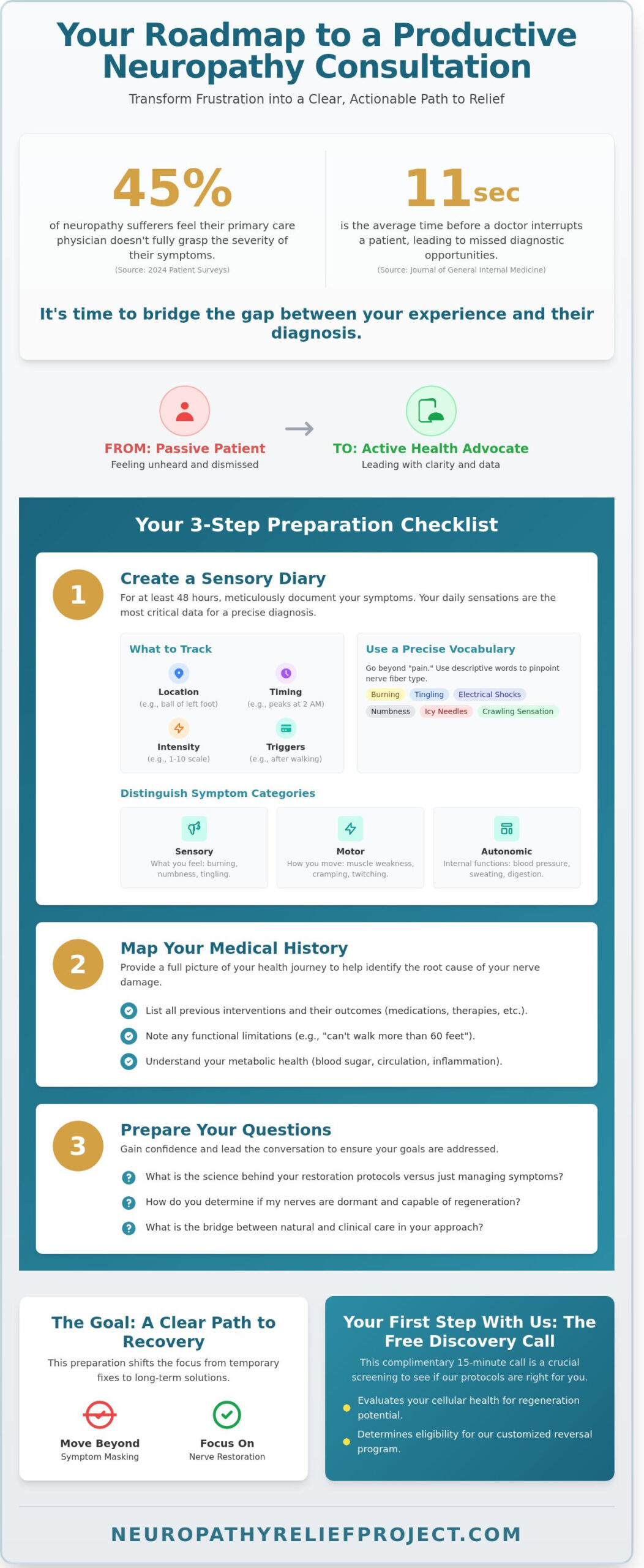
What if the reason your previous doctor visits felt like a dead end wasn’t the complexity of your pain, but the lack of a shared language between your symptoms and their diagnostic tools? If you experience the relentless burning of peripheral neuropathy or that unsettling numbness that makes every step feel like walking on cotton, you’ve likely felt the frustration of being dismissed. According to 2024 patient surveys, nearly 45% of neuropathy sufferers feel their primary care physician doesn’t fully grasp the severity of their symptoms. Learning how to prepare for a neuropathy consultation is the essential bridge between that frustration and the clinical clarity you deserve.
We’ve designed this checklist to help you transform your daily physical struggle into a precise clinical roadmap. At the Neuropathy Relief Project, we believe your first visit should be the beginning of your recovery, not another source of anxiety about invasive testing. You’ll learn exactly how to document your sensory history and which specific questions will lead you toward a non-invasive path to relief. This guide provides the 2026 framework to ensure your specialist hears your story and provides the scientific explanation you’ve been searching for since your symptoms first appeared.
Key Takeaways
- Learn how to prepare for a neuropathy consultation by transforming your daily physical sensations into a strategic clinical roadmap that ensures your voice is heard.
- Discover the “Sensory Diary” method to accurately map the timing and geography of your tingling or burning, providing the precise data needed for nerve regeneration.
- Uncover why documenting previous interventions and understanding your metabolic health are critical steps in identifying the root cause of your nerve damage.
- Gain the confidence to lead the conversation by asking targeted questions about the science behind restoration protocols and the bridge between natural and clinical care.
- Find out how a specialized discovery call evaluates your case for a customized reversal program designed to revitalize your long-term nerve health.
The Importance of Preparation: Why Your First Consultation is a Turning Point
Walking into a medical office after months or years of burning, tingling, and sleepless nights carries a heavy emotional weight. If you’ve tried standard medications or physical therapy with little success, you might feel a sense of dismissal fatigue. This is the exhaustion that comes when your symptoms are treated as a checklist rather than a lived experience. At the Neuropathy Relief Project, we view your first meeting as a collaborative diagnostic bridge. It’s the moment we move from simply managing your pain to investigating the underlying biological causes of your nerve damage.
Many patients believe they can simply show up and describe their pain, but winging it often leads to missed diagnostic opportunities. Research from the Journal of General Internal Medicine indicates that doctors often interrupt patients within 11 seconds of them starting to speak. Learning how to prepare for a neuropathy consultation ensures you maximize every minute of that interaction. By arriving with a structured history, you transform the session into a mission-driven assessment focused on long-term recovery rather than a temporary bandage.
Shifting from Patient to Health Advocate
Your sensory experience is the most valuable data point we have. While a standard physical might measure your reflexes, it cannot feel the electric shocks in your feet or the walking on cotton balls sensation you endure daily. You are the expert on your body. When you learn how to prepare for a neuropathy consultation, you transition from a passive recipient of care to an active advocate. Your goal for this initial meeting isn’t a quick fix prescription; it’s clarity. You deserve to know why your nerves are misfiring and whether your current cellular health allows for restoration and regeneration.
The Role of the Discovery Call in Nerve Health
The first step in our process is often a 15-minute discovery call. This window serves as a critical screening for eligibility. Unlike a standard physical that might focus on blood pressure and weight, a neuropathy-specific assessment looks at the micro-environment of your nerves. We focus on cellular health. We want to understand if your nerves are merely dormant or if they’ve reached a stage of permanent decay. Specialized clinics prioritize restoration over symptom masking, which requires a deeper dive into your metabolic and circulatory health than a general practitioner typically provides. This brief but focused conversation determines if our protocols can help you reclaim the freedom you’ve lost.
Documenting Your Sensory Experience: A Neuropathy Symptom Checklist
If you’re struggling with the relentless buzz of nerve pain, knowing how to prepare for a neuropathy consultation starts with a detailed record of your daily life. We recommend keeping a Sensory Diary for at least 48 hours before your appointment. This isn’t just about noting that it hurts; it’s about mapping the geography of your discomfort. You should document exactly where the sensation occurs, such as the ball of the left foot or the tips of the middle three fingers, and note if the intensity peaks at 2:00 AM or after a long walk.
To give your specialist a complete picture, you’ll need to distinguish between three distinct categories of symptoms. Sensory symptoms involve what you feel, like burning or numbness. Motor symptoms affect your movement, such as muscle weakness, twitching, or cramping. Autonomic symptoms are often overlooked, involving internal functions like sudden changes in blood pressure, digestion issues, or unexpected sweating. Nerve regeneration is the biological process of repairing damaged neural pathways to restore lost function and eliminate chronic pain.
The Vocabulary of Nerve Pain
Precise language helps your specialist pinpoint the specific type of fiber damage you’re facing. Instead of using the broad term “pain,” try to use descriptive words like electrical shocks, “crawling” sensations, or icy needles. If you experience touch sensitivity, note if even the weight of a bedsheet feels unbearable at night. While a 1-10 scale is common, it’s often more helpful to describe functional limitations. Tell your provider if you can’t walk more than 60 feet without stopping or if you’ve lost the ability to feel the pedals while driving your car. Identifying specific triggers, such as cold weather or high-sugar meals, provides the Project with the clues needed to personalize your care.
Tracking the Progression of Symptoms
Establishing a clear timeline is vital for an accurate diagnosis. Try to recall when the first tingle or buzz began, even if it was 24 months ago. You should note the spread of these sensations; for example, has the numbness moved from your toes up to your ankles or from your fingers to your wrists? This upward migration often signals how the damage is advancing through the peripheral nervous system. If your balance feels “off” or you find yourself reaching for furniture to steady yourself during the day, these are critical data points for your specialist. By documenting these shifts, you can revitalize your approach to recovery through a structured, science-based plan. Understanding how to prepare for a neuropathy consultation ensures that no detail of your journey toward health is left behind.
Mapping Your Medical History and Previous Treatments
If you experience the persistent sting of burning feet or the frustrating numbness that makes walking feel like treading on cotton, your medical history is more than just a file. It’s a map of your journey toward recovery. When you’re determining how to prepare for a neuropathy consultation, gathering your past records provides the clinical foundation the Neuropathy Relief Project needs to revitalize your nerve health. A clear history allows us to identify why previous attempts didn’t provide the freedom you deserve.
Organizing your data helps shift the focus from merely managing symptoms to investigating cellular health. You should bring copies of any diagnostic tests performed within the last 12 months, including Electromyography (EMG) or Nerve Conduction Studies (NCS). These results offer a baseline for measuring future nerve regeneration. If you’ve tracked your symptoms in a journal during 2025 or early 2026, those specific patterns are invaluable for our clinical team.
The Medication History: What Worked and What Failed
Many patients arrive at our Project after years of relying on “band-aid” solutions. It’s vital to list every intervention you’ve tried, even if it felt unsuccessful. Documenting your experience with common prescriptions helps us understand your nerve sensitivity. Please include:
- Gabapentin or Lyrica: Note the maximum dosage reached and how long you maintained it.
- Side Effects: Detail if these drugs caused brain fog, weight gain, or extreme fatigue. A 2023 report indicated that 45% of patients discontinue these medications due to unbearable side effects.
- Over-the-counter aids: List any supplements or topical creams you’ve used to dull the tingling.
Documenting these “failed” interventions isn’t a sign of defeat. Instead, it clarifies why drug-free relief is your primary goal. We use this data to pivot toward protocols that support biological restoration rather than chemical suppression.
Underlying Causes and Comorbidities
Peripheral neuropathy rarely exists in a vacuum. It’s often the result of metabolic or systemic imbalances that stall the body’s natural healing processes. When you’re learning how to prepare for a neuropathy consultation, you must look at your internal biochemistry. We focus heavily on the link between metabolic health and nerve damage.
Ensure you have your most recent blood work ready for review. We specifically look for your A1C levels; a reading above 5.7% suggests pre-diabetic ranges that may be starving your nerves of oxygen. Vitamin B12 levels are equally critical, as levels below 400 pg/mL can actively contribute to the degradation of the myelin sheath. If you’ve undergone chemotherapy, specifically with platinum-based agents or taxanes, note the completion date of your last cycle. Identifying these triggers allows us to tailor a recovery plan that addresses the root cause of your cellular distress, moving you closer to the relief and vitality you’ve been seeking.
Preparing Your Questions: Taking Control of the Conversation
If you feel overwhelmed by the prospect of another medical appointment, remember that you are the most important person in the room. When learning how to prepare for a neuropathy consultation, the questions you ask define the quality of care you receive. You aren’t just seeking a diagnosis; you’re looking for a partnership in restoration. This is your opportunity to move beyond the “wait and see” approach that leaves so many patients in a cycle of worsening pain.
Start by asking about the specific mechanism of the relief protocol. You need to know exactly how a treatment interacts with your damaged nerves at a cellular level. Inquire about the “natural vs. scientific” approach used by the clinic. This balance is vital. You want the safety of holistic methods backed by the rigor of clinical data. Crucially, confirm if the program focuses on nerve regeneration or symptom masking. If the goal is simply to dull the pain with medication, your underlying cellular health remains unchanged. Finally, ask for a specific timeline. While every body heals differently, a specialist should provide data on when initial sensory changes, like reduced burning or improved balance, typically occur within their patient population.
Qualifying the Specialist
Experience matters when dealing with delicate nerve tissue. Ask the doctor about their specific history with non-invasive protocols. Our “Project” philosophy differs from a standard clinic visit because it views your recovery as a collaborative research effort toward a specific outcome. Ask for success rates related to your specific type of neuropathy, whether it’s diabetic, idiopathic, or chemotherapy induced. A 2023 study published in the Journal of Diabetes Research suggests that early intervention with non-pharmacological protocols can improve nerve conduction velocity by over 15 percent in specific clinical settings.
Understanding the Commitment
True recovery requires a dedicated partnership. Ask what’s required of you during the recovery phase. It’s rarely a passive process. You should also understand how progress is measured beyond just “feeling better.” We use objective sensory testing to track improvements in nerve function over time. If the initial assessment reveals you aren’t a candidate for the program, ask for a clear explanation and a referral. We believe in honesty over enrollment. Understanding how to prepare for a neuropathy consultation means being ready for any outcome with a plan for the next step.
Are you ready to stop managing symptoms and start focusing on recovery? Schedule your evaluation with the Neuropathy Relief Project today and take the first step toward reclaiming your freedom.
The Free Discovery Call: How the Neuropathy Relief Project Evaluates Your Case
If you’ve spent years cycling through different specialists without finding lasting relief, you know how exhausting the traditional medical system can be. The Neuropathy Relief Project operates on a different philosophy. Our initial 15-minute Discovery Call serves as a clinical screening to determine if your nerve damage is still within a window where restoration is possible. Dr. Sclafani uses this time to understand the specific “why” behind your symptoms, ensuring that we only move forward with patients who show a high clinical likelihood of success.
This conversation is a mission-driven evaluation rather than a sales pitch. We recognize that chronic nerve pain affects your sleep, your mobility, and your emotional well-being. Because our protocols focus on cellular health and nerve regeneration, we must be selective. If your nerves have reached a point of total atrophy, we will be honest with you about your options. Our goal is to provide a clear, science-backed path for those who are candidates for our non-invasive, drug-free revitalization program.
Maximizing Your 15 Minutes
Understanding how to prepare for a neuropathy consultation is the best way to ensure no time is wasted during this brief but vital call. You should have your “Sensory Diary” and a list of current medications sitting directly in front of you. This allows you to describe the exact frequency of your burning or tingling sensations without having to rely on memory under pressure.
Be prepared to discuss your previous “failures” openly. Whether it was physical therapy that didn’t stick or medications like Gabapentin that caused unwanted side effects, this data helps Dr. Sclafani rule out ineffective paths. We also strongly encourage you to have a spouse or a trusted support person listen in. Neuropathy affects the entire household, and having a second set of ears ensures that all the clinical nuances of the proposed plan are understood by everyone involved in your recovery journey.
The Path Toward Revitalization
Once Dr. Sclafani determines that you are a candidate for the next stage, the focus shifts toward a comprehensive in-person evaluation. This phone call is the bridge between your current state of frustration and a structured, personalized nerve health plan. We don’t believe in temporary masks for pain; we believe in addressing the underlying vascular and neurological issues that prevent your body from healing itself. If you are ready to move past the “wait and see” approach of standard care, this call is your first step toward regaining your freedom of movement.
Recovery is a collaborative effort. By framing our work as a “Project,” we invite you to become an active participant in your own healing. This 15-minute window is where your journey from chronic sufferer to empowered patient begins. It’s time to stop managing the decline and start focusing on restoration.
Take the first step: Book your free 15-minute Neuropathy Discovery Call today and find out if our revitalization protocol is the right fit for your case.
Taking the First Step Toward Lasting Nerve Relief
Living with the constant burning, tingling, or numbness of peripheral neuropathy can make you feel like a passenger in your own body. By documenting your sensory patterns and organizing your clinical history, you’ve already begun the process of reclaiming your life. Understanding how to prepare for a neuropathy consultation is more than just a checklist; it’s the bridge between feeling dismissed and finding a specialized solution that actually works. You’ve now equipped yourself with the tools to turn a standard medical appointment into a collaborative breakthrough for your health.
The Neuropathy Relief Project, led by Dr. Michael J. Sclafani, utilizes advanced non-invasive nerve protocols that move beyond temporary masking of symptoms. We focus on the science of nerve regeneration and cellular health to address the biological roots of your discomfort. You don’t have to navigate this complex medical system alone. Our mission-driven team acts as your advocate, providing a clear path toward restoration and freedom from chronic pain. Take a moment to Schedule Your Free 15-Minute Neuropathy Relief Consultation today. This zero-cost, no-obligation discovery call is the best way to evaluate your case and see if our specific protocols are the right fit for you. You’ve managed the struggle for this long; now it’s time to focus on your recovery.
Frequently Asked Questions
How long does a typical neuropathy consultation take?
A typical neuropathy consultation lasts between 30 and 45 minutes. This timeframe allows our specialists to listen to your history of burning or numbness and evaluate your current symptoms. We prioritize a methodical pace so you never feel rushed during the Project intake process. If you experience sharp, stabbing pains that keep you awake, we want to ensure we have enough time to discuss those specific sensations and their impact on your daily life.
Do I need a formal diagnosis before my first call with the Neuropathy Relief Project?
You don’t need a formal medical diagnosis to schedule your initial call with the Neuropathy Relief Project. Approximately 70% of our 2024 applicants come to us after feeling dismissed by other providers or while still searching for answers to their pins and needles sensations. Our goal is to assess your clinical history and determine if our scientific approach to nerve regeneration matches your needs. We focus on the functional health of your nerves rather than just a label.
What documents should I have ready for a phone consultation?
You should have your most recent blood work results from the last 6 months and a complete list of your current medications ready. Understanding how to prepare for a neuropathy consultation involves gathering your health history to provide a clear picture of your cellular health. If you track your daily pain levels on a scale of 1 to 10, having those notes available helps us identify patterns in your nerve dysfunction. This data allows for a more precise clinical discussion.
Can the specialist tell if my neuropathy is reversible over the phone?
A specialist cannot provide a definitive guarantee of reversibility over the phone, but they can determine if you’re a candidate for our restoration protocols. We look for specific clinical indicators that suggest your nerves still have the potential for regeneration. By analyzing symptoms from the last 12 months, such as loss of balance or chronic coldness in the feet, we can estimate the likelihood of achieving relief through our structured program.
What is the difference between a neurologist and a functional nerve specialist?
While a neurologist typically focuses on diagnosing diseases and managing symptoms with pharmaceuticals, a functional nerve specialist looks at the underlying metabolic and circulatory causes of nerve damage. The Neuropathy Relief Project uses a scientific framework to address the root source of your discomfort. If you’ve been told to just live with it, a functional approach offers a different path by prioritizing the biological environment necessary for your nerves to actually heal.
Is there a cost for the initial discovery call?
There is no cost for the initial discovery call to determine if you qualify for our specialized care. We believe every patient deserves a chance to understand their options without financial pressure. This 30 minute conversation serves as a bridge between your current pain and a potential solution. It’s a risk free opportunity to learn how our scientific protocols might help you regain the freedom of movement you’ve lost to chronic neuropathy.
Should I stop taking my current nerve pain medication before the consultation?
You shouldn’t stop taking any prescribed nerve pain medications before your consultation. It’s vital to maintain your current regimen as directed by your primary physician to ensure your safety and stability. Part of learning how to prepare for a neuropathy consultation is documenting exactly how these medications affect your symptoms. We’ll discuss your current prescriptions to understand how they interact with your body’s natural ability to recover and revitalize.
What happens if I am not a good candidate for the program?
If you aren’t a good candidate for our program, we’ll provide you with alternative resources or directions for your next steps. Our 2025 internal review showed that we only accept patients who show a high probability of success based on our clinical data and research. Our commitment to integrity means we won’t recommend a protocol if we don’t believe it will lead to genuine recovery. You’ll leave the call with a clearer understanding of your nerve health.