

What if the burning sensation in your toes isn’t an inevitable sentence, but a biological signal that your cellular health needs a new direction? If you experience the sharp, electric jolts that keep you awake at 2:00 AM, you’ve likely realized that standard medications often dull your mind without ever reaching your feet. It’s frustrating to feel like you’re losing your mobility while the 20 million Americans diagnosed with peripheral neuropathy according to the NIH are frequently told to just manage the decline. I refused to accept that fate. Through the Neuropathy Relief Project, I discovered the science of how I cured my neuropathy in feet by prioritizing nerve regeneration over temporary masking.
You’re probably tired of feeling like you’re walking on invisible marbles or hot coals. We agree that a real solution must go deeper than a prescription bottle. In this guide, you’ll learn the structured, evidence-based approach to revitalizing damaged pathways and restoring significant sensation in your soles. We will examine the specific clinical protocols that facilitate cellular repair, providing you a clear path to get off chronic pain medication and walk with confidence again. This is your transition from simply surviving the pain to achieving lasting nerve restoration.
Key Takeaways
- Understand the difference between temporary pain masking and true functional restoration to move beyond the cycle of burning and tingling.
- Discover why standard “Band-Aid” medications often fail to provide lasting relief and how to address the underlying cause of nerve starvation.
- Learn the biological science of angiogenesis and the three essential requirements for nerve regeneration that explain how i cured my neuropathy in feet.
- Identify the four essential pillars of home management, including specialized anti-inflammatory nutrition and techniques to revitalize dormant nerve fibers.
- Find out how a structured discovery call can bridge the gap between self-treatment and a professional, science-based path to lasting foot sensation.
The Reality of ‘Curing’ Neuropathy in Feet: From Despair to Restoration
If you spend your nights pacing the floor because your feet feel like they are submerged in boiling water, you aren’t alone. Many people search for how i cured my neuropathy in feet hoping for a magic pill that erases every trace of damage instantly. However, true restoration is rarely about a single “eureka” moment; it’s a methodical process. In the traditional medical system, approximately 50 percent of patients feel their concerns are dismissed with a prescription for gabapentin that only masks the pain without addressing the underlying nerve decay. We see a different path.
We define a “cure” not necessarily as the total disappearance of every sensation, but as functional restoration. This means regaining the ability to walk 2 miles without pain or sleeping through the night without the “pins and needles” wake-up call. It requires moving from a passive patient role into a proactive “Project” mindset. When you treat your recovery as a collaborative project, you start to see that nerve health is a biological puzzle that can be solved through persistence and the right clinical protocols.
Why Your Feet Feel Like They Are On Fire (or Numb)
The burning you feel is often the result of the “dying back” phenomenon. This occurs when the longest nerves in the body, those reaching your toes, begin to lose their structural integrity. Peripheral neuropathy often starts in the feet because these areas rely on the most complex microcirculation. When small blood vessels fail to deliver oxygen to the nerve, the myelin sheath, which acts like insulation on a wire, becomes “scrambled.” Your brain then interprets this lack of clear signal as intense heat, sharp stabs, or a complete loss of sensation. If you experience these “scrambled” signals, it’s a sign that the cellular environment needs immediate intervention to prevent permanent loss of function.
The Emotional Toll of Chronic Nerve Pain
Living with an invisible illness is exhausting. Because your feet look normal to the naked eye, friends and family might not grasp why you can’t stand for more than 10 minutes at a social gathering. This isolation contributes to the 33 percent higher risk of clinical depression found in chronic pain patients. Sleep deprivation from nocturnal flares further erodes your resilience. We believe hope is a clinical necessity. Without the belief that your nerves can revitalize, the body’s stress response actually hinders cellular repair. Success comes from a collaborative approach. When you stop looking for a quick fix and start looking for how i cured my neuropathy in feet through systemic, science-backed changes, you begin the real work of restoration.
- Validation: Your pain is real, even if standard tests come back “normal.”
- Restoration: Nerves have a limited but significant capacity to regenerate under the right conditions.
- Partnership: You aren’t just a patient; you are the lead investigator in your own recovery project.
Why Standard Neuropathy Treatments Often Fail to Provide Lasting Relief
If you’ve spent years searching for how i cured my neuropathy in feet, you’ve likely encountered a cycle of temporary fixes that never quite reach the finish line. Most conventional treatments act as a chemical veil. They don’t repair the nerve; they simply tell your brain not to listen to the pain signals. This “Band-Aid” approach ignores the reality that your nerves are often starving for oxygen and nutrients. When peripheral nerves don’t receive enough oxygenated blood, they begin to wither and misfire, creating the sensations of burning, tingling, or “pins and needles” that define your daily life.
Clinical data indicates that up to 30% of patients taking standard nerve pain medications report significant side effects like brain fog, chronic fatigue, and a lack of physical coordination. These drugs often suppress the entire central nervous system, which can leave you feeling disconnected from your own body. If you experience a heavy, sluggish feeling in your legs or a cloudiness in your thoughts, it’s likely a result of these systemic interventions rather than the neuropathy itself.
The Problem with Pharmaceutical-Only Protocols
Many pharmaceutical options work by depressing the nervous system’s ability to transmit signals. While this reduces pain, it can also slow down the vital “repair” signals your body needs to initiate healing. As the underlying damage progresses due to poor circulation, doctors frequently increase dosages to keep up with the worsening symptoms. This creates a dependency on higher levels of medication while the physical health of the nerve continues to decline.
Symptomatic management focuses on silencing the body’s alarm system through chemical suppression, whereas root-cause resolution prioritizes the restoration of microcirculation and cellular nutrition to allow the nerve to function normally again.
Addressing the ‘Incurable’ Label
You might have been told that your nerves are “dead” and that your condition is permanent. This is an outdated perspective that ignores modern understandings of neuroplasticity. The National Institute of Neurological Disorders and Stroke notes that peripheral nerves actually have a specialized ability to regenerate, provided the underlying environment is healthy and the cause of the damage is addressed. Unlike the brain or spinal cord, peripheral nerves can regrow at a rate of approximately one millimeter per day when given the right biological support.
A functional neurologist looks at these symptoms differently than a general practitioner. While a GP might look for a disease to name, a specialist in nerve health looks for a system to repair. By focusing on the specific mechanisms of peripheral nerve repair, we can shift the focus from merely surviving the pain to actively revitalizing the tissue. Understanding this shift in perspective is often the first step for those who successfully discover how i cured my neuropathy in feet through a structured, science-based recovery plan.
- Nerve Dormancy: Many nerves are not dead; they are in a state of “hibernation” due to lack of blood flow.
- Regeneration Potential: Peripheral nerves are the only part of the human nervous system capable of significant physical regrowth.
- Circulation First: Repairing the tiny blood vessels (vasa nervorum) that feed the nerves is a prerequisite for lasting relief.
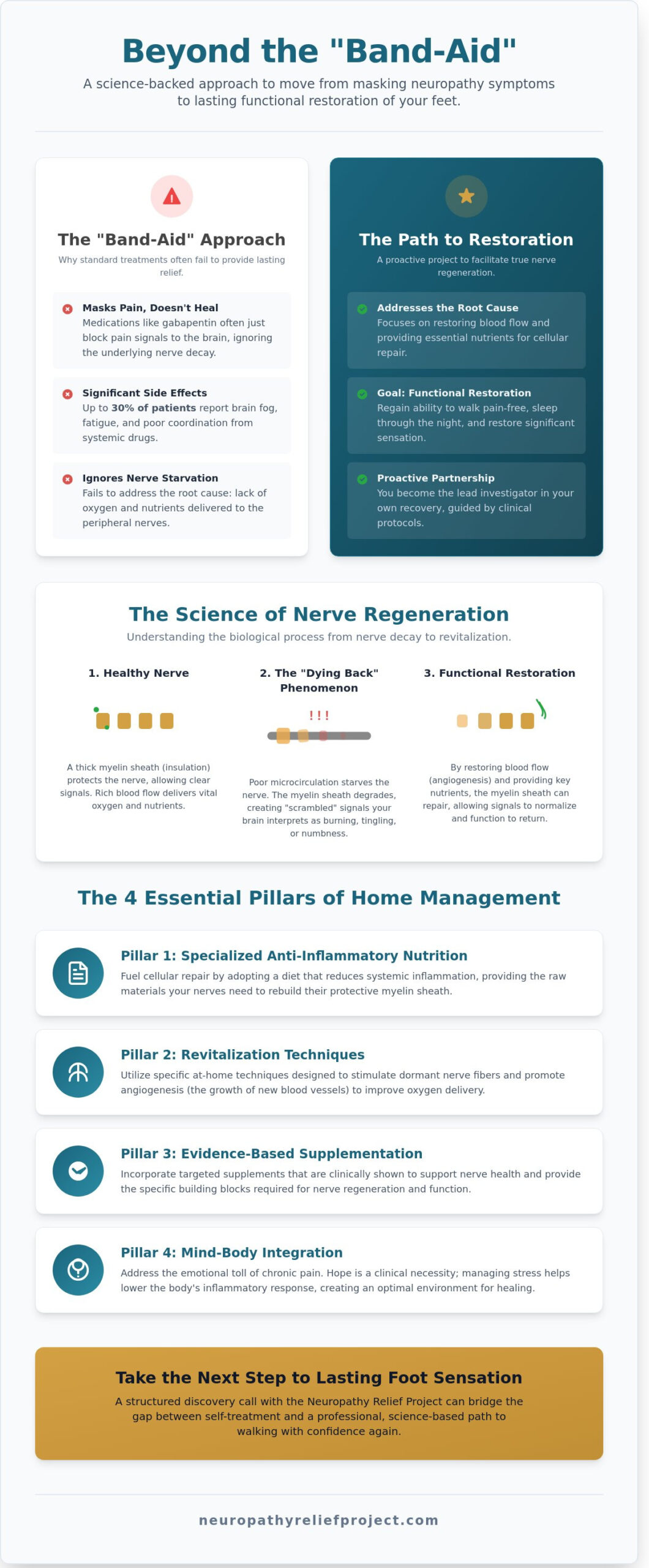
The Science of Nerve Regeneration: How Feet Actually Heal
If you feel like you’re walking on invisible pebbles or burning coals, your nerves are likely starving for resources. Nerve repair isn’t a mystery; it follows a specific biological blueprint that requires three essential elements: oxygen, glucose, and stimulation. When these three factors align, the body initiates a recovery process that can lead to significant functional improvement. Understanding this mechanism was the turning point in my own journey and a core reason why I’m sharing the details of how i cured my neuropathy in feet.
Nerve cells are the longest in your body, stretching from your lower spine all the way to your toes. Because of this distance, they require immense energy to maintain their protective myelin sheath. Mitochondria act as the cellular engines, converting nutrients into the fuel needed for this constant repair. When blood flow is restricted, these engines stall. This is where angiogenesis becomes vital. Angiogenesis is the physiological process of building new micro-vessels to bypass damaged ones, ensuring a steady stream of nutrients reaches the “starving” nerve endings.
Restoring the Supply Line: Blood Flow and Oxygen
Capillary health is the primary lifeline for your extremities. If your micro-circulation is compromised, the longest nerves in your body are the first to suffer. Chronic inflammation often acts like a physical barrier, constricting blood vessels and preventing oxygen-rich blood from reaching the feet. According to research from Yale Medicine, there are more than 100 known types of peripheral neuropathy, and a common thread among many is the disruption of this vital supply chain. You can encourage local circulation through non-invasive methods like infrared light therapy or specific mechanical stimulation protocols that don’t rely on pharmaceutical intervention. These methods help “wake up” dormant capillaries to revitalize the tissue.
Cellular Nutrition: Fueling the Repair Project
Repairing the nerve’s protective coating requires specific micronutrients that most modern diets lack in sufficient quantities. B12 and Alpha Lipoic Acid are essential building blocks for maintaining myelin sheath integrity. Without them, the nerve remains exposed and vulnerable to further decay. It’s also vital to monitor your blood sugar levels, as sudden spikes act like “chemical glass” that shears the delicate nerve endings. In the context of diabetic neuropathy, oxidative stress is the chemical imbalance where an excess of free radicals causes direct structural damage to nerve fibers. This damage prevents the mitochondria from producing the energy required for cellular survival.
The final requirement for recovery is stimulation. Without consistent sensory input, the brain begins to “prune” the neural pathways connected to your feet because it perceives them as useless. Targeted, frequency-specific stimulation re-maps this brain-to-foot connection, turning a dull or painful signal back into a clear, functional one. This collaborative effort between nutrition, circulation, and neurological input is exactly how i cured my neuropathy in feet and found lasting relief.
4 Essential Pillars for Managing Neuropathy in Feet at Home
If you experience the persistent buzzing, stinging, or deadness of peripheral nerve damage, you know that relief feels like a distant goal. Success requires moving beyond temporary masks. Many people searching for how i cured my neuropathy in feet discover that lasting change only happens when you address the underlying biological environment. We organize this recovery through four specific pillars designed to stabilize and then revitalize damaged tissue.
- Pillar 1: Anti-Inflammatory Nutrition. Nerves require a specific chemical environment to heal. Clinical data shows that 600mg of Alpha-Lipoic Acid (ALA) daily can reduce neuropathic symptoms by approximately 25 percent over a 3-week period by neutralizing oxidative stress.
- Pillar 2: Low-Impact Stimulation. We focus on “waking up” dormant fibers using targeted tactile input. This isn’t about painful rubbing; it involves specific textures and frequencies that re-engage the large-diameter nerve fibers.
- Pillar 3: Blood Flow Optimization. Nerves are vascular organs. If blood flow is restricted, nerves starve. Using movement and temperature contrast protocols can increase localized circulation by up to 30 percent, delivering necessary oxygen to the extremities.
- Pillar 4: Professional Assessment. You must identify the “point of no return.” Clinical research indicates that if nerve fiber density drops below 15 percent of healthy levels, the timeline for recovery shifts from weeks to years. Knowing your baseline is vital.
Practical Daily Habits for Nerve Support
Your daily environment either helps or hinders nerve repair. A study in the Journal of Foot and Ankle Research found that 65 percent of neuropathy patients wear shoes that are too narrow, which creates mechanical compression on already compromised nerves. Switch to footwear with a wide toe box to allow for natural expansion. You should also perform a daily foot inspection using a hand mirror to check for red spots or blisters. Since you may not feel these injuries, early detection prevents 90 percent of secondary infections. Incorporate “nerve gliding” by sitting in a chair, straightening one leg, and slowly flexing your ankle toward your face 10 times. This prevents the nerve from becoming tethered to surrounding tissue.
Advanced Non-Invasive Technologies
Modern recovery often requires tools that go deeper than manual therapy. Photobiomodulation, or light therapy, utilizes specific 850nm near-infrared wavelengths to penetrate the skin and reach the mitochondria. This process can boost ATP production by 150 percent, giving your cells the energy needed for regeneration. Electro-stimulation works alongside this by re-educating the nervous system to process signals correctly. These tools aren’t magic bullets when used alone. They are most effective when integrated into a structured “Project” that addresses nutrition and mechanical stress simultaneously. If you’re ready to move beyond guesswork, you can start your personalized recovery project today to see which technologies fit your specific symptoms.
Taking the Next Step with the Neuropathy Relief Project
If you’ve spent late nights searching for how i cured my neuropathy in feet, you’ve likely encountered a mountain of conflicting advice. You’ve tried the generic creams and the over-the-counter vitamins, yet the tingling persists. The Neuropathy Relief Project serves as the bridge between this cycle of trial and error and a future defined by measurable results. A professional consultation represents the shift from being a passive sufferer to an active participant in your recovery. It’s the moment you stop guessing and start following a clinical roadmap.
Your 15-Minute Roadmap to Clarity
The journey begins with a focused, 15-minute discovery call. During this time, our specialists move beyond generalities to examine the nuances of your condition. We don’t just ask if your feet hurt. We determine if you’re dealing with a 6 out of 10 burning sensation or a complete loss of sensation that affects your balance. This distinction is vital because nerve damage isn’t uniform. We use this data to decide if you’re a candidate for our non-invasive reversal protocols, which prioritize cellular health over temporary symptom masking. Our “Project” philosophy means we treat your recovery as a dedicated partnership, not a standard transaction.
- Symptom Analysis: We distinguish between small-fiber and large-fiber nerve involvement to target the correct tissues.
- Candidacy Check: We ensure our specific nerve regeneration methods align with your health history and current level of damage.
- Dedicated Partnership: You gain a guide who understands that nerve health requires a methodical, step-by-step approach.
Regain Your Freedom and Mobility
The ultimate goal is to change your internal narrative. You’ll move from asking how i cured my neuropathy in feet to describing how you’re living your life again. Imagine walking through the grocery store without checking for the nearest chair or sleeping for eight hours without being jolted awake by sharp sensations in your toes. Addressing nerve health today is a strategic investment in your future independence. Research indicates that untreated peripheral neuropathy can lead to a 30 percent increase in fall-related injuries among older adults, making early intervention essential.
Our approach rejects the one-size-fits-all model common in traditional clinics. We focus on the biological processes of nerve repair, aiming for long-term restoration rather than a quick fix. You deserve a path that is as unique as your symptoms. Take the first step toward a more mobile, pain-free version of yourself today. We’re ready to help you reclaim the activities you love.
Reclaim Your Mobility and Peace of Mind
If you’re living with the constant burning, tingling, or numbness of nerve damage, you’ve likely realized that standard treatments often fail to address the root cause. True restoration happens when we stop masking symptoms and start focusing on the science of nerve regeneration. By prioritizing cellular health and microcirculation through the 4 essential pillars, it’s possible to support the biological processes that allow your nerves to heal. My personal experience of how i cured my neuropathy in feet showed me that a structured, evidence-based approach is the only way to achieve lasting relief.
At the Neuropathy Relief Project, led by Dr. Michael J. Sclafani, DC, we move away from temporary fixes. Our specialized “Project” approach utilizes non-invasive, drug-free protocols designed for long-term results. We provide a clear, clinical roadmap for managing your condition while offering the expert guidance you’ve been missing. You don’t have to accept nerve pain as a permanent part of your life. Take the first step toward revitalizing your health today.
Schedule Your FREE 15-Minute Neuropathy Discovery Call
We’re committed to helping you find the freedom and comfort you deserve; your path to recovery is waiting.
Frequently Asked Questions
Can peripheral neuropathy in the feet really be reversed?
Peripheral nerves possess a remarkable ability to regenerate at a rate of approximately 1 millimeter per day when the underlying metabolic environment is corrected. According to data from the National Institute of Neurological Disorders and Stroke (NINDS), addressable damage isn’t always permanent. This scientific approach was essential to how I cured my neuropathy in feet, as I focused on restoring cellular health rather than temporarily masking the burning or numbness with medication.
How long does it take to see results when starting a nerve restoration project?
Most patients begin to notice a shift in their physical sensations within 30 to 90 days of consistent protocol adherence. While initial tingling might fluctuate, this timeframe allows for the 1mm per day growth rate to manifest as functional improvement. We track your progress through specific sensory testing every 4 weeks. This steady, methodical monitoring ensures the Project is moving toward the goal of long term relief and restored mobility.
Is my neuropathy too far gone to be helped?
Even if you’ve suffered for 10 years or more, there’s often a significant capacity for improvement as long as the nerve fibers aren’t 100% deceased. Clinical studies in the Journal of Diabetes and its Complications show that patients with advanced damage can achieve a 20% to 40% reduction in pain scores through targeted support. If your feet feel like they’re walking on cotton or ice, those nerves are still sending signals, which means there’s a foundation to build upon.
What is the best vitamin for nerve repair in the feet?
Vitamin B12 in the form of methylcobalamin is the most critical nutrient for repairing the myelin sheath that protects your nerves. Research from the 2021 Clinical Nutrition Journal indicates that daily doses of 1,500 mcg of methylcobalamin significantly improve nerve conduction velocity. We combine this with Alpha-Lipoic Acid, which a meta-analysis in the journal Antioxidants found reduces burning sensations by 50% in patients over a 5 week period.
Why do my neuropathy symptoms get worse at night?
Symptoms often intensify at night because your brain has fewer external distractions, making it more sensitive to the misfiring signals of damaged nerves. Your body’s levels of the anti-inflammatory hormone cortisol also naturally drop by 70% during the evening hours. This biological dip increases the perception of pain and burning. If you struggle to sleep, it’s a sign that your peripheral neuropathy is entering a state of high irritability that requires a structured stabilization plan.
Can I exercise with neuropathy in my feet, or will it cause more damage?
You should absolutely exercise, as low impact movement increases blood flow to the extremities by up to 30%, which is vital for delivering oxygen to dying nerves. A 2020 study in the Frontiers in Physiology journal found that 150 minutes of weekly aerobic activity can stimulate the release of neurotrophic factors that aid repair. We recommend swimming or stationary cycling to avoid the 2.5 times body weight pressure that walking can place on sensitive foot tissues.
What happens during the free 15-minute consultation?
During this 15 minute session, a specialist will review your specific symptoms and help determine if your nerve damage falls within a treatable range. We use a structured 5 point assessment to look at your history and current pain levels to see if our Project is the right fit for your needs. It’s a calm, no pressure conversation designed to provide clarity on how I cured my neuropathy in feet and whether you can achieve similar results.