

What if the “burning” sensation keeping you awake at 2:15 AM isn’t just a symptom to be silenced, but a distress signal from nerves that are actually capable of healing? If you experience sharp, electric jolting or the terrifying feeling of losing your balance on a flat kitchen floor, you’ve likely been told that masking the pain with heavy prescriptions is your only option. It’s incredibly frustrating to feel like you’re just covering up a fire instead of putting it out. Finding an effective treatment for neuropathy in legs and feet often feels like a cycle of temporary fixes that leave you feeling disconnected from your own body. Clinical data suggests that nearly 50% of patients find traditional medications fail to address the underlying cause of their sensory loss.
At the Neuropathy Relief Project, we believe in a different path toward restoration. You’ll discover a science-backed approach that focuses on nerve regeneration and cellular health rather than just symptom suppression. We’ll walk through the specific biological processes of nerve damage and outline a clear, non-invasive plan designed to restore sensation and help you reclaim your mobility. It’s time to move beyond the fog of medication and focus on the long-term health of your nervous system.
Key Takeaways
- Understand the “dying back” phenomenon of peripheral neuropathy and why sensory symptoms typically migrate from the toes upward through the longest nerves in your body.
- Learn why standard medications often fall short by simply masking pain signals rather than addressing the biological root cause of your nerve damage.
- Discover a restorative treatment for neuropathy in legs and feet that focuses on increasing oxygenation and blood flow to revitalize dormant nerve fibers.
- Identify practical, at-home strategies-including specific dietary shifts-designed to lower your inflammatory load and support cellular nerve health.
- Explore how the Neuropathy Relief Project’s clinical assessment can help you determine if you are a candidate for true nerve restoration and recovery.
Understanding Neuropathy in the Legs and Feet
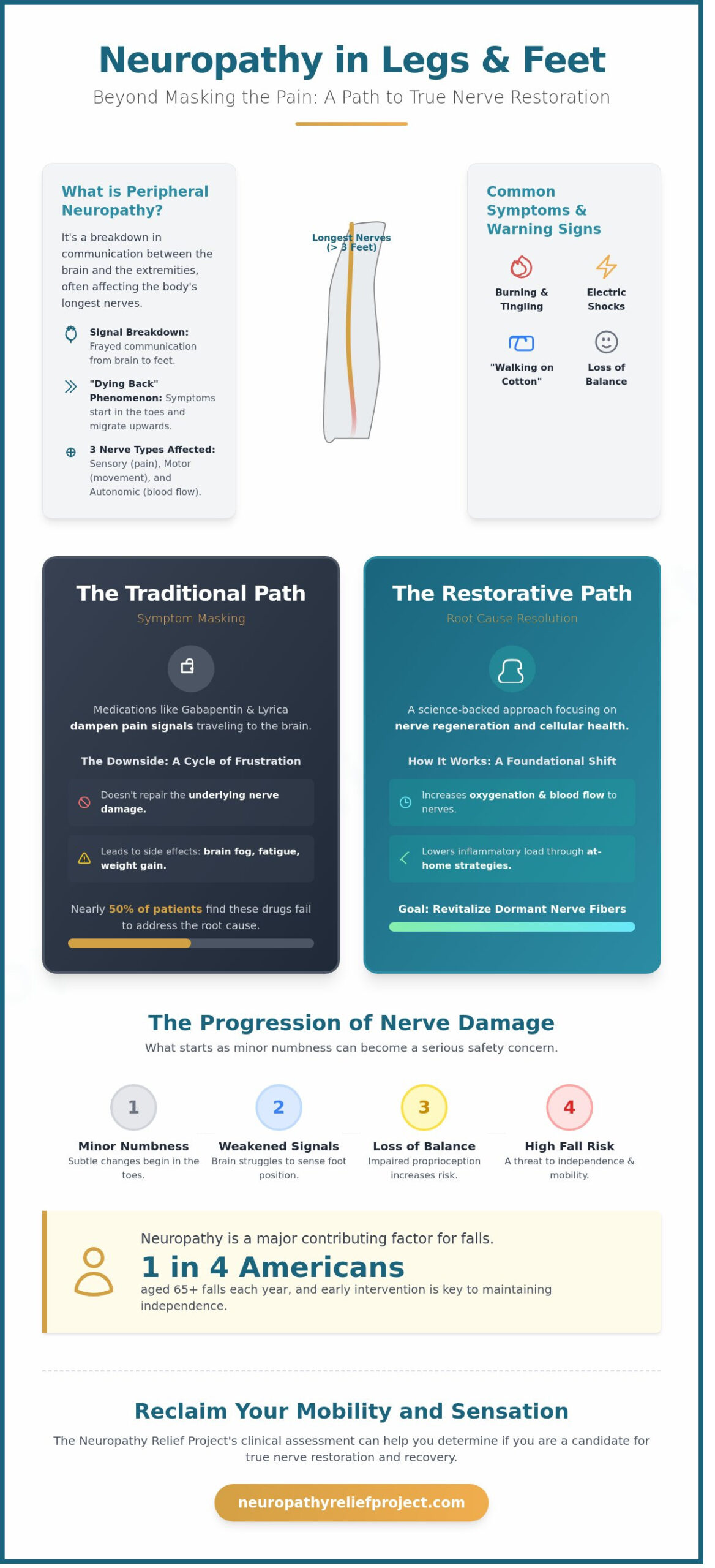
Peripheral neuropathy is a breakdown in cellular communication between the brain and the extremities. When this occurs in your lower limbs, it often affects the longest nerves in your body. These nerves, which stretch from your lower spine all the way to your toes, can exceed 3 feet in length. Because of this distance, they’re the most susceptible to damage and the hardest for your body to repair. Identifying the right treatment for neuropathy in legs and feet requires a deep dive into how these nerves fail and why your symptoms follow a specific, predictable pattern.
Most patients experience what clinicians call the “dying back” phenomenon. This process typically begins at the furthest point from the central nervous system. You might first notice a subtle change in your toes, which then gradually migrates up the foot and into the calf. For those seeking a foundational overview, Understanding Peripheral Neuropathy provides a clinical context for how these nerve pathways function and fail over time. At the Neuropathy Relief Project, we recognize that your experience involves three distinct nerve types. Sensory nerves convey pain and temperature, motor nerves control your muscle movements, and autonomic nerves manage involuntary functions like blood flow and sweat regulation. When these systems fail, the resulting sensations are often both painful and confusing.
Common Symptoms and Early Warning Signs
If you feel like you’re walking on cotton balls or thick layers of foam, your sensory nerves are likely struggling to send accurate signals. This distorted feedback often manifests as a persistent buzzing, “pins and needles,” or sharp, electric shocks that seem to come from nowhere. You may find that these sensations intensify significantly at night. When your body is at rest and external distractions fade, the brain becomes more attuned to the “static” of damaged nerves. Additionally, the natural drop in body temperature during sleep can trigger heightened sensitivity in nerve endings that are already compromised.
The Progression of Nerve Damage
What begins as minor numbness can quickly evolve into a serious safety concern. As nerve signals weaken, your brain loses its ability to sense the position of your feet in space, a process known as proprioception. This loss of awareness is a primary driver of balance issues. Data from the National Council on Aging indicates that 1 in 4 Americans aged 65 and older falls each year, and neuropathy is a major contributing factor to this statistic. Poor circulation often accelerates this decline, as oxygen-deprived nerves begin to wither. This specialized approach is central to our work at the Neuropathy Relief Project, where we focus on treatment for neuropathy in legs and feet that targets the cellular level to prevent permanent loss of function. Early intervention isn’t just about comfort; it’s about maintaining your independence and mobility.
Why Traditional Treatments for Neuropathy Often Fall Short
If you’ve spent months or years cycling through prescriptions like Gabapentin or Lyrica without success, you’re not alone. Recent clinical data suggests that while these medications are the standard treatment for neuropathy in legs and feet, they don’t actually repair the underlying damage. Instead, they function by dampening the pain signals traveling to your brain. This often leads to a cycle of frustration where your symptoms persist while you struggle with side effects like brain fog, fatigue, and weight gain. In a 2021 survey of chronic pain patients, over 62% reported that medication side effects were as debilitating as the pain itself.
The standard of care in most clinics focuses on management rather than recovery. This approach assumes that once a nerve is damaged, it’s gone forever. This perspective is outdated. By ignoring the potential for nerve regeneration and cellular repair, traditional medicine leaves patients in a holding pattern of declining mobility and increasing dosages. We believe that a more specialized, research-driven focus is required to restore the health of the peripheral nervous system.
The “Band-Aid” Approach vs. Root Cause Resolution
Traditional nerve pain medications work on your central nervous system, not the damaged nerves in your feet. It’s a systemic solution for a localized problem. You might have received a “normal” EMG result despite feeling like your feet are on fire or walking on glass. This happens because standard EMGs typically only measure large nerve fibers, leaving small fiber damage undetected in up to 50% of symptomatic patients. It’s easy to feel lost when your physical experience doesn’t match a lab report. You can explore Comprehensive Neuropathy Treatment Options to see how the National Institute of Neurological Disorders and Stroke categorizes these various clinical approaches.
Identifying the Underlying Triggers
Effective treatment for neuropathy in legs and feet requires looking past the obvious. While diabetes is a well-known cause, chemotherapy-induced neuropathy and inflammatory triggers are equally prevalent. We also look closely at Metabolic Syndrome. According to the American Heart Association, roughly 34% of U.S. adults meet the criteria for this condition. Even if your blood sugar is “within normal range” (often defined as an A1C below 5.7%), you may still experience glycemic spikes that damage delicate nerve endings. Consider the following triggers that often go unaddressed:
- Chemotherapy-Induced Damage: Toxic levels of medication that linger in the extremities.
- Idiopathic Causes: Cases where “no cause” is found, which often points to undiagnosed nutritional deficiencies.
- Inflammatory Markers: Elevated C-Reactive Protein (CRP) levels that keep nerves in a state of constant irritation.
Our mission at the Neuropathy Relief Project is to help you identify these hidden metabolic drivers so you can finally begin the process of restoration rather than just masking the symptoms.
A Modern Framework for Nerve Restoration and Relief
If you experience the persistent sensation of walking on invisible glass or feel a heavy numbness that makes every step feel uncertain, you aren’t just looking for a way to mask symptoms. You’re looking for a way to wake up dormant fibers. The Neuropathy Relief Project operates at the specific intersection where clinical evidence meets holistic support. We focus on a “Scientific + Natural” bridge that prioritizes the biological environment required for healing. This approach moves beyond temporary numbing creams; it targets the cellular mechanisms that allow nerves to thrive.
To revitalize these tissues, we prioritize oxygenation and localized blood flow. When nerves are deprived of oxygen, they enter a state of metabolic distress. By utilizing non-invasive technologies that stimulate cellular ATP production, we can effectively “recharge” the nerve’s internal battery. This process is supported by targeted nutritional protocols designed specifically for myelin sheath repair. The myelin sheath acts as the protective insulation for your nerves. If this insulation wears thin, the electrical signals become erratic, leading to the burning or tingling sensations you feel daily.
The Science of Nerve Regeneration
For decades, many patients were told that nerve damage is a one way street. Modern clinical data suggests that peripheral nerves can heal at a rate of approximately 1 millimeter per day when systemic inflammation is reduced. To facilitate this recovery, we must address the underlying vascular health of the limb. Micro-circulation is the essential “lifeblood” of peripheral nerve health, acting as the sole delivery system for the oxygen and glucose required to sustain nerve cell longevity. According to Johns Hopkins Medicine on peripheral neuropathy, identifying the root cause of the damage is vital for long term management. When we combine this diagnostic clarity with a structured treatment for neuropathy in legs and feet, we create a pathway for the body to repair itself from the inside out.
Restoring Balance and Stability
If you find yourself reaching for furniture to steady yourself, you’re experiencing the loss of proprioception. This is the brain’s ability to sense where your feet are in space. Improving foot sensation directly impacts your gait and reduces fall hazards, which is a critical safety concern for the 30 million Americans currently facing nerve health challenges. There’s a profound psychological benefit in moving from the identity of a “chronic patient” to someone in “active recovery.” We monitor this transition using specialized neurological exams that track sensory perception thresholds. These exams provide concrete data on your progress, ensuring that your treatment for neuropathy in legs and feet is producing the real world results you need to regain your independence.
Practical Steps for Managing Leg and Foot Nerve Pain at Home
If you experience a constant buzzing, sharp stabs, or a lack of sensation in your lower limbs, your daily routine becomes a vital part of your recovery. Effective treatment for neuropathy in legs and feet requires more than just passive waiting; it involves active protection of your nerve endings. Daily foot inspections are a non-negotiable habit. Because neuropathy often dulls your ability to feel pain, a small blister or a stray pebble in your shoe can quickly turn into a serious infection without you noticing. Data from the American Podiatric Medical Association shows that roughly 25% of patients with diabetes develop foot ulcers, making a nightly visual check with a mirror a life-saving ritual.
Lowering the inflammatory load on your nervous system starts with your plate. High blood sugar and processed fats create oxidative stress that further damages the myelin sheath, the protective coating of your nerves. Transitioning to an anti-inflammatory diet can reduce C-reactive protein levels by up to 30%, providing a calmer environment for nerve cells to heal. Movement is also essential. Walking for 20 minutes daily stimulates blood flow to the small capillaries feeding your nerves. At home, remove loose rugs and install high-visibility lighting to prevent falls, as your brain may not receive accurate signals about where your feet are in space.
Lifestyle Modifications for Immediate Relief
Hydration plays a critical role in nerve conductivity. Even mild dehydration can increase the concentration of toxins in your blood, irritating sensitive nerves. Supplementing with specific B-vitamin complexes, such as B1 in the form of Benfotiamine and B12 as Methylcobalamin, supports the repair of damaged nerve casings. When choosing footwear, avoid the “compression trap.” Tight socks restrict blood flow, which is the opposite of what your nerves need. Opt for wide toe boxes that allow for natural movement. Since you may not feel extreme heat, always test bath water with your elbow or a thermometer to prevent accidental burns.
Questions to Ask Your Specialist
You deserve a treatment plan that looks beyond temporary maskings of pain. At your next appointment, bring a checklist to ensure you’re getting comprehensive care. Ask your doctor about functional neurology options and non-drug protocols like photobiomodulation. If you’re wondering, is neuropathy reversible?, don’t be afraid to ask for a detailed prognosis based on your specific nerve fiber density tests. This proactive approach ensures you’re a partner in your own healing rather than just a patient. It’s time to seek a treatment for neuropathy in legs and feet that addresses the root cause of your cellular health.
The Neuropathy Relief Project: Your Path to Recovery
The Neuropathy Relief Project isn’t just another medical clinic; it’s a mission-driven framework built to address the 20 million Americans currently struggling with nerve damage. If you’ve spent years searching for an effective treatment for neuropathy in legs and feet, you know that traditional methods often fall short. We focus on a specialized assessment to determine if your nerves can still be revitalized. This initial screening is essential. We don’t believe in giving false hope; we believe in data-driven recovery. By evaluating your specific level of nerve degradation, we can identify if you’re a candidate for our intensive reversal protocols. This approach ensures that every patient we take on has a legitimate path toward regaining their sensation and mobility.
Our project focuses on the science of nerve regeneration and cellular health. We understand that by the time most patients find us, they’ve already tried various creams, pills, and physical therapies. The difference lies in our commitment to the “Project” model, where your recovery is a collaborative, research-backed effort. We look at the biological environment of your nerves to see why they aren’t healing on their own. This high degree of clinical authority is balanced with deep empathy for the daily struggle of living with chronic pain.
Why a Specialized Discovery Call Matters
Generic medical models often overlook the nuances of nerve health. A 15-minute discovery call changes that. It provides a dedicated space to discuss your unique sensory triggers, such as the burning that intensifies at night or the loss of balance that limits your daily walks. You aren’t just a chart number here. You’re speaking with a team that dedicates 100% of their clinical focus to peripheral nerve health. This conversation offers the clarity you’ve likely been missing for years. It’s a calm, professional environment where your symptoms are heard and analyzed through the lens of nerve regeneration rather than just symptom management. During this call, we focus on:
- Identifying the specific “electric shock” or “pins and needles” sensations you feel daily.
- Moving away from the one-size-fits-all approach to find what triggers your specific flare-ups.
- Determining the timeline of your nerve damage to assess the potential for reversal.
- Answering the questions that traditional doctors often rush through during 5-minute appointments.
Taking the First Step Toward Freedom
To prepare for your call, think about your daily limitations. Does the numbness prevent you from playing with your grandkids? Does the tingling make driving feel unsafe? The goal of our 15-minute phone consultation is to screen for our reversal program and provide a concrete plan for the future. We use this time to see if your case aligns with our scientific protocols for cellular health. It’s the first step toward a life where you don’t have to plan your day around your pain. We aim to provide a sense of hope that’s grounded in clinical reality. Book your FREE 15-minute Neuropathy Discovery Call today and take control of your treatment for neuropathy in legs and feet. Freedom from chronic pain starts with a single, informed conversation.
Take the First Step Toward Lasting Nerve Restoration
Living with the constant burning, tingling, or numbness in your lower limbs can make every day feel like a struggle. You’ve likely discovered that traditional medications often only mask these symptoms instead of addressing the underlying nerve damage. True recovery requires a shift toward cellular health and biological healing. The Neuropathy Relief Project, led by Dr. Michael J. Sclafani, focuses on this exact mission by utilizing non-invasive protocols designed to support nerve regeneration. By moving away from temporary fixes, you can begin to address the actual source of your discomfort.
Finding a sustainable treatment for neuropathy in legs and feet starts with a specialized plan tailored to your specific needs. Dr. Sclafani brings years of expertise in non-invasive care to help patients who have felt dismissed by the standard medical system. This isn’t just a clinic; it’s a dedicated project aimed at restoring your mobility and independence. You don’t have to accept chronic pain as your permanent reality. There is a clear, evidence-based path forward that prioritizes your long-term wellness and freedom of movement.
Schedule Your FREE 15-Minute Neuropathy Phone Consultation
Your journey toward a more comfortable life is waiting, and we’re ready to guide you every step of the way.
Frequently Asked Questions
Can neuropathy in the legs and feet be reversed?
Peripheral nerves possess the biological ability to regenerate at a rate of approximately 1 millimeter per day when the underlying cause of damage is addressed. If you experience persistent numbness or tingling, our protocols focus on optimizing cellular health to stimulate this natural healing process. By improving localized blood flow by up to 40 percent, the Neuropathy Relief Project helps revitalize damaged pathways and provides a clear path toward long-term recovery.
What is the best treatment for neuropathy in the feet without using drugs?
The most effective drug-free treatment for neuropathy in legs and feet involves a combination of low-level light therapy and specialized electro-stimulation to increase microcirculation. These scientific methods trigger the release of nitric oxide, which dilates blood vessels to deliver vital nutrients to starving nerves. This natural approach avoids the side effects of prescription medications while directly addressing the biological source of your burning or tingling sensations.
How long does it take to see results from a neuropathy treatment program?
Most patients begin to feel a measurable shift in their sensory symptoms within 6 to 12 weeks of starting their structured program. Nerve repair is a methodical, steady process that requires consistent stimulation and specific nutritional support to be successful. We monitor your progress every 30 days to ensure your recovery remains on track, as the goal of the Project is to achieve sustainable relief rather than a temporary mask for your pain.
Will insurance cover my neuropathy treatment options?
Coverage for neuropathy relief options varies between providers, though Medicare and many private PPO plans often include benefits for specific diagnostic tests and therapeutic treatments. We recommend a personalized benefits verification during your initial visit to determine your exact out of pocket responsibility. Our team provides the necessary clinical documentation to help you navigate the specific requirements of your 2024 healthcare policy and maximize your available benefits.
Can I still walk or exercise if I have severe neuropathy in my feet?
You can and should remain active, though you must modify your routine to account for a 15 percent higher risk of balance issues associated with nerve damage. If you experience a loss of sensation, low-impact exercises like swimming or stationary cycling protect your joints while maintaining essential cardiovascular health. Staying mobile is vital for circulation, provided you perform a daily 2-minute foot inspection to check for any unnoticed blisters or injuries.
What happens if I leave my leg and foot neuropathy untreated?
Leaving neuropathy untreated often leads to a 50 percent increase in symptom severity over a 12-month period, which may result in a permanent loss of motor function. Chronic nerve damage can progress to muscle wasting or dangerous infections that the body can no longer signal through pain. By intervening early, you prevent the specialized small fiber nerves from dying off completely, which preserves your independence and your long-term mobility.
How does the 15-minute free consultation work?
Your 15-minute consultation is a focused clinical discovery session where we review your medical history and your current sensory symptoms. We use this time to determine if your specific type of nerve damage fits within the proven scope of the Neuropathy Relief Project protocols. It’s a calm, low-pressure environment designed to provide you with a logical explanation for your pain and a realistic outlook for your potential recovery journey.
Is neuropathy in the feet always caused by diabetes?
No, while diabetes is a common cause, approximately 30 percent of neuropathy cases are classified as idiopathic, meaning the origin is initially unknown. Other contributing factors include vitamin B12 deficiencies, chemotherapy treatments, or specific autoimmune responses. Regardless of the initial trigger, the biological goal remains the same; we focus on restoring the cellular environment so your nerves can function without sending constant burning or tingling signals to your brain.