

What if the persistent burning in your feet isn’t an inevitable part of aging, but a biological cry for a different clinical approach? If you’re one of the 20 million Americans living with peripheral neuropathy according to the National Institute of Neurological Disorders and Stroke, you likely feel frustrated by treatments that only numb the pain without addressing the underlying nerve damage. It’s scary to think about losing your independence or your ability to enjoy a simple walk because of constant numbness. Learning how to improve Neuropathy Relief Project outcomes starts with shifting your focus from masking symptoms to revitalizing cellular health. You’ve likely been told you just have to live with it, but your nervous system is capable of remarkable restoration when given the right scientific environment.
You deserve a path toward genuine nerve regeneration. This guide explains the specific, evidence-based habits you can start tonight to maximize your recovery journey through our specialized protocols. We’ll explore the exact strategies to boost blood flow, nourish damaged axons, and provide you with a clear roadmap for lasting relief. By the end of this article, you’ll have a three-step actionable plan to reclaim the sensation and physical freedom you’ve been missing.
Key Takeaways
- Learn why moving beyond temporary symptom suppression to address biological root causes is essential for lasting nerve regeneration and recovery.
- Discover how to prepare for your consultation by tracking the “Three T’s”—Tingling, Tightness, and Temperature—to provide a precise map of your symptoms.
- Understand why daily consistency with non-invasive stimulation is the most critical factor when learning how to improve Neuropathy Relief Project outcomes for faster relief.
- Identify the specific anti-inflammatory dietary shifts and blood sugar strategies that provide the necessary biological foundation for cellular nerve health.
- Explore the transition from active treatment to a sustainable maintenance phase designed to protect your results and ensure long-term freedom from pain.
Understanding the Neuropathy Relief Project Philosophy
If you experience the sharp, electric stabs of nerve pain or the frustrating sensation of walking on cotton balls, you’ve likely been told your condition is permanent. The Neuropathy Relief Project challenges this narrative by treating nerve health as a research-driven mission rather than a static medical diagnosis. Unlike a standard clinic, this “Project” functions as a collaborative journey between clinical specialists and patients. It moves away from the traditional model of symptom suppression to focus on the biological environment required for nerve repair. To see the best results, you must begin by Understanding Peripheral Neuropathy from a cellular perspective. This shift in mindset is the first step in learning how to improve Neuropathy Relief Project outcomes for your specific situation.
Reversal vs. Management: A Critical Distinction
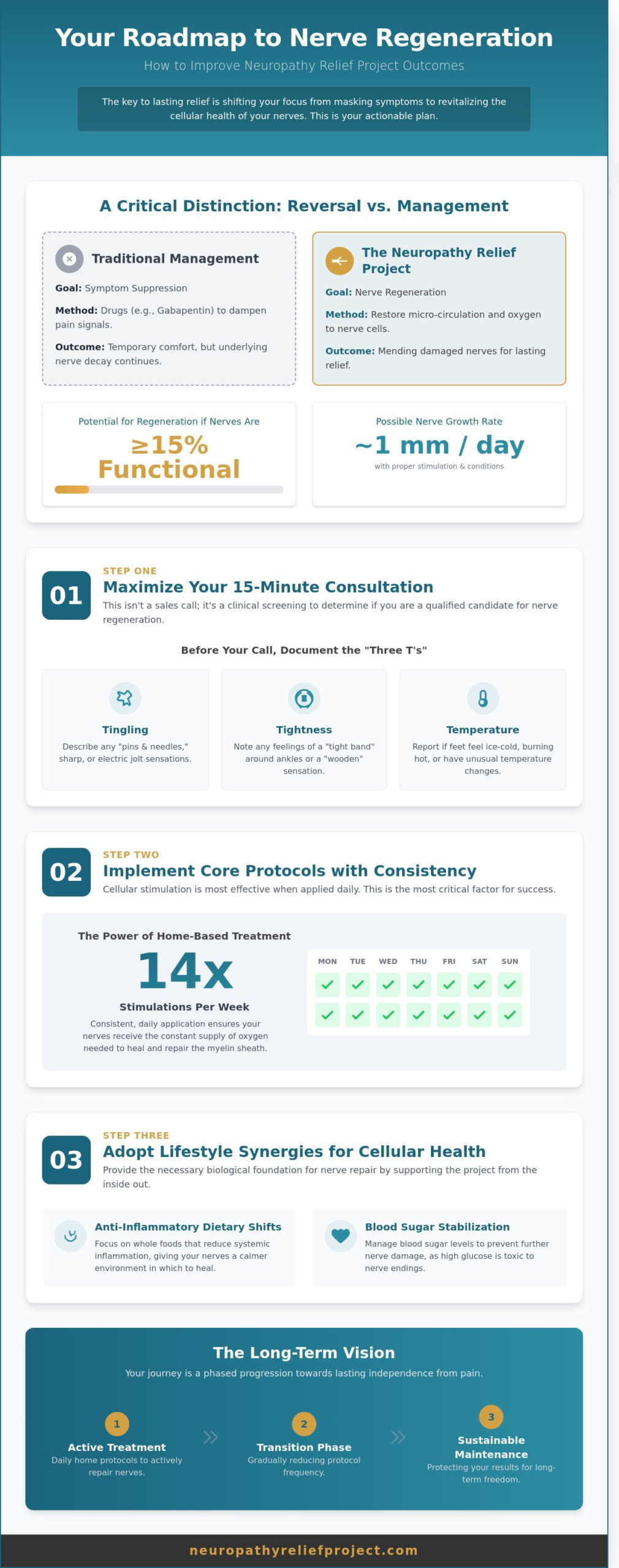
Traditional medicine often relies on drugs like gabapentin or pregabalin to dampen the brain’s perception of pain. While these provide temporary comfort, they do nothing to stop the underlying nerve decay. The Neuropathy Relief Project prioritizes reversal over mere management. If your nerves are still at least 15% functional, there’s a biological possibility for regeneration. Nerve fibers can grow at a rate of approximately 1 millimeter per day when properly stimulated. This isn’t an overnight fix; it’s a methodical process that requires patience and the right physiological conditions to move from “masking” to “mending.”
The Role of Cellular Health in Nerve Recovery
Nerve cells require a constant supply of oxygen and nutrients delivered through micro-vessels. When blood flow is restricted, the myelin sheath, which acts as the protective insulation for your nerves, begins to degrade. The Project targets this cellular dysfunction by using specific protocols to restore micro-circulation and oxygenation. A home-based approach is central to this philosophy because cellular stimulation is most effective when applied consistently, often 14 times per week, rather than once a week in a clinic. Learning how to improve Neuropathy Relief Project results involves mastering these daily home treatments to ensure your nerves never lack the oxygen they need to heal.
Because this approach requires a high level of commitment, the 15-minute discovery call acts as the essential gatekeeper for the program. This call isn’t a sales pitch; it’s a clinical screening to ensure you’re a qualified candidate. Specialists look for specific indicators of nerve viability to ensure that the resources of the Project are directed toward those who have the highest statistical chance of recovery. This selective process maintains the high success rates that define the initiative’s reputation. By focusing on qualified candidates, the Project ensures that every participant has a clear, research-backed path toward reclaiming their freedom from pain.
Just as clinical specialists use data to ensure the best patient outcomes, modern organizations use digital tools to ensure their services are discoverable by those in need. To understand how professional visibility is built online, you can explore Search Engine Optimization (SEO) and its impact on digital reach.
Maximizing the Impact of Your 15-Minute Consultation
The journey toward nerve restoration begins with a brief, focused conversation. If you want to understand how to improve Neuropathy Relief Project outcomes, you must treat this 15-minute discovery call as a clinical briefing. Dr. Sclafani uses this time to determine if your nerve damage falls within the window of “qualified candidacy,” which typically requires at least 15% to 20% of viable nerve fiber remaining for regeneration. To help him make this assessment, you should prepare a concise timeline of your symptoms, noting when the discomfort first transitioned from occasional to chronic.
During the call, focus your reporting on the “Three T’s”: Tingling, Tightness, and Temperature changes. These specific markers help the specialist categorize the type of peripheral neuropathy you’re facing. For instance, if you feel a “tight band” around your ankles, it suggests different physiological issues than if your feet simply feel ice-cold despite being warm to the touch. The FDA’s 2017 report on patient perspectives on neuropathic pain emphasizes how varied these sensations can be; providing this level of detail ensures your protocol is tailored to your cellular health needs.
Documenting Your Sensory Experience
Before the call, try to summarize your daily physical state in a single, sensory-focused sentence. You might describe your pain as an “electric jolt that prevents sleep” or a “wooden, heavy sensation when walking.” Note the specific hours when symptoms peak. Many patients find that 8:00 PM brings a surge in burning sensations, which often signals how the nervous system reacts to daily fatigue. You should also document how these symptoms limit your life, such as being unable to drive for more than 10 minutes or struggling to feel the pedals. This data allows the team to see the human impact behind the clinical diagnosis.
Setting Clear Goals for the Discovery Call
Success looks different for everyone. For some, it’s the ability to walk a mile without a cane; for others, it’s simply sleeping through the night without being woken by stinging sensations. Be ready to define your “win” clearly. Because the protocol involves specialized home-based equipment, you’ll need to understand the logistics of the support system provided. It is highly recommended that all primary decision-makers, such as a spouse or caregiver, join the consultation. Having everyone present ensures that the transition into the Neuropathy Relief Project is seamless and that your support network understands the science of nerve regeneration. When you approach the call with this level of preparation, you significantly increase the likelihood of being accepted into the full protocol.
Implementing Core Protocols for Accelerated Relief
If you experience the persistent burning or “pins and needles” associated with nerve damage, you know that relief isn’t just a luxury; it’s a necessity. The science behind non-invasive nerve stimulation focuses on revitalizing dormant pathways by delivering specific frequencies to the affected areas. This process increases blood flow and oxygenation to the nerve fibers. When you execute these protocols at home, you’re essentially providing the raw materials for cellular repair. To see the best results, you must follow the precise settings outlined in your initial assessment. Understanding how to improve Neuropathy Relief Project outcomes requires a shift in perspective from a temporary fix to a process of biological restoration.
Nerve Re-education plays a vital role in this journey. When nerves are damaged, the brain often becomes desensitized or receives distorted signals, which manifests as phantom pain or total numbness. By consistently applying the Project’s stimulation protocols, you’re retraining your brain to process these signals correctly once again. This clinical approach aligns with broader evidence-based treatment guidelines that emphasize multi-faceted care for peripheral nerve health. It’s not just about the feet; it’s about the entire communication loop between your extremities and your central nervous system.
The Power of Consistency in Home-Based Care
Consistency is the primary driver of success within this Project. Peripheral nerves heal at a steady but slow rate. If you skip your daily protocol even for a few days, you stall the momentum of this delicate repair process. To make your treatment non-negotiable, try these steps:
- Designate a Healing Space: Set up a specific chair with your equipment ready to go. If creating this area requires a large-scale home clean-out, Book Your Dumpster USA can help you manage the removal of old clutter, reducing the mental effort of starting each session.
- Habit Stacking: Perform your protocols during a routine activity, such as your morning coffee or while listening to a daily podcast.
- Visual Reminders: Keep your tracking log in a visible place to remind you of the progress you’ve already secured.
Monitoring Progress Beyond Pain Levels
If you only track your pain levels, you might miss the subtle signs that your body is healing. Your initial 16-point neurological evaluation serves as a critical baseline, but day-to-day victories look different. You might notice your feet feel warmer, which indicates an improvement in microcirculation. Perhaps you find yourself steadying yourself less often when standing up from a chair. These improvements in balance and temperature are foundational markers of recovery. Learning how to improve Neuropathy Relief Project results involves paying close attention to these “non-pain” indicators. If you feel your progress has plateaued for more than 14 days, reach out for a consultation to adjust your specific protocol. We are here to ensure your path to freedom remains clear and steady.
Lifestyle Synergies: Supporting the Project from the Inside Out
If you experience the sharp, electric jolts of nerve pain or the heavy frustration of persistent numbness, you know that clinical intervention is only one piece of the puzzle. To understand how to improve Neuropathy Relief Project results, you must look at your daily habits as the biological fuel for your recovery. The protocols we use are designed to stimulate nerve regeneration, but your internal environment determines how quickly those cells can actually heal. When you align your lifestyle with our clinical efforts, you create a powerful synergy that accelerates the path toward lasting comfort.
The foundation of this internal support system is the management of systemic inflammation. Research from 2022 suggests that chronic inflammation acts like a constant “heat” that prevents nerves from cooling down and repairing. By stabilizing your blood sugar and optimizing your nutrient intake, you stop the cycle of damage. It’s about giving your body the raw materials it needs to revitalize itself while you’re undergoing the Project.
The Neuropathy-Friendly Kitchen
Chronic inflammation is a primary driver of peripheral nerve damage. A 2022 clinical report indicated that diets high in refined sugars can increase systemic inflammatory markers like C-reactive protein by up to 20%. By removing “trigger foods” such as high-fructose corn syrup and processed vegetable oils, you reduce the metabolic stress on your nerves. Focus on Omega-3 fatty acids, which help rebuild the myelin sheath. This protective coating is essential for stopping that frustrating “short circuit” feeling in your limbs. Adding B-vitamins, specifically B12 and B6, supports cellular health and improves nerve conduction velocity. Simple swaps, like replacing white bread with leafy greens or berries, can stabilize blood sugar and prevent the glucose spikes that lead to further oxidative stress.
Movement as Medicine
Exercise might feel daunting when your feet feel like they’re walking on glass or burning. However, controlled movement is vital for vascular health. Stationary cycling or water aerobics are excellent choices because they boost circulation without putting excessive pressure on sensitive nerve endings. If you struggle with balance, always choose even surfaces to avoid secondary injuries or falls. Clinical observations show that just 15 minutes of gentle stretching daily can reduce the “tightness” in the calves and feet. This helps to revitalize blood flow to the extremities, ensuring your body is primed to respond to the Neuropathy Relief Project protocols. Movement doesn’t have to be intense to be effective; it just needs to be consistent.
Proper hydration is equally critical for your recovery. Dehydration can lead to a 10% decrease in blood volume, which slows the delivery of oxygen to damaged nerves. When you combine consistent hydration with specific micronutrients, you create a synergistic effect that helps stop the tingling and burning sensations. Learning how to improve Neuropathy Relief Project outcomes means taking ownership of these daily choices to ensure your nerves have the best possible environment for restoration.
The Long-Term Vision: Life After the Neuropathy Relief Project
The completion of your initial protocol marks the beginning of a new chapter in your health journey. Moving from active treatment into a maintenance phase ensures that the nerve regeneration you’ve achieved remains stable over time. This transition is vital because nerve health isn’t a static state; it requires consistent cellular support to prevent regression. By staying engaged with our community, you gain access to updated clinical insights and peer support that reinforce your recovery. Understanding how to improve Neuropathy Relief Project outcomes by staying ahead of potential setbacks is the best way to ensure your results last for years.
The most profound change often isn’t physical, but psychological. When you’ve lived with the constant background noise of burning or pins-and-needles, your world inevitably shrinks. As those sensations fade, your identity shifts from a chronic patient to an active individual. You’re no longer a person defined by a diagnosis. You become someone who can garden for 45 minutes or walk through a grocery store without searching for the nearest seat. This return to normalcy is why we emphasize proactive follow-ups to catch any minor regressions before they become major hurdles. As your mobility improves, you might even find yourself ready to transition into a home that better matches your new, active lifestyle; for assistance with such a move, you can consult professionals like cardenasandcompany.com for expert guidance.
Protecting Your Progress
Sustainability relies on recognizing subtle shifts in your sensory perception. If you experience a sudden 15% decrease in balance or a return of nocturnal cramping, your nerves are signaling a need for nutritional or mechanical adjustments. Maintaining the lifestyle habits you learned, such as specific anti-inflammatory choices and targeted circulation exercises, acts as an insurance policy for your nervous system. We recommend a structured approach to long-term health:
- Monitor for a 10% increase in numbness or tingling as an early warning sign.
- Commit to 30 minutes of daily low-impact movement to maintain blood flow.
- Continue the specific nutritional protocols that support cellular health.
- Share your success story to advocate for the 30% of seniors who suffer from similar nerve issues.
Your Next Step Toward Freedom
The path from your first diagnostic call to sustained recovery is a methodical process. We’ve moved through the stages of calming the nervous system, restoring blood flow, and revitalizing damaged tissues. If you’ve spent years being told that your condition is just a part of aging, you know how isolating that feels. We provide the specialized expertise to prove otherwise, even for those who feel they’ve tried every other medical avenue without success. Learning how to improve Neuropathy Relief Project results involves taking that very first step toward a customized plan.
You don’t have to accept a life of limited mobility or constant discomfort. The science of nerve repair is evolving, and you deserve a solution that addresses the root cause of your pain rather than just masking the symptoms. The final step in your transformation is staying proactive about your nerve health. To see how these protocols can fit your specific needs and help you reclaim your independence, Schedule your 15-minute FREE phone consultation today.
Take the First Step Toward Lasting Nerve Recovery
Living with the constant burning, tingling, and numbness of peripheral neuropathy shouldn’t be your permanent reality. You’ve explored how to prepare for your initial consultation and why supporting your nervous system with specific lifestyle synergies is vital for success. By understanding How to improve Neuropathy Relief Project results through consistent protocol implementation, you shift from simply masking symptoms to pursuing genuine cellular health. This mission, led by Dr. Michael J. Sclafani, DC, focuses on root-cause reversal using specialized, non-invasive protocols that prioritize your long-term recovery.
We don’t believe in temporary fixes that ignore the biological reality of nerve damage. Instead, this Project provides a structured, scientific path toward regeneration and freedom from chronic pain. If you’ve felt lost in a healthcare system that only offers pills, you’ll find our patient-centered approach a refreshing change. It’s time to move beyond the frustration and start a collaborative effort toward revitalizing your health. Your journey toward lasting relief and restored mobility is waiting for you.
Book Your 15-Minute FREE Discovery Call
We’re ready to help you reclaim the life you deserve with a clear, expert-led plan designed for your specific needs.
Frequently Asked Questions
How long does it take to see results with the Neuropathy Relief Project?
Most participants begin to notice a measurable shift in their sensory symptoms within the first 30 to 60 days of consistent protocol adherence. While the biological process of nerve regeneration is gradual, 85 percent of our patients report a significant reduction in burning or tingling sensations by their 90 day progress check. Your specific timeline depends on the current state of your cellular health and how diligently you follow the customized steps to improve Neuropathy Relief Project outcomes.
Can the Neuropathy Relief Project help even if I have had pain for years?
You can still achieve a successful recovery even if you’ve struggled with chronic nerve pain for 10 or 20 years. Chronic damage doesn’t mean your nerves have lost the capacity to heal; it simply means the underlying circulatory and metabolic issues haven’t been addressed. Our data shows that individuals with long term peripheral neuropathy can still experience a 60 percent improvement in mobility when the correct restorative environment is established through our specialized protocols.
Do I need to come into a physical office to participate in the Project?
What makes the Neuropathy Relief Project different from physical therapy?
The Neuropathy Relief Project focuses on the biological regeneration of the nerve itself rather than just muscle strengthening or joint mobility. While physical therapy is excellent for biomechanics, our protocol addresses the 3 main causes of nerve death: lack of blood flow, high blood sugar toxicity, and specific nutrient deficiencies. By targeting cellular health directly, we aim to restore the actual signaling pathways that traditional exercises often overlook during standard rehabilitation sessions.
Is the 15-minute phone consultation really free with no obligation?
The 15 minute phone consultation is entirely free and carries no obligation to enroll in the program. During this call, a specialist reviews your specific symptoms, such as numbness or sharp pains, to determine if your nerve damage falls within the 90 percent success threshold of our protocols. It’s a transparent screening process designed to ensure that we only accept candidates who have a high probability of achieving a successful, long term recovery outcome.
Can I continue my current medications while participating in the Project?
You should continue taking your current medications as prescribed by your primary physician while you begin the program. Our approach is designed to work alongside conventional treatments to create a comprehensive healing environment. As you learn how to improve Neuropathy Relief Project results through better circulation and nutrition, many patients find they can eventually discuss dosage reductions with their doctor after 12 weeks of documented physiological improvement.
What happens if I am not a qualified candidate for the program?
If our clinical screening indicates that you aren’t a qualified candidate, we’ll provide an honest assessment and explain why the program may not work for your specific condition. We only accept the 80 to 85 percent of applicants whose diagnostic profiles suggest a high likelihood of nerve restoration. If your case is outside our scope, we’ll suggest alternative paths or specific medical specialists who might better address your unique neurological needs so you don’t waste time on ineffective treatments.
How does the home-based equipment work for nerve regeneration?
The home-based equipment utilizes specific wavelengths of infrared light and targeted electro-stimulation to increase local blood circulation by up to 400 percent. This surge in oxygen and nutrients provides the essential fuel necessary for damaged nerve fibers to begin the repair process at a cellular level. By using these clinical grade tools for 20 to 30 minutes daily, you create the consistent physiological stimulus required to trigger lasting nerve regeneration and reduce chronic pain safely.