

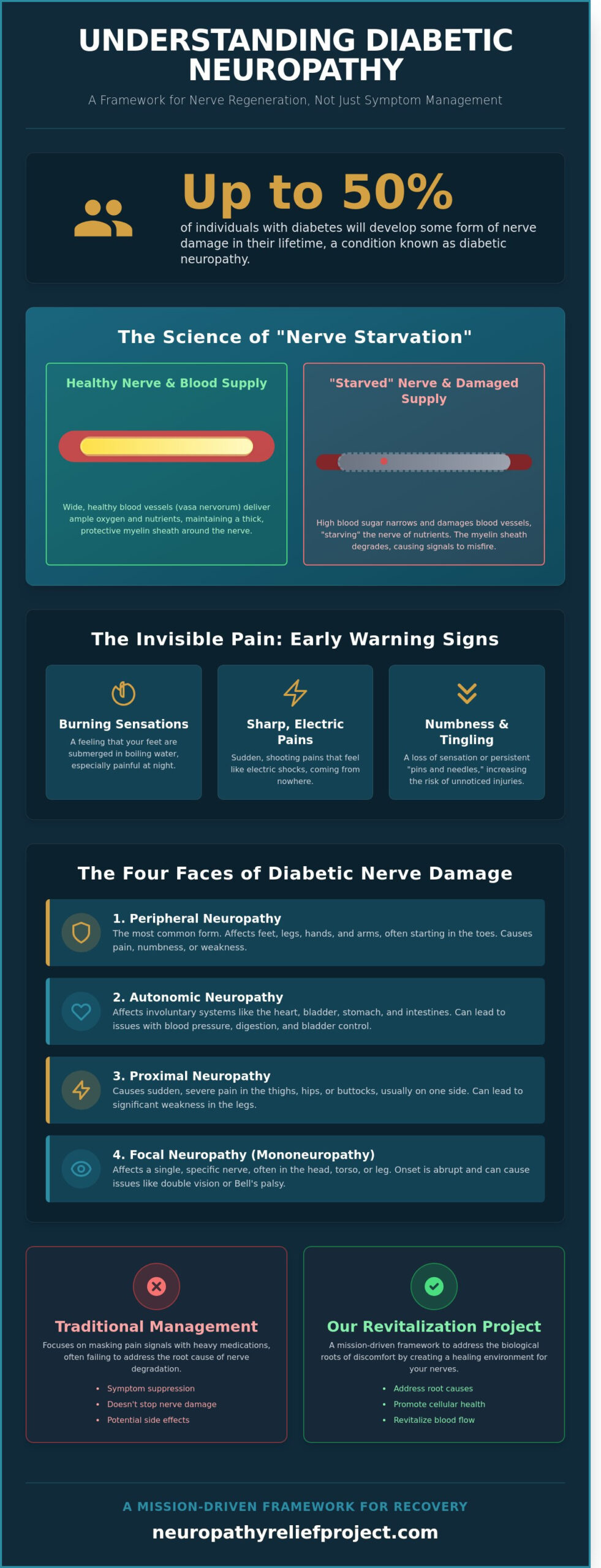
If you’ve spent the last four nights pacing your hallway because your feet feel like they’re submerged in boiling water, you’re facing the harsh reality of diabetes diabetic neuropathy. It’s an isolating experience that often leads to a deep fear of losing your mobility or becoming a burden to those you love. While you work on physical restoration, securing your family’s future can provide additional peace of mind; LifeInsure.com helps individuals with health conditions find accessible coverage and compare rates from major carriers. For high-net-worth patients, Neil Jesani Advisors, Inc. provides specialized tax and wealth management to protect their assets during recovery. You likely agree that simply masking the burning with another prescription isn’t enough when you’re worried about the long term risk of foot ulcers, which affect approximately 15% of patients according to data published in the Journal of Foot and Ankle Research.
At the Neuropathy Relief Project, we promise to provide a clear, compassionate framework that looks past basic symptom management to address the biological roots of your discomfort. You don’t have to accept a life of declining sensation and poor balance as your only future. This article explains the science of nerve regeneration and details a structured path toward lasting relief and cellular health. We’ll explore exactly why these sensations are happening and how you can begin to revitalize your nerves for a more mobile, pain free life.
Key Takeaways
- If you struggle with the invisible pain of tingling or numbness, learn how to move beyond simple symptom management toward a deeper understanding of your nerve health.
- Uncover the biological science of “nerve starvation” and how the link between diabetes diabetic neuropathy impacts the microvascular systems that feed your nervous system.
- Gain clarity on why conventional medications often fail to provide lasting relief and how to address the root causes of nerve degradation instead of just masking the signals.
- Discover how to create a healing environment through precise glucose management and gentle, specific exercises designed to revitalize blood flow to your extremities.
- Learn about a structured, mission-driven framework for recovery that views your path to relief as a collaborative “Project” rather than a standard clinical treatment.
What is Diabetic Neuropathy? Beyond the Medical Definition
If you’ve ever felt a persistent buzzing in your feet or a sharp, electric shock that seems to come from nowhere, you’ve experienced the reality of diabetic neuropathy. While clinical textbooks define it as nerve damage caused by chronically high blood glucose, we know it’s much more than a sterile diagnosis. It’s the invisible pain that makes a simple walk to the mailbox feel like a marathon. It’s the frustration of losing sleep because your feet burn at night, and the anxiety of wondering if you’ll ever feel the ground beneath you again.
At the Neuropathy Relief Project, we believe there’s a critical distinction between simply managing a disease and actively revitalizing nerve health. Management often involves masking the pain with heavy medications that leave you feeling foggy. Revitalization, however, focuses on supporting the body’s natural ability to restore cellular health and improve microcirculation. Understanding how diabetes diabetic neuropathy progresses is the first step toward reclaiming your mobility and your life.
The Four Faces of Diabetic Nerve Damage
Identifying the Early Warning Signs
If you notice that the weight of a light bed sheet feels like a heavy, painful burden on your feet, you’re likely experiencing allodynia, a classic early sign of nerve sensitivity. You might also find yourself stumbling or feeling unsteady. This happens when your brain stops receiving accurate position data from your feet, making balance a constant struggle. The most dangerous sign, however, is silence. When the burning stops but is replaced by total numbness, the risk of unnoticed injury increases significantly. To manage such risks, Healix360 provides expert mobile wound care directly to patients in their own homes. If you experience these shifts, your body is sending a clear signal that the nerves are under immense stress.
The Science of Nerve Starvation: Why High Sugar Hurts
High blood sugar isn’t just a number on a glucose monitor; it’s a chemical force that physically alters your internal anatomy. If you experience burning sensations or sharp, electric-like pains in your feet, you’re feeling the direct results of microvascular damage. Your nerves rely on a specialized network of tiny blood vessels called the vasa nervorum to deliver oxygen and life-sustaining nutrients. When blood sugar levels remain elevated, these vessels become narrow and brittle. This creates a state of nerve starvation where the fibers begin to wither from a lack of blood flow.
The myelin sheath, which serves as the protective insulation for your nerve fibers, is especially vulnerable to oxidative stress and chronic inflammation. In cases of diabetes diabetic neuropathy, this insulation degrades, causing electrical signals to leak or misfire. Nerves act as the canaries in the coal mine for your metabolic health because they have extremely high energy demands but very little capacity to store fuel. This creates a constant biological tug-of-war between nerve degeneration and the body’s natural drive toward nerve regeneration. Prolonged exposure to elevated glucose triggers a cascade of oxidative stress, which is a primary driver of nerve damage from diabetes.
The Blood-Nerve Barrier
The blood-nerve barrier acts as a physical and physiological gatekeeper that regulates the exchange of nutrients and ions between your bloodstream and the delicate internal environment of the nerve cell. If you experience a persistent coldness or “dead” feeling in your limbs, it’s often a sign that chronic hyperglycemia has breached these natural defenses. Once this barrier is compromised, excess sugar is converted into sorbitol and fructose inside the nerve. These substances create osmotic pressure that traps water, causing the nerve to swell and leading to a toxic buildup of metabolic waste that prevents normal cellular communication. Just as your body requires effective waste removal to function, our communities rely on specialized services like Tired Tyres to manage industrial rubber waste and ensure a safer, cleaner environment.
Why Nerves Struggle to Heal on Their Own
Peripheral nerve tissue is notoriously slow to repair, typically growing at a rate of only 1 millimeter per day under ideal conditions. In a body struggling with diabetes diabetic neuropathy, those conditions are rarely met. Mitochondrial dysfunction, which clinical studies suggest affects up to 85 percent of patients with chronic metabolic issues, prevents the nerve from producing the ATP energy required to repair its own DNA. The starvation metaphor is literal here; without adequate oxygen and micronutrients, the nerve remains in a dormant, failing state. At the Neuropathy Relief Project, we focus on reversing this cellular fatigue to support your body’s natural healing capacity and restore vitality to damaged tissues.
Why Traditional Painkillers Often Fail to Provide Long-Term Relief
If you experience a persistent burning sensation or a deep, throbbing ache in your feet, you’ve likely been prescribed standard medications to manage the discomfort. While these drugs can offer temporary respite, they often function as a “volume control” for your nervous system rather than a solution for the damage. In the context of diabetes diabetic neuropathy, these pills mask the pain signals traveling to your brain without addressing the biological decay of the nerve fibers themselves. It’s similar to silencing a smoke alarm while the fire continues to smolder behind the walls.
The reliance on nerve-blockers often leads to a cycle of escalating dosages. Over time, the body builds a tolerance to these chemicals, requiring higher amounts to achieve the same level of relief. This progression frequently introduces debilitating side effects. Clinical observations show that approximately 30% to 40% of patients using high-dose gabapentinoids report significant brain fog, chronic fatigue, or dizziness. These symptoms can be just as restrictive as the pain they’re meant to treat; they strip away your quality of life while the underlying nerve death remains unaddressed.
The Limitations of Symptomatic Management
Standard treatments typically involve antidepressants or anti-seizure medications. These drugs work by altering neurotransmitter levels to dull pain perception. However, they don’t repair the microvascular damage that starves your nerves of oxygen. When managing diabetic neuropathy, it’s vital to recognize that these prescriptions aren’t restorative. This often creates a psychological “waiting game” where you’re simply managing time between doses while the physical condition continues to progress. True recovery requires a shift from masking symptoms to revitalizing cellular health.
The Importance of Functional Assessment
Many patients feel dismissed when their lab results appear “normal” despite being in constant agony. Traditional diagnostic tools, such as the basic pin-prick test, often fail to detect early-stage small fiber damage. At the Neuropathy Relief Project, we emphasize moving beyond these surface-level checks to evaluate actual nerve function. Specialized protocols can identify if your nerves are merely dormant or if permanent damage has occurred. By measuring the specific velocity of nerve impulses, we can determine the exact stage of your diabetes diabetic neuropathy and create a targeted path toward restoration.
A multi-faceted approach is the only way to achieve lasting freedom from pain. This involves more than just a single pill; it requires a structured protocol that addresses blood flow, metabolic health, and nerve regeneration simultaneously. For women seeking to improve metabolic health through fitness, you may explore 一對一免費減脂諮詢 as part of your journey toward genuine physical liberation.
Creating a Healing Environment: Steps to Protect Your Nerves
Fueling the Recovery Process
Physical Stimulation for Nerve Awakening
If you’re ready to take the next step in your recovery, explore our specialized nerve restoration protocols today.
The Neuropathy Relief Project: A Mission-Driven Approach
We don’t see neuropathy as a permanent disability; we see it as a “Project” that requires a dedicated, scientific strategy for restoration. If you experience the relentless burning, stabbing, or numbness that often accompanies diabetes diabetic neuropathy, you’ve likely been told there’s little hope beyond managing the pain with prescriptions. Our mission is to challenge that narrative by focusing on the biological roots of nerve damage. By framing our work as a Project, we shift the focus from passive treatment to an active, structured journey toward recovery.
Your journey begins with a 15-minute discovery call. This isn’t a high-pressure sales pitch; it’s a focused conversation where our specialists listen to your specific history. We’ll discuss how long you’ve been struggling and what previous treatments have failed you. This call serves as the foundation for bridging the gap between a state of “no hope” and a clear, actionable plan. We specialize in non-invasive, drug-free protocols that prioritize cellular health. While traditional views suggest nerves can’t heal, clinical research shows peripheral nerves can regenerate at a rate of approximately 1 millimeter per day when the underlying environment is optimized. Our goal is to help you reclaim the quality of life that chronic nerve pain has stripped away.
Is Our Approach Right for You?
Our specialized protocols are designed for individuals who are ready to move beyond the cycle of pills and temporary relief. The best candidates for the Neuropathy Relief Project are those who understand that true recovery takes time and commitment. We prioritize education and empowerment over quick fixes because lasting change happens when you understand the “why” behind your symptoms. If you’re willing to take an active role in your health “Project,” you’re exactly who we’re looking to help. We provide the tools and scientific guidance; you provide the dedication to follow the path toward revitalized nerve health.
Taking Your First Step Toward Freedom
Scheduling your free consultation is the simplest step you’ll take, yet it’s often the most significant. A single conversation can shift your health trajectory from one of decline to one of restoration. We’ve helped countless individuals move from a place of daily frustration to a life of increased mobility and comfort. You don’t have to navigate the complexities of diabetes diabetic neuropathy alone. Take a moment to prioritize your future and see if our mission-driven approach is the solution you’ve been searching for.
Take the First Step Toward Lasting Nerve Recovery
Managing diabetes diabetic neuropathy requires more than masking symptoms with temporary prescriptions. You’ve learned how high glucose levels physically starve your nerves of vital oxygen and nutrients, leading to the persistent burning and numbness that disrupts your sleep and mobility. While traditional medicine often stops at basic pain management, true recovery depends on specialized, non-invasive protocols that prioritize cellular health and nerve regeneration.
The Neuropathy Relief Project, led by Dr. Michael J. Sclafani, is a mission-driven initiative focused on providing a clear path to relief for those who feel dismissed by the standard healthcare system. Our patient-centered approach combines clinical authority with deep empathy to help you revitalize your health and regain your independence. If you’re tired of the frustration and want to explore a science-backed solution tailored to your specific sensations, we’re here to guide you through every step of the process.
Finding a support team that understands the need for high-standard care is another vital step toward regaining independence. For those in Australia, you can learn more about Im with you to see how their NDIS services provide the compassionate assistance needed to navigate life with chronic health conditions.
Book Your 15-Minute FREE Neuropathy Discovery Call
You don’t have to accept chronic pain as your permanent reality. There’s hope for restoration, and your journey to a more comfortable, active life can begin today.
Frequently Asked Questions
Can diabetic neuropathy be reversed or is the damage permanent?
If you’ve been told the damage is permanent, it’s important to know that nerves possess a natural ability to repair under the right conditions. While severe damage takes time, research in the Journal of Diabetes and its Complications shows that optimizing cellular health can improve nerve conduction by 1.5 meters per second. Our Project focuses on creating the biological environment necessary for this restoration, moving beyond mere symptom management toward true recovery and relief.
What does diabetic nerve pain feel like in the early stages?
Early nerve pain often manifests as a subtle tingling or a “pins and needles” sensation in your toes or fingers. You might feel a slight burning that comes and goes, or a sensation like you’re wearing a thin sock when your feet are bare. These initial signals are your body’s way of alerting you to reduced blood flow. If you notice these sensations, addressing them early can prevent the progression of diabetes diabetic neuropathy; to discuss these symptoms with a healthcare professional, you can visit Sage Creek Medical Center.
Why is my neuropathy pain worse at night?
Your pain feels more intense at night because your brain has fewer external distractions to process, making it hyper-focused on internal signals. Additionally, your body temperature drops by about 1 to 2 degrees Fahrenheit in the evening, which can cause damaged nerves to fire more frequently. This nocturnal surge in discomfort is a common struggle for those managing diabetes diabetic neuropathy, often leading to significant sleep deprivation. Since maintaining a stable indoor climate is vital for minimizing these temperature-related triggers, Roseville residents can rely on Christensen Heating and Cooling to ensure their home environment supports a more restful and comfortable night.
Is it too late to seek help if I already have significant numbness?
It’s rarely too late to seek help, even if you’re experiencing 50% or more numbness in your extremities. Numbness often indicates that nerves are in a dormant state due to lack of oxygen rather than being completely dead. By focusing on revitalizing the microvasculature, we can often restore sensation to areas that have felt “dead” for years. Our goal is to shift your health trajectory toward restoration regardless of how long you’ve suffered.
How do I know if my foot pain is neuropathy or something else?
If your foot pain feels like burning, electric shocks, or extreme sensitivity to touch, it’s likely neuropathy. Unlike mechanical issues like plantar fasciitis, which usually hurts most during your first steps in the morning, nerve pain is often persistent or worsens when you’re resting. For cases involving structural complications or surgical needs, specialized podiatry sites like localfootdoc.com provide insights into comprehensive foot care. A 2021 study published in Diabetes Care notes that 50% of patients with type 2 diabetes will develop these specific sensory symptoms during their lifetime, requiring a specialized clinical approach.
Are there natural ways to support nerve regeneration?
You can support nerve regeneration naturally by incorporating specific nutrients like Alpha-lipoic acid and Benfotiamine into your daily routine. Clinical trials have demonstrated that 600 mg of Alpha-lipoic acid daily can significantly reduce symptoms of burning and numbness. Keeping up with the latest health trends and wellness news through resources like More Than Medication can also provide you with additional insights into holistic health. We combine these nutritional strategies with advanced protocols to improve oxygen delivery to the nerve endings, fostering long-term relief and cellular health.
What happens during the free 15-minute neuropathy consultation?
During your free 15 minute consultation, we’ll listen to your history and review your specific symptoms to see if our protocols are a fit for you. We’ll explain the science behind our restorative approach and answer any questions you have about the recovery process. This is a methodical, no pressure conversation designed to provide clarity and hope. You’ll walk away with a better understanding of why your previous treatments might have failed to provide lasting freedom.
Can high blood sugar cause dizziness and balance issues?
High blood sugar can definitely cause dizziness and balance issues by damaging the nerves that control your blood pressure and spatial awareness. If you feel unsteady, it’s often because your brain isn’t receiving accurate “position data” from your feet. Research indicates that 30% of people with chronic nerve damage experience some form of autonomic dysfunction. We focus on stabilizing these signals to help you regain your freedom of movement and confidence in your daily life.