

What if the most taxing part of your medical journey isn’t the physical sensation of a needle, but the agonizing weeks spent in a diagnostic “waiting room”? If you’re asking how long do peripheral neuropathy tests take, you already know that every day without a plan feels like lost time while you struggle with burning or numbness. You’re likely frustrated by a healthcare system that moves at a glacial pace. We understand that the “waiting game” creates a unique kind of anxiety that is often harder to manage than the physical symptoms themselves.
Understanding the diagnostic timeline is the first step in reclaiming your peace of mind and preparing for recovery. This guide provides a definitive schedule for your journey, from the 45 minute clinical exam to the 14 day window typically required for specialized lab results. You’ll learn what to expect during nerve conduction studies and how the Neuropathy Relief Project helps you bypass traditional delays to start your recovery sooner. We’ve mapped out every stage so you can stop wondering when relief will arrive and start focusing on your restoration.
Key Takeaways
- Navigate the typical 1 to 3-week diagnostic journey, starting from your initial sensory mapping to the finalization of your recovery plan.
- Learn exactly how long do peripheral neuropathy tests take during gold-standard procedures like EMG and NCS, which typically require 60 to 90 minutes.
- Identify the role of specialized lab work and imaging in uncovering underlying causes like metabolic imbalances or physical nerve compression.
- Understand when to expect your results, from the immediate verbal feedback following your exam to the formal report delivered within a business week.
- Discover how the Neuropathy Relief Project can help you bypass the “waiting game” and begin your journey toward revitalization and freedom from pain sooner.
The Diagnostic Timeline: What to Expect During Your Initial Neuropathy Assessment
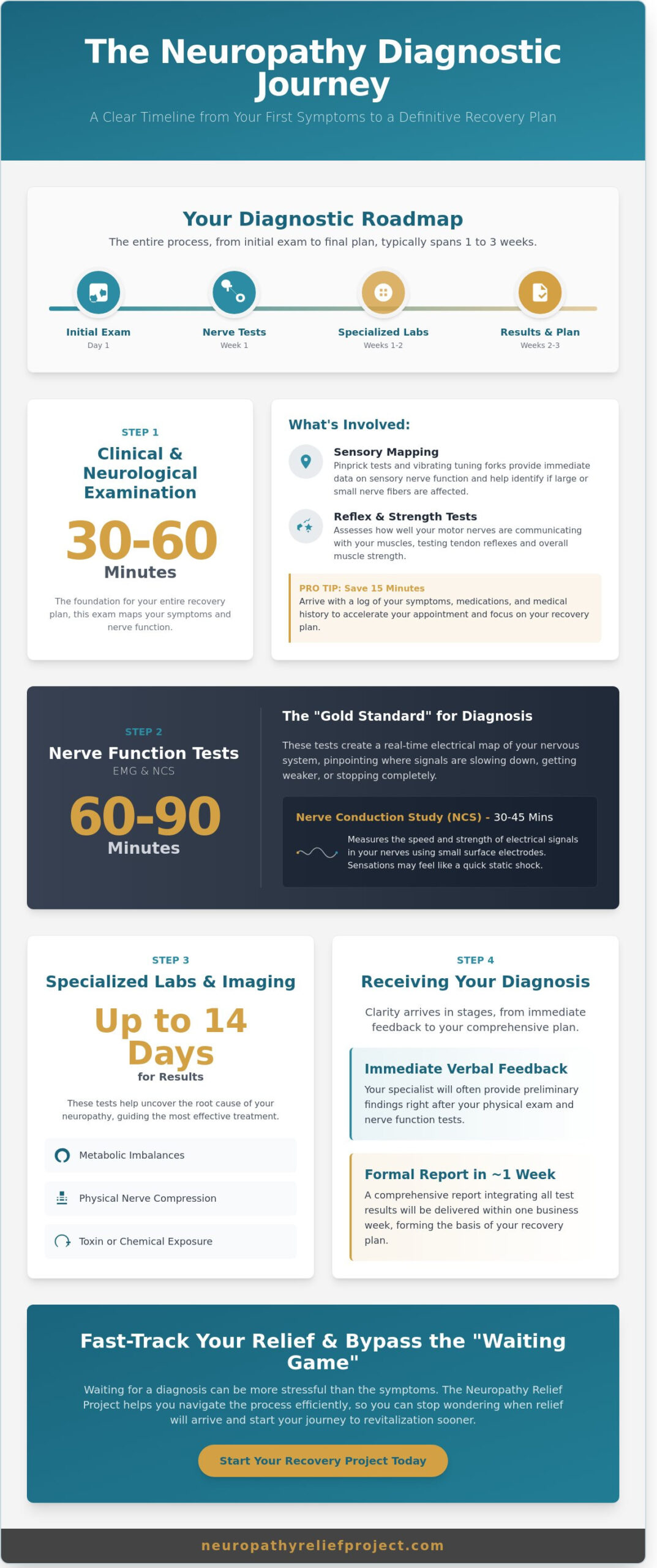
The journey toward reclaiming your mobility and comfort begins with a structured diagnostic window. Generally, a standard diagnostic path spans 7 to 21 days from your first physical exam to the final review of your results. If you experience the sharp stabs of “electric” pain or the dull ache of persistent numbness, understanding this timeline is the first step in your recovery project. This structured approach helps eliminate the anxiety of the unknown, providing a clear map toward revitalization.
Knowing exactly how long do peripheral neuropathy tests take allows you to plan for your treatment rather than worrying about the process. Early assessment is vital because it stops the progression of nerve fiber degradation before it becomes permanent. Within the first 14 days of noticing symptoms, the potential for cellular health restoration is at its peak. Waiting months to seek a diagnosis can lead to a 30 percent increase in the risk of irreversible damage to the myelin sheath. By acting quickly, you’re choosing a path of freedom and long-term relief.
The Physical and Neurological Examination (30–60 Minutes)
During this 60 minute window, your specialist performs a series of sensory-focused assessments to map your symptoms. This isn’t just a routine checkup; it’s the foundation for your entire recovery plan. They’ll test your tendon reflexes and muscle strength to see how well your motor nerves are communicating. The “pinprick” test and the use of a vibrating tuning fork provide immediate data about your sensory nerve function. These tests help determine if peripheral neuropathy is affecting your large or small nerve fibers. While the exam itself is brief, the insights gained dictate every clinical step that follows. If you feel a loss of temperature sensation in your feet, this immediate data point tells the specialist exactly where to focus the upcoming electrodiagnostic tests.
Preparing Your Medical History for a Faster Appointment
You can actively accelerate your diagnosis by arriving prepared. Document the exact date you first noticed burning or tingling sensations. List all current medications and any history of toxin exposure, such as heavy metals or specific industrial chemicals. A well-prepared patient can often reduce the initial consultation time by 15 minutes, allowing more time for deep-dive questions about nerve regeneration. This preparation ensures your specialist spends less time on clerical intake and more time on the science of your relief. If you bring a 30 day log of your pain levels and triggers, it provides a roadmap that might otherwise take several follow-up visits to establish. This collaborative effort is the hallmark of a successful recovery project.
Understanding Nerve Function Tests: EMG and NCS Durations
If you’re struggling with the relentless tingling or sharp pains of nerve damage, these tests represent a crucial step toward clarity. Doctors consider Nerve Conduction Studies (NCS) and Electromyography (EMG) the gold standard for diagnosing peripheral nerve issues. Usually, these two tests happen during a single session lasting between 60 and 90 minutes. This timeframe allows the specialist to create a real-time map of your peripheral nervous system, showing exactly where signals are slowing down or stopping altogether. If you experience significant discomfort or need a brief break, the technician can pause the procedure, which might extend the total session time by 10 or 15 minutes. Understanding how long do peripheral neuropathy tests take helps reduce the anxiety often associated with these clinical evaluations.
Nerve Conduction Study (NCS) Timeline (30–45 Minutes)
The NCS portion typically requires 30 to 45 minutes of your time. During this phase, a technician attaches small surface electrodes to your skin over specific nerve pathways. These sensors measure the speed and strength of electrical signals as they travel through your body. According to MedlinePlus, EMG and Nerve Conduction Studies are essential for identifying the precise location of nerve damage. You’ll feel a series of tiny electric shocks that might feel like a static discharge or a quick pulse. While these sensations can be startling, they’re necessary to ensure the data is accurate enough to guide your recovery. A Nerve Conduction Study is a measurement of signal velocity and strength across specific nerve segments.
Electromyography (EMG) Timeline (30–45 Minutes)
The second half of the appointment focuses on the muscles themselves. This part takes another 30 to 45 minutes as the specialist inserts very fine, sterile needles into specific muscle tissues. These needles act as microphones to record electrical activity both while the muscle is at rest and during a slight contraction. This step is vital because it helps your care team distinguish between primary muscle disorders and nerve damage that’s causing muscle weakness. Planning for these appointments becomes easier once you realize how long do peripheral neuropathy tests take in a clinical setting. If you feel tense, try to focus on deep, rhythmic breathing; staying relaxed ensures the most accurate readings and can actually make the needles feel less intrusive. At the Neuropathy Relief Project, we believe that understanding these diagnostic results is the first step toward revitalizing your cellular health and reclaiming your freedom from pain.
Beyond the Wires: How Long Do Imaging and Lab Tests Take?
If you experience the persistent burning or “pins and needles” of nerve damage, you know that the physical examination is only the first step. To understand the root cause of your symptoms, your specialist will likely order imaging or laboratory work. These secondary tests are almost always outpatient procedures, easily fitting into a single morning or afternoon appointment. When patients ask how long do peripheral neuropathy tests take, they are often surprised to learn that the actual time spent in the clinic is brief, while the wait for laboratory analysis requires the most patience.
Imaging tools like MRI or CT scans are frequently used to rule out mechanical issues. If a herniated disc or a tumor is pressing on a nerve, these scans will reveal the physical compression within 30 to 60 minutes of imaging time. This step is vital to ensure your symptoms aren’t caused by a “pinched” nerve that requires surgical intervention rather than metabolic support. Most imaging centers provide the raw images quickly, but a radiologist’s formal report typically takes 24 to 48 hours to reach your doctor’s desk.
Blood Work and Lab Result Timelines (15 Minutes + 3 to 5 Days)
The actual blood draw is nearly instantaneous, usually requiring less than 15 minutes of your time. However, the lab analysis is the primary bottleneck in this phase. Doctors look for specific markers like fasting glucose levels to check for diabetes, Vitamin B12 deficiencies, and inflammatory signals. While standard panels often return in 72 hours, specialized metabolic panels looking for rare autoimmune markers or heavy metal toxicity can take up to 7 full days to arrive from the lab. This data is essential for the Neuropathy Relief Project to create a tailored path toward your cellular health.
Skin and Nerve Biopsies (20 to 40 Minutes)
If your standard tests appear normal but you still feel significant pain, a skin biopsy may be necessary to evaluate small fiber neuropathy. This 20 to 40 minute procedure involves taking a tiny 3mm sample of skin, usually from the ankle or thigh, to check nerve fiber density. Nerve biopsies are far rarer and involve a more invasive surgical approach with a longer recovery period. For either test, you should expect a 7 to 14 day wait for a specialist pathologist to finalize the report. Understanding how long do peripheral neuropathy tests take helps you manage expectations as we work together toward your recovery and long-term relief.
The Waiting Game: When to Expect Your Neuropathy Diagnosis Results
If you’ve just finished an Electromyography (EMG) or Nerve Conduction Study (NCS), you’re likely physically and emotionally exhausted. These tests are demanding. The good news is that most neurologists provide a preliminary verbal summary immediately after the procedure. They might tell you if they noticed slowed signals or specific areas of damage. However, this isn’t the final word. A finalized, written diagnostic report usually takes 5 to 7 business days to reach your primary doctor’s office. This gap exists because the raw data requires careful calculation and comparison against standardized norms to ensure accuracy.
Understanding how long do peripheral neuropathy tests take to process helps manage the anxiety of the waiting game. While the physical test might be over in 60 minutes, the analytical phase is just beginning. Waiting for a clinical name for your chronic pain is an emotional burden. It’s common to feel a mix of hope and dread during this week of silence. At the Neuropathy Relief Project, we recognize that this period of uncertainty can feel just as debilitating as the physical tingling and numbness itself.
Factors That Can Delay Your Results
Clinical accuracy takes time; it shouldn’t be rushed. If your case is complex, a specialized neurologist might perform an “over-read” to confirm the initial findings. Coordination between separate imaging centers and your doctor’s electronic portal can also add 24 to 48 hours to the process. Additionally, insurance authorization for follow-up specialized tests, like a skin punch biopsy, often adds a 48 to 72 hour delay to the scheduling phase. These bureaucratic hurdles are frustrating when you’re living with constant burning sensations, but they are part of the standard medical workflow.
Navigating Diagnostic Uncertainty
It’s a common, heartbreaking scenario: you feel like your feet are on fire, yet your test results come back “normal.” This happens because standard EMG and NCS tests only measure large fiber nerves. They often miss small fiber neuropathy, which affects the tiny nerve endings responsible for pain and temperature. If your tests are inconclusive, it doesn’t mean your pain isn’t real. It simply means the tools used weren’t sensitive enough to capture the damage at a cellular level.
If you experience “negative” results despite your symptoms, don’t lose hope. A “normal” test just means a different approach is needed. We focus on the science of nerve regeneration and cellular health rather than just electrical speed. Seeking a specialist who looks beyond the basic electrical signals can be the turning point in your recovery. You deserve a path that leads to restoration and freedom from pain.
If you’re tired of waiting for answers and want to explore a specialized path toward recovery, discover how the Neuropathy Relief Project approaches nerve health.
Fast-Tracking Your Relief: Why a Consultation is the Smartest First Step
If you find yourself asking how long do peripheral neuropathy tests take, you’re likely already dealing with the daily burden of stinging, numbness, or loss of balance. Traditional diagnostic pathways often require multiple appointments, referrals, and weeks of waiting for lab results. You don’t have to stay stuck in this cycle of clinical delays before you begin understanding your options for real relief. While gathering data is part of the journey, your path to comfort shouldn’t be held hostage by administrative bottlenecks.
The Neuropathy Relief Project prioritizes rapid access to professional guidance because we know that nerve damage doesn’t pause for a hospital’s schedule. Our mission is to move you quickly from the frustration of testing to the hope of recovery. We bridge the gap between rigorous clinical evidence and natural restoration, ensuring that your treatment plan is as proactive as it is scientifically sound. It’s about shifting the focus from what’s wrong to how we can make it right.
The 15-Minute Free Consultation Advantage
We offer a zero-cost discovery call designed to evaluate your specific symptoms without the clinical coldness often found in large hospital systems. During this brief window, we can determine your eligibility for advanced recovery protocols, often in less time than a standard office wait at a general practitioner’s clinic. While traditional specialist wait times can exceed 20 days in many regions, we provide a direct line to expertise. This 15-minute free consultation serves as your first bridge toward revitalizing your nerve health by providing immediate clarity on your situation.
Your Path Toward Nerve Regeneration and Freedom
True recovery requires moving beyond the mindset of just managing pain with temporary fixes. Our approach focuses on cellular health and the biological potential for nerve regeneration to address the root of the problem. If you experience the constant distraction of burning feet or the fear of a fall due to numbness, our goal is to help you reclaim your life from these physical constraints. We use a methodical, evidence-based system to help you understand the timeline of your own healing process. Knowing how long do peripheral neuropathy tests take is only useful if it leads to a definitive plan for restoration.
You deserve a path that leads away from chronic discomfort and toward lasting freedom. Stop waiting for the system to catch up to your needs and start focusing on your cellular health today. Schedule your 15-minute FREE phone Consultation today.
Start Your Journey Toward Lasting Nerve Recovery
Navigating the diagnostic process doesn’t have to feel like a permanent state of limbo. While a standard initial assessment often takes 45 to 60 minutes, and specialized EMG or NCS procedures typically require 60 to 90 minutes of clinical time, these steps are vital for creating your personalized roadmap. Understanding exactly how long do peripheral neuropathy tests take helps you manage your schedule while prioritizing the cellular health of your nervous system. Every diagnostic hour spent is an investment in identifying the root cause of your burning, numbness, or tingling sensations.
The Neuropathy Relief Project, led by Dr. Michael J. Sclafani, focuses on a mission-driven approach that prioritizes non-invasive protocols and long-term nerve regeneration. We believe you shouldn’t have to settle for just managing pain when restoration is possible. Our team provides a compassionate environment where your physical struggle is met with clinical expertise and a clear path toward liberation from chronic symptoms. You’ve waited long enough for answers; it’s time to shift your focus toward a future defined by mobility and comfort.
Book your 15-minute FREE phone Consultation to discuss your neuropathy relief options.
You don’t have to walk this path alone. We’re here to guide you through every stage of your recovery with the specialized care you deserve.
Frequently Asked Questions
Is the EMG test for neuropathy painful?
Most patients experience a sensation of mild cramping or sharp twinges during an electromyography (EMG) test. While the needles are as thin as acupuncture needles, the 30 to 60 minute procedure involves small electrical pulses that may feel like a static shock. If you experience anxiety about needles, our Project specialists suggest focusing on deep breathing. Data from the American Association of Neuromuscular and Electrodiagnostic Medicine shows that 90 percent of patients tolerate this diagnostic tool without needing sedation.
Can I drive myself home after peripheral neuropathy testing?
You can typically drive yourself home immediately after most nerve conduction studies or blood draws. These non-invasive procedures don’t require sedation or heavy medication that impairs your motor skills. If your diagnostic visit involves a skin biopsy or a more intensive nerve biopsy, you might feel minor soreness at the site. However, unless your doctor specifically administers a sedative for a complex procedure, you’re safe to operate a vehicle and return to your daily routine.
How much does a full battery of neuropathy tests cost?
The cost of a diagnostic workup varies significantly based on your insurance coverage and the specific tests your neurologist orders. According to 2023 data from Healthcare Bluebook, a standard EMG and nerve conduction study can range from $500 to over $1,500 without insurance. Blood panels for vitamin deficiencies or autoimmune markers often add several hundred dollars to the total. We recommend contacting your provider to verify your out of pocket responsibility before your appointment to ensure a stress-free experience.
What happens if my neuropathy tests come back normal but I still have pain?
It’s common for standard EMGs to return normal results even when you feel intense burning or tingling because these tests only measure large nerve fibers. If you experience persistent symptoms despite clean test results, you likely have small fiber neuropathy, which affects the tiny nerves that standard diagnostics often miss. Research published in the Journal of the American Medical Association indicates that up to 50 percent of patients with neuropathy symptoms have normal large-fiber tests. We focus on these hidden causes to help you reclaim your freedom.
Do I need to fast before my neuropathy blood tests?
You should generally fast for 8 to 12 hours before your blood tests to ensure your blood sugar and metabolic markers are accurate. Since diabetes and pre-diabetes cause approximately 60 percent of peripheral neuropathy cases in the United States, an accurate fasting glucose or A1C reading is vital for your diagnosis. Drink plenty of water during this time to stay hydrated, as this makes the blood draw easier. Your clinical team will confirm if you need to pause specific supplements before the lab work.
Can a 15-minute consultation really help me understand my neuropathy?
A focused 15 minute consultation provides enough time to review your primary symptoms and determine if our scientific approach aligns with your health goals. During this session, we analyze the specific sensations you feel, such as numbness or electric shocks, to identify patterns in your nerve health. This initial meeting serves as a bridge to a more comprehensive evaluation. It’s a structured way to stop feeling lost in the healthcare system and start your journey toward nerve regeneration and relief.
Is there a way to speed up the neuropathy diagnostic process?
You can reduce the time it takes to get answers by arriving with a detailed log of your symptoms and a complete list of your current medications. Many patients wonder how long do peripheral neuropathy tests take because they’re eager to start a recovery protocol. By consolidating your medical history and previous lab results into one folder, you help your specialist skip redundant steps. This preparation can shave 2 to 3 weeks off the traditional diagnostic timeline, allowing you to begin your personalized relief Project sooner.