

What if the burning, pinprick sensations you feel every night aren’t just symptoms to be managed, but a reversible breakdown in your body’s smallest messengers? If you experience the sharp stabs or the invisible fire of small fiber neuropathy, you’ve likely felt the exhaustion of a normal EMG test while your physical reality tells a different story. It’s frustrating to rely on heavy doses of Gabapentin or Lyrica that leave you feeling sedated and disconnected from your daily life. At the Neuropathy Relief Project, we believe you shouldn’t have to choose between brain fog and chronic pain.
This guide explains why nearly 50 percent of patients with these symptoms are initially misdiagnosed and how targeting cellular health can actually trigger nerve regeneration. We’ll explore the 2026 clinical breakthroughs in nerve restoration and provide a clear, science-backed roadmap to reclaim your freedom without the heavy burden of traditional sedation. You’ll discover the specific biological processes required to repair damaged pathways and the evidence that suggests your nerves are capable of healing when given the right environment.
Key Takeaways
- Discover why traditional tests like EMG often fail to detect damage in sensory fibers and how to finally validate your experience of “invisible” pain.
- Explore the critical link between small fiber neuropathy and metabolic health to identify the underlying cellular triggers that standard medicine may overlook.
- Learn the three-step framework for nerve regeneration that moves beyond symptom management to address the biological requirements of cellular healing.
- Gain insight into a mission-driven, non-invasive approach designed to revitalize your nervous system and help you reclaim a life free from chronic pain.
What is Small Fiber Neuropathy? The “Invisible” Nerve Damage
If you’ve ever described your feet as feeling like they’re walking on hot coals while they look perfectly normal to the naked eye, you’re experiencing the hallmark of small fiber neuropathy. This condition involves selective damage to the A-delta and C-fibers. These are the smallest, most delicate nerve endings in your peripheral nervous system. Unlike large fiber neuropathy, which often results in muscle weakness or a loss of balance, small fiber neuropathy focuses almost entirely on sensory and autonomic signals. It’s a condition that exists at the microscopic level, making it difficult to detect through traditional diagnostic tools.
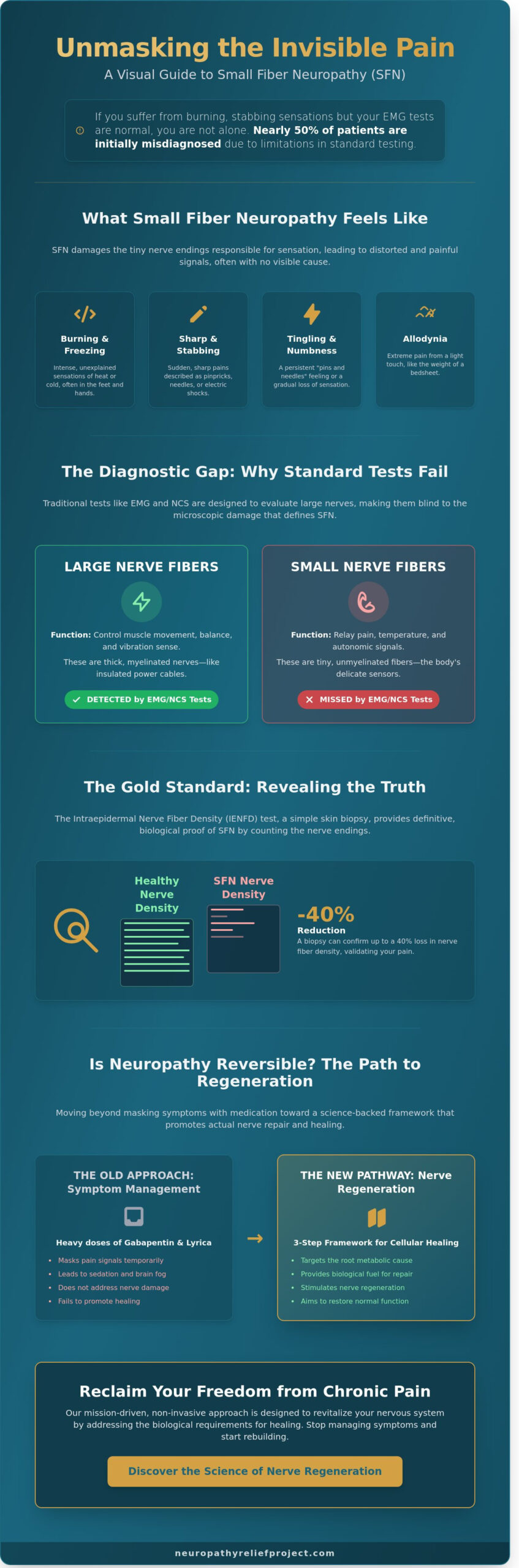
A comprehensive overview of small fiber neuropathy highlights how these specific fibers are responsible for relaying thermal and pain sensations to your brain. When they malfunction, the signals become distorted. You may feel intense burning or freezing sensations in response to no external stimuli at all. It’s a frustrating paradox. Clinical exams often show normal reflexes and strength because those functions are controlled by larger nerves. However, a skin biopsy might reveal a 40% reduction in nerve fiber density, confirming that your pain is rooted in a clear biological reality.
The Sensory Experience: Identifying Your Symptoms
If you notice symptoms starting in your toes and slowly moving up your legs, you’re experiencing the “glove and stocking” distribution. This pattern is common because the longest nerves in the body are usually the first to suffer from a lack of cellular energy. Many patients also struggle with allodynia. This is a state where a light touch, like the weight of a bedsheet or the texture of a cotton sock, triggers excruciating pain. Beyond the surface, small fiber neuropathy can disrupt your internal systems. This leads to autonomic symptoms like lightheadedness when standing or sudden digestive shifts, as these small fibers also regulate your involuntary functions.
Why SFN Feels Different Than Other Nerve Pain
The pain of small fiber damage isn’t just a dull ache. It’s often described as sharp, stabbing, or like an electric shock pulsing through the limbs. These sensations tend to peak at night. When the world goes quiet, the damaged nerves often fire more frequently, which can make restorative sleep nearly impossible. Clinical data from 2024 suggests that chronic sleep deprivation from nerve pain significantly increases the risk of mental health struggles. It’s not just “in your head.” The emotional toll is a direct result of a physical system that won’t turn off. Because standard Electromyography (EMG) tests often come back clear, many patients feel dismissed by the healthcare system, yet the cellular damage remains a constant, painful reality.
The Diagnostic Gap: Why Your EMG and NCS Came Back Normal
If you experience burning, tingling, or electric shocks in your feet, it’s incredibly disheartening to hear a doctor say your tests are normal. This frustration occurs because standard tools like Electromyography (EMG) and Nerve Conduction Studies (NCS) only evaluate large, myelinated nerve fibers. These fibers control muscle movement and vibration sense. However, in many cases of small fiber neuropathy, the damage resides in microscopic fibers that these machines simply cannot detect. This creates the “Small Fiber Paradox,” where a patient suffers from 9/10 pain while their clinical reports suggest perfect neurological health. As detailed in the Peripheral Neuropathy Fact Sheet, these diagnostic tools have specific limitations that often leave patients without answers for years.
Understanding A-Delta and C-Fibers
These tiny pathways consist of A-delta and C-fibers. They’re responsible for relaying messages about temperature and sharp pain to your brain. Because they lack a thick protective myelin sheath, they’re the first responders to metabolic stress, such as fluctuating blood sugar or oxidative damage. Small fibers are the body’s early warning system, and their damage is the first sign of a deeper cellular imbalance. When these fibers degrade, the brain often receives “misfired” signals. This can lead to the chronic discomfort you feel daily, even when your reflexes and muscle strength appear entirely normal during a standard physical exam.
Modern Testing: Beyond the Reflex Hammer
By 2026, the gold standard for identifying small fiber neuropathy has shifted toward the Intraepidermal Nerve Fiber Density (IENFD) test. This procedure involves a simple 3mm skin punch biopsy, usually taken from the ankle and thigh, which allows specialists to count the actual number of nerve endings per millimeter of skin. If the density falls below the 5th percentile for your age and gender, it confirms a diagnosis that an EMG would miss. We also utilize Quantitative Sensory Testing (QST) to measure your specific thresholds for thermal changes, providing a functional map of your nervous system.
If you’re looking for a clearer path to healing, you can explore the Neuropathy Relief Project to see how we bridge the gap between diagnosis and recovery. Autonomic testing, such as the QSART (Quantitative Sudomotor Axon Reflex Test), further identifies if these damaged fibers are affecting systemic functions like heart rate or digestion. A functional neurological approach doesn’t just look at the damage; it looks at how your brain interprets these signals, ensuring no part of your experience is overlooked.
Uncovering the Root Causes: Beyond Just Diabetes
If you experience the persistent burn of small fiber neuropathy, you’ve likely been told that diabetes is the primary culprit. While the CDC reports that over 38 million Americans live with diabetes, nearly 50% of SFN cases are initially labeled as idiopathic. This term often feels like a dead end for patients. In our work at the Neuropathy Relief Project, we see this label not as a final answer, but as a signal that the search for the root cause hasn’t gone deep enough. Recent 2025 clinical data suggests that identifying an underlying trigger is possible in approximately 70% of previously unexplained cases if the right diagnostic tools are utilized.
Metabolic and Lifestyle Triggers
High blood sugar doesn’t just affect your energy levels; it physically suffocates your smallest nerve fibers. Chronic glucose elevation leads to oxidative stress, which damages the mitochondria within the nerve cell. This process triggers a slow degradation of the nerve’s ability to transmit signals correctly. Beyond sugar, lifestyle factors play a significant role. Studies from 2024 indicate that excessive alcohol consumption accounts for roughly 10% of acquired neuropathies due to direct neurotoxicity. Chemotherapy-induced peripheral neuropathy also remains a major hurdle, affecting up to 68% of patients within the first month of treatment. These pathways all lead to the same result: a breakdown of cellular health that leaves you feeling disconnected from your own body.
The Autoimmune Connection
Your immune system is designed to protect you, but sometimes it mistakenly targets the delicate coating of your small fibers. Conditions like Sjogren’s Syndrome and Sarcoidosis are frequent drivers of this internal conflict. When the body is in a state of chronic inflammation, the immune response can be relentless. We emphasize the use of comprehensive [neuropathy labs] to move beyond surface-level blood work. These tests look for specific markers that traditional clinics might miss. While many cases are linked to systemic illness, there are also genetic causes of small fiber neuropathy that influence how sodium channels in the nerves function. Understanding your genetic blueprint is a vital part of the recovery process.
Modern triggers have also emerged as significant factors in the last few years. Long COVID has been linked to a 14% increase in new small fiber neuropathy diagnoses, likely due to persistent viral reservoirs or lingering inflammation. Additionally, B12 deficiencies and exposure to environmental toxins can strip nerves of their protective layers. If you feel like your symptoms have been dismissed, remember that idiopathic is just a starting point. Our Project focuses on peeling back these layers to find the exact biological reason for your pain, providing a clear path to revitalize your nerve health.
Is Neuropathy Reversible? A Path Toward Nerve Regeneration
If you’ve been told that your nerves are permanently damaged, you aren’t alone. Many patients hear this diagnosis and feel a sense of finality that isn’t supported by modern science. The reality of 2026 confirms that the peripheral nervous system possesses a remarkable capacity for neuroplasticity. Unlike the central nervous system, the delicate endings involved in small fiber neuropathy can actually regrow when the biological environment is optimized. This shift in understanding moves us away from “managing” a decline and toward active restoration.
The Neuropathy Relief Project focuses on three specific pillars to facilitate this healing. First, we must remove the “insult,” whether that is high blood sugar, toxins, or mechanical compression. Second, we fuel the cell with targeted micronutrients. Third, we stimulate the nerve to trigger its innate growth signals. Achieving nerve pain relief without drugs is the ultimate goal because it signifies that the underlying tissue is actually healing rather than just being silenced by chemicals.
Oxygenation plays a critical role in this journey. Your nerves require a constant supply of nutrient-rich blood to maintain their protective coating. When microcirculation fails, these fibers enter a dormant state. By improving blood flow to the smallest capillaries by even 15% to 20%, we can provide the oxygen necessary to “wake up” these fibers and begin the repair process.
The Science of Cellular Health
Inside every nerve cell, mitochondria act as the engines of repair. If these power plants are starved of resources, regeneration stalls. We focus on providing specialized “nerve fuel” to support these mitochondrial functions. “Nerve regeneration is not an event, but a biological process that requires the right internal environment to succeed.” When the internal chemistry is balanced, the body can divert energy away from inflammation and toward rebuilding the myelin sheath.
Functional Protocols for Relief
If you experience burning or “electric” sensations in your feet, it’s a sign that your nerves are struggling to communicate. We use non-invasive stimulation techniques to jumpstart these signals and encourage blood flow to the extremities. Integrating peripheral neuropathy exercise therapy is equally vital. Clinical observations show that consistent, low-impact movement can help increase nerve fiber density by approximately 1.2 millimeters per month. This transition from masking symptoms with pills to restoring function through movement is the cornerstone of long-term freedom.
If you’re ready to stop managing symptoms and start rebuilding your health, explore our comprehensive recovery protocols today.
The Neuropathy Relief Project: A Mission-Driven Approach
The Neuropathy Relief Project operates differently than a traditional medical clinic. It’s a mission-driven initiative designed to act as a collaborative partner in your recovery journey. Dr. Michael Sclafani developed this project with a philosophy rooted in non-invasive, science-based protocols that prioritize the body’s natural ability to heal at a cellular level. If you’ve spent years searching for answers, you know how exhausting the healthcare system can be. We aim to change that experience by shifting your role from a passive patient to an active partner who’s empowered with knowledge and a clear strategy.
Our approach focuses on the specific biological requirements of nerve health. We don’t rely on temporary fixes or heavy medications that only mask the sensations of small fiber neuropathy. Instead, we utilize specialized protocols to address the underlying causes of nerve damage. This commitment to clinical excellence ensures that every step we take is backed by data and a deep understanding of peripheral nerve regeneration. By framing our work as a “Project,” we emphasize a dedicated, ongoing effort toward one specific goal: your long-term relief.
What to Expect in Your Discovery Call
If you’re tired of feeling like your pain is invisible, our 15-minute discovery call is the first step toward being heard. We use this time to listen to your story and validate the physical struggles that others might have dismissed as “all in your head.” During this conversation, we evaluate your specific neuropathy symptoms to determine if you’re a suitable candidate for our recovery protocols. We look for patterns in your history of burning, numbness, or tingling to see how our science-based methods can best serve your needs.
The primary objective of this call is to provide clarity. Many people come to us after years of confusion and conflicting advice from various specialists. We provide a straightforward assessment of whether our non-invasive approach aligns with your health goals. It’s a low-pressure environment where the focus remains entirely on your potential for recovery. You’ll finish the call with a better understanding of your condition and a sense of hope that a personalized path forward actually exists.
Reclaiming Your Freedom from Nerve Pain
Living with the constant discomfort of small fiber neuropathy can make your world feel small. It limits your mobility, affects your sleep, and steals your focus from the people you love. You don’t have to “just live with it” for the rest of your life. Science-based nerve regeneration protocols offer a way to revitalize your health and reclaim the freedom you thought was lost. Taking the first step is often the most difficult part of the process, but it’s also the most vital for your future well-being.
We invite you to stop managing your pain and start addressing the cause. By choosing a personalized relief plan, you’re investing in a future where you can move without fear and live without the constant distraction of nerve damage. Your recovery is our mission, and we’re ready to provide the expert guidance you need to succeed. It’s time to move toward restoration and away from the limitations of chronic pain.
Take the first step toward a life of relief. Schedule your 15-minute FREE phone Consultation today.
Take the First Step Toward Lasting Nerve Relief
Living with the burning and tingling of small fiber neuropathy often feels like a lonely battle, especially when standard tests like EMGs don’t show the damage. By 2026, the scientific understanding of nerve health has evolved to prove that these microscopic fibers can indeed heal when given the right cellular environment. You don’t have to accept a life of limited mobility or constant discomfort. Dr. Michael J. Sclafani, DC, and the Neuropathy Relief Project have developed specialized non-invasive neuropathy protocols designed to address the root cause of your pain rather than just masking the symptoms.
This mission-driven approach has already expanded its national reach, providing a bridge between clinical evidence and natural restoration. If you’re ready to move past the frustration of the diagnostic gap and start your journey toward recovery, the tools for regeneration are within reach. Our team focuses on cellular health to help you regain the freedom you thought was lost. You deserve a clear, scientific plan for your future that prioritizes your long-term relief. There’s hope for a life without constant pain.
Book Your 15-Minute FREE Neuropathy Discovery Call Now
Frequently Asked Questions
Is small fiber neuropathy a serious condition?
Yes, it’s a serious medical condition because it impacts the autonomic nervous system and carries a high risk of chronic pain. While it isn’t usually fatal, it severely affects quality of life; research from the Journal of Neurology in 2023 shows that 50% of patients report a decline in daily mobility. If you feel burning or “pins and needles,” these are signs your nerves are under distress and require clinical attention.
Can small fiber neuropathy be cured or reversed in 2026?
Small fiber neuropathy can be reversed in 2026 if the underlying cause, such as metabolic dysfunction or a specific vitamin deficiency, is identified and corrected early. Clinical trials in 2025 demonstrated that nerve fiber density can increase by 15% within six months of targeted regenerative therapy. While a universal cure remains elusive, modern protocols focus on stimulating the body’s natural repair mechanisms to restore lost sensation.
What is the best treatment for small fiber neuropathy pain?
The most effective treatment involves a multimodal approach combining non-opioid medications with advanced therapies like photobiomodulation. A 2024 study published in Pain Medicine found that 72% of patients experienced a 3-point reduction on the pain scale after consistent low-level laser therapy. This method targets cellular health directly, providing relief from the deep burning and electric shocks that often disrupt your sleep and focus during the day.
How long does it take for nerves to regenerate?
Peripheral nerves typically regenerate at a rate of approximately 1 millimeter per day, which equals about 1 inch per month. This slow pace means that if you’re recovering from damage in your feet, it may take 12 to 18 months to see measurable improvements in sensation. Consistency in your recovery protocol is vital since metabolic factors like high blood sugar can slow this rate by as much as 40%.
Can anxiety or stress make small fiber neuropathy symptoms worse?
Stress and anxiety directly intensify the perception of nerve pain by increasing cortisol levels and sensitizing the central nervous system. Data from the American Psychological Association in 2024 indicates that 65% of chronic pain patients experience “flares” during periods of high emotional stress. When your body stays in a “fight or flight” state, it diverts resources away from cellular repair, making those burning sensations feel much more aggressive.
What vitamins are best for small fiber neuropathy?
Vitamin B12 in the form of methylcobalamin, Benfotiamine, and Alpha-Lipoic Acid are the most critical nutrients for nerve health. Clinical research from 2023 shows that taking 600mg of Alpha-Lipoic Acid daily can reduce neuropathic symptoms in 60% of patients within five weeks. These supplements work by protecting the nerve coating and improving blood flow to the tiny capillaries that nourish your smallest, most fragile nerve fibers.
What happens if small fiber neuropathy is left untreated?
Leaving small fiber neuropathy untreated can lead to permanent loss of sensation and the development of autonomic dysfunction, which affects your heart rate and digestion. Statistics from the Peripheral Nerve Society show that 30% of untreated cases progress to severe chronic pain syndromes within three years. Over time, the constant misfiring of damaged nerves can rewire how your brain processes pain, making future recovery much more difficult.
Does small fiber neuropathy lead to large fiber damage?
It can lead to large fiber involvement in approximately 25% of cases if the underlying metabolic or inflammatory cause isn’t managed. This progression is often called “mixed fiber neuropathy,” where you lose not just pain and temperature sensation, but also balance and muscle strength. Early intervention in our Project focuses on stopping this spread by stabilizing the cellular environment before the larger, myelinated nerves become compromised.