

What if the “permanent” nerve damage you’ve been told to live with is actually a cry for help from cells that are still capable of healing? If you experience the relentless burning in your feet or the frustrating numbness that makes every step feel like walking on cotton, you likely feel that your body is failing you. It’s exhausting to be handed another prescription for a pill that only masks the pain while the underlying damage continues. You deserve a diagnostic path that leads to a solution, not just a label.
A professional neuropathy assessment should do more than just give your pain a name; it should provide a roadmap for restoration. In 2026, clinical data suggests that identifying specific nerve fiber patterns can significantly improve the success rate of regeneration protocols for the 30 million Americans currently struggling with these symptoms. You’re going to discover the essential steps of a modern assessment and learn how to map your symptoms to find a path toward lasting relief. We’ll demystify complex terms like EMG and NCS to help you understand your condition’s severity and how to restore the sensation and mobility you thought were gone for good.
Key Takeaways
- Learn why standard physical exams often overlook early warning signs and how a multi-layered evaluation provides the clarity needed for a successful recovery.
- Understand the “gold standard” diagnostic tools and why a comprehensive neuropathy assessment can reveal significant nerve dysfunction even when previous tests appeared “normal.”
- Discover how to map sensory patterns like the “stocking and glove” distribution to accurately categorize your pain and identify which nerve fibers require the most attention.
- Explore the critical impact of micro-circulation and oxygenation on nerve health to uncover the hidden triggers behind symptoms often dismissed as “idiopathic.”
- Learn the vital difference between managing symptoms with medications and utilizing a restoration-based approach to revitalize nerve function and find lasting relief.
Understanding the Neuropathy Assessment Process
If you have ever left a doctor’s office feeling unheard after a basic reflex test, you aren’t alone. A standard physical exam often misses the early warning signs of nerve damage because it typically focuses on late-stage symptoms like complete loss of sensation or muscle wasting. A neuropathy assessment is a systematic review of sensory, motor, and autonomic nerve function to identify the root cause of dysfunction. This multi-layered evaluation goes beyond a simple diagnostic label to look at how your nerves are functioning in real-time.
A comprehensive peripheral neuropathy overview shows that damage is rarely a static event; it’s a progressive decline in cellular health. While traditional medicine might offer a label like “idiopathic neuropathy,” our assessment focuses on a functional evaluation. We want to know why the nerve is failing to communicate. By the time 2026 clinical standards are applied, we look for the specific triggers of dysfunction rather than just checking if you can feel a pinprick. This shift in perspective is the difference between simply managing a condition and finding a clear path toward restoration.
The Importance of Early Detection
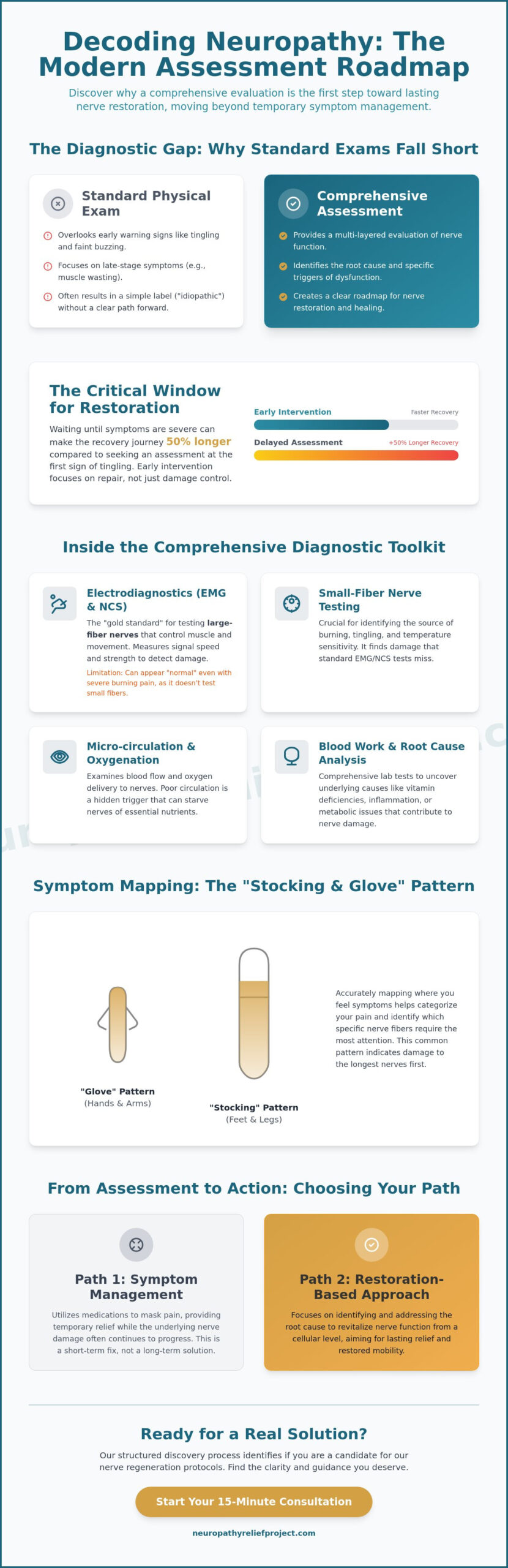
If you experience a faint buzzing in your feet or a slight “thick” feeling in your skin, your nerves are already under significant stress. These are the early warning signs that the protective myelin sheath is beginning to degrade. There’s a critical window of opportunity for nerve tissue restoration before the damage becomes irreversible. Data from 2024 clinical studies suggests that waiting until symptoms are “severe” can make the recovery journey 50% longer compared to those who seek a neuropathy assessment at the first sign of tingling. Early intervention allows us to focus on repair rather than just damage control, preventing the transition from intermittent numbness to permanent loss of function.
The Goal of the Neuropathy Relief Project Assessment
The Neuropathy Relief Project operates with a mission-driven focus on long-term results rather than temporary symptom suppression. Our goal is to identify the cellular health triggers that are preventing your body from healing its own nerve pathways. We don’t believe in a one-size-fits-all approach to chronic pain. Instead, we use a structured discovery process to ensure our protocols are a match for your specific needs.
- 15-Minute Consultation: This initial conversation provides immediate clarity, helping you understand the “why” behind your symptoms.
- Candidate Filtering: We use discovery calls to identify individuals who have the highest potential for nerve regeneration.
- Cellular Focus: We look beyond the surface to see how blood flow and oxygenation are impacting your nerve health.
This methodical approach reduces the anxiety often associated with chronic health issues. You deserve a guide who understands that “burning” and “stabbing” aren’t just words; they’re daily obstacles to your freedom. By centering the assessment on your lived experience and scientific data, we create a collaborative plan to revitalize your health and help you regain the life you’ve been missing.
Clinical Diagnostic Tools: From EMG to Blood Work
If you experience the relentless “pins and needles” or a deep, aching coldness in your feet, your doctor will likely begin a neuropathy assessment using electrodiagnostic tools. These tests are often called the gold standard because they provide objective data about how well your nerves communicate. Nerve Conduction Studies (NCS) measure the velocity and strength of electrical signals as they travel through your peripheral system. If a signal slows down or loses intensity, it indicates damage to the myelin sheath or the axon itself.
Electromyography (EMG) takes this a step further by assessing the electrical activity within your muscles. By inserting a thin needle electrode, specialists can determine if muscle weakness stems from the nerve or the muscle tissue. While these tools are precise, they focus on large-fiber nerves. This creates a frustrating gap for many patients. You might have a “normal” EMG result while still suffering from debilitating burning sensations. This usually happens because small-fiber neuropathy, which affects the tiny nerves responsible for pain and temperature, doesn’t show up on standard electrical tests.
Electrodiagnostic Testing (EMG and NCS)
In a clinical setting, diagnosing peripheral neuropathy involves looking for specific patterns of nerve failure. NCS provides a numerical value for nerve speed, but it often requires a 50 percent loss of nerve fibers before showing an abnormality. This delay is why early-stage detection is so critical. If your results come back clear but your symptoms persist, it’s not in your head; the technology simply has its limits in capturing the full spectrum of cellular health.
Advanced Imaging and Biopsies
When a neuropathy assessment suggests physical interference, specialists turn to MRI or CT scans. These images help rule out mechanical issues like a ruptured disc or a tumor pressing against a nerve root. For those with systemic nerve damage, a skin biopsy is becoming the modern standard. By taking a small 3-millimeter sample, doctors can count the density of nerve endings. A lower count confirms small-fiber damage that an EMG would miss. While traditional nerve biopsies are still used, they are increasingly rare due to their invasive nature and the risk of permanent numbness at the site.
Lab work rounds out the diagnostic picture by identifying metabolic triggers. High A1C levels or deficiencies in vitamins like B12 often point to the root cause. Once these clinical markers are established, you can move away from the frustration of testing and toward a structured plan for non-drug nerve relief that focuses on restoration and cellular vitality.
A Patient’s Guide to Symptom Mapping and Sensory Patterns
If you feel like you’re walking on hot coals or your feet feel heavy like lead, you’re not alone. These sensations are specific clinical indicators that help guide a professional neuropathy assessment. Approximately 30 million Americans live with some form of nerve damage, and the way you describe your pain is the first step toward recovery. Categorizing your symptoms helps us distinguish between different types of nerve fiber involvement. Burning and tingling sensations typically signal that small sensory fibers are misfiring, while the feeling of “walking on glass” or having “lead feet” often points to a loss of proprioception, which is your body’s ability to sense its position in space.
Most patients observe a specific “Stocking and Glove” distribution. This means symptoms begin in the longest nerves first, starting at the toes and gradually moving up toward the ankles. If the damage progresses, similar sensations may begin in the fingertips. Recognizing this pattern is vital because it signifies a systemic issue rather than a localized injury. If you experience these specific patterns, you might be an ideal candidate for a peripheral neuropathy reversal program designed to stimulate nerve regeneration and restore cellular health.
The timing of your symptoms offers another critical diagnostic clue. Many patients report that their pain intensifies at night. This happens because there are fewer external distractions to mask the misfiring signals, and slight changes in body temperature can trigger sensitive nerve endings. Tracking these nighttime flares helps the Neuropathy Relief Project team understand the severity of your condition and tailor a plan for your specific needs.
Documenting Your Sensory Experience
Being heard by a specialist requires a precise vocabulary. Don’t just say it hurts; describe the “phantom” sensations, such as the feeling of a wrinkled sock that isn’t there. Note if your feet feel ice-cold to the touch but burning on the inside. We recommend creating a “Nerve Pain Journal” to track triggers. For instance, notice if a high-sugar meal or a cold front increases your discomfort. This personal data provides essential context that complements clinical neuropathy diagnostic tests, ensuring your treatment plan addresses your lived experience.
Assessing Functional Impact
Nerve damage eventually moves beyond sensation to affect your physical freedom. If you have experienced more than two trips or falls in the last 6 months, your motor nerves may be compromised. Muscle weakness in the arches of the feet or the calves can lead to a “foot drop” gait, significantly impacting your mobility. A comprehensive neuropathy assessment must also account for the emotional toll of chronic pain. Living with constant discomfort often leads to sleep deprivation and anxiety, which are factors we prioritize as we guide you toward liberation from these symptoms.
Identifying Triggers: Evaluating the Root Cause of Nerve Damage
If you’ve been told your nerve pain is “idiopathic,” you aren’t alone. Clinical data from 2024 indicates that between 25% and 46% of patients receive this label, which essentially means the cause remains unknown after standard testing. However, a truly comprehensive neuropathy assessment must look deeper than a basic glucose test. Many patients suffer because the underlying catalyst isn’t diabetes, but rather a failure in the body’s support systems.
Nerve fibers are incredibly sensitive to their environment. When micro-circulation is compromised, the delivery of oxygen and nutrients to the distal extremities slows down. This creates a state of cellular hypoxia, or “nerve suffocation,” where the fibers begin to wither and misfire. Beyond circulation, we must examine external factors. Research shows that certain medications, particularly statins used for cholesterol, can inadvertently impair mitochondrial health in nerve cells. Toxins from the environment or heavy metal accumulation often act as silent disruptors. You can explore these less obvious factors by reviewing the common idiopathic neuropathy causes that traditional exams frequently overlook.
Metabolic and Nutritional Factors
Your nerves require specific building blocks to maintain their protective myelin sheath. Vitamin B12 acts as the primary architect for this insulation; a deficiency can lead to the biological equivalent of “exposed wiring.” We also find that blood sugar fluctuations, even in those not diagnosed with diabetes, can starve nerve cells. When glucose levels spike and crash, it creates oxidative stress. This leads to chronic inflammation, which acts as a physical barrier that prevents your body from initiating natural nerve regeneration.
Environmental and Lifestyle Assessments
The way you move and interact with your surroundings dictates nerve health. If you spend 8 or more hours a day in a sedentary position, you’re likely restricting blood flow to the nerves in your feet and lower legs. This lack of movement prevents the “pumping” action required for healthy circulation. Additionally, the health of your microbiome is a critical factor. A 2025 study found that gut dysbiosis can trigger systemic immune responses, causing the body to attack its own peripheral tissue. Screening for heavy metal exposure or long-term toxin accumulation is a vital step in any modern neuropathy assessment protocol.
If you’re tired of living with the burning and numbness of unexplained nerve damage, it is time to request a professional evaluation and uncover your specific triggers.
Moving from Assessment to Restoration: Your Next Steps
Receiving the results of your neuropathy assessment represents a pivotal crossroads in your healthcare journey. For many, a clinical diagnosis feels like a final sentence, yet it’s actually the first page of a new chapter. Understanding the specific nature of your nerve damage provides the data necessary to stop guessing and start healing. If you’ve spent years feeling like a number in a crowded waiting room, you deserve a transition from merely identifying the problem to actively pursuing a solution.
Traditional medicine often focuses on “managing” symptoms through gabapentinoids or other heavy medications. These drugs frequently act as a chemical veil, dampening the pain signals without addressing the underlying cellular decay. At the Neuropathy Relief Project, we prioritize nerve restoration over temporary suppression. By using your assessment data, you can advocate for a non-invasive, drug-free protocol that targets nerve regeneration and improved blood flow. We believe that since nerves are living tissue, they possess an inherent capacity to heal when provided with the correct biological environment.
Your data is your strongest tool for advocacy. When you understand the percentage of sensory loss or the specific areas of motor dysfunction, you can move beyond vague descriptions of pain. This clarity allows you to seek out specialized care that aligns with your goal of long-term recovery. Instead of settling for a life of limited mobility, you can use your findings to build a bridge toward a more active, pain-free future.
Choosing the Right Path for Relief
Deciding between standard medical management and a specialized restoration project is a significant choice. You should look for a specialist who offers more than just a prescription pad. True recovery requires a provider who demonstrates deep empathy for your daily struggles and presents a clear, science-backed plan. This collaborative approach ensures you aren’t just a passive patient, but an active partner in your own recovery. We focus on clinical evidence and long-term results rather than short-term fixes.
Schedule Your Free Nerve Health Review
Taking the first step toward reclaiming your mobility starts with a 15-minute phone consultation. This discovery call is designed to clarify your neuropathy assessment results and determine if our specialized protocols are the right fit for your symptoms. Please have a list of your current medications and a brief history of your sensory changes ready for our review. You can expect a compassionate, expert-led conversation that treats your pain with the seriousness it deserves. It’s time to shift your focus from simply surviving to truly thriving.
Take the First Step Toward Lasting Nerve Restoration
If you’re struggling with the persistent frustration of burning sensations or numbness, it’s time to look beyond temporary fixes. A comprehensive neuropathy assessment provides the clinical data needed to transition from mere pain management to active nerve regeneration. By utilizing 2026 diagnostic standards and advanced clinical tools, you can finally pinpoint the root causes of your discomfort. This process isn’t just about a diagnosis; it’s the foundation for a drug-free path toward revitalized cellular health.
The Neuropathy Relief Project, led by Dr. Michael J. Sclafani, DC, specializes in non-invasive protocols that prioritize your long-term recovery. We recognize that many patients feel dismissed by traditional medicine, which is why our mission-driven approach focuses on empathetic, specialized care. You don’t have to accept chronic pain as your permanent reality. Our team is dedicated to guiding you through a structured recovery plan that targets the biological triggers of nerve damage. Your journey to reclaiming your freedom and mobility starts with clear, scientific insights and a compassionate partner who understands your struggle.
Schedule your free 15-minute neuropathy consultation today and start your journey toward relief.
Frequently Asked Questions
What is the most accurate test for peripheral neuropathy?
The skin biopsy for Epidermal Nerve Fiber Density (ENFD) is widely considered the most accurate test for small fiber damage. While EMG and NCS tests are standard for large fiber issues, the ENFD biopsy provides a definitive count of nerve endings per millimeter of skin. According to the American Academy of Neurology, this test has a diagnostic sensitivity of 88%. If you experience burning or sharp stabs, this specific neuropathy assessment tool ensures your symptoms aren’t overlooked.
Can I have neuropathy if my EMG and NCS results are normal?
You can certainly have neuropathy even if your EMG and NCS results are completely normal. These traditional tests only measure the function of large, insulated nerve fibers. They’re unable to detect damage to the small, unmyelinated fibers responsible for pain and temperature. Research indicates that 50% of patients with clear neuropathic symptoms will pass an EMG because their specific damage exists at the microscopic cellular level.
How do I know if my nerve damage is reversible?
Whether your nerve damage is reversible depends largely on the underlying cause and how quickly you intervene. Nerves in the peripheral system have a natural ability to regenerate at a rate of approximately 1mm per day under the right conditions. A 2023 study published in Frontiers in Neurology shows that metabolic induced damage often responds well to treatment. If you experience symptoms due to nutrient deficiencies, restoring cellular health can lead to significant recovery.
What should I bring to a professional neuropathy assessment?
You should bring a detailed 7 day symptom log and a complete list of all medications or supplements you’re currently taking. Include copies of your most recent blood work, specifically looking for A1c levels and Vitamin B12 counts. Providing your specialist with a clear history of your pain levels on a 1 to 10 scale helps them build a more effective recovery plan. This preparation ensures your neuropathy assessment is thorough and focused on your long term relief.
Is a skin biopsy painful, and is it always necessary?
A skin biopsy involves a minor 3mm punch that’s typically no more painful than a routine blood draw. The specialist uses a local anesthetic to numb the area, so you’ll only feel a slight pressure during the 10 minute procedure. While not always required for every patient, it’s the only way to confirmedly diagnose small fiber neuropathy. In 95% of cases, the site is so small it requires no stitches and heals within a week.
How long does a full clinical neuropathy evaluation usually take?
A full clinical evaluation typically takes between 60 and 90 minutes to complete. This timeframe allows for a detailed review of your medical history, a physical sensory exam, and specialized diagnostic tests. You’ll likely spend 20 minutes on physical reflex testing and another 45 minutes on objective measurements like the Sudoscan. This methodical approach ensures we don’t rush through your concerns and provides a clear roadmap for your nerve health journey.
What is the difference between a neurological exam and a neuropathy assessment?
A neurological exam is a broad screening of the entire nervous system, while a neuropathy assessment focuses exclusively on peripheral nerve function. The general exam checks your brain health and spinal cord reflexes. In contrast, the specialized assessment uses tools like the 128Hz tuning fork and 10g monofilament to measure specific sensory loss in your extremities. This targeted focus is essential for identifying the precise patterns of nerve degradation that broader exams might miss.
Can I perform a neuropathy self-assessment at home?
You can perform a basic self-assessment at home using the “Touch Test,” but it can’t replace a clinical diagnosis. By having a partner touch different areas of your feet while your eyes are closed, you can identify zones of numbness. While this home check can catch about 60% of significant sensory loss, it lacks the precision of clinical equipment. If you experience any loss of feeling during this test, it’s time to seek a professional evaluation.