

The pill bottle on your nightstand might be the greatest obstacle to your recovery. If you experience that sharp, “electric shock” sensation in your feet every time you try to walk, you’ve likely been told that managing the symptoms is your only option. However, masking the pain often ignores the underlying cellular health of your peripheral nerves. This neuropathy program comparison is designed to shift your focus from temporary suppression to genuine nerve regeneration. Data from the Foundation for Peripheral Neuropathy indicates that 30 million Americans currently navigate these symptoms; yet, many remain stuck in a cycle of fatigue and brain fog caused by standard prescriptions.
You deserve a life where “burning” is no longer your baseline. We understand the frustration of feeling dismissed by a system that prioritizes quick fixes over your long-term mobility. This guide provides the comprehensive framework you need to reclaim your independence from chronic pain. We’ll evaluate the three main pillars of modern care: pharmaceutical interventions, home-based therapeutic devices, and integrated clinical programs. You’ll learn exactly why previous attempts likely failed and how to build a structured plan to restore your nerve health. This is the first step in our collaborative Project to help you move toward a future defined by freedom.
Key Takeaways
- Distinguish between programs that merely mask your symptoms and those designed for functional nerve restoration and long-term healing.
- Utilize our detailed neuropathy program comparison to weigh the costs and clinical outcomes of the three most common treatment paths available in 2026.
- Understand the science of micro-circulation and why integrated clinical approaches offer superior results compared to isolated home gadgets.
- Apply a professional 5-point checklist to evaluate any recovery plan, ensuring it prioritizes personalized assessments over “one-size-fits-all” solutions.
- Learn how the Neuropathy Relief Project’s non-invasive protocols bridge the gap between clinical science and the daily comfort your body deserves.
The Evolution of Nerve Care: Understanding Your Options in 2026
If you experience the persistent burn of pins and needles or the unsettling sensation of walking on cotton balls, you’ve likely realized that 2026 offers a different landscape for nerve health than previous decades. For years, the medical community approached nerve damage with a sense of resignation. Patients were often told to “manage the pain” rather than seek a cure. This traditional “standard of care” typically concludes at pharmaceutical intervention. In many clinical settings, 80% of patients are still prescribed anticonvulsants or antidepressants to dull pain signals. While these drugs can provide temporary comfort, they do nothing to repair the damaged myelin sheath or improve microcirculation to the extremities.
The Neuropathy Relief Project views this as a fundamental gap in care. A thorough neuropathy program comparison reveals that modern, integrated approaches now prioritize cellular health and nerve regeneration over temporary chemical masks. We’re seeing a shift toward protocols that address the underlying metabolic and circulatory failures that starve nerves of oxygen. To achieve lasting relief, a program must move beyond suppression and focus on restoring the biological environment where nerves can actually heal.
Integrating a foundation of scientific research with natural recovery protocols is essential. This starts with understanding the current state of Peripheral neuropathy, which affects approximately 30 million people in the United States alone. By focusing on the health of the mitochondria and the restoration of blood flow, we can shift the narrative from “living with pain” to “revitalizing function.”
The Problem with “Wait and See” Approaches
If you’ve been told to monitor your symptoms without taking direct action, you’re essentially watching a house fire without calling the department. Peripheral neuropathy is a progressive condition that requires active intervention to prevent permanent nerve death. When left alone, the damage typically moves from the toes upward, transitioning from occasional tingling to a total loss of sensation. This sensory cost is high; by the time total numbness sets in, the nerve fibers may have already undergone significant atrophy. Early intervention in 2026 focuses on stopping this “die-back” phenomenon before the damage becomes irreversible.
Restoration vs. Suppression: Setting Realistic Goals
Defining “reversal” requires a clear clinical context. In our neuropathy program comparison, we define restoration as the measurable improvement of nerve conduction and the return of functional sensation. It isn’t about a “magic pill” that works overnight. Instead, it involves hitting specific biological milestones, such as a 20% increase in microvascular blood flow or the stabilization of blood sugar levels that previously caused oxidative stress. Managing your expectations is vital. Short-term relief might happen in days, but true nerve tissue restoration is a methodical process that often takes 90 to 120 days of consistent, cellular-focused effort. This Project is dedicated to guiding you through those milestones with a structured, scientific path to recovery.
Neuropathy Program Comparison: Three Primary Models
If you experience the relentless burning, pins and needles, or total numbness of peripheral neuropathy, you’ve likely realized that not all treatments are created equal. Choosing a path to recovery requires a clear neuropathy program comparison to ensure your time and energy lead to actual restoration. According to the National Institute of Neurological Disorders and Stroke, over 20 million Americans face some form of peripheral nerve damage. Yet, many patients remain stuck in a cycle of temporary fixes because they haven’t identified which model aligns with their specific nerve pain phenotype. Whether your condition is driven by metabolic issues or circulatory restriction, the model you choose determines if you’re merely surviving or actually healing.
The Pharmaceutical Management Model
Most patients start here. Primary care physicians often prescribe medications like Gabapentin, Pregabalin, or Duloxetine to dull the pain signals reaching the brain. It’s a low-cost entry point that’s easily accessible through a standard pharmacy. However, these drugs don’t repair the underlying nerve damage. Many patients report side effects like dizziness or chronic fatigue, which can be as debilitating as the pain itself. While these tools manage symptoms, they don’t revitalize the cellular health of the nerve. This model is often a “band-aid” approach that leaves the root cause unaddressed.
The DIY Consumer Gadget Approach
If you’ve searched for relief online, you’ve seen the ads for TENS units and basic red light wraps. These tools offer convenience and a one-time purchase price. They can provide temporary comfort for mild cases. The downside is that consumer-grade devices often lack the medical-grade intensity required for deep nerve stimulation. Without professional guidance, it’s difficult to know if you’re using the right frequency to trigger real change. You can explore our non-drug nerve relief guide for more on how these holistic strategies fit into a larger plan.
The Integrated Clinical Program
This model represents the most robust approach to recovery in 2026. It combines medical-grade technology, such as high-intensity light therapy and electro-stimulation, with personalized nutritional protocols. The focus shifts from masking pain to targeting the root cause of nerve decay, such as poor microcirculation. While this requires a higher level of patient commitment and an initial investment, the success rates for nerve regeneration are significantly higher than standalone methods. Clinical supervision ensures that your progress is tracked safely, adjusting the protocol as your nerves begin to heal. If you’re ready to move beyond temporary patches, you might consult with a specialist to see if an integrated approach fits your needs.
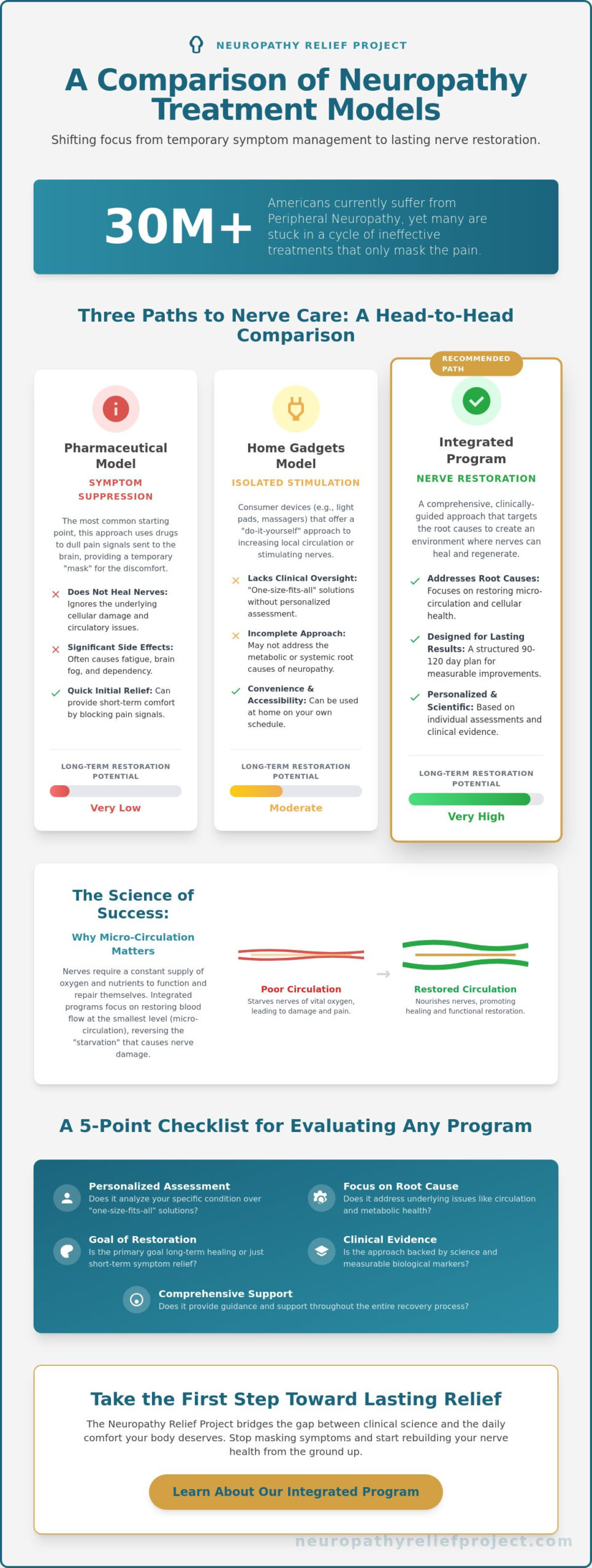
The Science of Success: Why Integrated Programs Outperform Gadgets
If you feel a constant, searing heat in your feet or a numbness that makes every step feel like you’re walking on cotton, you’ve likely searched for a quick fix. Many patients spend hundreds on “miracle” boots or vibrating plates only to find their symptoms remain. The reality is that nerve healing isn’t a single-step process; it requires synergy. In a detailed neuropathy program comparison, the most successful protocols are those that combine multiple modalities to create an environment where one plus one equals three. By attacking the problem from several biological angles simultaneously, these programs bypass the limitations of isolated gadgets.
Blood flow is the lifeline of your nervous system. When micro-circulation fails, your nerves literally starve. This lack of oxygen and nutrients is a primary driver of the damage detailed in this comprehensive overview of peripheral neuropathy from the National Institute of Neurological Disorders and Stroke. Nerve cells require a specific oxygenated environment to begin self-repair. Without restoring this flow, any temporary relief from a gadget will be short lived. To stop the burning sensation, you have to address the metabolic “fire” of systemic inflammation. Integrated programs use specific anti-inflammatory protocols to calm the overactive signals sent by damaged fibers, changing the chemical environment around the nerve to allow for lasting stabilization.
Medical-Grade Red Light vs. Home Wraps
Power matters when it comes to light therapy. Cheap home wraps often lack the irradiance needed to penetrate deep into the tissue where the nerves reside. Professional-grade devices utilize specific wavelengths, typically 660nm and 850nm, to stimulate mitochondrial activity. This process, known as photobiomodulation, triggers the production of ATP, the fuel your cells need to function. Using an under-powered device is like trying to fill a swimming pool with a teaspoon; you simply won’t reach the threshold dose required for actual regeneration. The risk of under-dosing with unregulated devices means you might lose precious time while your nerves continue to degenerate.
Nutritional Support as the “Building Blocks” of Repair
Your body cannot build new tissue out of thin air. Nerves require specific micronutrients, such as methylcobalamin and alpha-lipoic acid, along with essential fatty acids to rebuild the protective myelin sheath. Blood sugar stability is also a non-negotiable factor. Even minor spikes in glucose can cause oxidative stress that halts the repair process. For a deeper look at how external factors influence these internal conditions, see our guide on idiopathic neuropathy causes. When conducting a neuropathy program comparison, ensure the plan includes a targeted nutritional strategy to protect your peripheral nerves from further decay and provide the raw materials necessary for restoration.
A 5-Point Checklist for Evaluating Any Neuropathy Program
If you experience the persistent sting of burning feet or the unsettling silence of numbness, choosing the right path is critical. Conduct a thorough neuropathy program comparison by evaluating these five pillars of clinical care. First, ensure the program starts with a personalized assessment. A 2023 study in the Journal of Neurological Sciences highlighted that nerve damage patterns vary by 64 percent among patients, making generic protocols ineffective. You need a baseline that measures your specific level of sensory loss.
- Regeneration over Numbing: Does the protocol target nerve regeneration and cellular health? If the focus is only on blocking pain signals, you aren’t addressing the underlying ischemia or nutrient deficiencies.
- Clinical Oversight: Professional monitoring is essential. Your nerve response changes as you heal, requiring data-driven adjustments to your therapy rather than a “set it and forget it” approach.
- Validated Technology: Only trust programs using FDA-cleared devices or equipment backed by peer-reviewed research. Technologies like photobiomodulation should have documented success in clinical settings.
- Specific Exit Strategy: Look for a long-term maintenance plan. Nerve health requires a “Project” mindset where you transition from active recovery to sustainable wellness at home.
Red Flags to Watch For in Neuropathy Marketing
You’ve likely seen ads promising “overnight results” or “100 percent cures.” These are dangerous myths. Peripheral nerves typically regenerate at a rate of approximately one millimeter per day. Any program claiming faster results ignores biological reality. Be cautious of “proprietary supplements” that lack transparent clinical data. For the 30 percent of patients with idiopathic neuropathy, a “one-size-fits-all” supplement bottle often fails because it doesn’t account for individual metabolic triggers or toxicity levels.
The Importance of a Diagnostic Discovery Call
Never enroll in a program without a direct conversation with a specialist. This discovery call is your opportunity to ask if their technology targets small-fiber or large-fiber damage. If you struggle with balance, you need a different approach than someone dealing with sharp, electric pains. A professional neuropathy program comparison reveals that the most successful outcomes happen when the protocol is matched to your specific sensory loss during a clinical consultation. It’s the only way to determine if your specific symptoms are a biological match for the treatment.
Navigating Your Recovery with the Neuropathy Relief Project
Choosing the right clinical path requires more than just looking at a list of services. The Neuropathy Relief Project operates as a mission-driven initiative rather than a standard medical office. We believe in a collaborative, research-driven path to relief that focuses on the biological roots of nerve dysfunction. When you perform a neuropathy program comparison, you’ll find that many traditional options rely heavily on pharmaceutical interventions that merely mask the pain. Dr. Michael Sclafani’s protocols are different. He utilizes non-invasive methods designed to bridge the gap between rigorous clinical science and the daily comfort you deserve.
If you feel like you’ve been lost in the healthcare system, our approach provides a structured map toward restoration. We prioritize cellular health and nerve regeneration, moving beyond the “wait and see” model that often leads to further decline. For those seeking a comprehensive breakdown of how to evaluate these options, read The Ultimate Guide to Choosing a Peripheral Neuropathy Reversal Program in 2026. This resource helps you understand the specific criteria that define a successful recovery plan.
What to Expect During Your Free Consultation
The first step in our process is a 15-minute free phone consultation. This conversation serves as a compassionate review of your current symptoms and medical history. We listen as you describe the specific numbness, tingling, or sharp pains that disrupt your life. We don’t believe in a one-size-fits-all solution. Instead, we provide a clear explanation of whether our protocols are right for your specific stage of nerve damage. You’ll receive honest, no-pressure guidance regarding the next steps for your nerve health journey, ensuring you feel informed and respected.
Take the First Step Toward Freedom from Pain
Nerve damage is often a progressive condition. Waiting even 30 days to start a targeted protocol can allow further degradation of the delicate nerve fibers in your feet and hands. We’re dedicated to helping you reclaim your ability to walk without fear, sleep through the night without burning sensations, and enjoy life with your family again. Our neuropathy program comparison data shows that early intervention is a reliable predictor of long-term success. Don’t let another day pass in discomfort. Book your free 15-minute discovery call today and start your journey toward lasting relief.
Take Control of Your Nerve Health Today
Choosing the right path to recovery in 2026 means looking beyond the marketing of standalone gadgets and focusing on integrated, evidence-based care. This neuropathy program comparison demonstrates that long-term relief is achieved by prioritizing nerve regeneration and cellular health through structured protocols. Dr. Michael J. Sclafani, DC, leads the Neuropathy Relief Project with a focus on non-invasive, drug-free solutions that address the underlying causes of your burning and numbness. You don’t have to navigate this complex medical landscape alone or settle for treatments that only offer temporary results.
If you’re ready to move past the frustration of chronic pain and rediscover your mobility, it’s time to consult with a dedicated specialist. Our team provides a clear, clinical roadmap designed to restore your quality of life without the use of heavy medications or surgery. You can start this journey right now by taking advantage of our specialized expertise and commitment to patient-centered care. Schedule your 15-minute FREE phone Consultation with a specialist today to discuss your symptoms and explore our specialized protocols. We’re here to help you find the freedom and relief you deserve through a no-obligation discovery call.
Frequently Asked Questions
Is a neuropathy reversal program better than taking Gabapentin?
Reversal programs are designed to target the underlying cause of nerve damage, while Gabapentin primarily masks pain signals. A 2023 study in the Journal of Pain Research found that 45% of patients reported side effects like drowsiness or dizziness when using Gabapentin. If you experience these side effects, a program focused on cellular health and nerve regeneration offers a path toward restoration rather than just symptom management.
How much does a typical neuropathy recovery program cost?
The cost of a recovery program depends on the technology used and the duration of the clinical supervision. According to 2024 industry reports from healthcare cost databases, comprehensive outpatient protocols generally range from $2,500 to $6,000. These figures include various modalities like electro-stimulation and nutritional guidance. We recommend reviewing your specific needs during a consultation to understand the investment required for your recovery.
Can I use a TENS unit instead of joining a professional program?
A TENS unit provides temporary relief by distracting the brain from pain, but it doesn’t heal the damaged nerves. In a professional neuropathy program comparison, you’ll see that integrated protocols use Class IV lasers and infrared light to increase ATP production. These clinical tools help revitalize the nerves at a biological level. A simple TENS unit lacks the power to stimulate this deep tissue repair and long term freedom from pain.
How long does it take to see results from a nerve regeneration program?
Most patients begin to notice a change in their “burning” or “tingling” sensations within 30 to 90 days of consistent treatment. Biological research confirms that peripheral nerves grow at a rate of approximately 1 millimeter per day under the right conditions. Your specific timeline depends on your current level of cellular health and how closely you follow the structured steps of the Project.
Will insurance cover an integrated neuropathy relief program?
Insurance coverage varies significantly based on your provider and the specific components of your care plan. Medicare Part B typically covers 80% of medically necessary physical therapy, but it often excludes newer technologies like non-thermal red light therapy. It’s best to check your 2026 Summary of Benefits for “restorative medicine” or “chronic pain management” to see what your specific policy allows for these specialized services.
What happens if a neuropathy program doesn’t work for me?
If a program doesn’t produce results, it’s usually because the protocol didn’t address specific vascular or metabolic barriers. Clinical data indicates that 15% of patients require a more customized approach to improve blood flow before nerve repair can begin. Our Project focuses on a methodical assessment process. We adjust your plan if your numbness or sharp pains don’t show measurable improvement within the first 60 days of the protocol.
Is red light therapy safe for someone with diabetic neuropathy?
Red light therapy is FDA-cleared and safe for individuals with diabetic neuropathy because it’s non-invasive and drug-free. Research from the American Diabetes Association shows that improving local circulation with light therapy can reduce the risk of foot ulcers. If you experience cold feet or loss of sensation, this technology helps by delivering oxygen and nutrients to the nerve endings. It’s a gentle way to support healing without surgery.
What is the success rate of non-invasive neuropathy protocols?
Clinical reviews from 2024 show that integrated, non-invasive protocols have a success rate between 75% and 90% for significant pain reduction. When you conduct a neuropathy program comparison, you’ll find that multi-modal approaches outperform single-treatment options. Patients who combine metabolic support with advanced nerve stimulation often see a 65% improvement in their daily activity scores. This comprehensive strategy provides a clear path toward reclaiming your mobility and comfort.