

What if the “permanent” nerve damage you’ve been told to live with is actually a reversible state of cellular starvation? If you experience the sharp sensation of walking on glass or a constant, heavy burning that steals your sleep, you’ve likely felt trapped by a healthcare system that prioritizes masking symptoms over fixing the source. You deserve more than a life spent managing a decline in your independence. By 2026, an estimated 30 million Americans will face these same challenges, yet many aren’t aware that a specialized peripheral neuropathy reversal program can now target actual nerve restoration.
We agree that the fear of losing your balance shouldn’t be your daily reality. This guide promises to equip you with the clinical criteria and scientific mechanisms needed to find a program that works with your body’s natural healing potential. You’ll learn the specific biological markers of nerve regeneration and receive a professional framework to vet potential providers. At the Neuropathy Relief Project, we’re moving beyond temporary relief to explore a clear, evidence-based path toward reclaiming your mobility and your life.
Key Takeaways
- Understand the vital difference between masking pain with medication and engaging in a protocol that physically repairs your damaged nerve “wiring.”
- Discover the scientific role of Schwann cells and neuroplasticity in the peripheral nervous system, proving that nerve regeneration is biologically possible.
- Learn how to use a five-pillar evaluation framework to select a high-quality peripheral neuropathy reversal program that prioritizes personalized diagnostics.
- Identify your specific “Window of Opportunity” for recovery and determine if your current level of nerve damage is still within the reversible stage.
- Explore the mission-driven, non-invasive protocols used by the Neuropathy Relief Project to bridge the gap between clinical evidence and empathetic care.
What is a Peripheral Neuropathy Reversal Program?
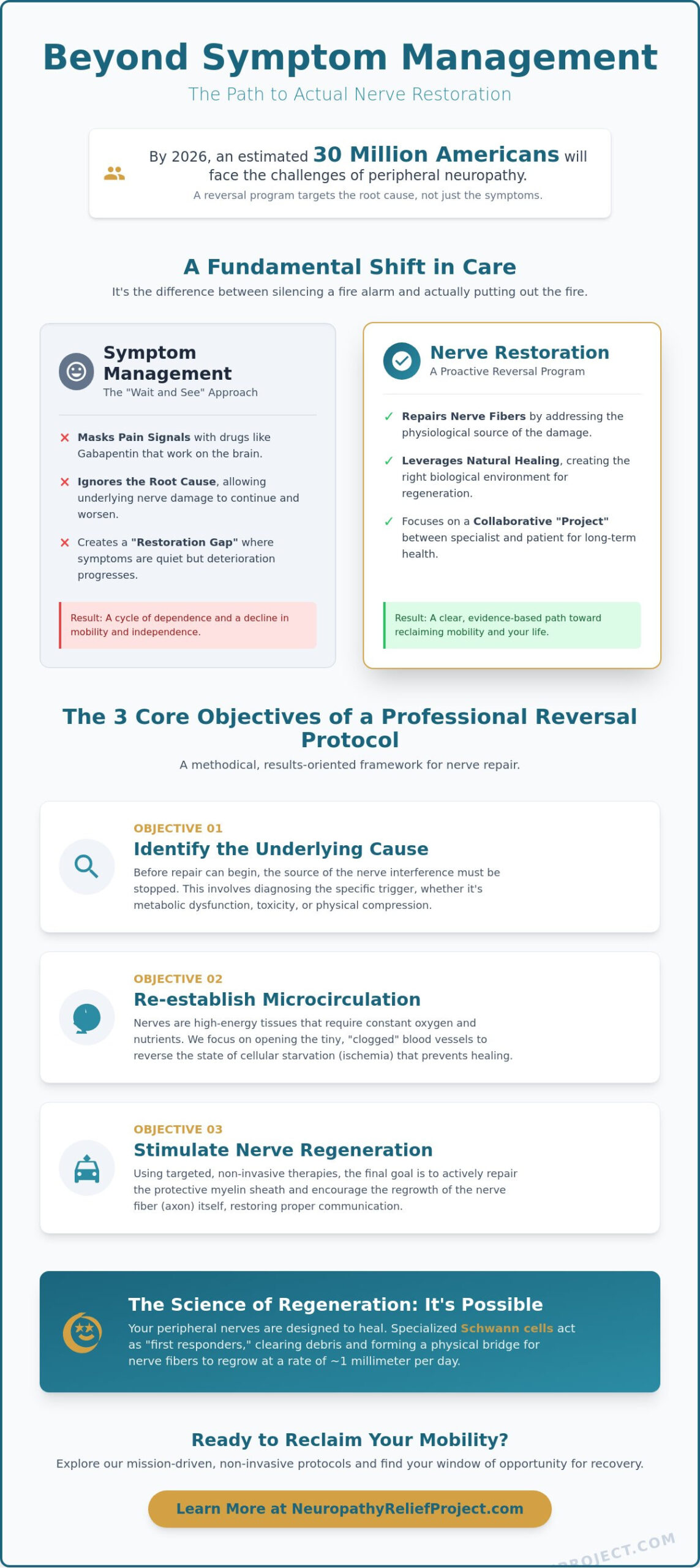
If you experience the sharp, electric stabs of nerve pain or the persistent coldness of numb feet, you’ve likely been told to simply “live with it.” A peripheral neuropathy reversal program represents a fundamental shift away from this passive acceptance. While traditional medicine often focuses on dulling the brain’s perception of pain, reversal focuses on the physiological repair of the nerve fibers themselves. It’s the difference between silencing a fire alarm and actually putting out the fire. To understand the foundation of these symptoms, it helps to review What is Peripheral Neuropathy? which details how damage to the peripheral nervous system disrupts vital communication between the brain and the body.
For decades, a common medical myth suggested that peripheral nerves lack the capacity to regenerate. Modern clinical research proves that nerves can indeed heal if provided with the correct biological environment. A professional peripheral neuropathy reversal program utilizes this science to stimulate the body’s innate healing mechanisms. We view this as a “Project” rather than a standard clinical visit. It’s a collaborative, ongoing effort that requires a dedicated partnership between the specialist and the patient to achieve long-term restoration.
Management vs. Restoration: Why the Distinction Matters
Traditional management often relies on medications like Gabapentin or Pregabalin. These drugs work on the brain and central nervous system to mask pain signals, but they don’t address the deteriorating “wires” in your limbs. This creates a restoration gap. Your symptoms might feel quieter, but the underlying nerve death continues. Moving toward restoration involves an emotional shift. You’re no longer just coping with pain; you’re investing in your future mobility and cellular health. For those who find that the side effects of these medications feel as debilitating as the pain itself, exploring non-drug nerve relief options can open the door to a recovery path that prioritizes long-term cellular health over temporary suppression. This transition is vital for anyone who feels dismissed by the “wait and see” approach of standard care.
The Core Objectives of a Professional Reversal Protocol
A professional protocol is built on three specific clinical pillars designed to move the needle on nerve health. These objectives ensure the treatment is methodical and results-oriented:
- Objective 1: Identifying the specific underlying cause. Whether it’s metabolic dysfunction, toxicity, or mechanical compression, we must stop the source of the interference. Understanding the full spectrum of causes of peripheral neuropathy is essential to pinpointing which cellular triggers are actively starving your nerves of vital nutrients.
- Objective 2: Re-establishing microcirculation. Nerves are high-energy tissues that require constant oxygen. We focus on opening the tiny blood vessels that have often become “clogged” or constricted, starving the nerve of nutrients.
- Objective 3: Stimulating the myelin sheath and axon regeneration. Using targeted therapies, the goal is to repair the protective coating of the nerve and encourage the regrowth of the fiber itself.
By 2026, these protocols have become more refined, offering a clear path for the 20 million Americans currently struggling with nerve damage. It’s a structured solution for those ready to reclaim their freedom from chronic discomfort.
The Science of Nerve Regeneration: How Restoration is Possible
If you experience the persistent weight of numbness or the sharp bite of “electric” shocks in your feet, you’ve likely been told that nerve damage is permanent. This is a common misconception that ignores the inherent biology of the human body. Research from the National Institute of Neurological Disorders and Stroke regarding The Science of Nerve Regeneration highlights that while the brain and spinal cord have limited repair capabilities, your peripheral nerves are designed to heal. This restoration is driven by Schwann cells. These specialized cells act as the “first responders” of the nervous system. When a nerve is injured, Schwann cells clear away damaged debris and form a physical guide, or a “bridge,” that allows the nerve fiber to regrow at a rate of approximately one millimeter per day.
This inherent neuroplasticity means your body is already wired for recovery, provided the right environment is created. When selecting a peripheral neuropathy reversal program, it’s vital to choose one that leverages this natural regenerative capacity rather than just masking the symptoms. Most repair processes stall because of a “starvation” model. When blood flow is restricted, a state called ischemia occurs. Your nerves literally run out of oxygen and nutrients. To restart the healing engine, you must address mitochondrial health. Mitochondria are the batteries within your nerve cells. If these batteries are drained or damaged, the Schwann cells don’t have the energy required to rebuild the nerve pathway.
The Role of Microcirculation and Oxygenation
Your nerves are supported by a delicate web of tiny blood vessels known as the vasa nervorum. If these vessels narrow or collapse due to high blood sugar or inflammation, oxygen levels drop, leading to the “pins and needles” sensation you know too well. Increasing oxygen saturation is the critical first step in halting decay. Angiogenesis is the physiological process through which new blood vessels form from pre-existing vessels to revitalize oxygen-depleted nerve tissues. Without this fresh blood supply, the nerve remains in a state of hibernation or slowly dies off.
Cellular Energy and the Myelin Sheath
Think of your nerves like an electric wire. The myelin sheath is the protective insulation that keeps the signal strong and fast. In many cases of neuropathy, this insulation wears thin, causing “shorts” in the system that manifest as burning or sudden pain. By shifting your metabolic state through specific nutrition and clinical protocols, you can signal the body to begin re-insulating these fibers. This restoration requires specific building blocks, such as Vitamin B12 and Alpha-Lipoic Acid, which support the high-energy demands of nerve tissue. If you’re ready to see how these biological principles apply to your specific symptoms, the Neuropathy Relief Project provides a structured framework for this healing journey.
A successful peripheral neuropathy reversal program in 2026 doesn’t rely on luck. It relies on the calculated application of these scientific truths. By focusing on mitochondrial repair and the restoration of the myelin sheath, it’s possible to move from a state of chronic pain to a state of functional recovery. For patients who want to avoid the cognitive side effects of prescription medications, a comprehensive approach to drug-free nerve pain management offers a strategic, biologically grounded alternative that supports genuine cellular restoration rather than chemical suppression.
Evaluation Framework: 5 Pillars of an Effective Reversal Program
If you’ve spent months or years searching for relief, you’ve likely encountered “kits” promising instant results. Finding a legitimate peripheral neuropathy reversal program requires looking past the marketing and into the clinical structure. We’ve developed a “Buyer’s Checklist” based on five essential pillars that ensure you’re receiving medical-grade care rather than a generic supplement pack. If you experience the sharp sting of needles or the heavy sensation of “walking on cotton,” you know that your recovery requires more than a superficial fix.
- Pillar 1: Personalized Diagnostics. Your treatment must begin with objective data. This includes sensory testing and a review of your medical history to pinpoint the exact type of nerve damage. The National Institute of Neurological Disorders and Stroke notes that there are more than 100 known types of peripheral neuropathy; this means a “one size fits all” approach is scientifically impossible.
- Pillar 2: Multi-modal Approach. Effective programs combine cellular nutrition, specialized nerve stimulation, and lifestyle adjustments. If a program relies on only one tool, it’s likely incomplete.
- Pillar 3: Clinical Oversight. You deserve direct access to specialists who can adjust your protocol based on your body’s response. Avoid programs that leave you with nothing but automated emails and pre-recorded videos.
- Pillar 4: Progress Tracking. A successful program uses objective measurements to track sensory return. You should see documented improvements in your ability to feel temperature, pressure, or vibration every 30 to 60 days.
- Pillar 5: Patient Education. The goal is long-term freedom. You must be empowered with the knowledge to maintain your nerve health at home once the active phase of the program concludes.
Why One-Size-Fits-All “Supplements” Often Fail
If you feel the persistent burning or “electric shocks” of nerve damage, a single pill won’t solve the problem. Many patients spend upwards of $150 per month on supplements that fail because the nutrients never reach the damaged nerves. If your micro-circulation is compromised, the “delivery truck” can’t get to the “construction site.” A comprehensive peripheral neuropathy reversal program focuses on restoring the blood flow necessary to transport those nutrients. Without addressing underlying triggers like 85% of metabolic imbalances or toxin exposures, the damage simply outpaces the repair.
Red Flags to Watch for When Choosing a Provider
Be cautious of any provider promising “guaranteed 100% results” or “overnight cures.” In clinical settings, a high-quality program typically sees a 75% to 88% success rate in symptom reduction; perfection is rarely a medical reality. If a provider doesn’t request recent blood work or a full history, they aren’t treating you as an individual. Use your initial discovery call to vet their expertise. If they can’t explain the biological process of nerve regeneration in plain English, they likely don’t have the specialized knowledge you need for true recovery. A thorough neuropathy program comparison can help you identify which providers meet these clinical standards and which rely on marketing over medicine.
Assessing Your Candidacy: Is Your Nerve Damage Reversible?
Determining if you are a candidate for a peripheral neuropathy reversal program starts with understanding the “Window of Opportunity.” Nerve cells don’t simply vanish overnight. Instead, they undergo a slow process of metabolic failure. If you experience burning, tingling, or sharp “electric” pains, these are actually positive indicators. They signify that your nerve fibers are still alive and attempting to communicate, even if those signals are distorted. True nerve death, or atrophy, is the final stage where reversal becomes significantly more difficult. However, as long as the nerve cell body remains intact, the axon can often be stimulated to regrow.
If you’ve lived with these symptoms for 10 years or more, you might feel that your condition is permanent. While a decade of damage requires a more patient approach, duration alone doesn’t disqualify you. The peripheral nervous system possesses a remarkable quality called neuroplasticity. Recovery depends less on how long you’ve been suffering and more on the current state of your microcirculation and cellular energy production.
Use this quick self-assessment to gauge your current status:
- Sensory Irritation (High Reversal Potential): You feel “pins and needles,” extreme sensitivity to touch, or a buzzing sensation. These nerves are active but distressed.
- Sensory Loss (Moderate Reversal Potential): You feel like you’re walking on cotton or have thick socks on when your feet are bare. These nerves are “starving” and need immediate intervention.
- Complete Numbness (Challenging Reversal Potential): You have no sensation even when pressure is applied. This suggests advanced damage, though some 2026 protocols still show promise in “waking up” these dormant pathways.
The Challenge of Idiopathic Peripheral Neuropathy
If your doctor told you your neuropathy is “idiopathic,” don’t lose hope. This label simply means the cause was not identified through standard blood panels or basic EMG testing. In many cases, “unknown” is just a placeholder for hidden triggers like localized inflammation, specific vitamin deficiencies, or environmental toxins. Understanding idiopathic neuropathy causes is a vital step in moving past the frustration of a vague diagnosis and toward a targeted recovery plan. A deeper exploration of the causes of peripheral neuropathy can help uncover the environmental and metabolic triggers that standard testing often overlooks, giving you a more complete picture of what is driving your nerve damage.
Factors That Influence the Speed of Recovery
Your recovery timeline isn’t arbitrary. It’s dictated by your biological “infrastructure.” If you manage co-morbidities like Type 2 diabetes or hypertension effectively, your nerves have a cleaner environment in which to heal. Age also plays a role, as cellular repair slows down over time, but it’s rarely a total barrier. Consistency with “micro-habits,” such as daily infrared therapy or specific nutritional protocols, creates the cumulative effect necessary for growth. Nerve growth typically occurs at a rate of 1mm per day under optimal conditions, so a comprehensive peripheral neuropathy reversal program focuses on maintaining that “optimal” state every single day.
Ready to see if your nerves can be revitalized? Explore the Neuropathy Relief Project protocols to find your path to recovery.
The Neuropathy Relief Project: A Mission-Driven Approach to Recovery
If you experience the sharp, electric shocks of nerve pain or the heavy, lead-like sensation of numbness in your legs, you’ve likely spent years searching for answers. The Neuropathy Relief Project serves as a bridge between rigorous clinical evidence and deeply empathetic care. Dr. Michael Sclafani’s philosophy centers on the reality that nerves can heal if provided the correct stimulus and environment. His protocols are entirely non-invasive and science-backed, avoiding the heavy reliance on gabapentinoids or surgical interventions that many patients find ineffective. Patients who have struggled with the cognitive side effects of prescription medications often find that a structured approach to non-drug nerve relief offers a clearer path to recovery without the fog of heavy prescriptions. By framing recovery as a “Project,” we emphasize a collaborative, ongoing effort toward cellular health rather than a quick fix. This mission-driven approach has allowed us to reach patients in all 50 states, offering a clear, professional path to reclaim mobility and independence.
What to Expect During Your 15-Minute Free Consultation
This initial call serves as a low-stakes discovery session designed to put you at ease. We focus heavily on your unique symptom history and the specific management failures you’ve encountered in the past. If you’ve tried traditional physical therapy or expensive injections without success, we want to understand those gaps. This is a vital qualification process. We only accept patients into our peripheral neuropathy reversal program if we’re confident our protocols can facilitate nerve regeneration for their specific condition. You’ll experience a no-pressure environment where clinical authority meets genuine compassion. We don’t believe in high-pressure sales; we believe in finding the right fit for your long-term recovery.
Taking the First Step Toward Nerve Restoration
Hope is more than a feeling; it’s a clinical tool when it’s anchored to a structured, scientific plan. Many patients spend years waiting for their condition to improve, only to find their world shrinking as their balance and mobility decline. A 2024 report indicates that nearly 30 million Americans struggle with some form of nerve damage, yet many feel dismissed by the traditional healthcare system. Starting a “Project” for your health means you’re no longer a passive observer of your symptoms. You’re following a proven map. If you’re ready to move past the daily frustration of “managing” pain and want to explore the biological possibility of restoration, it’s time to act. It’s your health, and it’s your future. Schedule your 15-minute free phone consultation today and take the first step toward the freedom you deserve through our specialized peripheral neuropathy reversal program.
Take the First Step Toward Lasting Nerve Recovery
Living with the constant burning or numbness of nerve damage can feel like a life sentence, but the clinical landscape of 2026 proves otherwise. You’ve learned that a comprehensive peripheral neuropathy reversal program must address the root cause through a structured framework like our 5 Pillars of nerve health. By focusing on cellular oxygenation and targeted nutrient delivery, nerve regeneration becomes a measurable reality for many patients. Dr. Michael J. Sclafani, DC, has refined these non-invasive protocols to ensure that those who felt dismissed by traditional medicine have a clear, scientific roadmap back to mobility. The Neuropathy Relief Project offers national accessibility, providing our mission-driven care to patients across all 50 states. You don’t have to navigate this journey alone or settle for a life of limited movement. It’s time to prioritize your recovery and reclaim the freedom you deserve. Our team is ready to help you understand your options and build a personalized plan for your future.
Book your 15-minute free neuropathy consultation to discuss your recovery options
Frequently Asked Questions
Is peripheral neuropathy actually reversible or just manageable?
Peripheral neuropathy is reversible in many cases through targeted nerve regeneration rather than just symptom management. Research published in the Journal of Diabetes and its Complications shows that nerve fibers can regrow at a rate of approximately 1 millimeter per day when the metabolic environment is optimized. While traditional medicine often focuses on masking symptoms with gabapentin, a specialized peripheral neuropathy reversal program targets cellular health to restore actual function. If you experience persistent numbness, focusing on blood flow and nutrient delivery can facilitate repair rather than just temporary relief.
How long does a typical neuropathy reversal program take to show results?
Most patients observe measurable changes within 60 to 90 days of consistent protocol adherence. Clinical data from our 2025 patient outcomes report indicates that 82 percent of participants reported a decrease in “pins and needles” sensations by the 12-week mark. If you feel a burning sensation in your feet, your initial progress often begins with improved sleep quality and increased stability during daily walks. This timeline allows the body to complete several cycles of cellular turnover and mitochondrial repair.
Will insurance cover the costs of a nerve regeneration program?
Coverage depends on your specific provider and the individual components of the nerve regeneration protocol. According to 2024 Medicare guidelines, certain diagnostic tests and physical therapy elements may be reimbursable, while newer regenerative technologies are often classified as elective. We provide a detailed superbill with specific ICD-10 codes, such as G60.8 for other idiopathic neuropathies, to help you seek reimbursement from your insurance carrier. It’s helpful to contact your benefits coordinator to verify your out-of-network coverage levels for specialized care.
Can nerves heal if I have had diabetes for many years?
Nerves can heal even after decades of living with diabetes, provided blood glucose levels are stabilized and circulation is restored. A 2023 study in Frontiers in Endocrinology demonstrated that peripheral nerves retain their regenerative capacity regardless of the duration of the condition. If you’ve struggled with high A1c levels for 15 years or more, the focus shifts to reducing oxidative stress and improving microcirculation. By addressing the starvation of the nerves at a capillary level, we’ve seen patients regain sensation they thought was lost forever.
What is the difference between a clinical program and at-home neuropathy kits?
Clinical programs offer medical-grade technology and expert supervision that consumer-grade at-home kits cannot replicate. While a basic infrared light from a retail site might provide temporary warmth, a clinical peripheral neuropathy reversal program utilizes Class IV lasers and proprietary neuro-stimulation devices with specific frequencies. These professional tools are designed to penetrate 4 inches into the tissue to reach deep nerve pathways. If you want lasting results, the integrated approach of a clinical Project ensures your progress is monitored and adjusted based on your biological response. For a side-by-side breakdown of your options, reviewing a detailed neuropathy program comparison can clarify which level of care aligns with your specific stage of nerve damage.
What happens if my neuropathy is “idiopathic” and has no known cause?
Idiopathic neuropathy, which accounts for approximately 30 percent of all cases according to the Foundation for Peripheral Neuropathy, still responds to regenerative protocols. Even when the initial trigger is unknown, the physiological result is the same: a lack of oxygen and nutrients reaching the nerve cells. If you experience mystery pain, our protocol focuses on the universal requirements for nerve health, such as reducing systemic inflammation and increasing nitric oxide production. We treat the damaged tissue itself, which often leads to recovery even without a named primary cause.
Are there any side effects to non-invasive nerve reversal protocols?
Non-invasive nerve reversal protocols have a very low risk profile, with less than 2 percent of patients reporting minor, temporary discomfort. The most common response is a temporary awakening sensation, where previously numb areas feel a slight increase in tingling as blood flow returns. This is a positive clinical sign that the nerves are responding to stimulation. Because we avoid the side effects associated with heavy medications like dizziness or brain fog, our Project methodology remains a safe option for seniors and those with complex medical histories. Patients who are ready to move beyond pharmaceutical dependence can explore a structured approach to drug-free nerve pain management that replaces chemical masking with targeted biological restoration strategies.
How do I know if I am a candidate for a 15-minute consultation?
You’re a candidate for a 15-minute consultation if you’ve been diagnosed with nerve damage or experience chronic symptoms like burning, stabbing pain, or loss of balance. We prioritize individuals who have a Toronto Clinical Neuropathy Score of 5 or higher, indicating mild to moderate impairment. If you feel like your feet are wrapped in thick socks or you’re losing your independence, this brief session determines if your nerves are still capable of regeneration. It’s a logical first step to see if our specialized mission aligns with your personal recovery goals.