

What if the “unknown” cause of your nerve pain isn’t actually a mystery, but simply a stone left unturned by standard diagnostic protocols? If you experience the persistent burning, tingling, or numbness of peripheral neuropathy, you’ve likely felt the deep frustration of being told your condition is idiopathic. It’s exhausting to feel dismissed by a medical system that labels your pain as “unexplained” when a 2023 report from the Journal of Clinical Medicine indicates that up to 50% of these cases may actually involve identifiable, treatable triggers. You aren’t alone in your search for answers, and your physical sensations are a valid signal that your body needs specific attention.
You deserve more than a vague label; you deserve a clear path toward relief. This guide will help you look past the “unknown” to uncover potential idiopathic neuropathy causes that could be standing between you and a life of comfort and freedom. We will examine the hidden biological factors impacting your cellular health and provide a structured approach to professional assessment and nerve regeneration. By the end of this article, you’ll have a roadmap for the Neuropathy Relief Project to help you move from uncertainty toward a targeted recovery plan.
Key Takeaways
- Learn why an “idiopathic” diagnosis doesn’t have to be the final word on your nerve pain and how to look beyond standard clinical testing for answers.
- Discover how hidden metabolic factors like impaired glucose tolerance can be primary idiopathic neuropathy causes, even if your blood sugar is considered “normal.”
- Identify the often-overlooked environmental toxins and lifestyle patterns that may be quietly impacting your microcirculation and nerve health.
- Master a systematic approach to tracking your symptoms so you can advocate for yourself when discussing non-traditional triggers with specialists.
- Understand how prioritizing cellular health and nerve regeneration can help you shift from merely masking sensations to restoring true nerve function.
What is Idiopathic Neuropathy? Moving Beyond the “Unknown” Label
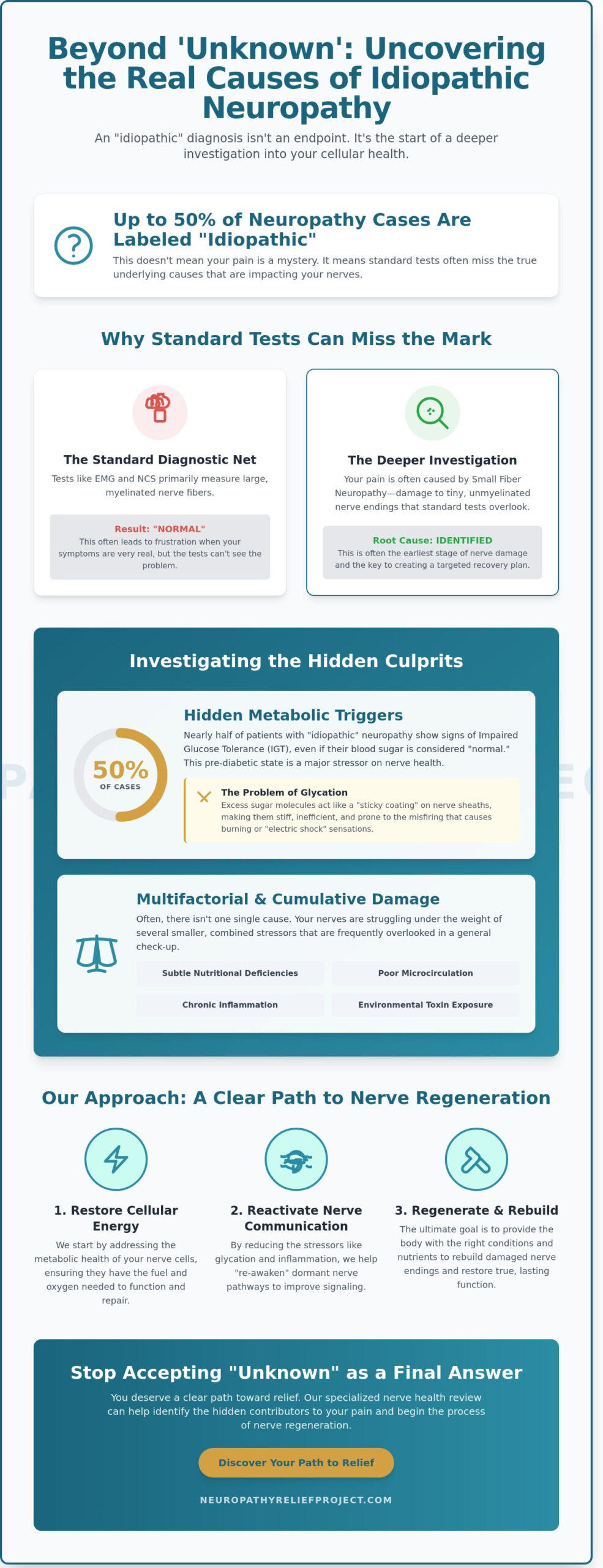
If you feel a persistent burning in your feet or a prickling sensation that keeps you awake at night, you know the damage is real. Doctors often use the term “idiopathic” when they can’t pinpoint a single, clear origin for your symptoms through standard clinical testing. This isn’t a rare occurrence. In fact, clinical data indicates that between 30% and 50% of all neuropathy cases are currently classified as idiopathic. To understand the broader context of your condition, it helps to first ask, What is Peripheral Neuropathy? at its core. It’s a condition where the communication lines between your brain and your limbs become frayed or damaged. When no clear trigger like Type 2 diabetes or physical injury is found, the “idiopathic” label is applied.
At the Neuropathy Relief Project, we view this label not as a dead end, but as a starting point for a deeper investigation into your cellular health. Whether you’re experiencing numbness, tingling, or sharp pains, your sensory experience is valid. The lack of a diagnosis doesn’t mean the nerves are healthy; it simply means the standard diagnostic net wasn’t fine enough to catch the problem. Our philosophy involves investigating the body as a whole system to find the underlying stressors that traditional medicine frequently misses.
The Frustration of “Normal” Test Results
It’s incredibly draining to describe intense pain only to have an Electromyography (EMG) or a Nerve Conduction Study (NCS) come back completely normal. These standard tools primarily measure large, myelinated nerve fibers. If your damage is localized in the small, unmyelinated fibers, these tests won’t see it. This Small Fiber Neuropathy often represents the earliest stage of nerve degradation. Being told “nothing is wrong” based on an incomplete test can lead to significant emotional distress. We recognize that your symptoms are your body’s way of signaling a breakdown, even if a standard machine can’t detect it yet.
Idiopathic vs. Known Causes: What the Difference Really Means
Most people associate nerve damage with clear triggers like chronic illness or acute physical trauma. However, idiopathic neuropathy causes are often multifactorial. This means that instead of one large problem, your nerves are likely struggling under several smaller, cumulative stressors. These could include subtle nutritional deficiencies, metabolic shifts, or environmental factors that a general check-up might overlook. We treat “idiopathic” as a placeholder for causes that haven’t been identified yet. By conducting a specialized nerve health review, we can identify these hidden contributors and begin the process of nerve regeneration. Recovery is possible when we stop looking for a single label and start addressing the health of the whole person.
Hidden Metabolic Triggers: Why Your Blood Sugar Might Be a Factor
If you’ve been told your blood sugar is “fine” yet you still struggle with persistent burning or numbness, you’re likely feeling a deep sense of frustration. It’s a common misconception that nerve damage only happens to those with a formal diabetes diagnosis. In reality, research into the causes of acquired peripheral neuropathy suggests that even subtle metabolic shifts can trigger significant nerve distress. A 2021 study indicated that nearly 50% of patients diagnosed with “idiopathic” symptoms actually showed signs of Impaired Glucose Tolerance (IGT), a state where blood sugar is elevated but hasn’t yet reached the diabetic threshold.
This “pre-diabetic” state is particularly dangerous because it directly impacts the microvasculature, the tiny network of blood vessels that feed your nerves. When blood sugar levels fluctuate, these vessels can constrict or become damaged, effectively starving your nerves of oxygen and essential nutrients. Without a steady supply of “fuel,” the nerve fibers begin to wither. This process is often accelerated by glycation, a biological reaction where excess sugar molecules bond to proteins in your nerve sheaths. Think of this as a “sugar-coating” that stiffens the nerve fibers, making them less efficient at transmitting signals and more prone to the misfiring that causes “electric shock” sensations.
Your overall metabolic health is a primary lens through which we must examine idiopathic neuropathy causes. Metabolic syndrome, which includes a waist circumference over 35 inches for women or 40 inches for men and blood pressure readings above 130/85 mmHg, creates a high-stress environment for your peripheral system. These factors create a “perfect storm” of oxidative stress that prevents your body from repairing minor nerve damage before it becomes chronic. If you’re looking for a structured way to assess these risks, you can explore our metabolic health resources to see how your numbers align with nerve recovery goals.
Why a “Normal” A1C Isn’t Always Enough
The standard A1C test provides a 90-day average of your blood sugar, but it can be misleading because it hides the dangerous “peaks” that occur after meals. If your blood sugar spikes to 180 mg/dL after dinner and then crashes, those fluctuations can be more damaging to nerve endings than a steady, slightly elevated level. Insulin resistance also plays a role; even if sugar is present in your bloodstream, your nerve cells may be unable to absorb it, leading to cellular energy starvation. Metabolic flexibility is the body’s ability to switch between burning glucose and fat efficiently to maintain the energy levels required for nerve regeneration.
The Impact of Chronic Inflammation on Nerve Pathways
Systemic inflammation often acts as a silent catalyst for nerve pain, yet it’s frequently overlooked in standard neurology appointments. This inflammation is often rooted in the gut-brain-nerve axis, where a compromised digestive lining allows toxins to enter the bloodstream, triggering an immune response that attacks your own nerve tissues. To get a clearer picture of your internal environment, ask your doctor to check these often-ignored markers:
- C-Reactive Protein (CRP): A key indicator of general systemic inflammation.
- Homocysteine: High levels can suggest a deficiency in B-vitamins necessary for nerve repair.
- Fasting Insulin: This identifies insulin resistance long before it shows up on an A1C test.
- Ferritin: Measures iron stores, as both too much and too little can impact nerve health.
By identifying these hidden metabolic triggers, you move away from the “unexplained” label and toward a targeted plan for relief. Understanding these biological processes is the first step in reclaiming the comfort and mobility you deserve.
Environmental and Lifestyle Factors Often Labeled as Idiopathic
If you feel a persistent burning in your feet or a strange buzzing in your toes, you’ve likely sought answers only to be told your condition is “idiopathic.” This label often overlooks the cumulative impact of your surroundings and daily habits. While standard blood panels check for obvious issues like high blood sugar, they rarely screen for the specific idiopathic neuropathy causes hidden in your home or your medicine cabinet. Understanding these triggers is the first step toward reclaiming your comfort.
Hidden Toxins in Modern Life
Toxic exposure isn’t always a sudden, dramatic event. It’s usually a slow accumulation that builds over decades. Heavy metals like lead, mercury, and arsenic can seep into your system from aging infrastructure or contaminated well water. For instance, the EPA estimated in 2023 that approximately 9.2 million lead service lines still provide water to American homes. These metals are directly neurotoxic, meaning they strip away the protective coating of your nerves. Pesticides used in local landscaping and industrial chemicals found in common household cleaners also contribute to your total “toxic load.” When this load exceeds what your body can naturally detoxify, your nerves reach a breaking point. To help you identify these risks, we’ve developed the Ultimate Checklist of Toxic Neuropathy Triggers to help you uncover hidden sources of damage.
Nutritional Deficiencies and Malabsorption
Your nerves require specific fuel to function and repair themselves. Many patients are surprised to learn that “normal” lab results don’t always mean you’re healthy. If your B12 levels are at 250 pg/mL, a standard lab might mark it as acceptable, yet clinical research suggests neurological symptoms can manifest at any level below 500 pg/mL. This gap in diagnostic standards is a frequent factor in idiopathic neuropathy causes. Vitamin D and B6 also play critical roles; however, excessive B6 from low-quality supplements can actually be toxic to nerves, creating a delicate balance that requires expert guidance.
Lifestyle choices also dictate how well your nerves are fed. Alcohol consumption, even in moderate amounts, can irritate the gut lining and interfere with the absorption of nerve-essential nutrients. Furthermore, long-term use of common medications, such as proton pump inhibitors for acid reflux or certain metformin prescriptions for blood sugar, are known to deplete B12 and magnesium over time. For a comprehensive overview of peripheral neuropathy and its biological roots, the National Institute of Neurological Disorders and Stroke provides extensive data on how these pathways degrade.
To maintain nerve membrane integrity, the Project focuses on the specific roles of magnesium and Alpha-Lipoic Acid. These compounds act as cellular stabilizers and antioxidants. When your microcirculation is sluggish due to sedentary behavior, these nutrients can’t reach the nerve endings in your hands and feet. By addressing these “hidden” lifestyle factors, you move away from a vague diagnosis and toward a structured path of recovery. If you’re concerned about the side effects of prescription medications and want to explore non-drug nerve relief strategies that support cellular healing, our comprehensive guide outlines the science-backed protocols we use at the Neuropathy Relief Project.
Identifying the Root: How to Investigate Unexplained Nerve Pain
Receiving an idiopathic diagnosis doesn’t mean your pain lacks a source. It simply means the initial, standard screenings didn’t catch the culprit. To move toward recovery, you must transition from a passive patient to an active investigator of your own biology. This shift requires looking at your body as an integrated system where lifestyle, environment, and cellular health intersect. A deeper understanding of the causes of peripheral neuropathy and the cellular triggers behind nerve pain can help you frame the right questions and pursue the right tests with your specialist.
The Symptom Tracking Protocol
If you experience fluctuating levels of discomfort, your body is reacting to specific triggers that remain hidden without a systematic approach. We recommend maintaining a Nerve Pain Diary for at least 14 days. This log should track your diet, sleep quality, and even local weather changes. Research indicates that 67% of individuals with chronic nerve issues report heightened symptoms during shifts in barometric pressure or extreme humidity. Identifying these external links provides your specialist with a roadmap for deeper investigation.
You must also learn to categorize your sensations with precision. Burning or “electric” sensations often indicate inflammatory responses or oxidative stress within the nerve sheath. In contrast, heavy numbness or a “thick” feeling usually suggests structural compression or metabolic deficiencies that deprive the nerve of oxygen. When the pain happens is as important as where it happens. For instance, pain that spikes 30 minutes after a meal may point toward glucose instability, even if your fasting blood sugar appears normal on standard charts. If the burning and numbness are concentrated in your lower extremities, understanding what helps neuropathy in feet from a cellular and metabolic perspective can provide a more targeted framework for your recovery.
Investigating idiopathic neuropathy causes also requires a shift from structural to functional testing. While an MRI or EMG is helpful for spotting pinched nerves or major damage, these tests often miss small fiber neuropathy. In fact, standard EMGs can return “normal” results in up to 50% of patients who are still experiencing debilitating symptoms. Functional testing looks at how the nerve performs and how the surrounding cells utilize energy, providing a clearer picture of the underlying dysfunction. If you’re ready to move beyond inconclusive testing, understanding the clinical criteria behind a structured peripheral neuropathy reversal program can help you identify what genuine nerve restoration looks like.
Questions to Ask Your Nerve Health Specialist
When you meet with a provider, aim for a collaborative relationship rather than a prescriptive one. You aren’t just a set of symptoms; you’re a partner in the “Project” of your recovery. Use these specific questions to guide the conversation toward metabolic and environmental factors:
- “Can we perform a comprehensive micronutrient panel to check for intracellular B12 and magnesium levels instead of just a standard serum test?”
- “Given my symptoms, should we screen for heavy metal toxicity or recent environmental exposures that might be taxing my nervous system?”
- “How do my fasting insulin and A1C levels compare to optimal functional ranges, rather than just the broad clinical averages?”
A 15-minute discovery call is often the most efficient way to determine if a specialist’s approach aligns with this investigative mindset. It allows you to gauge whether they’re willing to look beyond the surface or if they’ll simply rely on the same tests that have already failed to provide answers.
If you’re tired of being told your pain is a mystery, it’s time to take the next step toward clarity. Schedule your discovery call today to begin uncovering the true drivers of your nerve discomfort.
The Neuropathy Relief Project Approach to Idiopathic Cases
If you’ve been told your condition is idiopathic, you’re likely tired of being handed a prescription that only dulls the sensation without fixing the source. The Neuropathy Relief Project operates on a different mission. We don’t believe in just masking symptoms with heavy medications that leave you feeling foggy. Instead, our focus is on restoring nerve health at the foundation. By examining cellular health and the body’s natural capacity for nerve regeneration, we create a path for recovery that many patients thought was impossible. Our protocols are designed to address the micro-environment surrounding your nerves. When blood flow is restricted or cellular energy production drops, nerves begin to wither. By focusing on these specific biological markers, we move beyond surface-level symptoms. While standard medical tests often fail to identify specific idiopathic neuropathy causes, our specialized protocols look deeper into the metabolic and environmental factors that influence nerve survival. We act as a bridge between scientific research and natural, non-invasive recovery, ensuring you aren’t left wandering the healthcare system alone. For patients who want to understand the full scope of what this biological restoration approach involves, our guide to drug-free nerve pain management and science-backed restoration strategies outlines the clinical protocols we use to move beyond chemical masking toward genuine healing.
Why a Discovery Call is the First Step Toward Clarity
The “idiopathic” label can feel like a dead end. It’s frustrating to feel burning, tingling, or numbness and be told there’s no known reason for your suffering. Our 15-minute free phone consultation provides a low-pressure environment to discuss your specific physical sensations. We use this time to screen for candidates who are most likely to benefit from our specialized programs. You’ll speak with a specialist who understands that “unknown” doesn’t mean “untreatable.” This call is about finding clarity in the maze of idiopathic neuropathy causes and determining if our science-backed, natural approach is the right fit for your unique situation. We focus on your lived experience, not just a lab report, to see if your nerves still have the potential to revitalize and heal.
Reclaiming Your Freedom from Nerve Pain
Living with chronic nerve pain feels like being a prisoner in your own body. We want to help you transition from a place of “unknown” pain to a future with a clear, actionable recovery plan. Peer-reviewed research shows that nerves have a remarkable ability to repair themselves when given the right metabolic conditions and nutritional support. By bridging the gap between cutting-edge research and non-invasive recovery, the Project helps you reclaim the mobility you’ve lost. You don’t have to accept a life of limited activity or constant discomfort. Schedule your 15-minute FREE phone Consultation today to start your journey toward lasting relief and genuine nerve restoration. Let’s work together to turn your “idiopathic” frustration into a structured path for long-term healing.
Claim Your Path to Nerve Recovery Today
Living with a diagnosis of “unknown” origins for your pain can feel like a dead end. However, clinical evidence suggests that idiopathic neuropathy causes are often linked to hidden metabolic triggers and environmental stressors that standard tests overlook. You don’t have to accept a life of persistent burning or numbness just because your initial labs appeared normal. At the Neuropathy Relief Project, we treat your recovery as a mission focused on long-term nerve regeneration and cellular health.
Led by Dr. Michael J. Sclafani, DC, our team utilizes specialized, non-invasive nerve protocols for patients who feel dismissed by traditional medicine. This Project is built on providing empathetic care that uncovers the root issues others miss. It’s time to stop merely managing symptoms and start investigating the biological source of your nerve damage. You deserve a clear strategy and an expert guide to help you regain your mobility and comfort.
Book your 15-minute FREE phone Consultation to discuss your idiopathic symptoms
Your journey toward lasting relief starts with a single, focused conversation. We’re here to help you revitalize your health and reclaim the freedom you’ve been missing.
Frequently Asked Questions
Is idiopathic neuropathy permanent or can it be reversed?
Nerve damage isn’t always permanent because peripheral nerves have a natural ability to regenerate at a rate of roughly 1 millimeter per day. If you experience persistent burning or tingling, it indicates your nerves are in a state of distress rather than complete failure. The Neuropathy Relief Project focuses on restoring cellular health to facilitate this recovery. A 2019 study in the Journal of Neurology confirms that nerve fibers can repair themselves once metabolic stressors are removed.
What is the most common hidden cause of idiopathic neuropathy?
Undiagnosed prediabetes is the leading hidden factor among idiopathic neuropathy causes. Research published in Diabetes Care in 2021 found that 49 percent of people with “unexplained” nerve pain actually had impaired glucose tolerance. These subtle blood sugar spikes damage the tiny blood vessels that supply oxygen to your nerves. By identifying these metabolic shifts early, we can stop the progression of numbness and restore vital nutrient flow to your feet and hands.
Can stress or anxiety cause idiopathic nerve pain symptoms?
Stress doesn’t physically sever nerve fibers, but it significantly intensifies how your brain interprets pain signals. Clinical research and observations indicate that chronic cortisol elevation can increase perceived pain intensity by up to 30 percent in patients with existing nerve damage. If you feel your “pins and needles” sensations worsen during a difficult week, it’s a physiological response to an overtaxed nervous system. Managing this “fight or flight” state is a core pillar of our recovery protocols.
Why did my neurologist say my tests are normal if I still have pain?
Your tests likely appear normal because standard EMG and NCV scans only evaluate large fiber nerves, leaving small fiber damage completely invisible. Statistics show that small fiber neuropathy is responsible for roughly 50 percent of idiopathic cases, yet it can’t be detected by these electrical tests. If you’re still suffering despite “clean” results, it simply means the diagnostic tool wasn’t sensitive enough to detect the specific fibers causing your daily physical distress.
Are there specific diets that help with unexplained peripheral neuropathy?
Adopting a low-glycemic, anti-inflammatory diet is a clinical necessity to reduce the oxidative stress that fuels nerve degradation. A 2020 study in the journal Nutrients found that patients following a strict Mediterranean protocol saw a 25 percent improvement in pain scores within 90 days. We recommend focusing on high-quality fats and antioxidants to revitalize your nerve endings. This nutritional foundation creates the internal environment required for long-term recovery and freedom from chronic pain.
What happens during a 15-minute free neuropathy consultation?
During this session, we’ll perform a methodical review of your symptoms to determine if our recovery model is the right fit for your health goals. We evaluate your history against 4 specific markers of nerve health to identify the likely source of your discomfort. It’s a calm, professional conversation designed to provide a clear roadmap. You’ll leave the consultation understanding the science behind your pain and the structured steps required to regain your mobility.
Can idiopathic neuropathy spread to other parts of the body?
Nerve damage typically follows a “stocking-glove” distribution, starting in the longest nerves of the feet and gradually moving upward toward the hands. Clinical data suggests that 75 percent of patients see symptoms ascend toward the calves within a 3 to 5 year window if the underlying trigger isn’t addressed. If you’ve noticed tingling moving from your toes to your ankles, it’s a signal that your peripheral nervous system requires immediate, targeted support to prevent further spreading. Learning what to look for in a qualified peripheral neuropathy reversal program can help you act before symptoms progress further.
Is idiopathic neuropathy a sign of an underlying autoimmune disorder?
Unexplained nerve pain is often the first clinical sign of an undiagnosed autoimmune condition like Sjogren’s syndrome or Lupus. The American Journal of Medicine reports that 15 percent of patients initially diagnosed with idiopathic neuropathy are later found to have an underlying immune system dysfunction. Identifying these idiopathic neuropathy causes is vital because it shifts the treatment focus toward calming the body’s internal defense mechanisms. Understanding the autoimmune neuropathy links between immune dysfunction and peripheral nerve damage can help you pursue the targeted autoantibody testing that standard labs routinely miss. Our Project helps bridge the gap between these complex biological symptoms.