
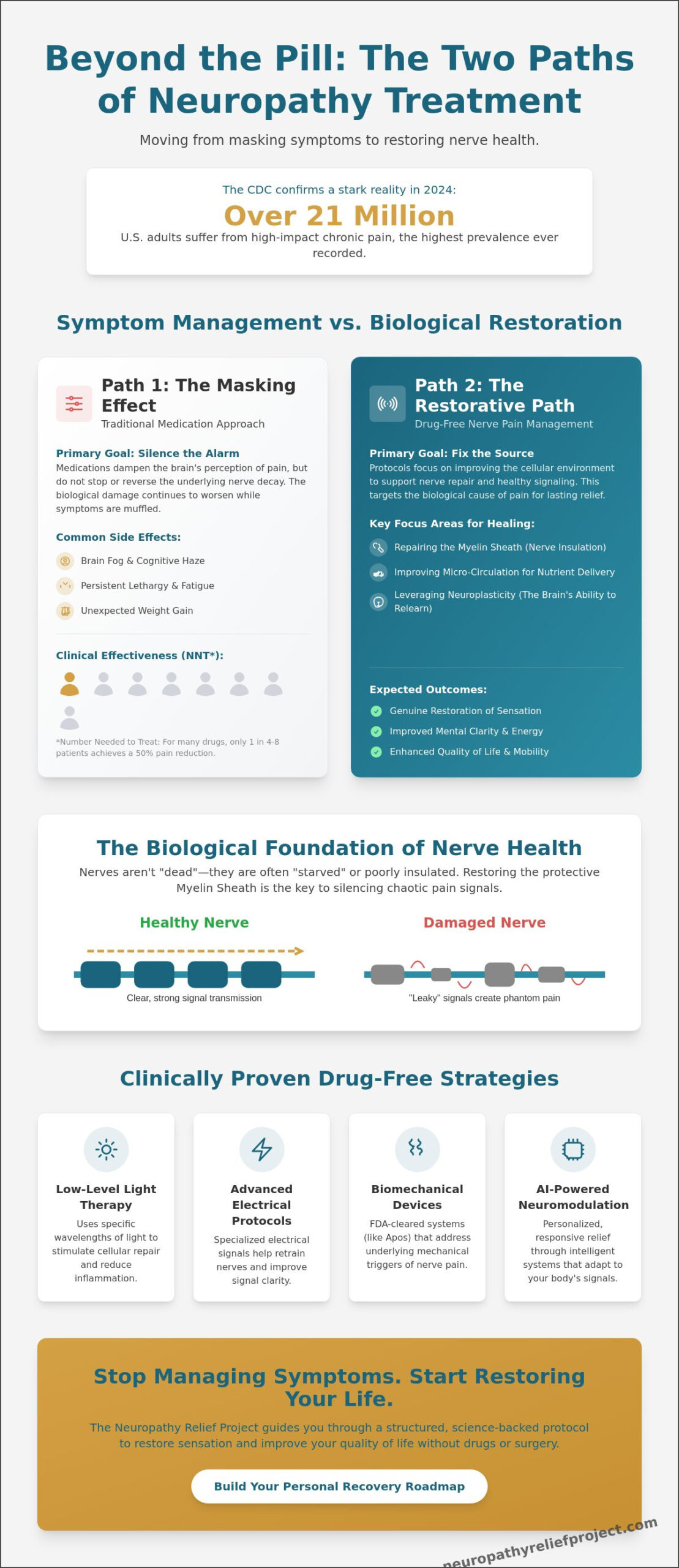
What if the medications prescribed to silence your nerves are actually preventing them from ever truly recovering? If you’re tired of living in a haze of brain fog while still feeling that sharp “walking on glass” sensation, you’ve likely realized that masking symptoms isn’t the same as healing. In 2024, reports from the CDC confirmed that over 21 million U.S. adults suffered from high-impact chronic pain, the highest prevalence ever recorded. Effective drug-free nerve pain management isn’t about simply “toughing it out.” It’s a strategic shift from chemical masking to biological restoration.
At the Neuropathy Relief Project, we understand the fear that comes with persistent numbness and the exhaustion of nighttime burning flares that steal your sleep. You deserve a path that prioritizes your cellular health over temporary sedation. This article will show you how to move beyond pills and utilize clinical, non-invasive strategies for genuine recovery. We’ll explore 2026 clinical breakthroughs, from FDA-cleared biomechanical devices like the Apos system to AI-powered neuromodulation that offers personalized, responsive relief. It’s time to stop managing your symptoms and start restoring your life.
Key Takeaways
- Understand the “masking effect” of standard medications and why true restoration requires addressing the biological root of nerve decay.
- Explore the vital roles of the myelin sheath and micro-circulation in stopping phantom pain and delivering essential nutrients to your nerves.
- Evaluate the clinical effectiveness of Low-Level Light Therapy and advanced electrical protocols as proven tools for drug-free nerve pain management.
- Learn how to build a personalized recovery roadmap by identifying your specific neuropathy triggers and assessing the extent of nerve damage.
- Discover how the Neuropathy Relief Project guides you through a structured, science-backed protocol to restore sensation and improve your quality of life.
Beyond the Prescription: Why Drug-Free Nerve Pain Management is Gaining Momentum
If you experience the relentless sting of peripheral neuropathy, you’ve likely been told that your only options are “pills for the pain.” However, drug-free nerve pain management is gaining momentum in 2026 because patients are tired of the trade-off. This approach uses non-invasive, non-pharmacological protocols to stimulate actual nerve health rather than just silencing the alarm. It’s a shift from merely surviving the day to actively restoring your body’s internal communication system.
Standard medications often create what clinicians call a “masking effect.” These drugs dampen your brain’s perception of neuropathic pain, but they don’t stop the underlying nerve decay. While the signal is muffled, the biological damage continues to worsen. This is the core difference between a palliative approach, which only addresses the misery, and a restorative approach, which targets the cause. Many patients find themselves trapped in a cycle of increasing dosages while their physical mobility continues to decline.
The cost of these prescriptions often includes more than just the pharmacy co-pay. Patients frequently report a heavy “cognitive fog” that makes daily tasks feel insurmountable. Combined with persistent lethargy and unexpected weight gain, these side effects can make you feel like a passenger in your own life. Choosing a drug-free path is often about reclaiming that lost clarity and energy.
The Limitations of Traditional Nerve Medications
If you’ve tried taking ibuprofen or naproxen for your tingling feet, you already know they don’t work. Nerves don’t respond to standard NSAIDs because the pain isn’t caused by simple tissue inflammation; it’s caused by damaged signaling. Clinical data highlights a high “number needed to treat” (NNT) for many common neuropathy prescriptions. In many studies, the NNT is between 4 and 8, meaning only one out of every several patients achieves a 50% reduction in pain. Most people seek a drug-free nerve pain management alternative once they realize the side effects are outweighing the minimal comfort provided by their daily pill regimen. Understanding why most neuropathy treatments fail and what the science says about real relief is often the turning point that motivates patients to explore a fundamentally different approach.
Restoring Sensation vs. Numbing the Body
There’s a profound difference between numbing a limb and revitalizing it. Numbing is a temporary retreat; revitalizing is an active recovery. Nerve restoration is the process of improving the cellular environment to support signal clarity and support natural healing. At the Neuropathy Relief Project, we don’t believe you should have to choose between natural care and scientific evidence. Our philosophy bridges the two, focusing on the biological processes that allow a nerve to repair itself. We want to help you move from a state of chemical sedation back to a state of genuine sensation.
The Biological Foundation of Non-Invasive Nerve Restoration
If you experience a constant burning in your feet or sharp, electric shocks in your hands, your body is reporting a biological breakdown. To understand drug-free nerve pain management, we must look at the myelin sheath. Think of this as the protective insulation around an electrical wire. When this sheath thins or degrades, your nerves begin to “leak” signals, creating the phantom sensations of pain or tingling that aren’t tied to an actual external injury. Restoring this insulation is the first step toward silencing those chaotic signals.
Many patients fear that once a limb goes numb, the nerves are “dead.” This is a common myth that often leads to unnecessary despair. In reality, nerves are frequently just dormant or “starved” due to a lack of resources. The nervous system possesses a remarkable quality called neuroplasticity; it’s the ability of your nerves to reorganize and relearn healthy signaling patterns. By changing the environment surrounding the nerve, we can encourage these pathways to revitalize rather than continue to decay.
Effective Non-drug pain management techniques focus on this environmental shift. Instead of using chemicals to block the brain’s reception, we look at the cellular requirements for repair. When the biological foundation is supported, the frequency of “phantom” pain signals naturally decreases.
The Role of Micro-Circulation in Nerve Health
Nerves are living tissues that require a constant, high-volume supply of oxygen and nutrients. This delivery happens through a complex network of tiny blood vessels called the vasa nervorum. If these vessels become constricted or damaged, your nerves effectively begin to starve. Starved nerves don’t just go quiet; they send out frantic distress signals in the form of burning, stinging, or “pins and needles” sensations. Our approach to non-drug nerve relief focuses on increasing blood flow to these extremities, ensuring your nerves have the oxygen they need to function without firing distress signals.
Cellular Energy and Mitochondrial Function
At the heart of nerve repair is ATP, the primary energy currency of your cells. Mitochondria produce this energy, but chronic inflammation acts like a clog in the system, preventing ATP from being used for tissue regeneration. If cellular inflammation remains high, drug-free nerve pain management becomes much more difficult. The Neuropathy Relief Project focuses on identifying the specific triggers of this inflammation, whether they’re related to toxicity, metabolic issues, or mechanical stress. Once these triggers are removed, your mitochondria can finally provide the fuel necessary for restorative health. If you’re ready to look beneath the surface of your symptoms, you can explore our specialized protocols to see how we address these cellular foundations.
Comparing Drug-Free Modalities: What Actually Works for Neuropathy?
If you’ve ever felt like you’re constantly walking on glass, you’ve likely realized that generic solutions don’t cut it. Effective drug-free nerve pain management isn’t about finding one “miracle” tool. It’s about selecting modalities that align with the biological requirements for nerve repair. While traditional medicine often stops at the prescription pad, clinical restoration focuses on the specific needs of Peripheral Neuropathy, a condition that affects nearly 30 million Americans as of 2024.
Low-Level Light Therapy (LLLT) is one of the most promising tools for restoration. It works by delivering specific wavelengths of light that penetrate the skin to reach the mitochondria. This process stimulates the production of ATP, the cellular fuel required for repairing the myelin sheath and reducing the sharp, electric sensations that disrupt your day. Without this energy, your nerves remain in a state of “suspended decay” regardless of how many pills you take.
Electrical stimulation is another area where clinical precision matters. Most people are familiar with standard TENS units, which use a low-voltage current to distract the brain from pain. However, clinical-grade protocols use much more sophisticated waveforms. These are designed to retrain the nerve pathways and improve signal clarity. When combined with specialized nutrition to reduce systemic inflammation, these technologies create an environment where nerves can finally begin to revitalize.
Clinical Technology vs. Home Remedies
There’s a significant gap between consumer-grade gadgets and clinical-grade technology. While home devices might provide mild comfort, clinical-grade light therapy often delivers significantly higher power density, which is required to trigger actual cellular change. A multi-modal approach succeeds because it attacks the problem from multiple angles; tech handles the stimulation while nutrition provides the raw materials for repair. You can learn more about how to vet these options in our peripheral neuropathy reversal program guide.
The Importance of a Structured Protocol
Trying a “little bit of everything” rarely works for chronic nerve damage. Nerves require a steady, methodical rhythm to heal. A science-backed schedule ensures that your cells receive the stimulation they need at the exact intervals required for growth. By focusing on sensory changes, like the reduction of nighttime burning or the return of sensation in your toes, you can track your recovery with confidence. This methodical pacing is a core part of the Neuropathy Relief Project, transforming a confusing health struggle into a manageable, research-driven journey.
Building Your Personal Roadmap for Nerve Health Without Medication
If you’re tired of being told to “just live with it,” you need a structured plan that moves beyond generic advice. Effective drug-free nerve pain management isn’t a one-size-fits-all solution; it’s a methodical process of identifying why your nerves are failing and providing the exact environment they need to heal. By following a science-backed roadmap, you can transition from a state of constant distress to a state of active restoration.
Your journey toward recovery should follow these four essential steps:
- Step 1: Identify the root cause. You must determine if your symptoms stem from diabetic complications, toxicity, or one of many hidden triggers.
- Step 2: Assess the severity. A professional review of your current nerve function helps determine how much of the myelin sheath remains intact and what level of intervention is required.
- Step 3: Implement circulation-boosting habits. Nerves cannot repair themselves without oxygen. Targeted nutrition and movement protocols are essential to “feed” the starving tissue.
- Step 4: Monitor sensory changes. Recovery isn’t always linear. If you notice your sharp burning sensation transitioning into a strange “fuzziness,” don’t be alarmed; this is often a clinical sign of dormant nerves beginning to wake up.
Identifying Your Specific Triggers
If you experience persistent tingling but your blood sugar levels are normal, you may be dealing with idiopathic neuropathy causes that traditional tests often miss. Identifying these hidden triggers is the only way to stop the cycle of decay. To support your nerves daily, consider these “nerve-safe” habits: avoid restrictive footwear that limits blood flow, prioritize foods rich in antioxidants to fight cellular inflammation, and maintain a consistent sleep schedule to allow for tissue repair. Small, deliberate changes in your daily routine create the cumulative effect needed for long-term relief.
When to Seek Professional Intervention
There is a specific point where home remedies and lifestyle changes are no longer sufficient to prevent permanent nerve death. If you’ve begun to lose your balance or if the numbness has moved from your toes to your ankles, early intervention is critical. Waiting too long can lead to a loss of mobility that is much harder to reverse. A free nerve pain consultation is often the most efficient starting point to determine if your condition requires advanced clinical technology. If you’re ready to stop guessing and start healing, you can request a clinical review of your symptoms to see which restorative protocols are right for your specific needs.
How the Neuropathy Relief Project Facilitates Your Recovery Journey
If you’ve spent years searching for answers only to be met with more prescriptions, the Neuropathy Relief Project offers a different perspective. We don’t view your condition as a set of symptoms to be silenced; we see it as a biological challenge that requires a mission-driven approach. By framing our work as a “Project,” we emphasize a collaborative, ongoing effort toward your restoration. This isn’t about a quick fix. It’s about providing a clear, science-backed path for drug-free nerve pain management for those who feel lost in a healthcare system that often prioritizes volume over individual outcomes.
Our focus on national accessibility ensures that regardless of your location, you have access to specialized knowledge. We understand the daily frustration of living with chronic nerve pain, and our goal is to provide a sense of hope through clinical authority. Effective drug-free nerve pain management starts with an expert-led narrative that validates your struggle while presenting a structured solution. Our protocols act as a bridge, combining natural restoration with the highest level of scientific evidence.
What Happens During Your Discovery Call?
The first step in your recovery is a 15-minute free phone consultation designed to reduce anxiety and provide clarity. The environment is calm and professional; it’s a space where you can share your experience without feeling rushed. During this call, we evaluate how Dr. Sclafani’s non-invasive protocols might apply to your specific case. If you experience persistent numbness, tingling, or nighttime burning, we’ll look at your history to see if you’re a candidate for our restorative approach. This conversation marks your transition from a pain victim to an active recovery participant. To understand exactly what to expect and how to prepare, you can learn more about what a free nerve pain consultation for peripheral neuropathy restoration involves before you call.
Your Next Step Toward Freedom from Nerve Pain
The ultimate goal of our work is your liberation from the constant distress of neuropathy. We want to help you revitalize your nerve health so you can return to the activities you love without the weight of chemical side effects or the fog of medication. There are no high-pressure sales tactics here; just a logical, methodical flow toward a better quality of life. If you’re ready to explore a path that prioritizes your cellular health and long-term recovery, your journey starts with a simple conversation.
Schedule your 15-minute FREE phone Consultation today
Your Path to Lasting Nerve Restoration Starts Here
In 2026, the path to recovery is clearer than ever for the over 21 million Americans struggling with high-impact chronic pain. You now understand that true restoration requires moving beyond the masking effect of medications to address the biological needs of your nerves. By focusing on micro-circulation and mitochondrial health, you’re providing the oxygen and energy your myelin sheath needs to repair itself. This shift from palliative care to active regeneration is the foundation of effective drug-free nerve pain management.
The Neuropathy Relief Project, led by Dr. Michael J. Sclafani, DC, is dedicated to guiding you through this transition with specialized, non-invasive protocols. We don’t just want to muffle your symptoms; we want to help you revitalize your cellular health and regain the mobility you thought was gone forever. It’s time to stop managing the decay and start facilitating the restoration.
Take the first step toward a future without the fog of medication or the fear of permanent loss. Book Your 15-Minute FREE Neuropathy Consultation today to discuss your specific symptoms and explore your clinical options. Relief is possible, and you don’t have to navigate this journey alone.
Frequently Asked Questions
Can I really manage nerve pain without taking any medication?
Yes, you can manage and often reverse nerve pain by shifting your focus from symptom masking to biological restoration. Clinical protocols for drug-free nerve pain management prioritize increasing micro-circulation and repairing the myelin sheath. While medications simply muffle the brain’s reception of pain signals, restorative techniques aim to fix the damaged signaling at the source. This approach allows your body to heal naturally while avoiding the cognitive fog often associated with prescriptions.
How long does it take to see results from a drug-free neuropathy program?
Most patients begin to notice sensory shifts within the first 4 to 12 weeks of a consistent, science-backed protocol. Recovery is a gradual process because nerves are slow-growing tissues, typically regenerating at a rate of roughly one millimeter per day. You might first notice that nighttime burning flares decrease in intensity or that your balance feels more stable. Consistent adherence to your daily roadmap is essential for achieving these long-term measurable results.
Is drug-free nerve management safe for people with diabetes?
Yes, these non-invasive methods are exceptionally safe for individuals with diabetes. Research published in 2025 indicates that approximately 50% of people with diabetes will develop neuropathy, making targeted care vital. Because these protocols are non-pharmacological, they don’t carry the risk of drug interactions or metabolic side effects that could complicate blood sugar management. By improving circulation in the extremities, these techniques support the specific vascular needs of diabetic patients while promoting overall cellular health.
What is the most effective non-invasive technology for nerve repair?
Low-Level Light Therapy (LLLT) is widely considered one of the most effective tools for stimulating mitochondrial ATP production. This cellular energy is the primary fuel required for repairing damaged nerve tissue. When combined with clinical-grade electrical stimulation, which uses specific waveforms to retrain nerve pathways, the results are significantly more robust than using a single device. This multi-modal approach ensures that the nerve is both energized and correctly re-wired for healthy signaling.
Will my insurance cover drug-free neuropathy treatments?
Insurance coverage varies significantly depending on the specific modality used. While Medicare and private insurers in 2026 often provide reimbursement for certain neuromodulation devices, many regenerative therapies like PRP or stem cell injections are currently considered elective and require out-of-pocket payment. We recommend a professional review of your specific plan. Our 15-minute consultation can help you understand which clinical options are most accessible within your current coverage framework.
What happens if I stop taking my current nerve medication to try a drug-free approach?
You should never stop or alter your current medication schedule without a supervised tapering plan from your prescribing physician. Abruptly quitting nerve medications can lead to rebound pain or withdrawal symptoms. A successful transition to drug-free nerve pain management involves introducing restorative protocols while slowly reducing chemical reliance under medical guidance. This ensures your nervous system remains stable as it begins the process of natural revitalization and recovery.
Can drug-free methods help with the “walking on glass” sensation in my feet?
Yes, non-invasive strategies are specifically designed to address the “walking on glass” sensation by revitalizing the sensory nerves in your feet. This feeling is often caused by a breakdown in signal clarity due to poor micro-circulation. By increasing blood flow and reducing cellular inflammation, these methods help restore normal sensation. Many patients report that as their nerves begin to wake up, this sharp, crystalline pain transitions into a milder fuzziness before eventually fading. If you’ve already tried standard prescriptions without success, learning about the cycle of failed neuropathy treatments and the science behind breaking it can help you understand why a biological restoration approach may finally deliver the results you’ve been seeking.