

What if the persistent numbness in your feet isn’t a permanent price you paid for your life, but a biological signal that your nerves are simply waiting for the right restorative environment to heal? If you experience the daily frustration of fumbling with shirt buttons or the quiet fear of falling because you can’t feel the floor, you’ve likely been told that chemo induced neuropathy recovery is a waiting game. It’s exhausting to live in a body that feels like it’s wearing heavy, invisible gloves when you’re just trying to drive or walk to the mailbox.
At the Neuropathy Relief Project, we believe you deserve more than a “wait and see” approach. Approximately 30% to 40% of patients still struggle with these symptoms six months after treatment, but recent clinical evidence, such as the SMILE study results published on February 10, 2026, confirms that targeted interventions can improve motor scores and reduce numbness. We promise to show you a clear, non-drug path to restoring sensation and reducing that electric-shock pain. You’ll learn the biological science of nerve regeneration and discover a structured roadmap to revitalize your cellular health and reclaim your independence.
Key Takeaways
- Understand why symptoms often peak months after your final infusion and how the “coasting effect” impacts your nervous system.
- Discover how repairing the myelin sheath and supporting your mitochondria are the biological keys to successful chemo induced neuropathy recovery.
- Learn the critical difference between masking pain with traditional medication and utilizing a restorative approach that targets the root cause of nerve damage.
- Identify the specific steps required to assess the severity of your nerve fiber damage and create a biological environment conducive to healing.
- Explore the mission-driven philosophy of the Neuropathy Relief Project and how we bridge clinical evidence with natural restoration for long-term relief.
Why Chemo-Induced Neuropathy Persists After Treatment Ends
Completing your final round of chemotherapy is a milestone that should feel like a total victory. For many survivors, however, the celebration is cut short by a rising tide of numbness and pain. This condition, known as Chemotherapy-induced peripheral neuropathy (CIPN), is a toxic response of your nervous system to life-saving medications. While your oncology team focused on eliminating the cancer, the very agents used to save your life often leave behind a legacy of cellular distress. It’s frustrating to feel that your survival is being overshadowed by a body that no longer feels like your own.
If you find that your symptoms are actually worsening weeks after your last infusion, you aren’t imagining things. This is a documented phenomenon called the “coasting effect.” Specific agents, particularly Platinum-based drugs like oxaliplatin and Taxanes like paclitaxel, don’t leave the body the moment the IV is removed. These toxins can linger in the nerve tissues, causing damage to continue even after treatment stops. In many cases, the peak of nerve pain doesn’t occur until three to six months after the final dose. This delay is why a proactive plan for chemo induced neuropathy recovery is so vital; you’re often fighting a battle that is still evolving internally.
The Difference Between Temporary Irritation and Lasting Damage
If you experience persistent tingling, it’s a sign that your nerves are struggling to self-repair. The body’s natural healing process often stalls after oncology treatment because the cellular “machinery” is simply overwhelmed. Chronic inflammation acts like static on a phone line, preventing clear signals from reaching your brain. As of October 2025, data shows that 30% to 40% of patients still experience these symptoms six months post-treatment. Without intervention, this “temporary” irritation can settle into a permanent state of dysfunction as the nerve fibers lose their ability to communicate.
Recognizing the Sensory Signals of CIPN
CIPN presents through two distinct types of signals. “Positive” symptoms are those your body adds to your experience, such as burning, tingling, or electric-shock sensations. “Negative” symptoms are things the body loses, like numbness, coldness, or the loss of balance that makes walking feel treacherous. In 2026, these sensory losses impact every facet of your life, from the safety of driving to the simple joy of holding a grandchild’s hand. These symptoms typically follow a “stocking-glove” pattern, where the damage begins in the furthest tips of the toes and fingers and gradually moves up the limbs in a symmetrical fashion. Recognizing these signals early is the first step toward a successful chemo induced neuropathy recovery project.
The Biological Mechanics of Nerve Regeneration and Repair
If you’ve felt the sharp, electric shocks or the dull weight of numbness in your hands and feet, it’s helpful to visualize what’s happening beneath the surface. Your nerves are protected by the myelin sheath, a fatty layer of insulation that ensures signals travel quickly and clearly. Chemo agents often strip this insulation away, leaving the “wire” exposed and vulnerable. This exposure is why signals become garbled, leading to the confusing sensations you’re currently experiencing. The good news is that the peripheral nervous system possesses a remarkable capacity for neuroplasticity. Unlike the brain and spinal cord, these peripheral nerves can reorganize and repair themselves if given the correct biological support. Achieving chemo induced neuropathy recovery isn’t about just managing pain; it’s about providing the specific building blocks for this re-insulation process. It’s a methodical journey, but your body is biologically wired to seek this state of balance.
Mitochondrial Health and Nerve Energy
Inside every nerve cell sit mitochondria, the tiny power plants responsible for producing cellular energy. Chemotherapy is notoriously hard on these structures, often disrupting their DNA and slowing down energy production to a crawl. When your nerve cells lack energy, they can’t perform the heavy lifting required for repair or maintenance. This energy deficit often results in “phantom” pain signals; the cell is essentially misfiring because it lacks the power to maintain its resting electrical state. Restoring mitochondrial health is a primary pillar of our work at the Project. By focusing on cellular health, we help your body shift from a state of survival to one of active restoration. For a broader perspective on how these treatments affect your system, you can consult the National Cancer Institute guide to peripheral neuropathy. It’s also worth noting that other common medications, such as cholesterol-lowering drugs, can compound this cellular energy crisis; understanding statin induced neuropathy and its impact on mitochondrial function is especially relevant for cancer survivors managing multiple medications.
The Role of Micro-Circulation in Restoration
Nerve repair is an oxygen-intensive process that requires a steady flow of nutrients. Unfortunately, chemotherapy often damages the microscopic capillaries that supply your nerves with blood. When these vessels are compromised, your nerves are effectively starved of the oxygen they need to heal. This is why we place such a heavy emphasis on oxygenation and micro-circulation. For true chemo induced neuropathy recovery to occur, the body must engage in angiogenesis, which is the growth of new blood vessels. This process creates a fresh delivery vehicle for the nutrients that revitalize damaged tissue. Without this blood flow, the nerves remain in a dormant, damaged state. If you’re ready to move beyond temporary fixes, exploring our restorative protocols can provide the structured path your body needs to reclaim its natural function and sensory clarity.
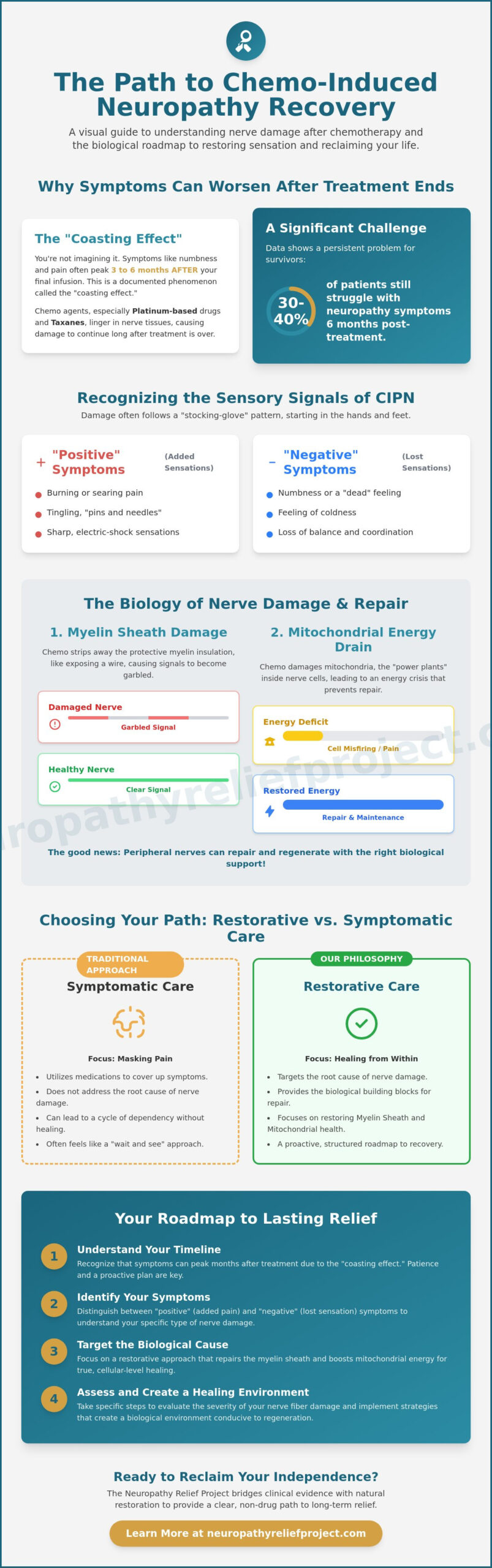
Restorative vs. Symptomatic Care: Choosing Your Path
If you’ve visited your oncologist or a neurologist regarding persistent nerve pain, you were likely handed a prescription for an anti-seizure or anti-depressant medication. While these drugs can be a lifeline for some, they often leave survivors feeling “stalled” in their journey. This happens because traditional pharmacy options typically focus on the brain’s perception of pain rather than the actual health of the peripheral nerves. It’s a masking approach that turns down the volume on the “screaming” nerve signals without ever addressing the source of the noise. For a true chemo induced neuropathy recovery, the focus must shift from merely surviving the symptoms to actively restoring the biological structures that allow for sensation and balance.
Choosing a restorative path means looking at the nerve as a living organ that requires specific conditions to heal. Many survivors find that while their burning sensations might decrease on medication, the numbness and lack of coordination remain unchanged. This is because masking agents don’t encourage the regrowth of capillaries or the repair of the myelin sheath we discussed earlier. In a post-cancer health plan, prioritizing non-invasive, non-drug protocols is essential to avoid adding further toxic load to a system that’s already been through so much. By focusing on the root cause, you move beyond temporary relief toward a permanent reclamation of your physical freedom. Cancer survivors managing heart health alongside their recovery should also be aware that commonly prescribed cholesterol medications may contribute to nerve symptoms; learning about the connection between statin induced neuropathy and peripheral nerve damage can help you have a more informed conversation with your care team.
Why Traditional Nerve Drugs Often Fail to Provide Long-Term Relief
In 2026, the conversation around neuropathy medication has shifted toward a greater awareness of long-term side effects, including persistent “brain fog,” dizziness, and fatigue. These medications are designed to numbing the pain, but they don’t have the biological capacity for restoring the sensation. If you’re looking for a way to actually feel the ground beneath your feet again, you’ll find that a pharmacy-only approach is often insufficient. You can explore the specific limitations of these methods and the benefits of non-drug nerve relief to understand why a multi-dimensional strategy is necessary for lasting results.
The Science of Non-Drug Nerve Relief
The shift toward technology-driven, non-pharmacological interventions is backed by recent clinical evidence. For example, the SMILE study results published on February 10, 2026, demonstrated that alternating magnetic field therapies could significantly improve motor scores and reduce numbness even when pain scores remained complex. This highlights a critical truth: your nerves can be revitalized through targeted stimulation and cellular health protocols. By utilizing non-drug methods like wireless neuromodulation or specialized pressure devices, you create a foundation for chemo induced neuropathy recovery that doesn’t rely on a pill bottle. This drug-free path is particularly vital for cancer survivors who want to revitalize their bodies without the risk of additional chemical toxicity.
Your Step-by-Step Roadmap to Chemo-Induced Neuropathy Recovery
Recovery is a deliberate project, not a passive event. To move toward chemo induced neuropathy recovery, you need a structured sequence that respects the biological pace of nerve repair. The first step involves assessing the severity of your nerve fiber damage. This isn’t just about identifying where it hurts; it’s about mapping the “dead zones” where sensation has been lost. By understanding the current state of your sensory fibers, we can tailor the intensity of the restorative protocols to your specific needs. It’s a methodical transition from simply surviving to actively thriving.
Once the baseline is established, the roadmap follows a logical biological order designed to support the body’s natural healing mechanisms:
- Reducing Nerve Inflammation: You can’t rebuild a house while it’s on fire. We focus on calming the cellular distress that prevents repair signals from being received by the brain.
- Restoring Micro-Circulation: As discussed earlier, nerves require oxygen-rich blood to heal. This step ensures that the biological “fuel” reaches the furthest extremities of your hands and feet.
- Stimulating Regeneration: We use targeted, non-invasive protocols to encourage the myelin sheath to re-insulate the exposed nerve fibers, restoring clear signal transmission.
- Maintenance and Stability: The final step is about protecting your progress and ensuring your nervous system remains stable and resilient against future stressors.
If you’re ready to move beyond the frustration of “wait and see,” you can schedule a consultation with the Neuropathy Relief Project to begin your personalized assessment and start your restoration journey.
Implementing Lifestyle Changes for Nerve Support
Your daily habits serve as the foundation for this restorative work. Hydration is critical; even mild dehydration can thicken the blood and slow down micro-circulation to the small nerve endings. We also emphasize nutrient density, specifically focusing on antioxidants that protect the mitochondria from further oxidative stress. For those struggling with balance, we recommend specific, low-impact exercises like seated heel-to-toe movements. These movements safely improve proprioception, which is your body’s ability to sense its position in space, without overtaxing your nervous system. For more practical daily management tips, you can read our guide on what helps neuropathy in feet.
Monitoring Your Recovery Progress
Healing isn’t always a linear path of feeling “better” every day. In fact, a temporary increase in tingling or a “fizzy” sensation can often be a positive sign of re-awakening nerves. As the nerve fibers begin to fire again, they may send erratic signals before they fully stabilize. It’s important to set realistic timelines; nerve tissue is some of the slowest-growing tissue in the human body, often repairing at a rate of just one millimeter per day. Consistency is the most important factor in your chemo induced neuropathy recovery. Skipping steps or stopping protocols too early can stall the angiogenesis process before the new blood vessels have a chance to fully mature and support the growing nerve fibers.
The Neuropathy Relief Project: A Compassionate Path to Restoration
If you’ve felt dismissed by the standard healthcare system, you aren’t alone. Many survivors are told that their burning and numbness are simply the price of beating cancer. At the Neuropathy Relief Project, we reject that narrative. We view chemo induced neuropathy recovery as a collaborative effort between the patient and the specialist. Dr. Michael Sclafani has built this mission-driven project on a singular philosophy: bridging the gap between rigorous clinical evidence and the body’s innate capacity for natural restoration. We don’t just look at your symptoms; we look at the cellular health of your nervous system to find where the healing process has stalled.
A 15-minute dedicated consultation can be the catalyst that changes your entire recovery trajectory. During this discovery call, there’s no pressure and no high-sales tactics. Instead, you’ll find a calm, expert-led conversation focused entirely on your lived experience. We’ll discuss your specific sensory signals, whether it’s the “electric shocks” in your fingers or the loss of balance that keeps you from the activities you love. Our goal is to provide a sense of hope and a clear, structured path forward for those who feel lost in the aftermath of oncology treatment.
Why a Specialized Review is Critical for Survivors
General oncology follow-ups are vital for monitoring your primary health, but they often lack the specialized tools to address micro-circulation and nerve regeneration in depth. Moving beyond the “wait and see” advice is the first step toward revitalization. By receiving a professional perspective on your specific sensations, you gain an advocate who understands the biological mechanics of your pain. This collaborative “Project” approach ensures that your long-term health is managed with the same intensity as your initial cancer treatment. It’s about moving from a state of survival into a state of active, vibrant recovery.
Start Your Recovery Project Today
Preparing for your free phone consultation is simple. Take a moment to note when your symptoms are most intense and which daily tasks, like driving or buttoning a shirt, have become the most difficult. Understanding the importance of early neuropathy treatment is essential for preventing permanent fiber loss. As of May 2026, research continues to show that the sooner we can address mitochondrial health and blood flow, the better the long-term outcomes for chemo induced neuropathy recovery. Don’t wait for the damage to become a permanent fixture in your life. Reclaim your freedom of movement and the simple joy of feeling the world around you again by starting your restoration project today.
Reclaim Your Physical Freedom and Sensation
You’ve learned that the “coasting effect” doesn’t have to be a permanent sentence. By shifting your focus from masking symptoms with traditional medications to actively supporting mitochondrial health and micro-circulation, you create the biological conditions necessary for repair. Your peripheral nerves have a surprising ability to reorganize; they just need the right roadmap to find their way back to clarity. Achieving chemo induced neuropathy recovery is a methodical project that requires moving beyond the “wait and see” approach often found in general oncology follow-ups.
Led by Dr. Michael Sclafani, DC, the Neuropathy Relief Project utilizes non-invasive, drug-free protocols with a specialized focus on nerve restoration and cellular health. If you’re tired of the frustration that comes with a loss of balance or the constant burning in your feet, take a moment to change your trajectory. Book Your FREE 15-Minute Nerve Recovery Consultation Today and discover how a structured, scientific path can help you revitalize your nerves. You’ve fought a hard battle to survive; now it’s time to thrive in a body that feels like your own again.
Frequently Asked Questions
Is chemo-induced neuropathy permanent?
Chemo-induced neuropathy isn’t necessarily a permanent condition because peripheral nerves possess the biological capacity to regenerate. Under the right restorative conditions, these nerve fibers can grow at a rate of approximately 1 millimeter per day. While 30% to 40% of survivors still experience symptoms six months after their final treatment, providing the correct cellular environment can shift the body from a state of chronic damage to one of active repair.
How long does it take for nerves to heal after chemotherapy?
Nerve restoration is a methodical process that typically requires 6 to 12 months of consistent support to see significant results. Because nerve tissue is some of the slowest-growing tissue in the human body, your chemo induced neuropathy recovery won’t happen overnight. Most survivors notice a gradual progression where the intensity of burning or electric-shock pain decreases before the deeper numbness in the hands or feet begins to recede.
Can I drive if I have numbness in my feet from chemo?
Driving with significant numbness is a safety risk because it prevents you from accurately sensing the position and pressure of the brake and gas pedals. If you can’t feel the floor of the car or distinguish between pedals by touch alone, your reaction times and vehicle control are compromised. It’s essential to have a professional assessment of your sensory and motor scores to ensure you can operate a vehicle safely without endangering yourself or others.
What are the best vitamins for chemo-induced neuropathy recovery?
Clinical research often highlights B-complex vitamins, Alpha-lipoic acid, and Acetyl-L-Carnitine as essential for supporting mitochondrial health and nerve repair. These nutrients provide the raw materials needed for energy production within the nerve cells. However, it’s also important to be aware that taking too much of certain B vitamins can itself become a problem; learn more about how vitamin B6 nerve damage can occur when supplementation exceeds safe thresholds. For a complete chemo induced neuropathy recovery, these supplements should be part of a broader roadmap that also addresses micro-circulation and the reduction of chronic inflammation in the nervous system.
Does exercise help or hurt chemo-induced neuropathy?
Targeted, low-impact exercise helps the recovery process by stimulating micro-circulation and improving proprioception, which is your body’s ability to sense its position. While high-impact activities might feel overwhelming, gentle movements like seated heel-to-toe exercises encourage the growth of new capillaries. These blood vessels are the primary delivery vehicles for the oxygen and nutrients your nerves require to rebuild the damaged myelin sheath.
Why is my neuropathy getting worse months after I finished chemo?
This worsening is a documented phenomenon called the “coasting effect,” where chemotherapy drugs continue to damage nerve tissues long after your final infusion. Specific toxins, particularly platinum-based agents, can linger in the nervous system for several months. This delay explains why many patients find their symptoms peak three to six months after finishing oncology treatment, emphasizing the need for a proactive restorative plan even after the cancer is gone.
What happens during the free 15-minute neuropathy consultation?
The discovery call is a focused, 15-minute conversation where we listen to your specific symptoms and explain our mission-driven approach to nerve restoration. We don’t use high-pressure sales tactics; instead, we provide a professional perspective on whether our non-drug protocols are the right fit for your needs. It’s a chance to get answers to your questions and see if a collaborative “Project” approach can help you reclaim your physical freedom.
Are there non-drug treatments for CIPN that actually work?
Technology-driven treatments like neuromodulation and alternating magnetic field therapy have shown measurable success in clinical trials. For example, the SMILE study results published on February 10, 2026, demonstrated that these non-pharmacological interventions improved motor scores and reduced numbness. Unlike traditional drugs that only mask the brain’s perception of pain, these methods focus on revitalizing cellular health and encouraging the biological repair of the damaged nerve fibers.