

What if the medication prescribed to save your heart is the very thing causing you to feel like you’re walking on glass? If you’ve mentioned a burning or tingling sensation to your doctor only to be told the side effect is “too rare” to be the cause, you aren’t alone. While the March 2026 ACC/AHA guidelines emphasize reaching LDL-C goals as low as 55 mg/dL for high-risk patients, many individuals find themselves caught in a silent struggle with statin induced neuropathy. You know the sensation is real, and the fear of permanent disability can feel just as heavy as the worry over your cholesterol levels.
At the Neuropathy Relief Project, we believe you shouldn’t have to choose between your heart and your hands. This article will validate your experience with clinical data and reveal why this condition is often a manageable cellular energy crisis rather than a mandatory trade-off. We’ll provide a clear strategy to mitigate nerve damage while maintaining your cardiovascular health, showing you how it’s possible to revitalize your cellular health and restore the sensation you thought was gone. We’ll explore the conflicting research and present a structured path toward recovery and freedom from chronic pain.
Key Takeaways
- Understand the delayed timeline of nerve damage and why symptoms often surface months or even years after starting your cholesterol medication.
- Uncover the biological “energy crisis” behind statin induced neuropathy, specifically how these drugs can impact the protective myelin sheath and mitochondrial function.
- Learn why simply stopping your medication may not provide immediate relief and what clinical steps are necessary to support genuine nerve regeneration.
- Discover actionable strategies to protect your heart and nerves simultaneously, including the role of targeted nutritional support and non-statin alternatives.
- Explore a mission-driven approach to recovery that focuses on revitalizing cellular health rather than just masking the sensations of burning and numbness.
What is Statin-Induced Neuropathy? Defining the Connection
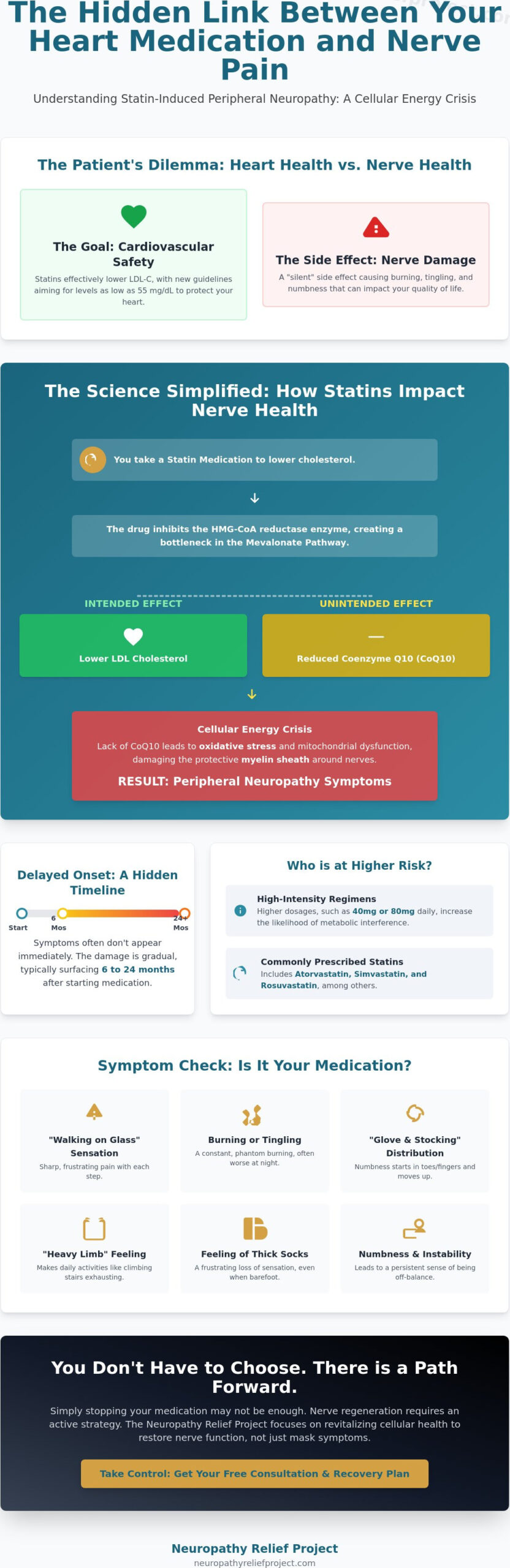
If you experience a persistent, phantom burning in your toes that seems to worsen at night, you might be experiencing statin induced neuropathy. This condition is defined as a toxic interference with nerve sheath integrity caused by the long-term use of cholesterol-lowering drugs. While these medications are vital for cardiovascular safety, they can inadvertently disrupt the delicate biological balance required to maintain your peripheral nerves. Most patients don’t notice the damage immediately. Instead, the onset is slow; it often appears 6 to 24 months after the initial prescription. This delay is precisely why so many clinicians misdiagnose the pain as “just getting older” or label it as idiopathic, which simply means they don’t know the cause.
The sensory profile of this condition is distinct and frustrating. It often starts as a mild numbness that evolves into a “walking on glass” sensation or a “heavy limb” feeling that makes daily activity exhausting. You might feel like you’re wearing thick socks when your feet are bare, or you may notice a vibrating, electric hum in your legs. These aren’t just minor side effects. They are clear signals from your nervous system that the cellular environment has been compromised. At the Neuropathy Relief Project, we recognize that these symptoms are real, and they require a specialized approach to restoration.
Common Statins Linked to Nerve Symptoms
Several widely prescribed Statin medications, including Atorvastatin, Simvastatin, and Rosuvastatin, have been linked to these sensory changes. Research suggests that the risk isn’t uniform across all patients. Higher dosages, such as 40mg or 80mg daily, appear to increase the likelihood of cellular metabolic interference. If you’re on a high-intensity regimen to meet the 2026 LDL-C goal of 55 mg/dL, your nerves are working harder to maintain their insulation. The medication effectively starves the nerve of the very fats it needs to stay healthy, leading to that heavy sensation that makes climbing stairs feel like an endurance test. It’s a trade-off that many patients aren’t warned about when they start their treatment.
Symptom Check: Is it the Medication?
Distinguishing this pain from other causes of peripheral neuropathy requires looking closely at the pattern of sensation. Statin-linked damage typically follows a “Glove and Stocking” distribution. This means numbness and tingling begin at the furthest points of the body, like the tips of the toes or fingers, and gradually move upward. Unlike a temporary “foot falling asleep” sensation, this discomfort is constant and doesn’t improve with stretching or movement. It’s also vital to understand that symptoms may persist even if you stop the medication. Because the nerve sheath has been structurally compromised, your body needs an active strategy for regeneration rather than just the absence of the drug. Without a structured recovery plan, the damage can linger, leaving you with a permanent sense of instability.
The Science of Damage: How Statins Impact Nerve Health
Understanding why your body is reacting this way is the first step toward regaining control over statin induced neuropathy. When you take a statin, the drug inhibits an enzyme called HMG-CoA reductase. While this successfully lowers your LDL-C, it also creates a biological bottleneck in the mevalonate pathway. This pathway is responsible for producing more than just cholesterol; it’s the factory for Coenzyme Q10 (CoQ10), a vital nutrient your nerves crave for energy production and protection against oxidative stress. Without enough CoQ10, your nerve cells lose their primary defense against unstable molecules that cause cellular rust.
This process, known as oxidative stress, eventually breaks down the protective barrier of the nerve. Clinical reviews on How Statins Can Affect Nerves highlight that this isn’t just a simple side effect; it’s a fundamental shift in how your cells manage energy. If you feel like your symptoms are progressing despite your best efforts, a free consultation can help clarify if this metabolic shift is the primary driver of your discomfort. By identifying the root cause, we can begin to look at restoration rather than just symptom management.
The Role of the Myelin Sheath
Your nerves are wrapped in a protective coating called the myelin sheath, which acts much like the rubber insulation on an electrical wire. This sheath is incredibly rich in lipids. In fact, cholesterol makes up a significant portion of its structure. When statin induced neuropathy occurs, the lipid-lowering effect of the medication can inadvertently thin this insulation. Without a robust myelin layer, the electrical signals traveling through your nerves begin to leak or misfire. This structural breakdown is what creates the erratic signals of burning and tingling that keep you awake at night.
Mitochondrial Energy and Nerve Repair
Nerve cells are some of the most energy-demanding cells in your entire body. They rely on mitochondria, the power plants of the cell, to produce ATP for constant repair and maintenance. Statins can interrupt the electron transport chain within these power plants, essentially starving the nerve of the fuel it needs to heal. This mechanism of starvation is quite similar to the metabolic interference seen in vitamin b6 nerve damage, where a nutrient imbalance triggers a sensory crisis. When your mitochondria can’t keep up with the daily wear and tear, the damage accumulates, leading to the chronic numbness and weakness you’re experiencing today.
Myth-Busting: 3 Misconceptions About Statins and Nerves
When you’re struggling with chronic pain, being told your symptoms are an “unlikely coincidence” can feel like a secondary injury. Many patients find themselves caught between their cardiovascular requirements and a nervous system that’s screaming for help. To find a path toward restoration, we must first clear away the misconceptions that often prevent people from seeking the specialized care they need. At the Neuropathy Relief Project, we’ve seen how these myths keep patients stuck in a cycle of numbness and frustration.
The first major myth is that statin induced neuropathy is a rare side effect that only affects a tiny fraction of the population. While major muscle injuries like rhabdomyolysis occur in less than 0.1% of users, sensory nerve complaints are reported far more frequently in real-world clinical settings. Labeling a side effect as rare is cold comfort to the person who can no longer feel their feet. A 2019 study highlighted that the risk of nerve damage increases significantly with long-term exposure, yet many patients are still told their symptoms are simply a byproduct of aging. Understanding the broader relationship between neuropathy and aging can help clarify why older patients on long-term statin therapy face a compounded risk to their nerve health.
Another common misconception is the belief that stopping the medication will immediately fix the nerves. Patients often expect that once the “trigger” is gone, the burning and tingling will vanish overnight. In reality, your nerves may have suffered structural damage to the myelin sheath or mitochondrial exhaustion. We often call this the “statin hangover.” Unlike the relatively predictable timelines seen in chemo induced neuropathy recovery, statin-linked damage requires an active protocol to revitalize the cellular environment. Passive waiting rarely leads to full sensation restoration.
Reality Check: The Frequency of Nerve Complaints
If you feel like your concerns aren’t being heard, trust your body’s sensory signals over general statistics. Many early 2000s studies failed to track peripheral nerve health as a primary outcome, leading to an underreporting of sensory issues. With the March 2026 ACC/AHA guidelines pushing for even lower LDL-C goals, more patients are on higher-intensity dosages. This aggressive treatment makes it more important than ever to monitor for early signs of numbness before the damage becomes more difficult to reverse.
Why ‘Just Stopping’ Isn’t Always the Answer
Simply walking away from your medication can be dangerous for your heart, and it often doesn’t provide the relief you expect. Because statin induced neuropathy involves a metabolic energy crisis, your nerve cells need specific nutritional and biological support to rebuild. We focus on a mission-driven approach that helps you transition from merely “managing” a side effect to actively restoring your cellular health. This involves a structured plan to provide the “power plants” of your cells with the fuel they’ve been missing, ensuring your nerves can finally heal while you maintain your cardiovascular safety.
Navigating the Heart-Health vs. Nerve-Health Dilemma
Finding a balance between a healthy heart and functional nerves often feels like an impossible choice. You’re told that aggressive cholesterol management is non-negotiable, yet the daily reality of statin induced neuropathy makes even a simple walk to the mailbox a painful ordeal. This conflict doesn’t have to be your permanent reality. The March 2026 ACC/AHA guidelines advocate for personalized risk assessments and the use of non-statin therapies when traditional medications cause significant side effects. If you’re struggling with statin induced neuropathy, you have options that don’t involve choosing between a heart attack and permanent nerve damage.
One of the most effective ways to bridge this gap is through targeted nutritional support, specifically Coenzyme Q10 (CoQ10). Because statins block the production of this vital nutrient, your nerves are left without their primary source of antioxidant protection. Supplementing with high-quality CoQ10 can help mitigate some of the oxidative stress mentioned earlier, potentially allowing you to maintain your cardiovascular regimen while shielding your peripheral nerves. At the Neuropathy Relief Project, our philosophy is rooted in this specialized restoration. We believe in providing your body with the biological tools it needs to revitalize cellular health while you work alongside your medical team to manage your lipid profile.
Questions to Ask Your Cardiologist
If you’re ready to advocate for your nerve health, your next appointment is the perfect time to start a collaborative conversation. Don’t feel pressured to simply “tough it out.” Use these specific questions to guide the discussion:
- “Given my nerve symptoms, can we trial a 30-day ‘statin holiday’ to see if the burning and numbness subside?”
- “Are non-statin alternatives like PCSK9 inhibitors or bempedoic acid appropriate for my current cardiovascular risk?”
- “If we reduce my dosage, can we use coronary artery calcium (CAC) scans to monitor my risk more precisely?”
Supporting the Micro-Circulation
Repairing damaged nerves requires a steady supply of oxygen and nutrients, which are delivered through your micro-circulation. Think of your blood flow as the delivery truck for nerve repair; if the roads are blocked, the “parts” never arrive. You can support this process through non-invasive methods like light therapy, gentle movement, and anti-inflammatory lifestyle adjustments. This foundation of non-drug nerve relief is essential for creating the environment your nerves need to heal. If you feel lost in the healthcare system and need a clear strategy to reclaim your sensation, book your free 15-minute consultation to discuss a personalized path forward.
A Path Forward: The Neuropathy Relief Project Approach
Living with the constant hum of nerve pain isn’t just a physical burden; it’s an emotional one that can leave you feeling isolated. When you’ve been told that your burning feet are a “rare” price to pay for heart health, it’s easy to feel like you’ve run out of options. The Neuropathy Relief Project was founded to act as a knowledgeable guide for those who feel lost in the traditional healthcare system. We don’t focus on masking the sensations with heavy medications that often leave you feeling groggy or disconnected. Instead, we target the biological root of statin induced neuropathy: the energy starvation and mitochondrial collapse of your nerve cells. By addressing this cellular crisis, we aim to revitalize the dormant fibers in your hands and feet, moving you toward a life defined by freedom rather than limitation.
If you experience the “walking on glass” sensation or a persistent numbness that makes daily activity difficult, it’s time to shift the focus from the problem to a potential outcome. Our protocols are designed to support the natural regenerative processes of your peripheral nerves. In 2026, as the medical community pushes for more intensive cholesterol management, our mission is to ensure your nerve health isn’t a casualty of your cardiovascular goals. We treat your recovery as a collaborative effort, providing a clear, scientific path toward restoring the sensation you thought was lost forever.
What to Expect in Your Free Consultation
If you’re unsure whether your symptoms are directly linked to your cholesterol medication, our 15-minute free phone consultation provides the clarity you’ve been seeking. During this call, we perform a sensory-focused review of your specific numbness and pain patterns. We’ll discuss when your symptoms first appeared relative to your medication history and determine if your nerve damage is still within the “reversible” window. This is a calm, expert-led discussion where your symptoms are validated, not dismissed, helping you understand the “Total Burden” of your nerve health and what can be done to lighten it.
Your Journey Toward Restoration
Our identity as a “Project” signifies our commitment to research-driven results and long-term recovery. We believe that early intervention is the most significant factor in overcoming the metabolic interference caused by statins. By choosing a path that prioritizes cellular health and micro-circulation, you’re taking a definitive step toward reclaiming your independence. Don’t let another year pass feeling like you’re trapped in a body that doesn’t respond correctly. We’re here to help you navigate the complexities of nerve regeneration with specialized knowledge and deep empathy.
Schedule your 15-minute FREE phone Consultation today and start your journey toward relief and restoration.
Reclaiming Your Sensation and Your Future
You now understand that the burning and numbness you feel aren’t just an unavoidable part of aging or a mandatory trade-off for heart health. We’ve explored how statin induced neuropathy stems from a specific cellular energy crisis that requires a targeted, active response. By focusing on mitochondrial repair and protecting the myelin sheath, it’s possible to revitalize damaged tissues rather than simply masking the pain. You don’t have to navigate this complex intersection of cardiovascular and neurological health on your own. Your nerves can recover.
The Neuropathy Relief Project offers a clear path toward recovery through our non-invasive, drug-free restoration protocols. Under the expert review of Dr. Michael J. Sclafani, DC, we provide specialized care with a national reach, supporting patients across the United States. If you’re ready to move beyond “living with it” and want to see if your sensation can be restored, we’re here to help. Book Your Free 15-Minute Nerve Review Consultation today to discuss your specific symptoms. There is genuine hope for relief, and your journey toward freedom starts with a single, informed step.
Frequently Asked Questions
Can statins cause permanent nerve damage?
Permanent nerve damage can occur if the structural integrity of the myelin sheath is compromised for an extended period without any intervention. While the body has a remarkable capacity for nerve regeneration, delaying treatment increases the risk of long-term sensory loss. Our protocols focus on revitalizing these fibers before the damage becomes irreversible, helping you reclaim the freedom of movement you once had.
How long after starting statins does neuropathy begin?
Symptoms of statin induced neuropathy typically don’t appear immediately after your first dose. Most patients report the onset of burning or tingling between 6 and 24 months after starting their medication. This delayed reaction is exactly why many people fail to connect their new foot pain to a pill they’ve been taking for over a year, leading to frequent misdiagnosis as age-related discomfort.
Will nerve pain go away if I stop taking statins?
Stopping the medication doesn’t always guarantee that your nerve pain will vanish overnight. Because the medication causes a metabolic energy crisis in the mitochondria, your nerves may remain in a state of starvation even after the drug is out of your system. You often need an active restoration plan to rebuild the protective insulation and restore normal electrical signaling to the brain.
Is there a specific statin that does not cause neuropathy?
No specific statin is entirely free from the risk of causing nerve symptoms. All HMG-CoA reductase inhibitors work by blocking the same biological pathway that produces cholesterol and CoQ10. Some clinical observations suggest that hydrophilic statins like Pravastatin may be less likely to penetrate nerve tissues than lipophilic ones like Simvastatin, but individual sensitivity and dosage levels remain the primary risk factors.
Can I take CoQ10 to prevent statin-induced neuropathy?
Supplementing with CoQ10 is a scientifically sound way to support your nerves while on cholesterol medication. Since statins block the mevalonate pathway, they inadvertently reduce the CoQ10 levels your mitochondria need for energy production. While this can help prevent further decline, existing damage to the nerve sheath often requires more intensive, non-invasive protocols to achieve full restoration of sensation.
What should I do if my doctor says my neuropathy isn’t from my statin?
If your doctor dismisses your concerns, you should advocate for a more detailed review of your specific sensory patterns. Ask about the “Glove and Stocking” distribution and mention that your symptoms align with documented cases of statin induced neuropathy. You can also schedule a free 15-minute consultation with the Neuropathy Relief Project to get a specialized assessment of whether your medication is the likely driver of your pain.
What are the first signs of statin-induced nerve damage?
The first signs often include a subtle numbness in the tips of your toes or a faint tingling that feels like a buzzing sensation. You might also feel like there is a fold in your sock that isn’t actually there, or notice that your feet feel unusually heavy when you walk. These early indicators are your nervous system’s way of signaling that its cellular health is being compromised by metabolic interference.
Are there non-drug ways to manage the burning and tingling?
You can manage the burning and tingling through several non-drug protocols that focus on micro-circulation and cellular energy. We use specialized systems to boost oxygenation and nutrient delivery to the nerve endings, which helps restart the repair process. These non-invasive methods avoid the grogginess of traditional pain pills while providing a clear path toward long-term recovery and freedom from chronic discomfort.