

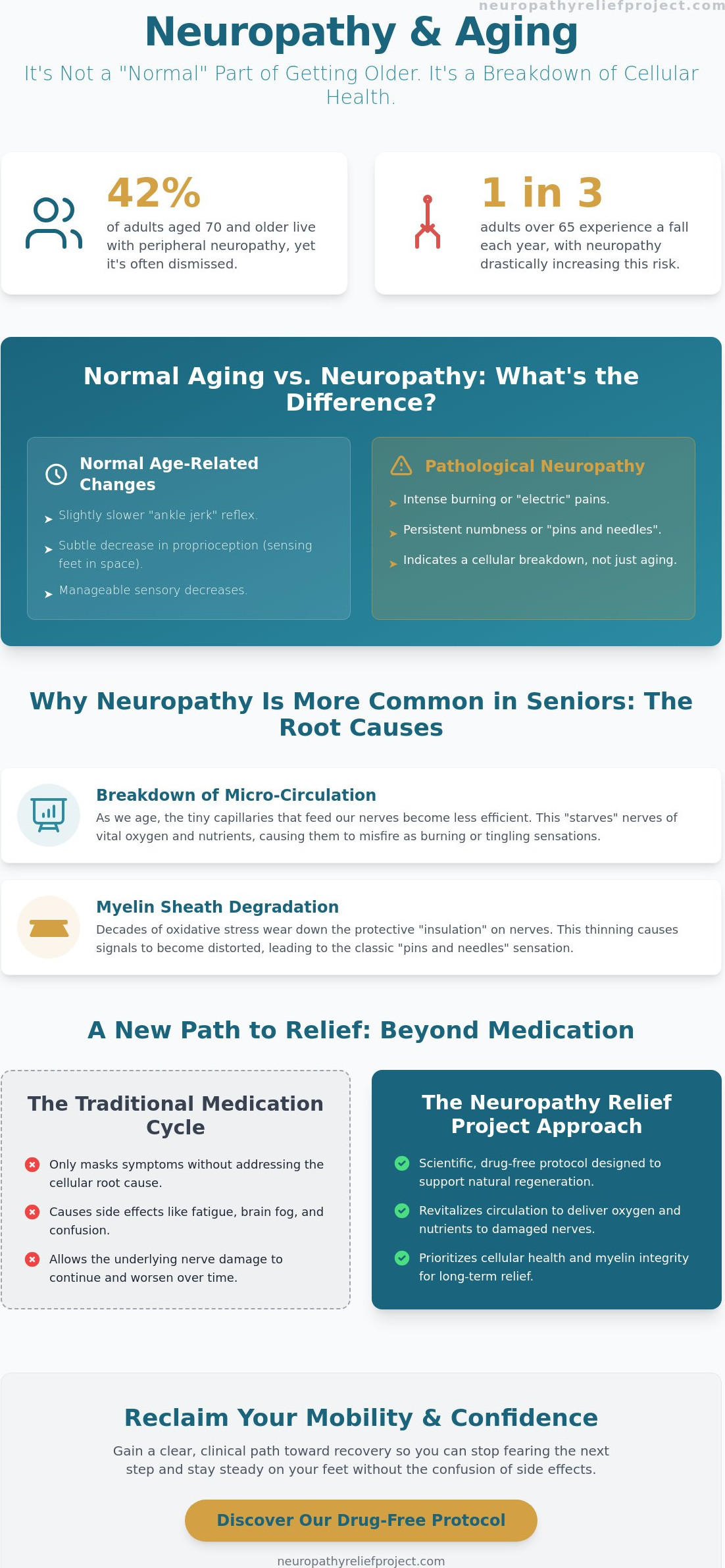
Did you know that approximately 42% of adults aged 70 and older live with peripheral neuropathy? If you’ve been told that the burning in your feet or the numbness in your toes is just a normal part of getting older, you likely feel dismissed and frustrated. It’s common to worry that losing your balance today means losing your independence tomorrow, especially since one in three adults over 65 experiences a fall each year. You don’t have to accept a life of managing symptoms with medications that leave you feeling foggy or fatigued while the underlying neuropathy and aging process continues unchecked.
At the Neuropathy Relief Project, we understand that aging narrows the safety margin for nerve health, but it shouldn’t steal your freedom. This guide explores the critical link between nerve vulnerability and the passage of time to show you how restorative, drug-free care can revitalize your mobility. We’ll examine the biological root causes of your discomfort and preview a non-invasive path toward recovery so you can stay steady on your feet without the confusion of side effects. It’s time to find a scientific approach that prioritizes your cellular health and long-term relief.
Key Takeaways
- Identify the distinct biological shift between normal aging and the cellular breakdown that causes chronic numbness or burning.
- Uncover why the intersection of neuropathy and aging often leads to sensory ataxia and an increased risk of life-altering falls.
- Learn why traditional medications often mask the problem and how to avoid the dangerous cycle of side effects from multiple prescriptions.
- Discover a scientific, drug-free protocol designed to revitalize your circulation and support the natural regeneration of your peripheral nerves.
- Gain a clear, clinical path toward reclaiming your mobility and confidence so you can stop fearing the next step.
The Biological Intersection of Neuropathy and Aging
Think of your peripheral nervous system as your body’s high-speed communication network. It’s a complex web of fibers that carries vital messages from your brain to your hands and feet. As the years pass, it’s natural for this system to experience some wear. You might notice your “ankle jerk” reflex is slightly slower or your proprioception, which is your brain’s ability to sense where your feet are in space, feels less precise than it did in your youth. Research indicates that roughly two-thirds of individuals over 65 experience these subtle alterations in proprioceptive sensitivity. The intersection of neuropathy and aging represents a specific challenge for the peripheral nervous system that requires a specialized understanding.
There is a critical distinction between these mild, age-related shifts and the actual damage of Peripheral neuropathy. While things may naturally slow down, the intense burning, persistent numbness, or sharp “electric” pains often associated with neuropathy and aging are not normal. These symptoms indicate a breakdown in the system rather than a simple passage of time. Understanding this difference is the first step toward finding a solution that works and reclaiming your comfort.
Sensory vs. Motor Nerve Changes After 65
After you cross the age of 65, the amplitude of your sensory signals, which represent the volume of information your nerves send to your brain, often begins to decrease. This can lead to subtle numbness that many seniors dismiss as part of the aging process. If you experience a loss of motor neurons, you might also find that your muscle strength and coordination aren’t what they used to be. The danger lies in the tipping point, where these manageable sensory decreases evolve into chronic pain. When the communication between your brain and your limbs becomes garbled, your risk of injury increases significantly.
The Myelin Sheath: Your Nerves’ Aging Armor
Your nerves are protected by a specialized coating called the myelin sheath. Think of it as the insulation on an electrical wire. It ensures that signals travel with clarity and speed without leaking out. Over several decades, oxidative stress can degrade this protective layer, leaving the underlying nerve fiber vulnerable to damage. When the myelin thins, signals become distorted, which often results in the tingling or “pins and needles” sensations that disrupt your daily life. Restorative care within the Neuropathy Relief Project focuses heavily on myelin integrity. By supporting the health of this protective armor, it’s possible to revitalize signal clarity and help you reclaim the freedom of movement you deserve.
Neuropathy in seniors is a pathological breakdown of cellular health and nerve function, not an inevitable consequence of growing older.
Why Peripheral Neuropathy is More Common in Your Senior Years
Time is a cumulative force. For your nervous system, the passing decades represent a long history of metabolic stress and blood sugar fluctuations. While a younger body possesses a wide “safety margin” for error, the biological reality of neuropathy and aging is that this margin narrows over time. What might have been a minor metabolic hiccup in your 40s can become a catalyst for nerve damage in your 70s. This increased vulnerability means that your nerves are more susceptible to environmental and internal triggers than they were in previous years.
A major factor in this shift is the breakdown of micro-circulation. Your peripheral nerves are among the most energy-demanding tissues in your body, relying on a dense network of microscopic capillaries to deliver oxygen and essential nutrients. As we age, these tiny vessels can become less efficient. When your nerves are “starved” of this vital support, they begin to misfire or send distress signals in the form of burning and tingling. This vascular decline is one of the most significant causes of peripheral neuropathy in older adults, highlighting the complex relationship between neuropathy and aging.
According to the Cleveland Clinic, Peripheral neuropathy affects millions of people, often stemming from these systemic issues that reach a “tipping point” in later life. If you’ve felt that your symptoms appeared out of nowhere, it’s often the result of this long-term, invisible erosion of cellular health that finally crossed the threshold of your body’s ability to compensate.
The Role of Chronic Conditions and Medications
Managing chronic conditions like Type 2 diabetes is a reality for many seniors, with up to 50% of diabetics eventually developing nerve damage. Long-term management of blood sugar can place an immense strain on capillary health, leading to nerve death over time. Additionally, the medications used to treat other senior health concerns can sometimes interfere with nerve function. A growing trend in senior care is the recognition of statin-induced neuropathy, where cholesterol-lowering drugs may inadvertently disrupt the fatty myelin sheath that protects your nerves.
Nutritional Deficiencies in the Aging Gut
Your ability to absorb nutrients changes as you age. The “aging gut” often struggles to extract Vitamin B12, a cornerstone of nerve repair, even if you’re eating a healthy diet. However, more isn’t always better. Many seniors turn to high-dose supplements to compensate, but this can lead to vitamin b6 nerve damage, where an excess of a vital nutrient actually becomes toxic to sensory nerves. Maintaining nerve health requires a precise, scientific balance of bioavailable nutrients rather than guesswork. If you’re feeling overwhelmed by your symptoms and want to find a clear path forward, scheduling a 15 minute FREE phone Consultation can provide the clarity you need.
The Mobility Crisis: How Nerve Damage Impacts Balance and Fall Risk
If you’ve ever felt like you’re “walking on cotton” or balancing on shards of glass, you’re experiencing the physical manifestation of a communication breakdown. This sensory distortion is a hallmark of how neuropathy and aging collide to create a silent mobility crisis. When your peripheral nerves stop providing accurate data, your brain loses its internal map of where your feet are in relation to the floor. Clinically, we call this sensory ataxia. It’s a state where your body’s GPS is offline, leaving you feeling untethered and unsteady with every step you take.
The stakes of this disconnection are incredibly high. In 2026, nearly one in three adults aged 65 and older experiences a fall each year. While many medical professionals focus on muscle weakness or inner ear issues, they often overlook the underlying nerve damage that makes a steady gait impossible. With over 1 million fall-related hospitalizations occurring among older adults annually, addressing nerve health isn’t just about comfort; it’s about survival. The fear of falling often triggers a heartbreaking psychological spiral. You might find yourself staying home more often, avoiding social gatherings, or skipping your daily walk. This isolation leads to muscle wasting and further balance degradation, creating a “downward spiral” that can feel impossible to escape.
The Proprioception Breakdown
Your nerves are designed to send constant, lightning-fast spatial data to your brain’s balance centers. When these signals become garbled, you may fall into the “visual dependency trap.” This happens when your brain decides it can no longer trust your feet and begins to rely solely on your eyes to navigate. If you struggle to walk in the dark or feel panicked when walking across a thick rug, your proprioception is likely compromised. You can assess your risk by noticing if you frequently “furniture walk” or if you feel dizzy the moment you close your eyes while standing. These are clear signs that the neuropathy and aging process is impacting your safety.
Preserving Independence Through Nerve Clarity
While a walker or cane can provide a physical brace, these tools don’t address the root cause of your instability. True freedom comes from restoring nerve signal clarity. By focusing on the biological health of your nerves, it’s possible to revitalize the connection between your feet and your brain. Confident, independent living depends on your ability to feel the ground beneath you. Early intervention is the key to stopping the progression of damage and avoiding the trauma of a fracture or nursing facility placement. Our mission at the Neuropathy Relief Project is to help you reclaim that connection so you can move through the world with the assurance you once had.
Modern Challenges in Senior Nerve Care: Why Drugs Aren’t the Answer
If you’ve visited a doctor for burning or numbness, you were likely handed a prescription for gabapentin or Lyrica. In 2026, retail pharmacies are expected to hold a 56.7% market share in the neuropathic pain treatment industry, reflecting a system that relies heavily on pills. While these medications are common, they present a significant challenge for seniors. These drugs act like a volume knob, muting the pain signals reaching your brain without ever addressing why the nerves are dying in the first place. This “masking” effect is dangerous because it allows the underlying neuropathy and aging process to worsen while you feel temporarily better.
Seniors face unique risks with polypharmacy, which is the use of multiple medications simultaneously. Adding nerve blockers to a list that might already include blood pressure or cholesterol meds increases the likelihood of severe side effects. Gabapentinoids are notorious for causing dizziness, confusion, and “brain fog” in older adults. When you’re already struggling with balance, the combination of neuropathy and aging alongside these cognitive side effects significantly increases your risk of a life-altering fall. True relief requires addressing cellular health rather than just blocking pain signals.
The Failure of the ‘Wait and See’ Approach
Many seniors are told to just “monitor” their symptoms, but this passive approach is a recipe for disaster. Ignoring a slight tingling in your 60s often leads to total numbness and loss of mobility by your 70s. There’s a persistent myth that nerves cannot regenerate in older populations, but clinical evidence suggests otherwise. When provided with the right biological environment, your peripheral nerves maintain a remarkable capacity for repair. Traditional medicine often overlooks these restorative protocols, leaving patients stuck in a cycle of decline.
The Shift Toward Restorative, Non-Drug Protocols
There’s a growing demand for non-drug nerve relief among health-conscious seniors who want to maintain their independence. Instead of muting the brain, modern restorative care focuses on improving micro-circulation and oxygenation at the source of the damage. By stimulating blood flow to the tiny capillaries surrounding your nerves, you can provide the fuel necessary for natural repair. Non-invasive technologies now allow us to manage chronic inflammation and revitalize nerve function without the systemic risks of heavy medication. Learn how to revitalize your nerve health by scheduling a 15 minute FREE phone Consultation today.
Reclaiming Your Independence: The Neuropathy Relief Project Approach
Living with chronic nerve pain shouldn’t be a solitary struggle. At the Neuropathy Relief Project, we’ve moved away from the standard clinic model to create a mission-driven advocacy focused on long-term recovery. We recognize that the intersection of neuropathy and aging requires more than a five-minute appointment and a new prescription. Our philosophy bridges the gap between clinical science and natural restoration, focusing on the biological processes that allow nerves to heal when given the right stimulus. We call ourselves a “Project” because we view your recovery as a collaborative, ongoing effort toward a specific goal: reclaiming your freedom.
By framing our work as a project, we emphasize research-backed results and a dedication to the specific niche of nerve health. We act as your knowledgeable guide, helping you navigate a healthcare system that often feels dismissive or overly reliant on pharmacological band-aids. Our goal is to provide a sense of hope and a clear path toward recovery for those who feel lost. We believe that understanding the root cause of your pain is the only way to find a non-invasive path to lasting relief.
A Personalized Roadmap for Nerve Restoration
If you experience the sensation of “walking on glass” or persistent burning that keeps you awake, you need a strategy tailored to your unique cellular health. We don’t believe in a one-size-fits-all approach. Instead, we evaluate your specific symptoms and history to determine if you are a candidate for protocols designed to revitalize damaged tissue. Many of our patients come to us after being told by other providers that “nothing can be done” or that they just have to live with the pain. We challenge that narrative by focusing on the science of nerve regeneration and micro-vascular health. By identifying where the communication breakdown is happening, we can create a roadmap that targets the source of your discomfort.
Your Next Step Toward Freedom from Nerve Pain
The first step toward relief shouldn’t be overwhelming. We’ve found that a specialized 15-minute review is often the most effective way to identify your recovery potential without the stress of a long office visit. This discovery call allows you to speak with a specialist who understands the nuances of neuropathy and aging. It’s an opportunity to reduce the anxiety of the unknown and gain professional guidance on whether our non-invasive path is right for you. You deserve a clear roadmap back to the activities you love. Schedule your 15-minute FREE phone Consultation today to discuss your path to relief and take control of your mobility once again.
Reclaiming Your Future and Mobility
The connection between neuropathy and aging doesn’t have to mean a permanent loss of independence. You’ve learned that while aging narrows your biological safety margin, the burning and numbness you feel are signs of a treatable cellular breakdown rather than an inevitable decline. By moving away from the cycle of masking symptoms with medications and focusing on micro-circulation and nerve regeneration, you can stop the downward spiral of mobility loss. Restoring your internal “map” is the key to preventing falls and staying active in your community.
Dr. Michael J. Sclafani and the Neuropathy Relief Project specialize in these non-invasive protocols designed for seniors who have been told there are no other options. We’ve already evaluated over 1,000 patients for their nerve restoration potential, focusing on drug-free, science-backed relief that targets the root cause of your pain. You don’t have to navigate this complex journey alone. Book Your 15-Minute FREE Neuropathy Phone Consultation today to speak with a specialist about your specific symptoms. It’s time to stop just managing the pain and start your recovery. You have the power to revitalize your health and walk with confidence again.
Frequently Asked Questions
Is neuropathy a normal part of aging?
No, peripheral neuropathy is not a normal part of aging, even though it affects approximately 42% of adults over 70. While slight nerve slowing is common as we get older, sensations like burning, tingling, or sharp pain indicate a pathological breakdown of your nervous system. These symptoms are a sign of underlying damage that requires specific attention rather than passive acceptance. Recognizing the difference between neuropathy and aging is the first step toward reclaiming your comfort.
Can nerve damage be reversed in people over 70?
Yes, peripheral nerves maintain a remarkable capacity for repair even in your 70s and 80s. While some doctors might say nothing can be done, restorative protocols focus on improving micro-circulation and cellular health to stimulate nerve regeneration. By providing the right biological environment, it’s possible to revitalize damaged fibers. Our Project has evaluated over 1,000 patients to determine their specific potential for recovery and restoration through non-invasive means.
How can I tell if my balance issues are caused by neuropathy?
If you feel like you’re “walking on cotton” or need to look at your feet to stay steady, your balance issues are likely nerve-related. This condition, known as sensory ataxia, occurs when your brain loses its map of where your feet are in space. You might also notice that your balance worsens in the dark or on uneven surfaces like rugs. These are clear indicators that neuropathy and aging are impacting your proprioception and safety.
Does Medicare or insurance cover neuropathy consultations?
While many traditional treatments are covered by Medicare, our specialized 15-minute review is provided as a FREE phone consultation to help you understand your options. Medicare expanded coverage in 2023 for certain procedures like spinal cord stimulation for diabetic neuropathy. However, many newer, non-invasive restorative therapies are still considered investigational by insurance companies. We focus on providing a clear path forward so you can make informed decisions about your nerve health without initial cost.
What is the best way to prevent neuropathy as I get older?
Maintaining a healthy “safety margin” for your nerves involves managing blood sugar and ensuring proper nutrient absorption. As you age, your gut often struggles to absorb B12, which is vital for the myelin sheath that protects your nerves. You should also focus on activities that promote micro-circulation to keep your nerves oxygenated and nourished. Avoiding medications that list nerve pain as a side effect can also help protect your long-term mobility and independence.
Why does my nerve pain seem to get worse at night?
Nerve pain often intensifies at night because there are fewer environmental distractions to pull your brain’s attention away from the misfiring signals. Your body temperature and blood pressure also fluctuate as you sleep, which can irritate damaged nerve endings. If you experience burning or “electric” shocks that disrupt your rest, it’s a sign that your peripheral nervous system is in a state of high distress. This nocturnal discomfort is a common reason seniors seek restorative care.
Can certain medications for seniors actually cause neuropathy?
Yes, several common senior medications, including statins for cholesterol and certain blood pressure drugs, can interfere with nerve health. These drugs can sometimes degrade the protective myelin sheath or disrupt the delicate balance of nutrients your nerves need to survive. If you noticed your symptoms started or worsened after beginning a new prescription, it’s important to discuss these potential side effects. A specialist who understands medication-induced damage can help you identify these triggers.
What happens if I leave my neuropathy untreated?
Leaving neuropathy untreated often leads to a “downward spiral” of total numbness, muscle wasting, and a significant increase in fall risk. Because falling once doubles the chances of falling again, untreated nerve damage can quickly lead to a loss of independence or nursing facility placement. Over time, the lack of sensory feedback causes the brain to lose its connection to your limbs entirely. Early intervention is essential to stop this progression and preserve your ability to walk safely.