

What if the “walking on glass” sensation you feel every morning wasn’t a life sentence, but a signal that your nerves are starving for the right biological support? If you’re one of the 13 million Americans struggling with this condition, you’ve likely asked: is diabetic neuropathy permanent? It’s a heavy question to carry, especially when you’re paying up to $4,000 annually for medications like branded pregabalin that only dull the burning without healing the damage. You’ve been told to manage the pain, but deep down, you’re searching for a way to regain the life you had before the numbness took over.
At the Neuropathy Relief Project, we believe the “permanent” label is being dismantled by 2026 clinical breakthroughs. This article promises to show you how focusing on micro-circulation and nerve cellular health can actually trigger restoration. We’ll explore the latest evidence from the ADA 2026 Standards of Care and discuss why new Phase 3 trials for drugs like Pilavapadin, cleared on January 27, 2026, are changing the prognosis for millions. You’ll learn a clear path toward stopping the progression of disability and finally reclaiming your freedom of movement through a structured, scientific approach. Our mission is to act as your guide, helping you move from masking symptoms to revitalizing your health.
Key Takeaways
- Understand the biological anatomy of your nerves and how repairing the myelin sheath can lead to genuine nerve regeneration.
- Discover why the question “is diabetic neuropathy permanent” often stems from traditional medications that mask burning and tingling without addressing cellular decay.
- Learn a science-backed framework to revitalize your feet by stabilizing blood sugar and stimulating micro-circulation to feed starving nerves.
- Explore how the Neuropathy Relief Project provides a clear, empathetic path toward recovery, moving you from a “walking on glass” sensation toward lasting freedom.
- Identify the specific steps needed to avoid long-term disability and regain the critical sensation in your feet through targeted nerve restoration.
Understanding the “Permanent” Label in Diabetic Neuropathy
If you’ve been told that your condition is a one-way street, you aren’t alone. Diabetic neuropathy is often described as a progressive decay of nerve fibers, triggered by years of elevated blood glucose levels. This hyperglycemia causes structural damage to the delicate fibers that carry signals between your brain and your limbs. Because traditional pharmaceutical approaches focus on dampening the pain rather than rebuilding the tissue, many patients are left asking: is diabetic neuropathy permanent? The label “permanent” usually exists because current standard-of-care drugs don’t offer a cure; they only offer a quieter way to suffer.
The medical community frequently uses this term because, within the constraints of a 10 minute office visit, it’s easier to manage expectations than to explain the complex requirements for nerve cellular health. True restoration requires more than just a prescription. It involves a fundamental shift in how we treat the vasa nervorum, the tiny blood vessels that supply your nerves with oxygen. When these vessels are choked by high sugar levels, the nerve begins to starve. If we only treat the pain and ignore the starvation, the nerve will eventually die. Addressing the underlying decay is the only way to move beyond the “masking” phase of treatment.
The Medical Consensus vs. Emerging Restoration Science
Historically, the medical community operated under the belief that once a peripheral nerve was damaged, it was gone for good. However, 2026 perspectives on cellular health have shifted this narrative toward nerve plasticity. We now understand that nerves have an innate, albeit slow, ability to heal if the mitochondrial “engines” of the cell are properly supported and the toxic environment is neutralized. Nerve restoration is the biological process of repairing damaged axons and restoring the protective myelin sheath that surrounds them. This shift in thinking is why we frame our work as a “Project” rather than a standard clinic; it’s a dedicated effort to apply these emerging scientific protocols to your specific recovery.
Why Early Detection Changes the Prognosis
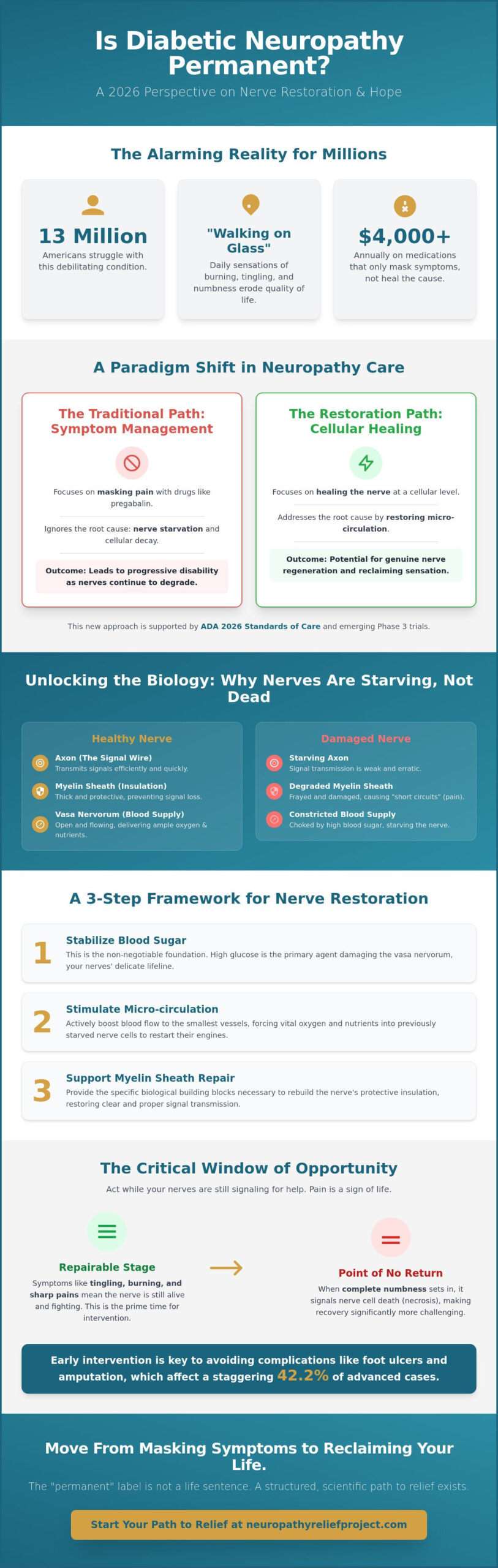
Timing is everything when it comes to avoiding long-term disability. There is a “point of no return” where nerves become completely necrotic, but most patients exist in a “stage of repairable damage” for years before reaching that cliff. If you still feel tingling, burning, or sharp pains, it means the nerve is still alive and sending signals; it’s just screaming for help. Understanding the causes of peripheral neuropathy is the first step in identifying if your nerves can still be revitalized. By intervening while you’re still in the symptomatic phase, you significantly increase the chances of regaining full sensation and avoiding the 42.2% market share of complications that lead to foot ulcers and potential amputation.
The Biology of Nerve Damage: Is Regeneration Actually Possible?
To understand why your recovery is possible, you first need to visualize the anatomy of a healthy nerve. Imagine your nerves as high-performance electrical cables. The axon is the inner copper wire that carries signals, while the myelin sheath acts as the thick rubber insulation. In a healthy state, these “cables” transmit information at lightning speed. However, chronic hyperglycemia acts like a slow-moving corrosive agent. It doesn’t just attack the nerve directly; it chokes the vasa nervorum, which is the microscopic network of blood vessels responsible for feeding your nerves. When these vessels are damaged, your nerves begin to starve for oxygen and nutrients.
Many patients are told their nerves are “dead,” but this is frequently a clinical oversimplification. In many cases, the nerves are actually dormant. They’ve entered a low-power state to survive the hostile, low-oxygen environment created by poor circulation. If you’ve spent years asking yourself is diabetic neuropathy permanent, it’s vital to recognize that a starving nerve is not necessarily a dead one. It’s a biological structure waiting for the right conditions to reboot. Regeneration isn’t about “fixing” something that’s gone; it’s about providing the cellular building blocks and blood flow required to wake up these dormant fibers.
Myelin Sheath Repair and Signal Clarity
Signal clarity in your legs and feet depends entirely on the integrity of the myelin sheath. When this insulation wears thin, electrical signals leak out into the surrounding tissue, creating those “short-circuit” sensations of burning, stinging, and tingling. Repairing this insulation is a biological priority. To do this, the body requires specific fatty acids and micronutrients that are often depleted in chronic cases. This is why we emphasize non-drug nerve relief protocols. By focusing on the biological requirements for myelin restoration, you can effectively stop the “misfiring” and regain the clear, calm sensation of healthy limbs.
Micro-Circulation: The Lifeblood of Nerve Health
Nerves are metabolic hogs that require a constant supply of oxygen to maintain their cellular health. The nerve damage caused by diabetes specifically targets the micro-circulation first. Because these tiny capillaries are so delicate, they’re the first to fail when blood sugar remains elevated. Revitalizing this blood flow is the most critical step in any restoration plan. Without opening these nutrient pathways, the nerve remains in a state of permanent decay. If you’re ready to move beyond just managing symptoms and want to see if your micro-circulation can be restored, a 15 minute free phone consultation can help you determine the best path forward for your specific situation.
Why Traditional Treatments Make Neuropathy Feel Irreversible
If you’ve visited a standard clinic for your nerve pain, you likely walked out with a prescription for Gabapentin or Lyrica. These medications are the industry standard because they’re effective at one specific task: muting the brain’s ability to process pain signals. However, this pharmaceutical approach often reinforces the belief that your condition is fixed. When the “walking on glass” sensation is replaced by a dull numbness, it’s easy to assume the problem is solved. This is the “Symptom Masking Trap.” While the drug interrupts the signal, the underlying cellular decay continues completely unchecked in the background.
This approach is why so many patients continue to ask is diabetic neuropathy permanent. If your treatment only addresses the volume of the alarm without putting out the fire, the damage will inevitably progress. Many people also struggle with significant side effects, such as brain fog, dizziness, and fatigue, which can cost as much as $87.50 in monthly co-pays for drugs like Cymbalta according to 2026 insurance data. These side effects often trade one form of disability for another, leaving you feeling disconnected from your own body while the nerves in your feet continue to starve for oxygen. It’s a frustrating cycle that leaves many feeling dismissed by a system that prioritizes management over actual recovery.
The Downward Spiral of Nerve Decay
Ignoring the root cause of nerve starvation leads to a dangerous downward spiral. When you mask the pain, you lose the body’s primary warning system. Pain is a signal from the body that the nerve is dying for help. By silencing that signal for years, you may inadvertently allow the damage to reach the “point of no return” where the tissue becomes necrotic. This false sense of security is the primary reason why neuropathy is labeled as a progressive, irreversible disease in traditional medicine. Without the signal of pain, you’re less likely to seek the micro-circulation support your feet desperately need. Many patients also find that neuropathy burning at night intensifies as the condition progresses, robbing them of the restorative sleep their bodies need to begin any healing process.
Breaking the Cycle of Dependency
Moving beyond pharmaceutical reliance requires a fundamental shift in your recovery strategy. You must move from asking “how do I stop the pain?” to “how do I fix the nerve?” This is where specialized restoration protocols come into play. By focusing on the biological environment of the nerve, it’s possible to break the cycle of dependency and start the actual healing process. If you’re tired of medications that only hide the problem, exploring drug-free nerve pain management is a critical step toward reclaiming your mobility and sensation. Our mission at the Neuropathy Relief Project is to guide you through this transition with clinical authority and genuine empathy, ensuring you have a clear path away from long-term disability.
A Science-Backed Framework for Nerve Restoration
If you’ve spent years believing the answer to is diabetic neuropathy permanent is a definitive “yes,” it’s time to examine the biological requirements for healing. Restoration doesn’t happen by accident; it follows a specific, science-backed framework designed to reverse the decay we discussed earlier. The first step is absolute glucose stabilization. Think of this as putting out the fire. Without a stable internal environment, any attempt at repair is like trying to rebuild a house while it’s still burning. Once the fire is controlled, we move to stimulating micro-circulation to reopen the nutrient pathways to your feet.
Following circulation, we focus on two final, critical stages:
- Neuromuscular Re-education: This phase teaches your brain how to process the new signals coming from your revitalized feet, reducing the risk of falls and balance issues.
- Cellular Nutrition: We provide the specific building blocks, such as specialized B-vitamin complexes and antioxidants, that your nerves require to physically rebuild their structure.
Restoring Blood Flow to the Extremities
If you experience cold feet, skin discoloration, or a heavy sensation in your legs, your micro-circulation is likely compromised. While walking is often recommended by general practitioners, it’s frequently insufficient for severe cases because the capillary beds are too collapsed to respond to simple movement. In 2026, we utilize non-invasive technologies that help “wake up” these damaged capillaries through targeted stimulation. This localized approach ensures that oxygen actually reaches the starving axons. This is the only way to reduce the persistent burning sensations and trigger the body’s natural repair mechanisms. When the blood flow returns, the healing begins. For a comprehensive, step-by-step approach to addressing these agonizing sensations, our guide to neuropathy foot pain relief outlines the specific biological strategies needed to restore comfort from the ground up.
Supporting the Myelin Repair Process
Restoring the myelin sheath is a methodical process that requires patience and the right biological environment. As you progress through a peripheral neuropathy reversal program, you’ll notice a distinct, predictable shift in sensation. Paradoxically, as dormant nerves wake up, you might feel a temporary increase in tingling or “pins and needles.” This is a positive sign that the signal is returning to the brain. Eventually, this tingling gives way to normal, healthy sensation as the myelin insulation thickens and stabilizes the electrical current. If you’re ready to start this journey and want to see if your nerves can still be revitalized, you can schedule a 15 minute free phone consultation to discuss your specific symptoms with our specialists.
Taking Control: Finding Your Path to Relief with the Neuropathy Relief Project
At the Neuropathy Relief Project, we don’t view your condition as a foregone conclusion. We operate as a mission-driven organization dedicated to bridging the gap between clinical research and patient recovery. If you’ve spent years wondering is diabetic neuropathy permanent, you deserve more than a shrug and a prescription refill. We understand the daily frustration of living with chronic nerve pain, and we balance that empathy with a high degree of clinical authority. Our goal is to provide a clear, scientific path toward recovery for those who feel dismissed by a healthcare system that often prioritizes symptom management over cellular health.
It’s vital to understand that not every case of nerve damage is identical. While we’ve discussed the potential for restoration, the reality is that assessment is the most critical step. We focus on identifying nerves that are still in the repairable stage rather than those that have reached total necrosis. Acting while you still experience sensations like burning or tingling is essential. These symptoms are evidence that the nerve fibers are still communicating, even if that communication is distorted. By intervening now, you can stop the progression toward long-term disability and start the process of revitalizing your peripheral nervous system.
Assessing Your Potential for Recovery
A standard five-minute doctor visit is often insufficient for a complex neuropathy diagnosis. General practitioners frequently lack the specialized time to conduct a deep, sensory-focused review of your specific symptoms. We take a different approach by examining the nuances of your lived experience. Do you struggle with balance? Is the numbness worse at night? Understanding these details helps us determine if your nerves are dormant or truly dead. Learning what helps neuropathy in feet requires this level of specificity, ensuring that any protocol we suggest is tailored to your unique biological environment.
Your 15-Minute Discovery Call: What to Expect
Your journey begins with a 15 minute free phone consultation. This isn’t a high-pressure sales pitch; it’s a clinical triage for your nerve health. During this call, we’ll discuss your history, your current symptoms, and the previous treatments that failed to provide relief. We’ll be honest with you: if our restoration protocols aren’t a fit for your specific case, we’ll tell you. The goal is to determine if you’re a candidate for the science-backed framework we’ve developed. It’s a methodical, calming conversation designed to reduce the anxiety of chronic pain and provide you with a structured solution. If you’re ready to see if your nerves can be restored, we’re ready to listen.
Your Path Toward Lasting Nerve Recovery
The belief that is diabetic neuropathy permanent is a barrier that has kept millions from seeking the restoration they deserve. As we’ve explored, your nerves aren’t necessarily dead; they’re often just dormant and starving for oxygen. By shifting your focus from masking pain with drugs to revitalizing micro-circulation and myelin health, you can break the cycle of progressive decay. This science-backed approach offers a clear alternative to the “walking on glass” sensation that has defined your daily life for too long.
Led by Dr. Michael J. Sclafani, DC, the Neuropathy Relief Project is committed to providing specialized non-invasive nerve restoration protocols. We act as mission-driven advocates for patients who have been told there’s no hope beyond symptom management. If you’re ready to see if your nerves can be saved, we invite you to take the first step toward freedom. Schedule Your 15-Minute FREE Neuropathy Consultation Today and discover if our protocols are the right fit for your recovery. You don’t have to navigate this journey alone, and it’s never too late to advocate for your own healing.
Frequently Asked Questions
Is diabetic neuropathy truly reversible in 2026?
Yes, many cases of nerve damage are reversible if the nerves are dormant rather than completely necrotic. While traditional medicine often claims the damage is final, modern science in 2026 suggests that many nerves are simply in a state of “starvation” due to poor blood flow. The question of whether is diabetic neuropathy permanent depends largely on whether you intervene while the nerves are still in a repairable state. Clinical protocols now focus on rebuilding the myelin sheath to restore signal clarity and function.
How long does it take for nerves to start healing?
Peripheral nerves typically regenerate at a rate of approximately one millimeter per day under optimal biological conditions. You may begin to notice sensory shifts, such as a transition from total numbness to a slight tingling, within the first 30 to 90 days of a restoration protocol. It’s a methodical process that requires consistent support for your micro-vessels. Complete recovery of sensation in the feet often takes several months of dedicated care to ensure the new tissue is stable and healthy.
Can I stop taking Gabapentin if my nerves start to heal?
You should never discontinue Gabapentin or any prescribed medication without the direct supervision and approval of your primary care physician. As your nerves begin to heal and signal clarity improves, your doctor may choose to gradually taper your dosage based on your reduced pain levels. The goal of restoration is to address the root cause of the decay so that the need for “symptom masking” drugs naturally diminishes over time. This ensures your transition away from pharmaceutical reliance is safe and managed.
What is the “point of no return” for nerve damage?
The “point of no return” occurs when nerve tissue becomes completely necrotic, meaning the cells have died and can no longer be revitalized. If you experience total, “dead” numbness with no response to deep pressure or temperature, you may be approaching this stage. However, if you still feel burning, stinging, or even occasional sharp pains, your nerves are likely still alive and sending distress signals. These signals indicate that the tissue is still in a repairable state and can respond to targeted restoration.
Does Medicare cover neuropathy restoration programs?
Medicare coverage for specialized neuropathy restoration protocols varies significantly depending on the specific technologies used in your care plan. While traditional pain management like generic duloxetine is usually covered, many emerging regenerative treatments are still classified as “investigational” in 2026. It’s important to review your specific plan’s summary of benefits for “peripheral neuropathy” services. We recommend discussing your coverage options during an assessment to understand which parts of a comprehensive protocol may be eligible for reimbursement or health savings account use.
Will my insurance pay for the 15-minute consultation?
There is no need for insurance involvement for the initial 15 minute discovery call because it is provided as a free service by the Neuropathy Relief Project. This consultation serves as a triage to determine if you are a candidate for our specific restoration protocols. We provide this at no cost to ensure that you can explore your options for recovery without the financial barrier of a co-pay. This allows us to focus entirely on your symptoms and history before any financial commitments are made.
What happens if I ignore the numbness in my feet?
Ignoring numbness is dangerous because it removes your body’s ability to detect injury, which often leads to severe complications. According to March 2026 market data, peripheral neuropathy accounts for a 42.2% share of diabetic complications that can lead to foot ulcers. If you can’t feel a small cut or blister, it can quickly progress to a deep infection or gangrene. This progression is the leading cause of non-traumatic amputations, making early intervention vital to preserving your long-term mobility and independence.
Can I heal my nerves just by controlling my blood sugar?
While stabilizing blood sugar is the essential first step to stop ongoing damage, the ADA 2026 guidelines indicate that glycemic control alone rarely reverses existing neuronal loss. Think of it as stopping a fire; once the flames are out, you still need to rebuild the charred structure. Restoration requires proactive steps to stimulate micro-circulation and provide the cellular nutrition needed for tissue repair. If you only focus on glucose, the dormant nerves may remain in their starved state indefinitely without active intervention.