

What if the key to lasting neuropathy foot pain relief isn’t about numbing your nerves, but rather about restoring the biological environment they need to heal? If you’ve spent another night staring at the ceiling because your feet feel like they’re burning or frozen, you aren’t alone. It’s a heavy burden to carry when every step feels uncertain and the fear of falling begins to shrink your world. You deserve a solution that acknowledges this daily struggle without simply reaching for another prescription bottle that leaves you feeling disconnected.
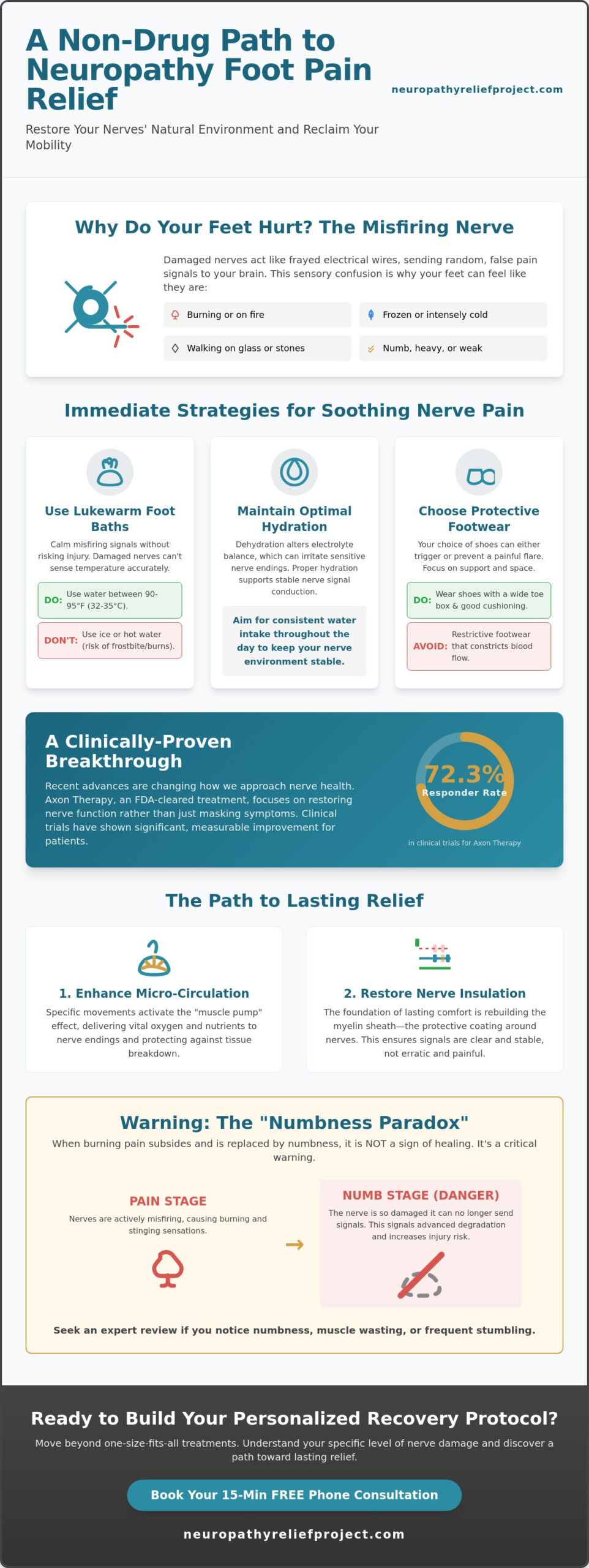
We understand that you’re looking for more than just a temporary mask for your symptoms. This guide provides a comprehensive, non-drug approach to soothing those agonizing sensations and restoring the vital feeling in your feet. Through this collaborative initiative, you’ll discover how recent clinical breakthroughs, such as the FDA-cleared Axon Therapy which showed a 72.3% responder rate in clinical trials, are changing the way we approach nerve health. We’ll walk through a methodical, step-by-step path to help you reduce daily pain levels, improve your mobility, and finally understand how to support your body’s natural repair processes.
Key Takeaways
- Understand the biological “misfiring” mechanism that transforms normal touch into the distressing sensation of burning or walking on glass.
- Learn how targeted strategies like lukewarm foot baths and optimal hydration can provide immediate neuropathy foot pain relief by stabilizing nerve conduction.
- Discover how specific movements stimulate the “muscle pump” effect to enhance micro-circulation and protect against the breakdown of nerve tissue.
- Explore the science of the myelin sheath to understand how restoring nerve insulation is the foundation of lasting comfort and sensation.
- Recognize why a personalized assessment is necessary to move beyond one-size-fits-all treatments and address your specific level of nerve damage.
Identifying the Source of Your Neuropathy Foot Pain
If you’ve ever felt like you were walking on shards of glass or hot coals, you’ve experienced the visceral reality of nerve damage. This isn’t just “discomfort” in the way a bruise or a strain might be. It’s an unpredictable, often invisible struggle that can make even the shortest walk feel like a marathon. When your nerves are damaged, they begin to misfire, sending frantic, false pain signals to your brain. Think of it like a frayed electrical wire that sparks randomly; the brain interprets these sparks as burning, stinging, or intense cold, even when your feet are physically safe. This sensory confusion is a hallmark of the condition, and finding effective neuropathy foot pain relief starts with identifying exactly which systems are under fire.
Nerve involvement isn’t limited to just one feeling. While sensory nerves cause the burning you feel, motor nerve damage can make your feet feel heavy or weak. Autonomic nerves, which control blood flow and sweat, might cause your feet to feel strangely cold or excessively dry. Gaining a comprehensive understanding of Peripheral Neuropathy helps clarify why your symptoms might shift from day to day. We view this recovery process as a collaborative effort. It’s a partnership between your lived experience and our clinical expertise to map out a path toward restoration and liberation from chronic pain.
Common Triggers for Foot Nerve Flares
Your environment and internal chemistry play a massive role in how your nerves behave. Blood sugar fluctuations are a primary culprit, as excess glucose can be toxic to the delicate endings of your longest nerves. This is a widespread challenge; research indicates that approximately 30% of people with diabetes are affected by peripheral neuropathy. You might also notice that pain peaks during the evening hours. This happens because inflammation levels naturally rise at night, and without the distractions of the day, your brain becomes more attuned to those misfiring signals. External factors, such as restrictive footwear or sudden changes in floor temperature, can also act as triggers that set off a painful flare.
When to Move Beyond Home Management
There is a dangerous phenomenon known as the “numbness paradox.” This occurs when the intense burning finally subsides, replaced by a lack of feeling. While it might feel like a relief, it often signals that the nerve is no longer able to send any signals at all. This stage increases your risk of injury or infection because you can’t feel a cut or a blister. If you notice muscle wasting in your feet or find yourself stumbling more often, these are signs of advanced degradation. It’s crucial to seek an expert review before these changes become irreversible. To help you navigate these symptoms, we offer a 15 minute FREE phone Consultation to discuss your specific situation and your path toward neuropathy foot pain relief.
Immediate Strategies for Soothing Foot Nerve Pain at Home
If you’re currently in the middle of a painful flare, you need practical tools that offer relief without the fog of heavy medication. Achieving neuropathy foot pain relief at home starts with resetting the sensory signals your feet are sending to your brain. While it’s tempting to use very hot or ice-cold water to “drown out” the pain, damaged nerves often lose their ability to accurately sense temperature. This creates a high risk of accidental burns or frostbite. Instead, try a lukewarm foot bath, ideally between 90 and 95 degrees Fahrenheit. This mild temperature provides a calming sensory input that can help quiet the “misfiring” signals without placing the skin at risk.
Hydration plays a surprisingly vital role in nerve health that many people overlook. When you’re dehydrated, the concentration of electrolytes in your blood shifts, which can increase fluid pressure in the extremities and irritate sensitive nerve endings. Drinking enough water ensures that the environment surrounding your nerves remains stable, supporting better signal conduction. While home care is a powerful first step, it’s often most effective when integrated with medically-reviewed treatment options that address the underlying nerve damage. If you’re finding that these home strategies aren’t providing the lasting comfort you need, you might benefit from a 15 minute FREE phone Consultation to explore a more structured recovery plan.
Optimizing Your Footwear for Nerve Protection
If your shoes are too tight, they act like a vice on already inflamed tissues. Wide toe boxes are essential because they allow the metatarsals to spread naturally, preventing the compression of the small nerves between your toes. You should also prioritize moisture-wicking materials to keep the skin dry and healthy, as neuropathy can sometimes interfere with your ability to sweat correctly. For a deeper look at specific recommendations, read our guide on the Best Shoes for Neuropathy Feet to find the right balance of support and protection.
The Role of Compression and Elevation
Elevation is a simple but effective way to clear metabolic waste from your lower legs. By propping your feet up above the level of your heart for 15 minutes, you assist the venous system in moving fluid away from the feet, which can reduce the “throbbing” sensation often associated with nerve pain. Be cautious with compression socks; while they help some people with swelling, they can be too restrictive for others and may actually trigger a flare. If you choose to use them, ensure they’re light grade and don’t leave deep indentations in your skin. You can also try gentle self-massage using very light, rhythmic strokes toward the heart to stimulate circulation without overstimulating the pain receptors.
Restorative Exercises to Improve Foot Stability and Circulation
While the instinct during a flare-up is to remain still, movement is a fundamental component of achieving long-term neuropathy foot pain relief. When you move the muscles in your feet and lower legs, you activate what clinicians call the “muscle pump.” This process involves the rhythmic contraction of muscles that helps squeeze blood through the tiny capillaries surrounding your nerves. Because nerves are highly metabolic and require a constant supply of oxygen and nutrients, this boost in micro-circulation is essential for preventing the “dying back” phenomenon, where nerve fibers gradually retreat from the toes toward the ankle due to lack of support.
According to the comprehensive guide to peripheral neuropathy provided by the NINDS, maintaining physical activity can help manage the underlying conditions that contribute to nerve damage. Beyond circulation, restorative exercise focuses on proprioception, which is your brain’s ability to “hear” where your feet are in space. Neuropathy often mutes this signal, leading to a fear of falling. By performing specific, gentle movements, you’re effectively retraining the neural pathways to communicate more clearly with the brain, restoring a sense of stability and confidence in your gait.
Simple Daily Movements for Nerve Health
You don’t need a gym to begin this collaborative effort toward restoration. Start with seated towel scrunches; place a small towel on the floor and use only your toes to bunch it up. This simple action activates the intrinsic muscles of the foot that often go dormant. You can also perform ankle circles or “write” the alphabet with your big toe to maintain a healthy range of motion. For those worried about balance, standing balance drills while holding onto a sturdy chair can help reduce fall risk by strengthening the stabilizing muscles around the ankle.
Walking Protocols for Sensitive Feet
Walking is one of the best ways to support nerve health, but your technique matters. Focus on a deliberate heel-to-toe strike to ensure pressure is distributed evenly across the foot, rather than landing flat-footed. If you’re just starting, use a pedometer to track your steps and aim for a gradual 10% increase each week to avoid over-stimulating sensitive nerves. Whenever possible, choose softer surfaces like carpet or grass. These provide a natural cushion that is far more forgiving than tile or hardwood, allowing you to walk longer with less irritation. If you’re unsure how to start safely, our team offers a 15 minute FREE phone Consultation to help you establish a baseline.
Addressing the Root Cause: Long-Term Nerve Tissue Restoration
Most traditional approaches to neuropathy foot pain relief focus on symptom management through prescription medications. While drugs like gabapentin or pregabalin can turn down the “volume” of your pain, they don’t address the underlying cellular starvation that causes the nerves to misfire in the first place. For true restoration to occur, we must look at the health of the myelin sheath. This fatty insulation surrounds your nerves and ensures that electrical signals travel quickly and accurately. When this sheath is damaged, signals leak and cross-wire, which leads to the familiar burning and stinging sensations you experience daily.
Nerves are among the most oxygen-dependent tissues in your body. They rely on a vast network of microscopic capillaries to deliver the nutrients they need to survive and repair themselves. When this micro-circulation is compromised, the nerve fibers begin to wither, a process that can’t be reversed by numbing agents alone. Our collaborative initiative focuses on non-invasive, drug-free protocols designed to support capillary health and provide the biological environment necessary for nerve survival. By shifting the focus from masking pain to restoring the nerve’s blood supply, we can help you move toward a life of greater liberation and comfort.
Nutritional Support for Nerve Repair
Nerve signal clarity depends heavily on the availability of specific micronutrients. B-vitamins, especially B12, serve as the essential raw materials for myelin production. Without adequate levels, your body lacks the tools to patch the “frayed wires” of your nervous system. An anti-inflammatory approach to eating is equally vital. High blood sugar acts like a corrosive force on delicate capillary walls, so reducing sugar intake is a direct way to protect the blood supply to your extremities. You may find yourself asking, Is Diabetic Neuropathy Permanent? The latest research suggests that while damage is serious, the body’s capacity for nerve restoration is significant when the right nutritional and circulatory conditions are met.
Oxygenation and the Nervous System
Every nerve cell requires a constant supply of Adenosine Triphosphate (ATP) to maintain its function. This cellular energy is produced most efficiently in the presence of high oxygen levels. Improving systemic oxygenation through deep breathing and specific movement protocols supports this energy production, giving your nerves the fuel they need for long-term repair. Deep, rhythmic breathing also helps regulate the autonomic nervous system, which can reduce the frequency and intensity of nighttime flares. Restoration is a biological process that requires patience and consistency. If you’re ready to explore a structured path toward healing, you can schedule a 15 minute FREE phone Consultation to discuss your specific needs.
Navigating Your Recovery: Building a Personalized Protocol
If you’ve spent months or even years searching for neuropathy foot pain relief only to be met with generic advice, you know how discouraging the standard medical system can feel. A one-size-fits-all approach fails because it ignores the unique biological state of your nerves. Some individuals struggle primarily with micro-circulation issues, while others face a more severe degradation of the myelin sheath. Because your experience is specific, your recovery plan must be equally precise. We begin by determining the severity of your nerve damage through an initial assessment. This allows us to move beyond guesswork and create a roadmap that addresses your specific symptoms, whether you’re dealing with constant burning or a complete loss of sensation.
Setting realistic expectations is a vital part of this collaborative effort. Biological restoration isn’t an overnight event; it’s a methodical process that typically unfolds over a 90-day timeline. During this period, the focus shifts from simply masking pain to actively supporting the environment your nerves need to repair. You’ll look for small, significant victories: a better night’s sleep, a steadier gait, or a reduction in those sharp, unpredictable flares. The Neuropathy Relief Project acts as your dedicated guide throughout this journey, providing the clinical authority and empathetic support you need to stay the course.
The Value of an Expert Discovery Call
If you’re unsure where to begin, a specialized 15-minute nerve review can provide the clarity you’ve been missing. During this call, we’ll help you organize your symptoms into a clear “symptom map” that identifies when and where your pain is most intense. This discussion isn’t just about listing problems; it’s about identifying the specific triggers and patterns that define your condition. Research suggests that early intervention is the strongest predictor of long-term success. By addressing nerve degradation before it reaches a point of total numbness, you significantly increase your chances of restoring comfort and function to your feet.
Taking the First Step Toward Liberation
Moving from a state of frustration to a state of active recovery is a powerful shift. Throughout this guide, we’ve explored the importance of temperature therapy, the role of micro-circulation, and the necessity of nutritional support for nerve repair. You now have a clearer understanding of how to protect your feet and support the biological processes required for healing. The path to restoration is available to those who are ready to take a structured, evidence-based approach. Don’t let another day pass in discomfort. Schedule your 15-minute FREE phone Consultation today and begin your journey toward lasting neuropathy foot pain relief.
Reclaiming Your Quality of Life and Mobility
Living with the constant buzz of nerve pain is exhausting; however, it doesn’t have to be your permanent reality. True neuropathy foot pain relief requires moving beyond temporary masks to address the cellular environment where your nerves reside. By prioritizing micro-circulation and providing your body with the nutritional building blocks it needs, you can support the restoration of the myelin sheath and quiet those misfiring signals. This collaborative journey is built on specialized non-invasive protocols and the expert guidance of Dr. Michael Sclafani. We’re committed to your long-term restoration rather than just numbing the sensation. If you’re ready to shift from frustration to active recovery, Book your 15-minute FREE phone Consultation to discuss your foot pain relief options. You don’t have to navigate this complex system alone. There’s a clear path forward toward the comfort and liberation you deserve.
Frequently Asked Questions
Can neuropathy foot pain really be relieved without drugs?
Yes, achieving neuropathy foot pain relief without drugs is possible by focusing on the underlying biological causes rather than just masking symptoms. While medications like gabapentin are common, non-invasive protocols aim to improve micro-circulation and support the myelin sheath. By addressing “cellular starvation” through targeted nutritional and physical strategies, you can help your nerves function more normally without the side effects often associated with long-term prescription use.
How long does it take to feel relief from foot neuropathy?
Most people begin to notice subtle changes within the first few weeks, but a full cycle of nerve tissue restoration typically requires a 90-day commitment. This timeline allows for the gradual repair of the myelin sheath and the improvement of capillary health. Consistency is the most critical factor; your nerves need a stable, supportive environment over several months to move from a state of chronic misfiring to one of lasting comfort.
Is it safe to exercise my feet if they feel numb or tingle?
Gentle exercise is not only safe but essential for stimulating the “muscle pump” that drives blood flow to your nerves. If you’re experiencing numbness, you should prioritize seated movements like towel scrunches or ankle circles to avoid fall risks. Always perform standing drills with a sturdy chair for support. These movements help prevent the “dying back” of nerve fibers by ensuring that oxygen and nutrients reach the furthest extremities of your feet.
Why does my neuropathy foot pain get worse at night?
Your pain often intensifies at night because the body’s natural anti-inflammatory hormones, like cortisol, are at their lowest levels during the evening. Additionally, without the sensory distractions of your daily routine, your brain becomes more focused on the misfiring signals coming from your feet. Temperature shifts in the bedroom can also irritate sensitive nerve endings, making the burning or freezing sensations feel much more vivid and disruptive to your sleep.
What is the best way to improve circulation in my feet?
Improving micro-circulation involves a multi-faceted approach that includes optimal hydration and regular, low-impact movement. Drinking enough water maintains blood volume, while elevation for 15 minutes a day helps clear metabolic waste from the lower legs. Engaging the calf muscles through simple walking or seated heel-to-toe movements acts as a mechanical pump, pushing nutrient-rich blood through the tiny capillaries that nourish your nerves and support long-term recovery.
Can a 15-minute consultation really help me understand my nerve pain?
This brief review serves as a structured discovery call where we move beyond surface-level symptoms to create a personalized “symptom map.” By discussing the specific timing, location, and nature of your sensations, we can identify the likely degree of nerve involvement. This 15 minute FREE phone Consultation helps clarify whether your current approach is sufficient or if a more specialized, non-invasive protocol is needed to reach your goals for neuropathy foot pain relief.
What happens if I ignore the tingling in my feet?
Tingling is often an early warning sign that your nerves are under stress; ignoring it can lead to the “numbness paradox” where the pain stops because the nerve has died. Once a nerve reaches this stage of total degradation, the risk of unnoticed injuries, infections, and balance loss increases significantly. Early intervention is the best way to stop this progression and ensure that your nerves retain their capacity for restoration and long-term health.
Are there specific vitamins that help with foot nerve pain?
Vitamin B12 and other B-complex vitamins are the primary building blocks for the myelin sheath, which acts as the protective insulation for your nerves. Without these nutrients, your nerves cannot repair the “frayed wires” that cause burning sensations. While vitamins are helpful, they work most effectively when combined with strategies that improve the blood flow required to deliver those nutrients directly to the damaged nerve tissues in your feet.