

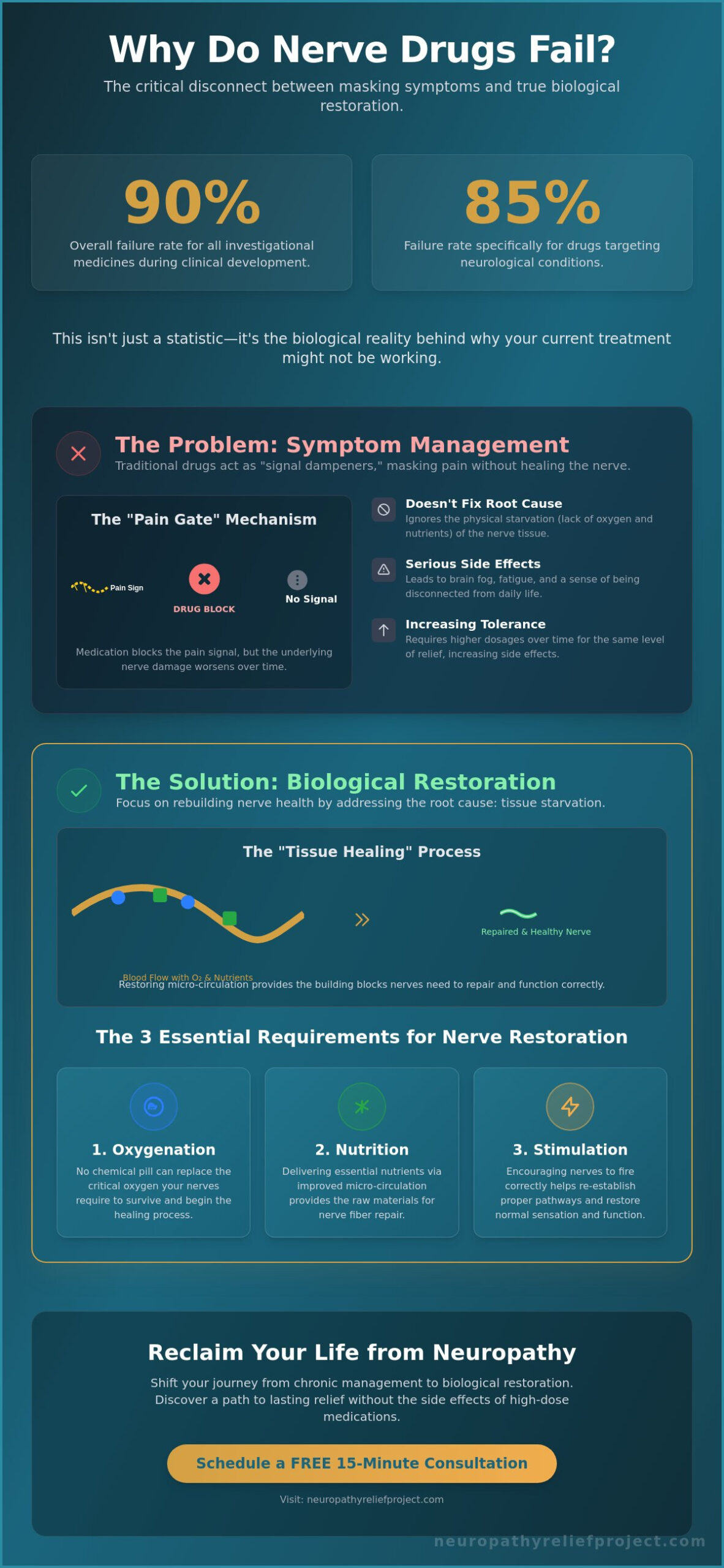
Did you know that roughly 85% of drugs targeting neurological conditions fail during clinical development, contributing to a staggering 90% failure rate for investigational medicines? This biological reality is likely something you feel every day in your own feet and hands. If you’re struggling with the persistent fire of burning or the hollow chill of numbness despite your prescriptions, it’s easy to feel dismissed by a system that prioritizes masking symptoms over fixing the root cause. You shouldn’t have to choose between debilitating nerve pain and the heavy brain fog that often accompanies high-dose medications.
You deserve to understand the scientific truth of why nerve drugs fail and how we can shift the focus from merely muffling pain signals to actively restoring nerve health. This article explores the biological reasons why traditional treatments often stop working as they ignore the physical starvation of your nerve tissue. We’ll provide a clear, evidence-based path toward restoration and offer a sense of hope that your sensation can return without simply increasing your dosage. This is the first step in a collaborative journey toward lasting relief, and we invite you to schedule a 15 minute FREE phone Consultation to discuss your specific path forward.
Key Takeaways
- Learn why traditional medications act as signal dampeners that mask pain without addressing the underlying physical decay of your nerves.
- Understand the biological limitations that explain why nerve drugs fail to provide long-term relief when they only target the pain signal rather than the tissue.
- Discover the critical role of micro-circulation and why no chemical pill can replace the oxygen and nutrients your nerves require to survive and heal.
- Explore the three essential requirements for true nerve restoration—oxygenation, nutrition, and stimulation—and how they differ from standard symptom management.
- Identify the specific steps to shift your health journey from a mindset of chronic management toward a mission of biological restoration and liberation.
The Disconnect: Why Most Medications Only Muffle the Message
If you have lived with the relentless hum of burning, tingling, or numbness in your extremities, you’ve likely reached for a prescription bottle in search of a reprieve. You might find that for a few hours, the intensity of the “fire” dims. However, it’s vital to recognize that most traditional treatments are designed as signal dampeners rather than tissue healers. Think of your nerves as a complex network of electrical wires. When the insulation is frayed, the system sparks and sends frantic distress signals to your brain. Standard medications often function like a “pain gate” that simply blocks these signals from reaching their destination. While this might provide temporary comfort, it does nothing to repair the damaged wire itself. This fundamental disconnect is a primary reason why nerve drugs fail to offer a permanent solution. Over time, your body often builds a tolerance to these masking agents, requiring higher dosages that bring a heavier emotional and physical toll.
Symptom Management vs. Biological Restoration
Commonly prescribed anticonvulsants and antidepressants work through a specific Mechanism of Action (MOA) that targets the central nervous system. These chemicals attempt to stabilize hyper-excited nerves, but they don’t address why the nerves are excited in the first place. When you rely solely on these drugs, you might experience a false sense of security. You feel better, so you assume you are getting better. In reality, the underlying Peripheral neuropathy may continue to progress, leading to further decay of the delicate nerve fibers. True restoration requires moving beyond the “muffle” and addressing the biological starvation of the tissue. If we only silence the alarm without putting out the fire, the structure continues to burn.
The Mechanism of Signal Dampening
Drugs like Gabapentin are designed to alter neurotransmitter release, effectively quieting the nervous system’s response to pain. While this can lower the volume of your symptoms, it often comes with a significant “trade-off” in the form of cognitive side effects. Many patients describe a persistent brain fog or a sense of fatigue that makes daily life feel like wading through water. It’s critical to understand that silencing a nerve signal is not the same as restoring nerve function. If the nerve is still starving for oxygen and nutrients, the “silence” is merely a temporary mask. Our collaborative initiative focuses on moving past these chemical barriers to help you reclaim a life defined by sensation and strength rather than suppression. To explore how we can help you transition toward actual healing, we invite you to schedule a 15 minute FREE phone Consultation.
The 90% Failure Rate: Why Science Struggles with Nerve Repair
As of late 2025, approximately 90% of investigational medicines fail to reach the market. For those specifically targeting neurological indications, the success rate is even more discouraging. This isn’t just a corporate statistic; it’s the biological reason you might still be searching for answers. The peripheral nervous system is incredibly complex, stretching from your spine to the very tips of your toes. Unlike other bodily systems that may heal relatively quickly, nerves are delicate and notoriously slow to recover. A “one-size-fits-all” pill often ignores the reality that there are over 100 distinct causes of neuropathy, ranging from metabolic imbalances to chemotherapy-induced toxicity. When a single drug tries to address such a wide variety of biological triggers, the results are frequently underwhelming.
Scientists often face significant challenges in translational drug research when moving from the laboratory to the clinic. What looks promising in a petri dish frequently fails when introduced to a living, breathing human being. This “Lost in Translation” problem is a core reason why nerve drugs fail once they leave the controlled environment of a laboratory. Your feet are not a sterile environment; they are subject to gravity, circulation issues, and years of cumulative physical stress that a lab culture simply cannot replicate.
The Blood-Nerve Barrier Challenge
Just as your brain is protected by a blood-brain barrier, your peripheral nerves are shielded by a blood-nerve barrier (BNB). This protective sheath is designed to keep toxins out, but it also creates a formidable wall for many medications. To get enough of a drug past this barrier to reach deep nerve tissue, you’d often need a dose so high it would become toxic to other organs. This explains why systemic drugs often cause more side effects in the brain, such as dizziness or lethargy, than actual relief in your hands or feet.
The Flaw in Animal Model Testing
Most neuropathy research begins with rodent models. However, a rat’s nerve response doesn’t accurately predict how a human nerve will respond after decades of chronic health challenges. There’s also a notable lack of long-term studies on how these chemicals affect nerve regeneration over several years. The translational gap in neuropathy research is the significant distance between a successful animal trial and a failed human outcome. If you’ve felt stuck in this gap, you can learn more about our collaborative mission by scheduling a 15 minute FREE phone Consultation to discuss your unique situation.
The Myth of the Chemical Fix for Physical Starvation
When you take a pill for nerve pain, you are introducing a chemical into your bloodstream that is designed to change how your brain perceives a signal. However, nerves are not just abstract electrical pathways; they are living, breathing biological tissues that have high metabolic demands. For a nerve to function, it requires a constant, uninterrupted supply of oxygen and glucose delivered through a microscopic network of blood vessels. If these vessels are compromised, the nerve begins to starve. This physical starvation is a primary reason why nerve drugs fail to provide lasting relief. You can’t solve a biological supply-chain problem with a chemical signal blocker. While the drug might quiet the “cry” for help, the tissue continues to wither in an environment devoid of the resources it needs to survive.
The pharmaceutical industry faces a low probability of successful development for new neuropathy medications because most research still overlooks this fundamental physiological requirement. If the underlying blood flow is not restored, the nerve remains in a state of chronic distress. This creates a “starvation cycle” where poor circulation leads to nerve decay, which in turn causes more pain, leading to higher drug dosages that do nothing to fix the original lack of oxygen. If your current treatment plan doesn’t address the health of your vascular system, you are essentially trying to keep a plant alive by painting its brown leaves green instead of watering the roots.
Micro-Circulation: The Lifeblood of Nerve Repair
Your peripheral nerves are fed by tiny capillaries so small that blood cells must often pass through them in single file. In many cases of chronic neuropathy, these capillaries become constricted or damaged, effectively choking off the nerve’s lifeline. We have found that blood flow and nerve repair are inextricably linked; you simply cannot have one without the other. If you notice that your feet often feel cold to the touch or look slightly discolored, your nerves are likely starving for oxygen rather than just “misfiring.”
Why Nerves Need Oxygen, Not Just Blockers
Neurons are some of the most energy-hungry cells in your body. When chronic inflammation is present, it creates a toxic environment that further restricts the delivery of vital nutrients. This inflammation acts like a physical barrier, preventing the very pathways nerves need to heal from functioning correctly. You cannot medicate a nerve back to life if it lacks oxygen. Our collaborative initiative focuses on breaking this cycle by prioritizing the restoration of the nerve’s natural environment. If you feel lost in a system that only offers more pills, we invite you to schedule a 15 minute FREE phone Consultation to discuss a path toward true biological restoration.
Beyond the Pill: A Framework for True Nerve Health
If you’ve spent months or years relying on prescriptions, you’ve likely realized that a chemical-only approach has its limits. This realization is often the first step in understanding why nerve drugs fail to provide a lasting solution. Instead of just blocking the pain, we must look at what the nerve actually needs to survive and thrive. A successful framework for nerve health rests on three fundamental pillars: oxygenation, nutrition, and stimulation. When these three elements are present, the body’s natural regenerative processes can finally begin to bridge the gap that traditional medications often leave behind. By moving toward a biological model, we shift our focus from silencing a symptom to supporting a living tissue.
Restoring the Protective Myelin Sheath
Your nerves are protected by a fatty coating known as the myelin sheath. In many cases of chronic neuropathy, this “insulation” becomes thin or damaged, leading to the erratic stabbing and burning sensations you feel. We believe myelin sheath restoration is the secret to stopping the “short circuit” at its source. This biological process of re-myelination requires specific lipids and micronutrients that are often absent in a standard diet or blocked by chronic inflammation. By providing the building blocks for this sheath, we help the nerve regain its ability to transmit signals clearly and without pain. This isn’t about masking the signal; it’s about repairing the wire so the signal can travel correctly.
Supporting the Nervous System from Within
True recovery isn’t just about what’s happening in your feet; it’s about the internal environment of your entire body. Recent research into the gut brain nerve axis shows that your microbiome plays a significant role in controlling systemic inflammation. If your gut health is compromised, it can trigger an immune response that attacks your own nerve tissue. Additionally, maintaining blood sugar stability is non-negotiable for preventing further decay. A holistic view is required because your nerves don’t live in isolation. They are part of a complex, interconnected system that responds to nutrition, stress, and metabolic health. When you address the body as a collaborative whole, you create the optimal conditions for peripheral nerve recovery.
By moving beyond the pill, we can utilize non-invasive protocols that actually support the tissue’s needs. This shift from “management” to “restoration” is what allows patients to see improvements even after years of stalled progress. If you’re ready to stop just muffling the message and start healing the wire, we’re here to help. You can take the first step toward nerve restoration today by scheduling a 15 minute FREE phone Consultation to discuss your specific situation.
Reclaiming Your Life: The Path to Drug-Free Restoration
Many patients arrive at our door feeling they’ve reached the absolute end of the road with traditional medicine. If you’ve been told that your nerve damage is permanent and your only option is to increase your medication dosage, it’s natural to feel a sense of despair. However, this stagnation is often just a sign that the current approach is targeting the wrong mechanism. By shifting your mindset from “management” to “restoration,” you open the door to evidence-based protocols that prioritize tissue health. This is the core reason why nerve drugs fail in so many cases; they aren’t designed to fix the underlying biological causes of your pain. Our mission is to move past the temporary muffle of a pill and address the starvation and decay of the nerve itself.
The Neuropathy Relief Project Philosophy
We view the recovery process as a collaborative journey toward a specific goal: the return of normal sensation and function. Dr. Michael J. Sclafani and our dedicated team prioritize non-invasive, drug-free protocols that have been refined through clinical observation and research. We don’t treat every case the same way because every patient’s biological markers are unique. If you’re tired of the “walking on glass” sensation or the deep, aching numbness that keeps you awake at night, our targeted interventions are designed to help you reclaim your mobility. By focusing on the three requirements of oxygenation, nutrition, and stimulation, we bridge the gap where traditional systems may have dismissed your concerns.
Your Next Steps: The 15-Minute Discovery Call
The first step in this process is a free nerve pain consultation. This 15-minute phone assessment is a focused discovery call designed to determine if you are a qualified candidate for our restoration protocols. Unlike a typical doctor visit where you might feel rushed or unheard, this call is a dedicated time to review your history. We actually want to know about the medications that didn’t work for you. Each drug that failed to provide relief gives us a critical clue about which biological pathways are still struggling. This information allows us to refine our approach and provide you with a clear, logical path forward. You can secure your spot for a national phone assessment today and begin the transition from simply surviving to truly thriving.
A Clear Path Toward Lasting Nerve Restoration
Living with the constant fire of neuropathy is exhausting, but understanding the biological reality of your condition is the first step toward freedom. We’ve explored how traditional medications often act as mere signal dampeners and why the high failure rate in neurological research stems from ignoring the physical starvation of nerve tissue. True relief requires a shift from masking symptoms to providing the oxygen, nutrition, and stimulation your nerves need to repair their protective myelin sheaths. This is the fundamental reason why nerve drugs fail; they treat the symptom while the tissue continues to wither.
Led by Dr. Michael J. Sclafani, DC, our collaborative initiative specializes in non-invasive protocols that prioritize biological restoration over temporary masking. We provide national expert assessments to help you identify your specific nerve health markers and move past the sensation of walking on glass. You don’t have to navigate this complex system alone. Book Your FREE 15-Minute Neuropathy Consultation Now to begin your journey toward sensation and strength. There’s a logical path forward, and we’re ready to guide you home.
Frequently Asked Questions
Is it possible to heal nerve damage without using prescription drugs?
Yes, it’s possible to support the body’s natural regenerative processes by addressing the underlying biological environment rather than relying on chemical signal blockers. While prescriptions often only muffle pain, true restoration involves providing the specific nutrients and oxygen levels that nerves require to repair themselves. This shift from management to restoration allows the tissue to heal naturally when given the correct biological building blocks for long-term health.
Why does my neuropathy pain get worse even though I am taking my medication?
Your pain may worsen because most medications only target the symptom while the underlying nerve decay continues to progress. This is a common reason why nerve drugs fail over time. As the physical damage to the nerve fibers increases, the initial dosage becomes less effective. Additionally, your body can build a tolerance to these chemicals, which often leads to a cycle of increasing dosages without addressing the actual root cause.
How long does it take for nerves to start the restoration process?
The restoration process begins at a cellular level almost as soon as you improve micro-circulation and nutrient delivery. However, because peripheral nerves grow at a very slow rate, it often takes several weeks of consistent protocol adherence before you notice significant changes in your physical sensations. Patience is vital during this collaborative journey as your body works to rebuild the delicate myelin sheath and restore proper, pain-free signal transmission.
Can a change in diet really help my peripheral neuropathy symptoms?
A targeted nutritional approach is essential for nerve repair because it reduces the systemic inflammation that often chokes off blood flow. By stabilizing blood sugar and consuming specific lipids, you provide the raw materials necessary for re-myelination. This isn’t just about general health; it’s about creating a metabolic environment where your nerves are no longer starving for the resources they need to function correctly and stop the burning sensation.
What are the most common side effects of long-term neuropathy drug use?
Long-term use of common neuropathy medications frequently leads to systemic side effects like persistent brain fog, chronic fatigue, and dizziness. Because these drugs are designed to quiet the entire nervous system rather than just the damaged area, they often impact cognitive function and energy levels. Many patients find that the “trade-off” for reduced pain is a diminished quality of life, which is another reason why nerve drugs fail to provide a holistic solution.
What is the “Blood-Nerve Barrier” and why does it matter for my treatment?
The Blood-Nerve Barrier is a specialized layer of cells that protects your peripheral nerves from toxins circulating in your bloodstream. While this barrier is vital for health, it also prevents many oral medications from reaching the deep nerve tissues where they are needed most. This biological wall often means that only a fraction of your medication reaches the target, which explains why you might experience systemic side effects without feeling localized relief in your feet.
Is the 15-minute consultation really free, and what should I expect?
Yes, the 15-minute phone consultation is completely free of charge. During this discovery call, we will review your health history and discuss the specific symptoms you are experiencing, such as burning or numbness. The goal is to determine if you are a qualified candidate for our non-invasive restoration protocols. It’s a collaborative conversation intended to provide you with a clear understanding of your options for moving toward a drug-free future.
Can I still recover if I have had neuropathy for more than five years?
You can still experience significant improvement even if you have lived with neuropathy for many years. While chronic damage is serious, nerves retain a degree of regenerative potential as long as the underlying biological starvation is addressed. By restoring micro-circulation and providing the necessary building blocks for repair, many patients find they can reclaim sensation and strength that they previously thought was lost forever due to the passage of time. Understanding nerve damage recovery as a metabolic rebuilding process rather than a waiting game is the key to approaching your healing with the right biological framework.