

Your nerves are biological engines that have effectively stalled because their internal fuel lines are blocked. If you spend your days feeling like you are ‘walking on glass’ or battling a persistent burning sensation, you’re likely familiar with the exhaustion of this struggle. You are not alone, as an estimated 30 million Americans currently face the challenges of peripheral neuropathy and the complex relationship between blood flow and nerve repair. It’s common to feel frustrated by treatments that cause brain fog or leave you fearing a loss of independence, especially when you feel the root cause of your pain is being ignored.
This article explains the biological requirements for nerve regrowth and how restoring micro-circulation provides the oxygen and nutrients required to physically repair damaged tissue. Through this collaborative initiative, you’ll discover a non-drug path to reclaiming sensation and moving from simply managing symptoms to rebuilding the foundations of your mobility. We invite you to explore this science-based approach and consider a 15-minute free phone consultation to discuss how these restorative protocols can be applied to your specific journey toward relief.
Key Takeaways
- Learn how the vasa nervorum acts as a vital fuel line for your peripheral system; without this microscopic network, nerves cannot maintain their health.
- Understand the biological link between blood flow and nerve repair to see why restoring circulation is the prerequisite for reclaiming sensation.
- Discover how the science of angiogenesis allows for myelin sheath restoration, providing the structural support your nerves need to stop sending error signals.
- Contrast restorative, circulation-based protocols with traditional methods that only numb the brain, leaving the underlying starvation cycle unaddressed.
- Explore how a 15-minute free phone consultation offers a clear path toward identifying the specific biological barriers preventing your recovery.
The Essential Link: Why Blood Flow is the Lifeline for Nerve Repair
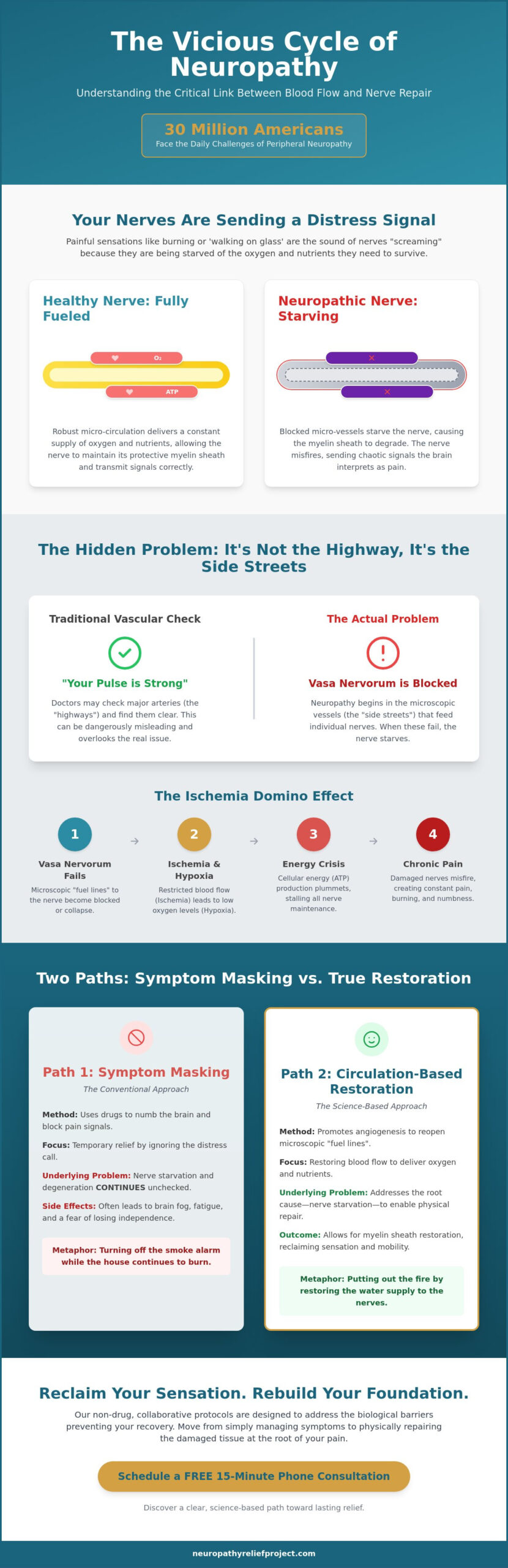
If you spend your days feeling as if you are walking on shards of glass or battling a persistent, searing heat in your feet, your body is sending an urgent distress signal. These sensations aren’t random glitches in your anatomy; they are the sound of your nerves “screaming” because they are being starved of the basic elements they need to survive. To understand the critical connection between blood flow and nerve repair, we have to look at nerves as the most metabolically expensive tissues in your body. While they make up only a small fraction of your total body weight, they require a disproportionate amount of energy to maintain the delicate electrical balance that allows you to feel, move, and maintain your balance.
Nerves are biological high-performers. They don’t just sit there; they are constantly pumping ions across their membranes to stay ready for the next signal. This constant activity requires a steady, high-pressure stream of glucose and oxygen. When the supply line is restricted, even slightly, the “engine” of the nerve begins to stall. This is the fundamental reason why restoring circulation is not just a secondary goal in your recovery. It’s the primary requirement for any meaningful improvement in how you feel and move.
Understanding the Vasa Nervorum: The Nerves of the Nerves
While many clinical assessments focus on the pulse in your ankle to check major blood vessels, those “highways” don’t tell the whole story. Neuropathy is often a problem of the “side streets.” These microscopic vessels, known as the vasa nervorum, are a dedicated network of tiny blood vessels that wrap around and penetrate individual nerve fibers. Because they are so small, they’re the first to be damaged by systemic inflammation or elevated blood sugar. When these tiny vessels fail, the nerve they support begins to wither from the inside out. The vasa nervorum is the primary gateway for nerve restoration; without reopening these microscopic channels, the nerve remains trapped in a state of chronic starvation.
Oxygenation: The Fundamental Fuel for Neural Transmission
Every sensation you experience depends on the production of Adenosine Triphosphate (ATP) within your nerve cells. This cellular energy is what powers the electrical signals traveling to your brain. ATP production is an oxygen-dependent process, meaning your nerves require a constant, uninterrupted flow of oxygenated blood. When ischemia, or restricted blood flow, sets in, ATP levels plummet. This is when the process of Neuroregeneration grinds to a halt. In a healthy state, robust circulation ensures that nerves can repair their own protective coatings and maintain signal integrity. In a neuropathic state, the tissue is stalled, unable to perform basic maintenance because the fuel lines are closed. Re-establishing the link between blood flow and nerve repair is the only way to move from temporary symptom masking to true biological restoration.
When Circulation Fails: How Ischemia Triggers Chronic Nerve Pain
Ischemia is a term you might not hear often in a standard exam, but it’s the invisible architect of your daily discomfort. It refers to a clinical state of restricted blood supply to your tissues, creating a metabolic crisis that your nerves cannot ignore. When this occurs, your nerves enter a “starvation” cycle. Without the constant delivery of oxygenated blood, the tissue enters a state of hypoxia, or low oxygen. This lack of oxygen causes the nerve to lose its ability to regulate electrical impulses, leading to the chaotic signals your brain interprets as searing pain, tingling, or profound numbness. The connection between blood flow and nerve repair is absolute; you cannot have one without the other.
A common point of frustration for many patients is being told their circulation is “normal” because a doctor felt a strong pulse in their foot. While a strong pedal pulse indicates that your major arteries are clear, it says very little about the microscopic vessels that actually feed the nerve fibers. You can have excellent “highway” flow while your “side streets” are completely blocked or collapsed. This micro-vascular insufficiency is the hidden reason why your nerves continue to degenerate even when traditional vascular tests come back clean. Your nerves are not failing because they are “old”; they are failing because they are hungry.
The Hypoxia Loop: Why Your Feet Feel Like They Are Burning
If you experience a searing heat in your extremities, you are feeling the physical effects of the hypoxia loop. When oxygen levels drop, the firing threshold of your pain fibers also drops. This means the nerves become hyper-sensitive, triggering intense pain signals from even the lightest touch or movement. Many people find this sensation intensifies at night. This happens because your heart rate and blood pressure naturally decrease during sleep, further reducing the already limited flow to your extremities. That “walking on glass” sensation is a direct physical manifestation of micro-vascular collapse. Your nerves are literally struggling to survive in an oxygen-depleted environment, sending emergency signals to your brain in a desperate plea for nutrients.
Micro-Vascular Damage Beyond Diabetes
While high blood sugar is a well-known culprit for vascular damage, it isn’t the only cause of nerve starvation. Toxins, certain medications, and the natural process of aging can all degrade the delicate vasa nervorum. This is particularly true for those who have undergone chemotherapy, which can be notoriously hard on microscopic blood vessels. If you’ve been told your condition is “idiopathic,” it’s possible the underlying cause is actually undiagnosed micro-vascular insufficiency. You can learn more about idiopathic neuropathy causes to see how these hidden triggers might be affecting your sensation and mobility.
Understanding these biological mechanics is the first step toward finding a solution that addresses the root cause rather than just the symptoms. If you’re tired of the frustration that comes with masking your pain and want to investigate the specific state of your micro-circulation, you can schedule a 15-minute free phone consultation to discuss your history with a specialist who understands the vascular link.
The Science of Angiogenesis: How to Reopen the ‘Fuel Lines’ for Nerves
If you imagine your nerves as a garden, angiogenesis is the process of laying down new irrigation lines to save the wilting plants. In clinical terms, angiogenesis is the physiological process through which new blood vessels form from pre-existing vessels. This isn’t just about clearing a blockage; it’s about the body’s remarkable ability to build entirely new pathways for nutrient delivery. For those struggling with chronic pain, this biological mechanism is the cornerstone of blood flow and nerve repair. Without the formation of these new micro-vessels, the damaged nerve tissue remains isolated and unable to access the resources it needs to heal.
This restorative process doesn’t happen by accident. Your body requires specific growth factors, most notably Vascular Endothelial Growth Factor (VEGF), to act as a signal for this construction to begin. Think of VEGF as the foreman on a construction site, directing the growth of new capillaries toward the areas of highest need. Nerve repair is a collaborative effort between vascular health and cellular regeneration. When we create the right environment, we aren’t just treating a symptom; we’re facilitating a biological “renovation” of the nervous system.
Nitric Oxide and Vasodilation: Expanding the Pathways
One of the most important molecules in this process is nitric oxide. It acts as a natural signaling agent that tells your blood vessel walls to relax and expand. This vasodilation doesn’t just increase the volume of oxygen reaching your extremities; it also creates a “flushing” effect. By increasing the pressure and volume of flow, the body can effectively wash away the inflammatory toxins and metabolic waste that often pool around damaged nerve sites. This cleansing is a vital step in reducing the “background noise” of pain signals. Natural triggers, such as specific wavelengths of light or targeted movement, can signal the body to release more nitric oxide, kickstarting this essential micro-circulation.
Restoring the Myelin Sheath via Nutrient Delivery
Your nerves are protected by an insulating layer called the myelin sheath, which ensures signals travel quickly and accurately. When this insulation is damaged, signals leak, causing the “static” of tingling or burning. However, myelin sheath restoration is entirely dependent on the raw materials carried in your blood. These fatty acids and proteins are the “bricks and mortar” of the nervous system. Once consistent blood flow and nerve repair protocols are established, the body begins a predictable timeline of recovery, often starting with a change in temperature sensation followed by a gradual return of motor control. Nerve regrowth is limited only by the consistency of the blood supply.
Comparing Recovery Paths: Circulation-Based Protocols vs. Symptom Masking
Choosing a recovery path often feels like a choice between two entirely different philosophies. On one hand, you have the traditional “top-down” approach. This strategy focuses on numbing the brain’s perception of pain using heavy medications. While these drugs might offer a temporary period of quiet, they do nothing to address the biological starvation occurring in your extremities. On the other hand, a “bottom-up” approach prioritizes blood flow and nerve repair. By fixing the flow at the source, you address the ischemia that causes the pain in the first place, rather than just silencing the messenger.
Traditional nerve drugs often fail because they are designed to mask signals, not repair tissue. As the underlying ischemia worsens, the nerves become even more desperate for nutrients, often requiring higher doses of medication. This frequently leads to a cycle of brain fog and fatigue that makes it even harder to stay active. To understand the deeper biological reasons why nerve drugs fail to address the root cause of your pain, it’s important to recognize that these medications are engineered to intercept signals rather than restore the tissue generating them. We also have to consider the gut-brain-nerve axis. Systemic inflammation often starts in the digestive system and travels through the vascular network, further irritating the delicate vasa nervorum. Addressing this axis is a critical component of reducing the overall inflammatory load on your nervous system.
Why Your Current Treatment Might Be Stalled
It’s deeply frustrating to apply topical creams or take pills only to find your symptoms returning just hours later. This happens because these methods don’t reach the microscopic vessels that feed your nerves. This “masking effect” can actually be counterproductive. It allows the underlying nerve degradation to continue unnoticed until your mobility is severely compromised. When evaluating non-drug nerve relief options, you should look for protocols that prioritize restoration over management. True improvement only begins when the “fuel lines” are reopened.
The Role of Micro-Circulation in Long-Term Mobility
Healthy blood flow is essential for proprioception, which is your brain’s ability to know exactly where your feet are in space. When circulation is poor, these signals become sluggish or absent, leading to the instability and fear of falling that characterizes living with peripheral neuropathy. Improving vascular health is the most effective way to prevent falls and maintain your independence as you age. If you’re ready to move beyond masking and start a collaborative effort toward restoration, you can schedule a 15-minute free phone consultation to discuss a personalized path forward that focuses on the root cause of your discomfort.
Reclaiming Your Sensation: The Neuropathy Relief Project’s Collaborative Approach
If you’ve felt dismissed by traditional systems that only offer prescriptions, the Neuropathy Relief Project offers a different perspective. We view our work as a collaborative initiative designed to bridge the gap between clinical evidence and your lived experience. We understand that your goal isn’t just to “manage” pain but to reclaim the life you had before the ‘walking on glass’ sensation took over. By focusing on the intersection of blood flow and nerve repair, we aim to address the biological stalling that keeps your nerves from healing properly.
Our mission is rooted in the belief that no one should be left to navigate complex health challenges without a knowledgeable guide. We’ve seen the frustration of patients who are told their pain is permanent simply because the underlying vascular issues were never addressed. Our approach is steady, methodical, and centered entirely on your specific needs, ensuring you feel heard and understood throughout every step of the process.
What to Expect During Your 15-Minute Expert Nerve Review
This isn’t a high-pressure sales call. It’s a methodical review of your specific symptoms and treatment history. During this 15-minute free phone consultation, a specialist will listen to your story to identify the specific ‘stalled’ mechanisms in your case. We look for indicators that your nerves are viable candidates for vascular-based restoration. This conversation is designed to provide you with a clear sense of direction and the clinical authority you need to make informed decisions about your health. You’ll gain a better understanding of how the micro-vascular link applies to your unique situation, moving you one step closer to a non-drug path for relief.
Starting Your Journey Toward Restoration
Moving from a state of chronic frustration to one of active restoration requires a shift in focus. It’s about moving toward a solution that respects the biological needs of your nervous system. The science of blood flow and nerve repair suggests that improvement is possible when the right conditions are met. This free consultation is the first step in empowering you with that knowledge. We want to help you move from a state of fear regarding your mobility to a state of confidence in your body’s ability to heal and reclaim its natural function.
There is a profound sense of liberation that comes with restored sensation and the ability to move through the world without the constant distraction of pain. We invite you to join this collaborative effort and discover why so many people are finding hope in our restorative science. Your journey toward reclaiming sensation starts with a single, informed conversation.
Your Path to Restored Mobility and Sensation
The journey toward healing begins with the realization that your nerves aren’t permanently broken; they are simply stalled. By understanding the critical link between blood flow and nerve repair, you can shift your focus from masking symptoms to addressing the underlying ischemia that causes your daily struggle. We’ve explored how angiogenesis and nutrient delivery are the biological prerequisites for rebuilding the myelin sheath and quieting the ‘static’ of chronic pain signals. This shift from management to restoration is the key to reclaiming your independence and preventing the falls that often accompany sensory loss.
Led by Dr. Michael J. Sclafani, DC, the Neuropathy Relief Project is a national collaborative initiative dedicated to providing non-invasive, drug-free protocols. We’re committed to helping you find a clear, evidence-based path forward that respects your body’s natural regenerative potential. It’s time to move beyond the frustration of brain fog and fatigue. Take the first step toward a life of liberation by connecting with a specialist who understands your physical sensations. Book Your FREE 15-Minute Neuropathy Discovery Call Today and discover how we can work together to restore your sensation and your quality of life. You deserve to feel the ground beneath your feet again.
Frequently Asked Questions
Can nerve damage be repaired by improving blood flow?
Yes, nerve repair is possible when you address the underlying lack of oxygen and nutrients. Nerves are living tissue that can regenerate if the environment is supportive. By focusing on blood flow and nerve repair, you provide the essential “fuel” required for cells to rebuild the myelin sheath and restore signal integrity. This shift from symptom masking to biological restoration is the cornerstone of modern peripheral nerve recovery.
How do I know if my neuropathy is caused by poor circulation?
If you notice skin color changes, cold extremities, or pain that intensifies when you lie down at night, your micro-circulation is likely compromised. These are classic signs of ischemia, where the tiny vessels feeding your nerves aren’t delivering enough oxygen. Even if your doctor finds a strong pulse in your ankle, your microscopic “side streets” might still be failing to nourish the individual nerve fibers.
What is the vasa nervorum and why does it matter for my nerve pain?
The vasa nervorum is the microscopic network of blood vessels that provides the lifeblood to your peripheral nerves. It matters because it acts as the primary supply line for oxygen and glucose. When these tiny vessels become damaged or inflamed, your nerves begin to starve, leading to the burning and tingling sensations you feel. Protecting and restoring this micro-vascular network is essential for long-term relief and nerve health.
Will traditional neuropathy medications help with blood flow and nerve repair?
Traditional medications are generally designed to numb the brain’s perception of pain rather than fix the underlying cause. They don’t improve the relationship between blood flow and nerve repair. Understanding why nerve drugs fail to restore tissue health can help clarify why these prescriptions often provide only temporary comfort while allowing the underlying nerve starvation to continue. Choosing a restorative path means looking beyond just blocking signals and focusing on reopening the vascular pathways that allow the tissue to heal.
How long does it take for nerves to start repairing once circulation is restored?
Nerves are slow-growing tissues, typically regenerating at a rate of approximately one millimeter per day, or about one inch per month. You might start noticing changes in temperature sensation or a “different” type of tingling as the nerves wake up. Consistency is vital during this phase. Once the micro-circulation is stabilized, the body can begin the methodical process of rebuilding the protective insulation around each nerve fiber. Understanding nerve damage recovery as a metabolic rebuilding process, rather than a passive waiting game, helps set realistic expectations and keeps you engaged in the restorative steps that matter most.
Can I improve micro-circulation without using heavy medications?
Yes, you can stimulate micro-circulation through non-invasive, drug-free protocols that encourage the body’s natural healing processes. Techniques that promote vasodilation and the release of nitric oxide help expand the microscopic vessels without the side effects of heavy drugs. This approach focuses on creating a collaborative environment within the body, allowing your vascular system to deliver the nutrients required for cellular restoration and long-term mobility.
What happens if I ignore the vascular component of my neuropathy?
If you ignore the vascular link, your nerves will likely continue to degenerate due to chronic starvation. This often leads to a complete loss of sensation and an increased risk of balance issues or falls. Over time, the damage can move from the small fibers to the larger ones, making it much harder to maintain your independence. Addressing the flow early is the best way to prevent permanent loss of function.
Is a 15-minute consultation enough to understand my nerve health?
A 15-minute expert review is a focused, methodical starting point to determine if your symptoms align with vascular-based restoration. It’s enough time for a specialist to review your history and identify if your nerves are “stalled” due to poor circulation. This initial conversation is designed to provide clarity and empower you with a clear sense of direction, helping you decide if this collaborative initiative is the right path for your recovery.