

What if the “electric shocks” in your feet aren’t a sign of permanent destruction, but a signal that your body’s repair crew is simply waiting for the right tools to finish the job? You’ve likely been told that nerve damage is a one-way street, leaving you to manage that “walking on glass” sensation with little more than hope. It’s exhausting to live with the fear that your condition is progressive, especially when complex medical jargon makes the path to myelin sheath restoration feel like a puzzle you can’t solve.
We understand the daily struggle of living with these sensory disruptions; you deserve a clear explanation rather than a dismissal. It’s important to realize that your body possesses a natural, biological drive to mend itself when the environment is right. This article will help you discover the scientific mechanisms behind myelin repair and how you can support the restoration of your nerve’s protective coating. We’ll explore current 2026 clinical trends, from neurostimulation devices to drug repurposing trials, to give you a clear, actionable understanding of how sensation can return. This guide provides a structured, collaborative path toward nerve health that shifts the focus from managing pain to fostering genuine liberation from your symptoms.
Key Takeaways
- Understand how damaged myelin creates the “short circuit” sensations you experience and why this insulation is vital for clear nerve signaling.
- Learn the three-stage biological cycle of myelin sheath restoration and the specific metabolic energy your body needs to complete the repair.
- Discover why nerves in your limbs possess a unique “regenerative window” that allows for recovery potential often missing in the brain or spine.
- Identify how improving micro-circulation and reducing systemic inflammation acts as a delivery system for the building blocks of nerve repair.
- Explore the benefits of a collaborative effort to pinpoint your personal “repair blocks” and begin a structured journey toward sensory liberation.
The Science of Myelin: Understanding Your Nerve’s Protective Insulation
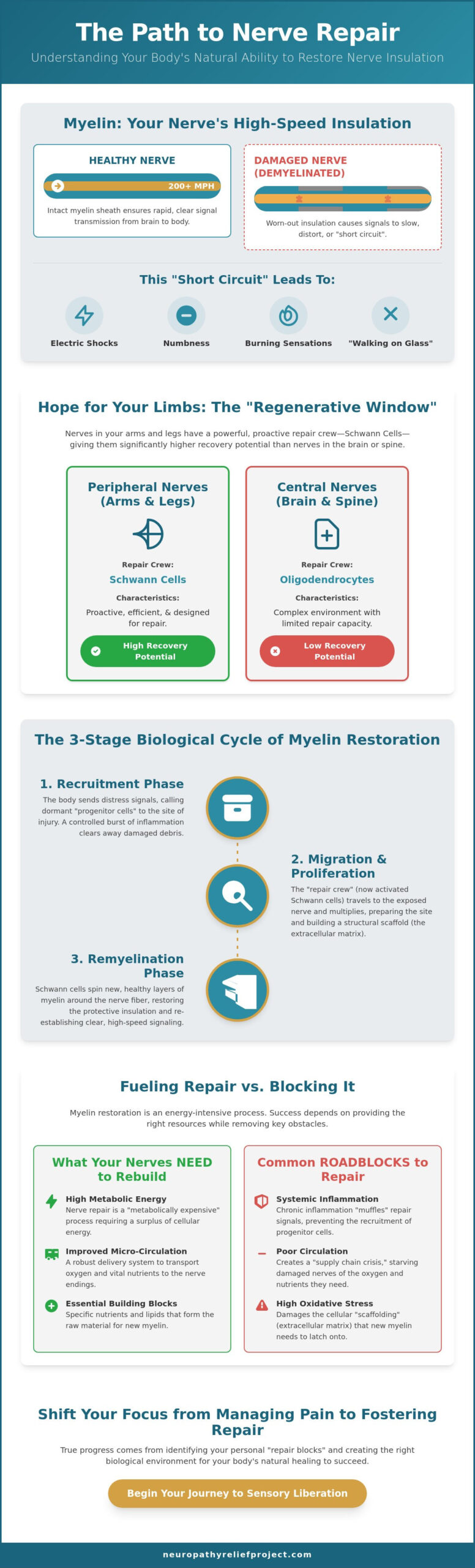
If you’ve ever touched a frayed electrical cord, you know the unpredictable sparks and heat it can produce. Your nerves operate under a similar biological principle. Myelin is a dense, lipid-rich substance that wraps around your nerve fibers like high-grade insulation. This fatty coating is essential for rapid signal conduction, ensuring that a message from your brain reaches your toes in milliseconds. When this insulation remains intact, your nervous system functions silently and efficiently. However, when the coating wears thin, your body experiences “short circuits.” This is exactly what you feel during those moments of sudden, electric-like pain or persistent numbness that makes you feel disconnected from your own limbs. Achieving myelin sheath restoration is about more than just masking these sensations; it’s about rebuilding the biological barrier that allows your nerves to function without interference.
The Role of Schwann Cells in Nerve Health
In your arms and legs, the heavy lifting of nerve repair is performed by specialized “mechanic” cells known as Schwann cells. These differ significantly from the oligodendrocytes found in your brain and spinal cord. While the central nervous system has a limited capacity for repair, Schwann cells are remarkably proactive. When they detect a nerve injury, they don’t simply wither away. Instead, they initiate a sophisticated “clean-up” phase, removing damaged debris to prepare the area for a fresh start. The process of remyelination begins when these cells transform their function to spin new, healthy layers of protective fat around the exposed nerve fiber. This natural resilience is the foundation of hope for anyone struggling with peripheral neuropathy.
Why Myelin Loss Leads to Neuropathy Symptoms
Healthy, well-insulated nerves carry electrical impulses at staggering speeds, often exceeding 200 miles per hour. When demyelination occurs, those signals can slow to a crawl or dissipate entirely before they reach their destination. This delay often manifests as a “heavy” feeling in your legs or a complete loss of sensation. Even more distressing is a phenomenon called “crosstalk.” When the insulation is gone, electrical signals can leak between adjacent nerves. Your brain might interpret a simple touch from a bedsheet as a burning, searing pain because the signal “jumped the tracks.” Because your longest nerves travel all the way from your lower spine to the tips of your toes, they have the most surface area to protect. This makes your feet the most vulnerable to the effects of “frayed” insulation, but it also makes them the primary focus for myelin sheath restoration protocols designed to stabilize these leaking signals.
The Biological Mechanics of Myelin Sheath Restoration
Your body isn’t a static machine; it’s a dynamic, self-correcting system designed for resilience. If you’ve been living with the frustration of chronic nerve pain, it’s easy to feel like your biology has failed you. In reality, your nervous system is constantly attempting myelin sheath restoration. This process follows a strict biological blueprint that requires a significant “metabolic cost.” Rebuilding nerve insulation isn’t a side project for your cells; it’s an energy-intensive operation that demands a surplus of oxygen and nutrients. The extracellular matrix acts as the essential scaffolding for this work, serving as a biological “net” that holds new repair cells in place. If this structural environment is compromised by poor circulation or high oxidative stress, the new myelin has nowhere to latch onto, and the repair cycle breaks down before it can truly begin.
The Recruitment Phase: Calling the Repair Crew
The first step in this journey is the Recruitment Phase. When a nerve fiber is exposed, your body releases specific signaling proteins to call for help. Progenitor cells are the dormant builders waiting for the signal to activate and migrate to the site of injury. Interestingly, the initial stage of repair requires a small, controlled burst of inflammation to clear away cellular debris. However, if you’re stuck in a state of chronic systemic inflammation, these signals become muffled. The repair crew gets “lost” or remains dormant, leaving your nerves frayed and sensitive. Ensuring your internal environment is clear of these “signal blockers” is a critical part of any recovery strategy.
Lipid Synthesis: The Building Blocks of Restoration
Once the builders arrive and activate, they enter the wrapping phase. This is where the actual insulation is manufactured. Because myelin is 70% to 85% fat, your body must engage in intense lipid synthesis to produce the necessary materials. It assembles cholesterol and phospholipids into thin, powerful sheets that spiral around the axon to restore high-speed communication. This complex manufacturing process depends heavily on your internal chemistry. For instance, Vitamin B12 and Folate are essential for the DNA synthesis of new nerve cells, while specific fatty acids provide the raw material for the sheath itself. If these building blocks are missing, myelin sheath restoration stalls, and the “electric shocks” continue. Understanding your unique “repair blocks” is a vital step in this collaborative effort toward recovery. If you’re ready to see what your body might be missing, a 15 minute consultation can help clarify your path forward.
Peripheral vs. Central Nerves: Why Your Limbs Have Higher Recovery Potential
If you’ve been told that nerve damage is permanent, you’re likely feeling a mix of grief and resignation. This common medical narrative is a half-truth that often conflates the central nervous system with the peripheral nervous system. While it’s true that the brain and spinal cord have a limited capacity for repair, your limbs operate under a completely different biological set of rules. The nerves in your arms and legs possess a robust, lifelong ability to regrow axons and initiate myelin sheath restoration. This “regenerative window” means that the numbness in your toes or the weakness in your hands isn’t necessarily a life sentence. Understanding why your limbs are more resilient than your spine is the first step toward reclaiming your mobility.
The ‘Inhibitory Environment’ Myth
The primary reason the brain and spinal cord struggle to heal is a process called gliosis. When the central nervous system is injured, specialized cells create physical scars that act as roadblocks, preventing new nerve fibers from growing. Your peripheral nerves lack these permanent blocks. Instead of creating scars, the area around a peripheral nerve injury remains “plastic” and receptive to repair. This supportive environment is what allows for functional restoration even years after the initial damage began. However, this repair can only happen if you remove the underlying stressors that caused the damage in the first place. Exploring the various idiopathic neuropathy causes can help you identify the hidden triggers that might be stalling your body’s natural healing process.
Sensation vs. Function: What Returns First?
Recovery is rarely a linear path, and the timeline can sometimes feel counterintuitive. As myelin sheath restoration begins, you might actually notice an increase in sensitivity or a change in the type of discomfort you feel. This is often a sign that dormant nerves are “awakening.” Awakening nerves often feel more sensitive or even slightly painful before they return to a state of normal, calm sensation. During this phase, your brain is working hard to re-learn and recalibrate the signals coming from these newly insulated fibers. Think of it as a radio station coming back into range; at first, there is static and noise, but as the signal strengthens, the music becomes clear. This transition from tingling to steady function is a hallmark of the peripheral nervous system’s unique ability to mend itself when given the proper biological support.
Clinical Strategies to Support Natural Nerve Remyelination
If your body already possesses the biological blueprint for repair, you might wonder why the “electric shocks” or numbness persist. The answer usually lies in the clinical environment surrounding your nerves. Achieving myelin sheath restoration is not a passive event; it requires a deliberate effort to remove the biological roadblocks that keep your Schwann cells in a dormant state. Chronic systemic inflammation acts like a persistent fire, consuming the metabolic energy your body needs for reconstruction. When your system is stuck in a pro-inflammatory loop, it cannot prioritize the energy-intensive process of spinning new myelin. This is why addressing the gut brain nerve axis is so vital. Your microbiome helps regulate the specific hormones and signaling proteins that tell your nerves it’s safe to begin the remyelination sequence.
Lifestyle choices can also “starve” your nerves of the resources they need. High glucose levels, smoking, and sedentary behavior all constrict the very pathways meant to deliver healing building blocks. By shifting these variables, you move from a state of progressive damage to a state of active restoration. This shift is the foundation of a collaborative effort toward long-term nerve health.
Micro-Circulation: The Lifeblood of Nerve Repair
Nerves need fuel to heal. This fuel is delivered through a network of tiny, specialized capillaries known as the vasa nervorum. These microscopic vessels act as the delivery trucks for oxygen and the fatty acids required for myelin sheath restoration. In many neuropathy patients, these “delivery trucks” are stalled due to poor micro-circulation. When circulation is compromised, the repair crew at the site of nerve damage simply runs out of supplies. Understanding the critical relationship between blood flow and nerve repair can help you see why restoring micro-circulation is such a foundational step in any recovery protocol. You can support this process through non-invasive techniques such as light therapy or specific movement protocols designed to dilate these tiny vessels. Boosting blood flow ensures that oxygen reaches the “regenerative window” of your peripheral nerves, allowing the repair process to resume without interruption.
Nutritional Foundations for Myelin Integrity
Rebuilding a fatty insulation requires specific raw materials. Alpha-Lipoic Acid and Acetyl-L-Carnitine are two critical components that support mitochondrial health within the nerve cell, providing the “battery power” needed for repair. Many patients find that while their blood tests show “normal” vitamin levels, they aren’t at the “optimal” levels required for active nerve restoration. High-dose B-complex vitamins, particularly B12, are essential for the DNA synthesis of new protective layers. Utilizing a foundation of non-drug nerve relief strategies helps create a baseline where your body can finally use these nutrients effectively. If you’re ready to stop managing symptoms and start supporting your body’s natural mechanics, a 15 minute consultation can help you identify the specific “repair blocks” standing in your way.
Navigating Your Path to Nerve Restoration with the Neuropathy Relief Project
If you’ve spent years moving from one specialist to another only to be told your symptoms are something you must learn to live with, you aren’t alone. We view the journey toward myelin sheath restoration as a collaborative effort between our clinical expertise and your body’s innate biological potential. It’s time to stop looking at your nerves as broken components and start seeing them as tissues in need of a specific, supportive environment. Our mission is to act as your knowledgeable guide, helping you identify the unique repair blocks that have kept your healing process at a standstill for far too long.
A personalized assessment is the only way to determine why your body’s natural “mechanics” haven’t finished the job. As we’ve discussed in previous sections, factors like micro-circulation, systemic inflammation, and nutrient availability all play a role in whether Schwann cells can successfully wrap your nerves in new insulation. When one of these systems is offline, the entire repair sequence stalls. We work with you to pinpoint these specific obstacles, moving away from the “one-size-fits-all” approach that often leaves neuropathy patients feeling lost in a complex medical system.
Beyond the Prescription Pad: Our Restoration Philosophy
Traditional medical approaches often rely on heavy medications that merely turn down the volume on your pain signals. While these prescriptions might offer temporary relief, they don’t address the underlying frayed wires that cause the “electric shocks” or burning sensations in the first place. Understanding why nerve drugs fail to address the root cause of nerve tissue starvation is essential to appreciating why our protocols focus on tissue restoration rather than symptom masking. By optimizing the biological environment we’ve described, we create the baseline required for your nerves to finally achieve functional stability. We’re deeply committed to those who have felt dismissed by traditional systems; we believe that understanding the science of your own body is the first step toward genuine liberation from chronic discomfort.
Your First Step: The 15-Minute Discovery Call
Taking the first step toward reclaiming your mobility can feel overwhelming, especially when you’ve been let down by standard treatments in the past. Our process begins with a simple, methodical conversation designed to ensure you feel informed rather than rushed. During this initial touchpoint, we’ll discuss your specific physical sensations and history to determine if you’re a candidate for our advanced restoration protocols. There is no high-pressure sales tactic here; our goal is to provide you with the clinical clarity you need to make an educated decision about your health. If you’re ready to move toward a future of improved sensation and freedom, we invite you to schedule your 15-minute FREE phone Consultation today. This isn’t just a phone call; it’s the beginning of a structured journey toward myelin sheath restoration and long-term relief.
Reclaiming Your Sensation and Mobility
Living with daily “electric shocks” and the fear of progressive damage is exhausting. However, you now understand that your peripheral nervous system isn’t a static, broken machine. It’s a living tissue with a remarkable capacity for myelin sheath restoration. By optimizing your internal environment through improved oxygenation and reduced inflammation, you provide your Schwann cells with the tools they need to mend those frayed wires and restore clear signal conduction. Healing is a biological possibility when you stop fighting your body and start supporting its natural mechanics.
Our mission is to guide you through this complex process with clarity and compassion. Led by Dr. Michael J. Sclafani, DC, our collaborative effort focuses on non-invasive, drug-free protocols designed specifically for peripheral nerve tissue restoration. We’re here to help you move beyond temporary relief and toward genuine, structural healing. If you’re ready to stop masking symptoms and start reclaiming your mobility, we invite you to take the first step. Book Your FREE 15-Minute Nerve Restoration Consultation today. You don’t have to navigate this journey alone, and there’s every reason to hope for a future of better sensation and freedom.
Frequently Asked Questions
Can the myelin sheath actually be restored naturally?
Yes, your body is biologically programmed for myelin sheath restoration through an innate process called remyelination. This occurs when specialized cells detect damage and begin spinning new layers of protective insulation around the exposed nerve fiber. While this process is natural, it requires a specific internal environment free from chronic inflammation and rich in the metabolic resources your cells need to complete the repair cycle.
How long does it take for the myelin sheath to repair itself?
The timeline for repair depends on the extent of the damage and your body’s access to healing building blocks. Peripheral nerves typically grow at a rate of approximately one millimeter per day, with the re-insulation process following closely behind. You should generally expect a timeframe of several weeks to months of consistent biological support before you notice significant, lasting changes in your sensory function.
What vitamins or nutrients are most important for myelin sheath restoration?
The most vital nutrients include high-dose Vitamin B12, Folate, and specific phospholipids that serve as the raw material for myelin sheath restoration. Antioxidants like Alpha-Lipoic Acid are also essential because they protect the mitochondria, providing the cellular energy required for lipid synthesis. Ensuring these nutrients are at optimal rather than just “normal” levels is a critical component of a successful recovery strategy.
What is the difference between MS demyelination and peripheral neuropathy?
The primary difference is the location of the damage and the specific cells responsible for repair. Multiple Sclerosis affects the central nervous system, where repair is often blocked by scar tissue. Peripheral neuropathy affects the nerves in your limbs, which utilize Schwann cells. These cells are much more resilient and proactive, giving your arms and legs a significantly higher potential for functional recovery than the brain or spine.
Can exercise help with myelin sheath restoration?
Targeted, low-impact exercise is a powerful catalyst for repair because it naturally stimulates micro-circulation. When you move, you dilate the tiny vessels that feed your nerves, ensuring a steady delivery of oxygen and nutrients to the site of damage. This increased blood flow provides the “fuel” your repair cells need to wrap your nerves in new, healthy insulation without the need for invasive procedures.
Does age prevent the body from repairing damaged myelin?
Age does not stop the biological machinery of repair, though it can slow the speed at which your body responds to injury. The peripheral nervous system remains plastic and capable of regeneration throughout your entire life. As long as you manage systemic inflammation and support your micro-circulation, your body retains the ability to activate progenitor cells and initiate the remyelination sequence regardless of your date of birth.
What are the first signs that my nerves are starting to heal?
You may notice subtle changes in how you perceive your environment, such as a shift from total numbness to a “pins and needles” sensation. Some people report a renewed ability to feel temperature changes or a slight improvement in their balance and gait. These sensory shifts indicate that your nerves are beginning to transmit signals more consistently, even if the sensations feel unusual at first.
Why do my nerves hurt more when they are supposed to be healing?
This temporary increase in sensitivity is often a sign that dormant nerves are “awakening” and reconnecting with your brain. As the protective coating is rebuilt, your brain must recalibrate to the new influx of electrical data, which can initially feel like increased tingling or sharp sensations. This phase is a normal part of the transition from a “short circuit” state to a stable, well-insulated nerve connection. If you’ve ever wondered why nerve drugs fail to ease this transitional discomfort, it’s because they target pain signals rather than the underlying biological repair process itself.