

What if the persistent burning or numbness in your hands and feet isn’t actually starting in your limbs, but deep within your digestive system? This connection, known as the gut brain nerve axis, represents a critical shift in how we understand peripheral health. The science is clear. If you’re among the 20 million Americans living with neuropathy, you likely feel the exhaustion of using treatments that only mask the pain while the damage continues to progress. It’s common to feel dismissed when your tests come back “normal” yet your daily reality is one of frustration and anxiety. You deserve a specialized approach that looks beyond the surface symptoms to the root cause of your cellular health.
In this guide, you’ll discover how your microbiome serves as a command center for nerve repair and regeneration. We’ll explore actionable ways to reduce neuroinflammation and discuss how recent breakthroughs, such as the August 25, 2025, FDA approval of the first implantable vagus nerve stimulation device, are changing the clinical path to recovery. By the end of this article, you’ll have a scientific understanding of this connection and a clear roadmap for restoration. If you’re ready to move toward lasting relief, we’re here to act as your knowledgeable guide on this project toward recovery.
Key Takeaways
- Understand how the gut brain nerve axis functions as a bidirectional communication network where your microbiome sends direct electrical signals to your peripheral nerves.
- Discover the role of the vagus nerve as the body’s biological superhighway and how improving its tone can shift your system from a state of pain to a state of rest and repair.
- Learn how intestinal permeability, often called leaky gut, can trigger systemic neuroinflammation and contribute to the burning and tingling sensations of neuropathy.
- Identify specific nutrients and probiotic strategies designed to calm overactive nerve signals and support the natural process of nerve regeneration.
- Find out how a personalized 15-minute consultation can help you identify imbalances in your axis and create a clear path toward long-term recovery.
What is the Gut-Brain-Nerve Axis? Redefining Peripheral Health
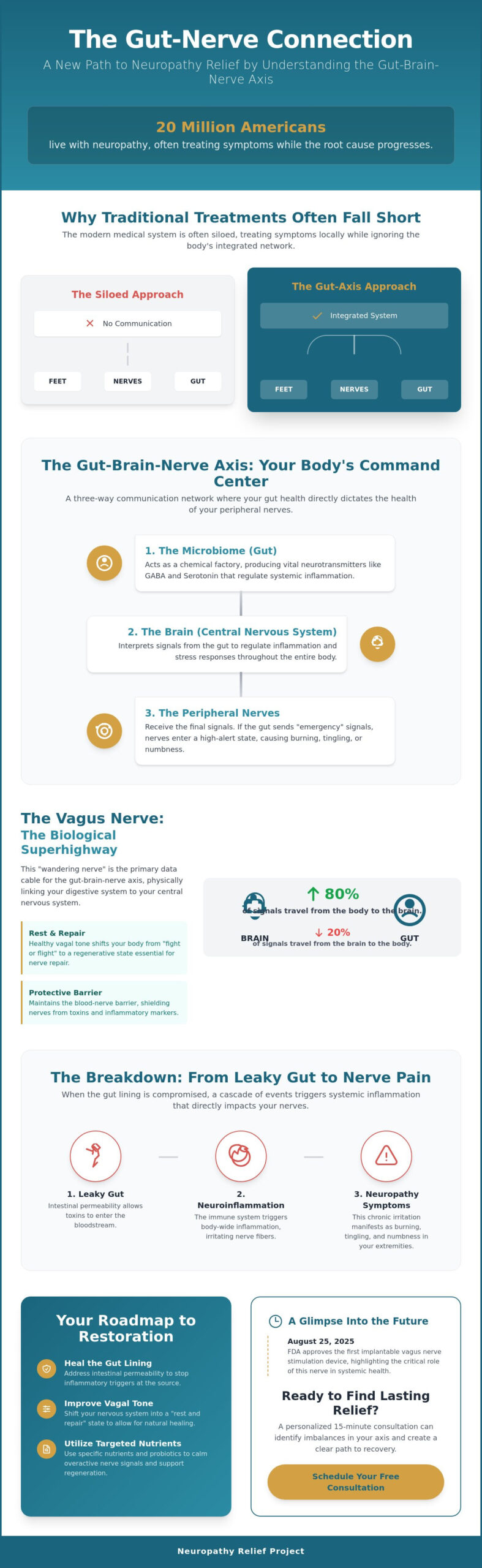
If you experience the relentless sting of peripheral neuropathy, you’ve probably wondered why traditional treatments often feel like they’re missing the mark. The reason is that most protocols focus solely on the site of the pain, ignoring the systemic environment that created it. As of May 2026, clinical research is rapidly shifting away from localized symptom suppression toward a more comprehensive model. We now understand that peripheral health is actually a byproduct of the gut brain nerve axis. This three-way communication network involves your microbiome, your central nervous system, and your peripheral nerves. It turns out those “gut feelings” aren’t just metaphors; they’re literal electrical signals traveling through your nerve fibers. Your nerves are only as healthy as the environment your gut provides, meaning that true restoration must begin at the core of your digestive system.
The Three Pillars: Microbiome, Brain, and Peripheral Nerves
To understand the biological function of the gut brain nerve axis, we must look at its three main components. First, your microbiome acts as a chemical factory, producing vital neurotransmitters such as GABA and serotonin. These compounds don’t just stay in the gut; they send signals that the brain interprets to regulate systemic inflammation levels. You can learn more about this foundational connection by exploring What is the Gut-Brain-Nerve Axis? and how it influences your overall health. Finally, your peripheral nerves act as the “end-users” of this biological data. If your gut is sending “emergency” signals due to an imbalance, your peripheral nerves receive that stress as a command to remain in a state of high alert. This chronic state of alarm is what often manifests as the numbness, tingling, or burning you feel in your extremities.
Why Traditional Medicine Often Misses the Axis
The modern medical system is often siloed, which means specialists rarely look at the body as a single, integrated project. You might see a podiatrist for your feet and a neurologist for your tingling sensations, but they rarely discuss your digestive health. Treating the feet while ignoring the gut is like trying to fix a lamp when the circuit breaker is tripped. You can change the bulb repeatedly, but the light won’t return until you address the power source. True recovery requires looking at the whole circuit. In this context, neuroplasticity is the nervous system’s capacity to repair and reorganize itself once the gut-driven inflammatory triggers are removed. If you’ve felt dismissed by traditional approaches, understanding this systemic connection is your first step toward freedom from chronic pain and a clear path to revitalizing your cellular health.
The Vagus Nerve: The Biological Superhighway for Nerve Signals
The Vagus nerve is often called the “wandering nerve” because it travels from your brainstem through the chest and down into the abdomen. It acts as the primary data cable for the gut brain nerve axis, carrying roughly 80% of its information from the body back up to the brain. This physical link is what allows your digestive system to communicate directly with your central nervous system. When this cable is healthy, your body can easily switch from a “fight or flight” state into a “rest and repair” mode. This transition is essential for recovery because your nerves cannot regenerate while your body is under constant inflammatory stress.
A healthy Vagus nerve also helps maintain the blood-nerve barrier, a protective shield that prevents toxins from entering the delicate environment of your peripheral nerves. According to research cited in The Vagus Nerve: The Biological Superhighway, this pathway is a major regulator of systemic inflammation. If this communication is disrupted, the barrier weakens, allowing inflammatory markers to irritate nerve fibers. This often results in the persistent tingling and burning that characterize peripheral neuropathy. If you’ve been searching for answers, you might find that scheduling a 15-minute consultation is the first step in determining if your vagal health is the missing piece of your recovery puzzle.
Vagal Tone and Peripheral Sensation
Vagal tone refers to the internal “fitness” of your Vagus nerve. When your tone is low, your peripheral nerves can become hypersensitive. This means that even a light touch or a normal temperature change can feel like an intense burning sensation in your extremities. Low vagal tone also impacts micro-circulation, which is the flow of blood through the tiniest vessels that feed your nerves. Ask yourself: do you feel like you’re in a constant state of high stress? If so, your Vagus nerve may be struggling to signal your body to begin the repair process, leaving your peripheral nerves in a vulnerable, inflamed state.
The Enteric Nervous System: Your Second Brain’s First Priority
Deep within the lining of your gastrointestinal tract lies the Enteric Nervous System (ENS), a complex web of more than 100 million neurons. This system is so sophisticated that it operates independently of the brain. The ENS is responsible for signaling your peripheral nerves to either thrive or withdraw based on the chemical environment of your gut. It also plays a vital role in the absorption of specific nutrients, such as B-vitamins and healthy fats, which are required for myelin health. Myelin is the protective coating around your nerves; without it, signals become crossed, leading to the erratic pain and numbness you’re currently enduring. Understanding the full process of myelin sheath restoration can help clarify why gut-driven nutrient absorption is so critical to your recovery.
Neuroinflammation: How a Compromised Gut Triggers Nerve Pain
If you’ve been told your nerve pain is strictly the result of physical injury or high blood sugar, you’re only hearing part of the story. While those are common causes of peripheral neuropathy, they don’t explain why millions of people with healthy blood sugar levels still suffer from debilitating symptoms. The missing link is often found in the integrity of your gut lining. When the intestinal barrier becomes permeable, a condition known as “leaky gut,” toxins called lipopolysaccharides (LPS) escape into your bloodstream. These molecules act as a systemic alarm, triggering a wave of inflammation that specifically targets your small fiber nerves.
Recent research highlights how this inflammatory cascade fuels neurodegeneration via the gut-brain-nerve axis. This isn’t just a digestive issue; it’s a direct attack on your nervous system’s integrity. When LPS enters the blood, it forces the immune system into a state of chronic activation. This leads to systemic neuroinflammation that disrupts the delicate balance of the gut brain nerve axis, making it nearly impossible for your nerves to heal on their own without addressing the source of the irritation.
The “Leaky Gut, Leaky Nerve” Connection
Think of your nerves like high-speed data cables. They’re protected by a fatty insulation called the myelin sheath. When systemic inflammation is high, your body’s immune cells can mistakenly attack this insulation, causing signals to “leak” or misfire. This breakdown leads to the agonizing sensations of “walking on glass” or the deep, internal burning you feel in your feet and hands. This process is often driven by a cytokine storm, which is an overreaction of the immune system that floods your tissues with inflammatory proteins, preventing your nerves from entering a natural repair cycle. Learning about the biological mechanisms behind myelin sheath restoration reveals how reducing this inflammation is the critical first step toward rebuilding that protective insulation.
Beyond Diabetes: Other Axis Disruptors
Many patients feel lost when their medical tests come back “normal,” yet their pain persists. This is where exploring idiopathic neuropathy causes becomes vital for long-term relief. External disruptors, such as certain statin medications or environmental toxins, can alter your microbiome’s composition and trigger oxidative stress. This oxidative stress acts like biological rust, slowly degrading your nerve endings from the inside out. By identifying these hidden axis disruptors, we can stop the cycle of damage and begin the work of true restoration. If you’re tired of treatments that only mask the symptoms, it’s time to look at the systemic health of your entire nervous system.
Nurturing the Axis: Practical Steps for Nerve Restoration
Restoring the integrity of your nervous system requires more than just masking the pain; it demands a strategic shift in your internal environment. If you’ve felt the frustration of stagnant progress, it’s likely because your gut brain nerve axis lacks the raw materials needed for cellular repair. To foster nerve regeneration, you must prioritize nutrient-dense building blocks that support the myelin sheath. For instance, B-vitamins are essential for metabolic function, while Alpha-Lipoic Acid (ALA) acts as a powerful antioxidant to neutralize the oxidative stress that degrades nerve endings. Integrating Omega-3 fatty acids further supports the structural integrity of your nerves, helping to reduce the persistent burning sensations you experience daily.
Probiotics and fermented foods also play a clinical role in this restoration project. By introducing beneficial bacteria, you effectively “calm” the erratic electrical signals traveling from your gut to your brain. This reduction in systemic noise allows your peripheral nerves to finally exit their state of high alert. This approach to non-drug nerve relief ensures that you aren’t just treating the feet, but supporting the entire gut brain nerve axis. Improving micro-circulation is equally vital; it ensures these essential nutrients actually reach the damaged nerve endings in your hands and feet, providing the oxygen necessary for recovery. Understanding the direct relationship between blood flow and nerve repair can help you see why restoring micro-circulation is a foundational step in rebuilding damaged tissue.
Anti-Inflammatory Protocols for Nerve Repair
Stabilizing your gut lining starts with what you remove from your diet. Processed sugars and artificial additives often act as triggers that heighten nerve sensitivity and fuel the neuroinflammation discussed earlier. Instead, focus on foods rich in polyphenols, such as dark berries and leafy greens, which nourish both your microbiome and the Vagus nerve. Hydration is another overlooked factor in nerve health. Proper fluid intake is necessary for electrical signal clarity, preventing the sudden “misfires” and stabs of pain that can disrupt your day.
The Role of Stress Management in Nerve Signaling
Your emotional state directly impacts your physical recovery because your body’s systems are inextricably linked. When you’re under chronic stress, your body produces high levels of cortisol, a hormone that has been shown to inhibit the natural process of nerve regeneration. To counteract this, you can use simple techniques to stimulate the Vagus nerve and lower your body’s alarm response. Deep, diaphragmatic breathing or even gentle humming can trigger a relaxation response, shifting your system out of “fight or flight” and into a state of repair. This mental clarity often leads to a reduction in the anxiety associated with chronic pain flares. If you’re ready to build a personalized roadmap for your recovery, book your free 15-minute consultation today to see how we can support your journey toward lasting relief.
The Neuropathy Relief Project: Restoring Your Systemic Health
The Neuropathy Relief Project represents a fundamental shift in how we approach chronic nerve health. Rather than viewing the body as a collection of separate parts, we see a single, integrated system where the gut brain nerve axis plays the starring role. If you’ve spent years searching for relief only to find temporary fixes, it’s because the root cause hasn’t been addressed. Our mission is to act as your knowledgeable guide, providing the clinical authority and empathy needed to navigate a complex recovery process. We specialize in drug-free nerve pain management that prioritizes the restoration of your body’s natural healing pathways.
By framing our work as a “Project” rather than a standard clinic, we emphasize a collaborative, research-driven identity. This approach allows us to bridge the gap between the latest scientific breakthroughs and the deeply personal experience of living with nerve damage. We don’t believe in masking symptoms with medications that often come with their own set of burdens. Instead, we focus on the cellular health of the gut brain nerve axis to create an environment where nerve regeneration is possible. This methodical, calming process is designed to reduce the anxiety often associated with chronic health issues, ensuring you feel informed and supported every step of the way.
Why a 15-Minute Discovery Call Matters
If you experience the daily burden of chronic pain, you know how exhausting it is to repeat your story to specialists who don’t seem to listen. This call is different. We focus on a detailed symptom review and an eligibility assessment to ensure our systemic approach matches your clinical needs. We don’t just ask where it hurts; we investigate why the signals are misfiring in the first place. This is where we identify axis imbalances that others might miss. It’s a focused, methodical conversation designed to validate your struggle and provide a clear, expert-led narrative for your recovery.
Your Path to Restoration Starts Here
Moving from a state of anxiety to a state of action is the most significant step you can take for your long-term health. Dr. Michael Sclafani leads this project with a deep commitment to research-backed, non-invasive protocols. By focusing on the biological links within the body, we provide a structured solution that addresses the actual damage to your peripheral nerves. You don’t have to accept a life of limited mobility or constant discomfort. A path toward recovery, freedom, and revitalization is available. Schedule your 15-minute FREE phone Consultation today and begin the collaborative effort of restoring your systemic health.
Reclaiming Your Health Through Systemic Healing
Understanding the biological link within the gut brain nerve axis provides the foundation you need to move beyond temporary relief. You now see how a healthy microbiome and a resilient vagus nerve act as the primary defense against systemic neuroinflammation. This mission-driven Project, led by the expert review of Dr. Michael Sclafani, is committed to your long-term results. We use specialized non-invasive neuropathy protocols that prioritize your cellular health. With 20 million Americans currently struggling with these symptoms, you aren’t alone in your search for a solution that addresses the source of your pain.
Book your 15-minute FREE phone Consultation to discuss your nerve health and take a decisive step toward revitalizing your body. We’re here to guide you through a structured, scientific path toward restoration. You deserve liberation from chronic pain. True recovery is a collaborative effort, and a future of physical comfort is possible when you finally address the root cause. You have the power to change your trajectory starting today.
Frequently Asked Questions
Can gut issues cause tingling in my feet?
Yes, gut issues are a direct trigger for tingling because they regulate the level of systemic inflammation in your body. When your intestinal barrier is compromised, inflammatory markers travel through the blood and irritate the small fiber nerves in your extremities. This creates the “pins and needles” sensation even if you haven’t suffered a physical injury. Addressing the gut brain nerve axis is essential to stop this cycle of irritation.
How long does it take to repair the gut-brain-nerve axis?
Restoring this complex communication network is a methodical process that typically takes 90 to 180 days to see significant biological shifts. While your gut lining can begin to heal in just a few weeks, peripheral nerves regenerate at a slow rate of approximately 1 millimeter per day. You must remain consistent with your recovery protocol to give your nervous system the time it needs to revitalize and repair damaged fibers.
Is there a specific diet for the gut-brain-nerve axis?
A diet focused on nerve restoration emphasizes high-fiber plants and healthy fats while removing processed sugars that fuel neuroinflammation. Clinical research suggests that consuming 30 different plant varieties per week supports the microbiome diversity necessary for nerve health. This variety ensures your gut produces the neurotransmitters and short-chain fatty acids required to calm overactive nerve signals and support the myelin sheath.
Can the Vagus nerve be repaired if it is damaged?
The Vagus nerve can be revitalized through targeted stimulation and the principles of neuroplasticity. The medical landscape changed significantly on August 25, 2025, when the FDA approved the first implantable VNS device for inflammatory conditions, proving the clinical importance of this pathway. You can improve your vagal tone through non-invasive techniques like deep breathing and humming, which help shift your body into a state of repair.
What are the first signs of a healthy gut-brain connection?
Improved sleep quality and the lifting of “brain fog” are often the first indicators that your system is stabilizing. As the communication within the gut brain nerve axis improves, you’ll notice that your nerve pain flares become less frequent and lose their intensity. These subtle shifts suggest your body has successfully moved from a state of “fight or flight” into a restorative “rest and repair” cycle.
Do probiotics help with peripheral neuropathy pain?
Probiotics help by lowering the inflammatory markers that constantly irritate your peripheral nerves. While they don’t fix a nerve directly, they improve the internal environment where your nerves live. By reducing the production of pro-inflammatory cytokines, certain probiotic strains help prevent the degradation of the myelin sheath. This reduction in systemic noise is a vital step in finding freedom from chronic burning and numbness.
How do I know if my nerve pain is systemic or localized?
Symmetrical symptoms in both feet or both hands are the primary indicator that your pain is systemic rather than localized. If you experience burning in both feet simultaneously, it’s rarely caused by a localized injury like a pinched nerve. This pattern suggests that an internal trigger, often originating from a gut imbalance, is circulating through your blood and affecting your entire nervous system at once.
What happens if the gut-brain axis is not functioning correctly?
A malfunctioning axis leads to chronic neuroinflammation that accelerates the degradation of your peripheral nerves. Without the correct signals from your microbiome, your body’s natural repair mechanisms remain dormant, allowing damage to progress. This systemic failure is a leading cause of the symptoms affecting 1 in 15 people in the United States, making a specialized, mission-driven approach to restoration absolutely necessary.