

You’ve just turned off the lamp and settled into your pillows, but instead of the quiet embrace of sleep, your feet begin to simmer with an unmistakable, searing heat. If you feel like your neuropathy burning at night is a cruel trick your body plays once the world goes quiet, you aren’t alone. It’s incredibly isolating to face another evening where the only solutions offered are heavier prescriptions that leave you feeling foggy rather than refreshed. You deserve to be heard, and more importantly, you deserve a night of restorative sleep.
If you’ve noticed that the fire peaks only when the house is silent, it’s because your brain lacks competing sensory input to distract it from damaged nerve signals. This article reveals why your nerves intensify after dark and provides an expert-led checklist to help you cool the sensation. We’ll explore 2026 clinical breakthroughs, from selective sodium channel inhibitors to FDA-cleared device therapies, and offer a structured routine for lasting relief. To start your journey toward restoration and join our collaborative effort for better health, you can schedule a 15 minute FREE phone Consultation with our team today.
Key Takeaways
- Understand how sensory isolation and your biological clock work together to amplify nerve signals once the house goes quiet.
- Learn how to optimize your bedroom environment by maintaining a specific temperature range and selecting friction-free bedding to soothe hypersensitivity.
- Discover a physical preparation routine that uses hydration and gentle mobilization to help close the pain gate before you settle in for the night.
- Find out why standard medications often fail to resolve neuropathy burning at night and how they can inadvertently disrupt your restorative sleep cycles.
- Shift your focus from temporary symptom masking toward a collaborative restoration journey designed for long-term nerve health and signal clarity.
Why Your Neuropathy Burning Intensifies at Night
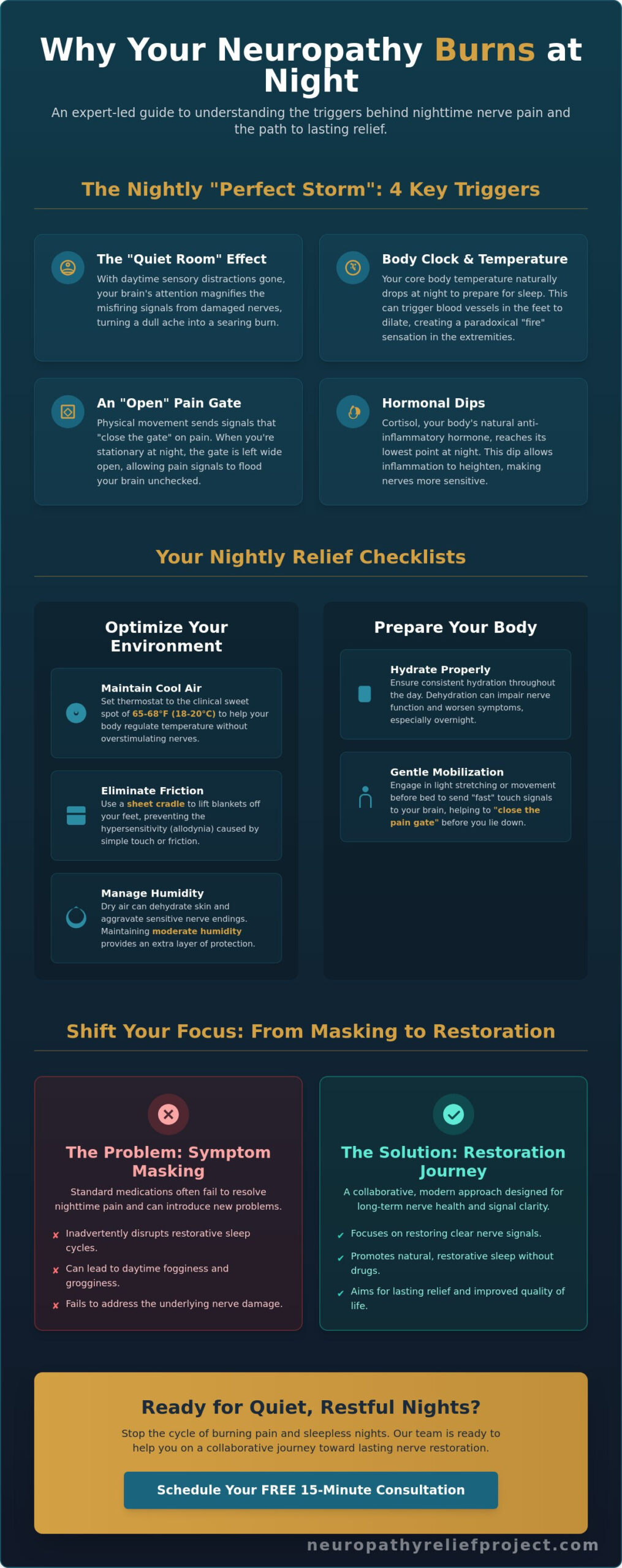
The sensation is often described as standing on hot coals or feeling a persistent, electric sizzle beneath the skin. If you find that your neuropathy burning at night feels significantly more aggressive than it does during the day, your body isn’t imagining things. Several biological shifts occur as you transition into rest, creating a perfect storm for nerve pain. One primary culprit is the “Quiet Room” effect. During the day, your brain is bombarded with sensory signals like the feeling of shoes, the sounds of traffic, or the visual input of your surroundings. These signals act as a natural distraction. When you lie still in a dark room, those distractions vanish, leaving your brain to focus entirely on the erratic, misfiring signals coming from damaged nerves.
Your internal biological clock, or circadian rhythm, also plays a decisive role. As evening approaches, your core body temperature naturally begins to drop to prepare for sleep. While this cooling is essential for rest, it can paradoxically trigger a “fire” sensation in the extremities as blood vessels in the hands and feet dilate to release heat. This shift in blood flow, combined with nighttime drops in blood pressure, can temporarily reduce oxygenation to already struggling peripheral nerves. For those living with Small fiber neuropathy, these minor physiological changes are often enough to turn a dull ache into a searing flare.
The Gate Control Theory of Nerve Pain
Think of your spinal cord as a gatekeeper that decides which signals reach your brain. According to the Gate Control Theory, physical movement and touch send “fast” signals that can effectively crowd out the “slow” signals of nerve pain, closing the gate. At night, when you are stationary, those fast signals disappear. This leaves the gate wide open for pain to flood through. Engaging in gentle stimulation or specific mobilization before bed can help “close” this gate, providing a window of relief so you can actually fall asleep.
Cortisol and Inflammation Cycles
Your body’s natural chemistry shifts significantly around 10:00 PM. Cortisol, a hormone that helps regulate inflammation, reaches its lowest point during the night. As cortisol levels dip, the inflammatory response in your body can heighten, making your nerves more sensitive to every stimulus. This chemical “flare” cycle is a primary reason why many patients report a sudden surge in discomfort just as they are trying to drift off. Understanding these triggers is the first step in our collaborative effort to restore your quality of life. If you feel overwhelmed by these nightly cycles, a 15 minute FREE phone Consultation can help you begin tailoring a plan to your specific needs.
Your Nighttime Environment Checklist: Cooling the Burn
When you are dealing with neuropathy burning at night, your bedroom environment can either be a sanctuary for healing or a catalyst for pain. It’s often the small, overlooked details of your surroundings that dictate whether you’ll achieve deep sleep or spend the night pacing the floor. Clinical observation suggests that optimizing your room temperature is the most critical first step. Aiming for a consistent range between 65 and 68 degrees Fahrenheit is the clinical sweet spot. This cool environment helps counteract the natural nighttime rise in skin temperature that often triggers nerve flares, allowing your body to regulate its internal clock without overstimulating damaged pathways.
For many, the simple act of a bedsheet touching the skin can feel like a blowtorch. This hypersensitivity, known as allodynia, is a common hallmark of Peripheral Neuropathy. To mitigate this, consider implementing a “sheet cradle.” This is a simple frame that sits at the foot of the bed, lifting the weight of blankets and sheets off your feet entirely. By removing physical friction, you prevent the mechanical triggers that often keep the “pain gate” open throughout the night. Additionally, pay attention to the air quality; dry air can dehydrate the skin and aggravate sensitive nerve endings, so maintaining moderate humidity can provide an extra layer of protection.
Choosing the Right Fabrics for Nerve Sensitivity
The texture of your bedding is just as vital as the fit of your clothes. If you’ve already researched the importance of breathable materials in shoes for neuropathy feet, you know that friction is the enemy. Silk or high-thread-count bamboo sheets are ideal because they glide over the skin rather than catching on it. Avoid heavy wool or coarse cotton blankets, as these can trap excessive heat and create the micro-stabbing sensations that characterize nighttime flares.
Bedtime Elevation and Positioning
How you position your body can directly influence micro-circulation. If you experience heavy throbbing along with the heat, slight leg elevation using a specialized wedge pillow can help blood return to the heart and reduce pressure on the lower extremities. Conversely, some patients find that “dangling” their feet off the edge of the bed provides a cooling effect and a temporary shift in blood flow that dulls the burn. Finding the right alignment is a personal process, and if you’re struggling to find a position that works, a 15 minute FREE phone Consultation can offer a starting point for more personalized strategies.
The Physical Preparation Checklist: Supporting Nerve Signal Clarity
While your environment sets the stage, your internal physiology determines how loudly your nerves will scream once you lie down. Achieving signal clarity is about more than just avoiding pain; it’s about calming the irritability of the peripheral nervous system before the sun goes down. If you’ve noticed that your neuropathy burning at night feels more like an electrical storm, it’s often a sign that your nerve cells are struggling with electrolyte imbalances. Hydration is your first line of defense. When you’re even mildly dehydrated, the concentration of salt in your blood can trigger spontaneous firing in damaged nerve endings. Aim to sip water steadily throughout the afternoon rather than gulping it all at bedtime, which can lead to sleep-disrupting bathroom trips.
Many patients reach for cooling gels or lidocaine creams to douse the fire. While these topicals can provide a temporary distraction by overwhelming the skin’s surface receptors, they rarely penetrate deep enough to heal the underlying nerve. Instead, focus on mind-body calibration to lower your sympathetic nervous system’s “fight or flight” response. According to the National Institute of Neurological Disorders and Stroke, neuropathic symptoms often intensify during periods of rest because the brain lacks competing sensory input. By consciously lowering your heart rate through rhythmic breathing, you reduce the chemical signals that tell your nerves to stay on high alert.
The 60-Minute Pre-Sleep Routine
Consistency is the hallmark of restoration. Start your routine with a lukewarm soak; never use hot water, as it can cause a rebound flare once you exit the tub. During this time, practice gentle desensitization by lightly rubbing your feet with a soft microfiber cloth. This controlled stimulation helps retrain your brain to interpret touch as “safe” rather than painful. Finish with a final 8-ounce glass of water to ensure cellular health throughout the night.
Addressing the “Walking on Glass” Sensation
If you experience a sharp, gritty sensation in your soles, it’s time to focus on micro-circulation. Integrating specific, low-impact movements is a key part of what helps neuropathy in feet by encouraging nutrient-rich blood to reach distal nerve endings. Try simple ankle circles or “towel scrunches” with your toes while sitting on the edge of the bed. Always perform a quick visual foot inspection before sleep to ensure no minor irritations are contributing to your neuropathy burning at night.
Moving Beyond the Mask: Why Drugs Often Fail Nighttime Pain
When you sit in a clinical exam room, the most common solution offered for your discomfort is a prescription for nerve blockers. While these medications are standard practice, they often lead to a cycle of frustration for those living with neuropathy burning at night. These drugs work by inhibiting specific neurotransmitters to dull the pain signal before it reaches your brain. They don’t address why the nerve is misfiring; they simply turn down the volume on the alarm. For many, this “management” strategy feels less like a solution and more like a mask that eventually slips as the body develops a tolerance to the dosage.
The hidden cost of relying solely on nighttime sedation is the quality of your actual rest. While certain medications may help you fall asleep by inducing drowsiness, they often disrupt the architecture of deep, restorative sleep cycles. You might wake up feeling “foggy” or lethargic, yet the searing heat in your feet remains waiting for you the next evening. This cycle of escalation, where doses are increased to chase a fading effect, can leave you feeling misunderstood by a system that prioritizes temporary relief over long-term nerve health. We believe in a collaborative effort that seeks to restore the nerve’s environment rather than just sedating the patient. If you’re searching for a non-drug approach to soothing these agonizing sensations, our comprehensive guide to neuropathy foot pain relief outlines the biological steps your nerves need to begin healing.
Understanding Nerve Restoration in 2026
The landscape of neurological care is shifting away from lifelong suppression toward the biological possibility of repair. If you’ve ever wondered is diabetic neuropathy permanent, the answer in 2026 is increasingly hopeful. Research into myelin sheath repair suggests that when provided with the right metabolic conditions, nerves possess an inherent ability to stabilize. Addressing the root cause of the nighttime fire requires looking at the cellular level to see what is preventing the nerve from conducting signals clearly.
The Role of Micro-Circulation in Nerve Repair
Nerves are some of the most oxygen-hungry tissues in your body. When the tiny blood vessels that feed your peripheral nerves become constricted or damaged, the nerves essentially begin to starve. These “starved” nerves send out intense, erratic pain signals as a distress call. Improving micro-circulation is vital because it provides the oxygen and nutrients necessary for the myelin sheath to heal. Long-term liberation from pain isn’t found in a pill bottle; it’s found in restoration. To explore a path that moves beyond masking symptoms, you can schedule a 15 minute FREE phone Consultation with our specialist team today.
Restoration Over Management: Your Path to Lasting Relief
Choosing to move beyond symptom suppression is a profound shift in your health journey. For years, you may have been told that your only option is to manage the discomfort with increasing doses of medication. However, true liberation comes from a restoration-focused approach. The Neuropathy Relief Project is a mission-driven collaborative effort designed to bridge the gap between traditional clinical evidence and holistic nerve health. We don’t just look at the symptoms; we analyze the underlying biological environment that allows neuropathy burning at night to persist. By shifting your focus from “living with it” to “restoring from it,” you open the door to protocols that prioritize the long-term health of your peripheral nervous system.
Every case of nerve damage is unique, which is why a one-size-fits-all approach often fails to provide relief. Complex nerve challenges require customized protocols that account for your specific metabolic needs, lifestyle, and the degree of sensory dysfunction you experience. Whether you’ve been struggling for months or decades, the goal remains the same: to provide your nerves with the oxygen, nutrients, and environment they need to stabilize. This isn’t just about getting through the next few hours; it’s about building a foundation for a future where your rest is no longer dictated by pain.
The 15-Minute Expert Nerve Review
If you’re tired of feeling dismissed by a system that only offers pills, a discovery call is your first step toward a different narrative. During this time, we evaluate your specific sensory symptoms, from searing heat to the “walking on glass” sensation, to understand the current state of your nerve health. You’ll have a specialized advocate who listens to your history and explains the science behind our restoration philosophy. It’s an opportunity to gain clarity on your condition without the pressure of a standard clinical environment, ensuring you feel informed and supported as you consider your next steps.
Reclaiming Your Nights and Your Life
You aren’t alone in this struggle, and the frustration you feel is a valid response to a complex condition. The path to liberation from chronic pain begins with the belief that restoration is possible. By implementing the environmental changes, physical preparations, and biological support discussed in this guide, you’re already taking control of your recovery. We are committed to helping you navigate this journey toward lasting relief and signal clarity. To take the next step in this mission-driven process, Schedule your 15-Minute FREE Phone Consultation today and start your journey toward restorative sleep.
Reclaim Your Rest and Restore Your Health
You now have the tools to transform your evening from a battle against heat into a period of genuine restoration. By optimizing your room environment and following a structured pre-sleep checklist, you can significantly dampen the intensity of neuropathy burning at night. These practical steps, from hydration to gentle mobilization, are designed to calm your nervous system and help close the pain gate before you settle in for the evening.
True liberation from chronic pain requires more than just masking the sizzle with temporary solutions. It demands a collaborative effort focused on the biological roots of nerve damage. Led by Dr. Michael J. Sclafani, DC, our mission-driven initiative specializes in non-invasive nerve restoration protocols that prioritize your long-term recovery. If you’re ready to move beyond management and start your journey toward restoration, Book Your 15-Minute FREE Phone Consultation to discuss your specific situation. You don’t have to face these flares alone; a future of quiet, cool, and restorative sleep is within your reach.
Frequently Asked Questions
Why does my neuropathy burning feel like it starts exactly at bedtime?
The sensation often intensifies the moment you lie down because your autonomic nervous system shifts from a state of activity to one of rest. As your heart rate slows and your blood pressure drops, the “gain” on your sensory nerves is turned up. This physiological transition makes your brain more aware of the erratic signals coming from damaged fibers, causing the neuropathy burning at night to feel more immediate and aggressive than it did during your busy daytime hours.
Can I use ice packs to cool the burning sensation in my feet at night?
You should avoid using ice packs or extreme cold on neuropathic tissue. While the cold may feel like a relief initially, it can cause a rebound effect called vasodilation, where blood vessels widen rapidly once the ice is removed, making the burning worse. Additionally, if you have reduced sensation, you run a high risk of thermal injury or frostbite without realizing it. Using a gentle cooling fan or a lukewarm soak is a much safer alternative for your skin.
Is it normal for nerve pain to move from tingling to burning as I try to sleep?
Yes, this progression is a common sign of increasing nerve irritability. Tingling, or paresthesia, often represents a nerve that is struggling but still functional. As the fiber becomes more compromised or starved of oxygen, the signal shifts into dysesthesia, which is the searing or burning sensation you feel. This transition typically happens at night because your body’s threshold for processing these “error messages” lowers as you attempt to enter deeper sleep stages.
How does dehydration affect the intensity of my nighttime nerve flares?
When your body lacks sufficient water, the concentration of electrolytes in your blood changes, which directly impacts the sodium-potassium pump that regulates nerve firing. Dehydration makes your nerve membranes more unstable and prone to spontaneous “misfires.” This chemical imbalance can turn a manageable tingle into a severe flare. Ensuring you’ve maintained steady hydration throughout the day helps stabilize these cellular pumps, reducing the likelihood of a sudden surge in neuropathy burning at night.
Are there specific vitamins that can help reduce burning at night?
B-complex vitamins, particularly B1 (benfotiamine), B6, and B12, are essential for maintaining the myelin sheath that protects your nerves. Additionally, Alpha-Lipoic Acid (ALA) is a potent antioxidant that has been shown to improve micro-circulation and reduce the oxidative stress that causes burning sensations. While vitamins aren’t a quick fix for an immediate flare, they provide the metabolic foundation your nerves need to begin the restoration process and conduct signals more clearly over time.
What happens if I ignore the burning and just try to sleep through it?
Ignoring the pain can lead to a phenomenon called central sensitization, where your brain and spinal cord become “hyperefficient” at processing pain signals. Over time, your nervous system learns to stay in a state of high alert, making even light touch feel excruciating. This creates a cycle of chronic exhaustion that further lowers your pain tolerance. Addressing the signals early through a collaborative restoration plan is vital to prevent your brain from permanently rewiring itself to expect pain.
Can certain foods or drinks in the evening make my neuropathy worse at night?
High-sugar snacks and alcohol are common triggers for nighttime flares. Sugar causes a rapid spike in blood glucose, which leads to immediate inflammation and “sugar stings” in the peripheral nerves. Alcohol is a known neurotoxin that can further damage small nerve fibers while simultaneously dehydrating your system. If you’re struggling with severe burning, try sticking to anti-inflammatory snacks like walnuts or a small serving of leafy greens in the evening to keep your blood chemistry stable.