

What if the very shoes designed to support your feet are actually contributing to that agonizing “walking on glass” sensation? For many of the 30 million Americans living with peripheral neuropathy, standard orthopedic sneakers provide a false sense of security while failing to address the underlying cellular health of the foot. If you experience burning sensations or a frightening lack of feedback that makes you fear a fall, you aren’t alone in your frustration. Finding the right shoes for neuropathy feet requires a shift in perspective from simple cushioning to active nerve protection.
At the Neuropathy Relief Project, we understand that every step shouldn’t feel like a gamble with your comfort. We’ve analyzed clinical data to help you discover the essential footwear features that shield sensitive nerves and prevent the small, unnoticed injuries that lead to long-term complications. This guide outlines the specific science of nerve-safe footwear, providing you a clear path to regain your mobility and walk without immediate pain flares. We’ll explore the vital role of wide toe boxes, seamless interiors, and specialized outsoles in your journey toward recovery and freedom.
Key Takeaways
- Understand why standard footwear often compresses sensitive nerves and how switching to an extra-wide toe box can help eliminate the “walking on glass” sensation.
- Discover the five non-negotiable features to look for in shoes for neuropathy feet, including deep-well designs that accommodate custom orthotics without crowding the foot.
- Learn to match your footwear to your specific symptoms, whether you require heat-dissipating materials for burning sensations or high-feedback soles for improved balance.
- Master the “daily inspection” ritual to protect your feet from silent injuries and identify the subtle signs that your midsoles are no longer providing adequate nerve protection.
- Explore why specialized footwear is a tactical defense and how the Neuropathy Relief Project helps identify and address the underlying cellular cause of your nerve pain.
Why Standard Footwear Fails Neuropathy Feet
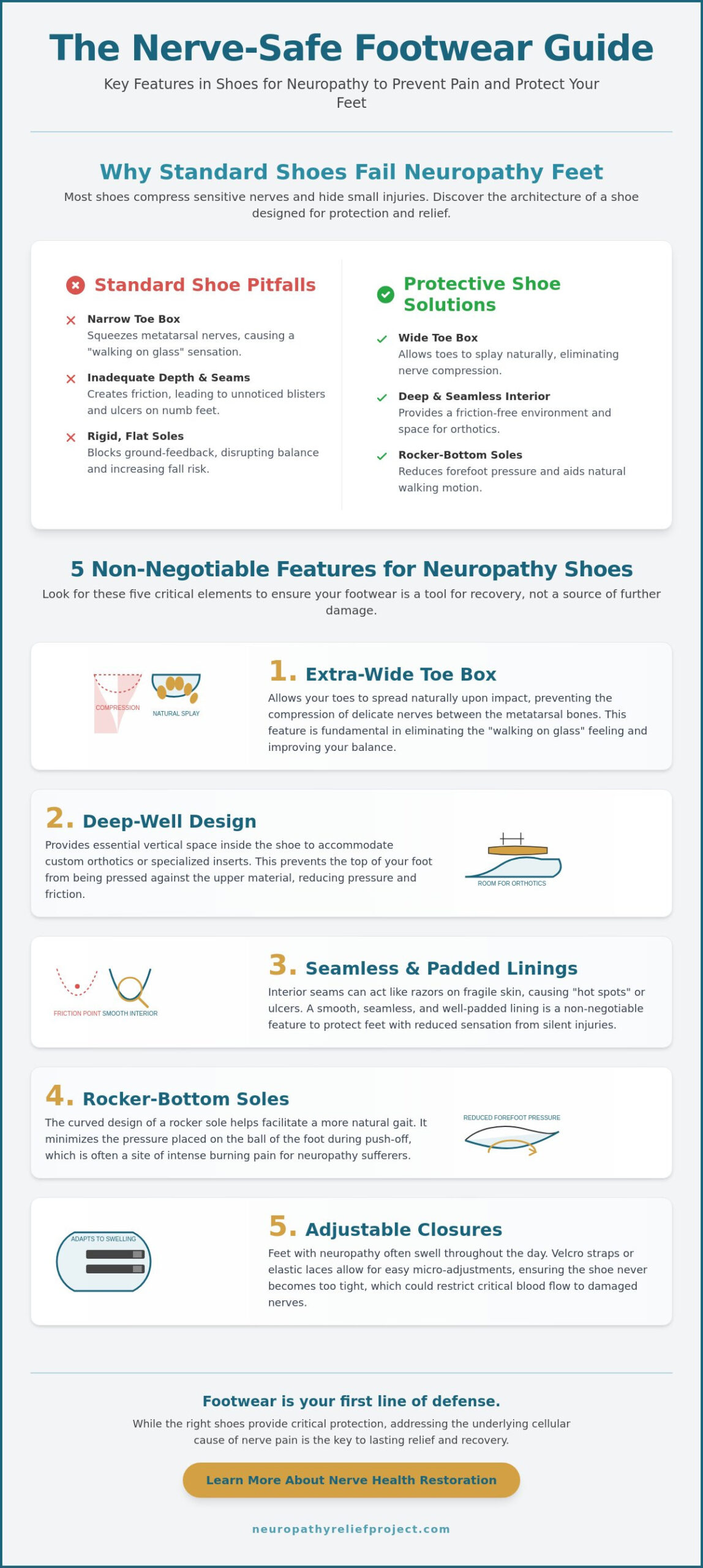
Standard footwear is often built for the average consumer, but if you live with peripheral neuropathy, your feet are far from average. Most off-the-shelf options prioritize a sleek profile, which results in narrow toe boxes that compress the metatarsals. This compression pinches the small, delicate nerves between the bones, often triggering that agonizing “walking on glass” sensation that defines your day. Finding the right shoes for neuropathy feet isn’t about style; it’s about preventing a physiological crisis in your lower extremities.
A lack of vertical depth in standard shoes creates constant friction against the top of the toes and the heel. For the 25% of patients who experience significant numbness, this friction goes unnoticed until a blister or ulcer forms. Because tight shoes restrict micro-circulation, they starve damaged nerves of the oxygen needed for repair. This lack of blood flow can accelerate nerve degeneration in compromised tissues, making the choice of footwear a critical medical decision. When your shoes are too tight, they act as a tourniquet, preventing the very cellular health we aim to restore.
The “Nerve Trap” Effect of Modern Sneakers
Fashionable sneakers often feature tapered fronts and rigid soles that disrupt your body’s natural mechanics. If you struggle with lost proprioception, a stiff sole prevents your brain from receiving the ground-feedback it needs to maintain balance. This sensory disconnect increases your fall risk significantly. Specialized footwear acts as the primary foundation for non-drug nerve relief by stabilizing the foot and reducing mechanical stress.
Sensory Overload vs. Sensory Deprivation
Neuropathy often presents as a cruel paradox: your feet may feel nothing at all, or they may be so hypersensitive that a single internal seam feels like a razor blade. This hypersensitivity, known as allodynia, means that the wrong shoe can trigger a painful flare-up that lasts for 48 hours or more. Conversely, “silent” injuries occur when a shoe is too tight but the nerves can’t signal the brain. To mitigate these risks, many specialists recommend Diabetic shoes because they provide the necessary protective environment and seamless interiors required to prevent skin breakdown. Choosing high-quality shoes for neuropathy feet ensures that every step supports recovery rather than causing further damage.
- Narrow toe boxes squeeze metatarsals and aggravate compressed nerves.
- Inadequate depth leads to friction that patients with numbness don’t feel until it’s a wound.
- Rigid midsoles interfere with your ability to feel the ground, increasing the risk of stumbles.
- Internal seams can cause micro-trauma to fragile skin during a 30-minute walk.
5 Non-Negotiable Features for Neuropathy Shoes
If you’ve spent months or years managing the burning, tingling, or “pins and needles” sensations of nerve damage, you understand that your choice of footwear is a clinical decision. Finding the best shoes for neuropathy feet involves more than just seeking out a soft sole; it requires a specific architecture designed to protect vulnerable nerves from further trauma. When the peripheral nerves in your feet are compromised, they lose the ability to signal pain effectively, making mechanical protection your first line of defense.
- Extra-wide toe boxes: These allow your toes to splay naturally, which prevents the compression of the small metatarsal nerves and improves overall stability.
- Deep-well designs: A shoe must have enough internal volume to house custom orthotics or specialized inserts without pressing the top of your foot against the upper material.
- Seamless, padded linings: Any interior seam can become a source of friction, leading to blisters or “hot spots” that may go unnoticed due to reduced sensation.
- Rocker-bottom soles: These curved soles reduce the force required to push off during your stride, effectively offloading the pressure usually placed on the forefoot.
- Adjustable closure systems: Velcro straps or elastic laces are essential because they allow you to modify the fit as your feet swell throughout the day, ensuring the shoe never becomes a tourniquet.
If you experience daily fluctuations in foot volume, these features aren’t just luxuries. They’re safety requirements. Proper footwear helps prevent the minor irritations that can lead to serious complications, a core tenet of comprehensive Diabetic Foot Care and nerve health maintenance.
The Science of the Rocker Sole
A rocker sole uses a curved geometry to mimic the foot’s natural rolling motion. This design is critical because it offloads pressure from the metatarsal heads, where many patients experience the most intense burning. For the 30% of neuropathy patients who struggle with balance issues, a rocker sole provides a stable platform that compensates for vestibular or nerve-related instability. When you test a new shoe, check for a rigid forefoot. If the shoe bends too easily at the ball of the foot, it won’t provide the mechanical advantage needed to protect your joints and nerves.
Anatomical Toe Boxes and Nerve Freedom
It’s a common mistake to assume a “wide” shoe is the same as an “anatomical” one. Wide shoes are often just scaled up versions of standard lasts, while anatomical toe boxes are shaped like a human foot, wider at the tips than at the ball. This extra space allows for natural toe splay, which is proven to reduce inflammation in the ball of the foot. To ensure you have enough room, perform the “thumb test” while standing. There should be a full thumb’s width of space between your longest toe and the end of the shoe. If your toes feel crowded, you’re likely restricting blood flow and aggravating nerve pathways. Our nerve restoration protocols often emphasize this type of mechanical relief as a foundational step toward long-term recovery.
Selecting Shoes Based on Your Specific Symptoms
Neuropathy doesn’t manifest the same way for everyone. Your choice in shoes for neuropathy feet should reflect the specific sensations you face daily. Whether you deal with hypersensitivity or a complete lack of feeling, the construction of your footwear acts as the first line of defense in your recovery journey. Finding the right fit often requires a methodical process of trial and error under the supervision of a nerve specialist to ensure your gait remains natural and safe.
Footwear for Hypersensitive (Burning) Feet
If you experience a persistent burning sensation, your feet are likely reacting to heat and friction. You should prioritize “cool-touch” fabrics and moisture-wicking linings that pull sweat away from the skin. Synthetic materials like heavy faux leather often trap heat, which can trigger agonizing nighttime flares or increase localized swelling. Proper airflow is vital because it helps regulate skin temperature, and consistent cooling supports the management of idiopathic neuropathy causes related to chronic inflammation. Look for open-cell mesh uppers that allow for 360-degree ventilation. This prevents the “greenhouse effect” inside the shoe that often exacerbates nerve irritation.
Stability Solutions for Numbness
If you experience numbness and a loss of balance, your primary goal is fall prevention. You need a shoe that provides “ground feel” without sacrificing the protective barrier of the sole. A wide outsole base is essential. Clinical observations suggest that a wider footprint can improve lateral stability and reduce the risk of ankle rolls by approximately 15 percent. Even if you prefer the convenience of slip-on styles, they must feature a rigid, secure heel counter. A flimsy heel allows the foot to slide, which often leads to tripping. Your shoes for neuropathy feet should feel like an extension of your body, providing the sensory feedback your nerves are currently struggling to transmit.
Maximum Cushioning for the “Walking on Glass” Sensation
If every step feels like you’re walking on shards of glass or hard pebbles, you require maximum “marshmallow” cushioning. This specific comfort comes from high-rebound foam, such as specialized EVA or nitrogen-infused midsoles. These materials absorb the vertical impact that your damaged nerve endings perceive as pain. Understanding what helps neuropathy in feet beyond cushioning alone can be the difference between temporary comfort and genuine nerve recovery.
- Seek out a stack height of at least 30mm for maximum shock absorption.
- Ensure the foam doesn’t bottom out after an hour of wear.
- Look for a rocker-bottom sole to transition your weight smoothly from heel to toe.
The Neuropathy Relief Project views footwear as a clinical tool. We recommend testing new shoes in the late afternoon when your feet are at their largest. Don’t settle for “good enough” when your mobility is at stake. If a shoe causes even minor redness after 10 minutes of walking, it isn’t the right fit for your specific nerve profile.
Safety and Maintenance: Living with Neuropathy Feet
If you experience the persistent tingling, numbness, or “pins and needles” associated with nerve damage, your footwear serves as a primary medical tool rather than a simple fashion choice. Selecting high-quality shoes for neuropathy feet is a vital step toward stability, but your safety depends on how you manage those shoes and monitor your physical health daily. Because neuropathy often dulls the warning signs of pain, you can’t rely on your nerves to tell you when a shoe is causing damage.
The Mirror Check: Preventing Silent Injuries
A small blister can escalate into a serious ulcer within 48 hours if it goes unnoticed. You should perform a visual foot inspection every night before bed to catch issues your nerves might miss. Since you may not feel a stray pebble or a folded sock liner, follow this routine:
- Use a hand mirror to examine the soles of your feet and the spaces between your toes clearly.
- Look for localized redness, swelling, or skin that feels warmer than the surrounding area.
- Check for “hot spots” which indicate high-pressure zones where the shoe is rubbing.
When you purchase new shoes for neuropathy feet, don’t wear them for a full day immediately. Limit your initial wear to 30-minute increments inside your home. This controlled environment allows you to check for pressure marks every half hour before committing to a long walk outdoors.
The Lifetime of a Neuropathy Shoe
Even the most advanced therapeutic footwear has an expiration date. Most specialized EVA foam midsoles lose approximately 50% of their shock-absorption and offloading capabilities after 300 to 500 miles of use. If you walk an average of 2 miles a day, your shoes likely need replacement every 6 to 8 months. Don’t wait for visible holes in the fabric to buy a new pair.
Watch for horizontal compression lines in the foam or a noticeable tilt in the heel counter. If the midsole looks wrinkled or feels “mushy” to the touch, the internal support structure has likely collapsed. Rotating between two different pairs of shoes is a strategic way to extend the life of the cushioning. This practice allows the foam cells to decompress fully for 24 hours between uses, which can increase the lifespan of the support material by 20%.
Proper footwear is a foundational element of safety, yet it works most effectively when integrated into a comprehensive peripheral neuropathy reversal program. Your shoes protect the nerves from external trauma while a structured protocol works to revitalize cellular health from the inside. Always pair your shoes with moisture-wicking, seamless diabetic socks to prevent friction and maintain a stable environment for your feet.
Beyond Footwear: Restoring Nerve Health with the Project
Selecting the right shoes for neuropathy feet is a vital tactical defense. These specialized shoes shield your feet from external injury and reduce the mechanical stress on sensitive nerve endings. However, footwear remains a protective barrier rather than a biological solution. It doesn’t repair the underlying cellular damage that causes your symptoms. If you experience persistent burning, tingling, or that frustrating “pins and needles” sensation, you’ve likely realized that comfort alone isn’t the same as recovery. While 2023 data from the Foundation for Peripheral Neuropathy suggests that over 30 million Americans live with this condition, many remain stuck in a cycle of temporary relief because they only treat the surface symptoms.
The Limitations of Lifestyle Adjustments
Orthotics and specialized shoes for neuropathy feet provide immediate relief from pressure, but they don’t address the core issues of myelin health or micro-circulation. Peripheral nerves require a steady supply of oxygen and nutrients to function. When micro-circulation is compromised, nerves begin to wither; this is often the moment when “numbness” turns into a permanent loss of sensation. Many patients facing this progression find themselves asking is diabetic neuropathy permanent, and the answer may be more hopeful than they expect. The Neuropathy Relief Project serves as the bridge between temporary comfort and long-term restoration. We move beyond simply cushioning the foot to focusing on the biological environment of the nerve. Our protocols focus on cellular health and the potential for nerve regeneration, aiming to shift your experience from merely managing pain to actively revitalizing your nerve function. If you’re searching for what helps neuropathy in feet at a deeper biological level, our specialist guide outlines the clinical steps required to move from symptom management toward genuine nerve restoration.
Your Path to Relief Starts with a Conversation
The journey toward real recovery doesn’t happen in a vacuum. It starts with a dedicated 15-minute phone consultation. This isn’t a high-pressure environment; it’s a clinical conversation designed to provide clarity. You’ll speak with a specialist who understands why your feet feel like they’re walking on glass or why the burning sensation intensifies at night. We listen to the nuances of your experience to determine how our specialized protocols can address your specific symptoms. This methodical approach ensures you feel informed rather than rushed.
During this brief call, you can expect to discuss:
- The specific sensory patterns of your nerve pain, such as “electric shocks” or “cold” sensations.
- How long you’ve been struggling with these symptoms and what treatments have failed in the past.
- The science behind myelin sheath repair and how it applies to your situation.
- The specific steps required to transition from protection to restoration.
You don’t have to accept a life of limited mobility or constant discomfort. If you’re ready to look past the protection of your footwear and start working on the health of the nerves themselves, we’re here to guide you. Take that first step toward freedom from pain. Book your consultation today and discover a path built on clinical evidence and deep empathy.
Step Forward Into a Life of Greater Comfort
Selecting the right shoes for neuropathy feet is a vital strategy for preventing the skin breakdown and ulcerations that affect nearly 25 percent of patients with nerve damage according to clinical data from the American Podiatric Medical Association. You’ve learned that a wide toe box and seamless interior aren’t just features of comfort; they’re essential tools for protecting your cellular health. While the right footwear provides a necessary shield, true recovery requires addressing the underlying nerve damage. If you’re tired of the constant burning or numbness, it’s time to look beyond your shoes.
At the Neuropathy Relief Project, Dr. Michael J. Sclafani uses evidence-based, non-invasive protocols to stimulate natural nerve regeneration. Our drug-free approach focuses on long-term restoration rather than temporary masks. We treat every patient as a collaborative partner in this mission-driven Project to reclaim their freedom of movement. You don’t have to navigate this complex medical journey alone. Take a proactive step toward revitalizing your health and reducing chronic pain today.
Book Your 15-Minute FREE Neuropathy Consultation Today
Your path to relief is waiting, and we’re ready to guide you toward a future where every step feels lighter and more secure.
Frequently Asked Questions
Are expensive running shoes good for neuropathy?
High-end running shoes can be beneficial if they feature a wide toe box and neutral cushioning, but price doesn’t always guarantee nerve safety. Many standard athletic shoes have a 10mm to 12mm heel-to-toe drop, which can increase pressure on the forefoot. If you experience burning or sharp pains, look for shoes with a 0mm to 4mm drop to distribute weight evenly across your plantar surface. This helps protect the delicate vascular structures in your feet.
Do I need a prescription for neuropathy shoes?
You don’t need a medical prescription to purchase shoes for neuropathy feet, though a podiatrist’s recommendation helps for insurance reimbursement. The American Podiatric Medical Association (APMA) provides a Seal of Acceptance for footwear that promotes foot health. If your nerve damage is linked to diabetes, Medicare Part B covers 80 percent of the cost for one pair of therapeutic shoes and three pairs of inserts per calendar year. This provides a clear path to professional-grade protection.
Can I wear sandals if I have neuropathy in my feet?
You can wear sandals provided they offer a secure heel strap and a closed-toe design to prevent accidental trauma. Open-toed sandals increase the risk of cuts or stubs that may go unnoticed due to sensory loss. Research from the Journal of Foot and Ankle Research indicates that 50 percent of neuropathy-related injuries occur from walking barefoot or in unprotected footwear. Always choose models with deep heel cups and orthopedic footbeds for maximum stability.
How often should I replace my neuropathy footwear?
You should replace your shoes every 300 to 500 miles or approximately every 6 months to maintain proper structural support. Over time, the midsole foam compresses, losing its ability to absorb shock and protect sensitive nerve endings. If you notice the outer sole is worn down by 2 millimeters or the heel counter feels flimsy, it’s time for a new pair. Consistent replacement ensures your cellular health isn’t compromised by uneven pressure or impact.
Why do my feet hurt more when I take my shoes off at night?
Your feet often hurt more at night because the removal of external stimuli allows the brain to focus entirely on the dysfunctional signals sent by damaged nerves. This phenomenon, often called nocturnal exacerbation, affects 75 percent of patients with peripheral neuropathy. When the compression and support of your shoes are gone, blood flow changes and the lack of sensory distraction makes the burning or tingling feel much more intense. It’s a common hurdle in the recovery process.
Should I wear shoes inside the house if I have neuropathy?
Wearing shoes or specialized house slippers indoors is essential to prevent silent injuries from household objects. If you experience numbness, you might not feel a small tack or a hard edge that causes a skin break. Data from clinical studies shows that 35 percent of foot ulcers are caused by walking barefoot indoors. A dedicated pair of indoor shoes for neuropathy feet provides a constant barrier against infection and supports your long-term nerve health.
What is the best way to break in new neuropathy shoes safely?
The safest way to break in new footwear is to wear them for only 30 to 60 minutes on the first day. Gradually increase this time by 30 minutes each day while performing a visual skin check every time you take them off. If you see redness that doesn’t fade after 15 minutes, the fit is likely incorrect. This methodical approach ensures that your journey toward nerve regeneration isn’t stalled by preventable blisters or skin irritation.