

What if the medical jargon clouding your diagnosis is actually the key to unlocking your recovery? If you experience persistent burning, tingling, or a loss of sensation that feels like it’s being ignored, you aren’t alone. Data from the National Institutes of Health indicates that over 20 million Americans currently face the daily struggle of peripheral neuropathy. Identifying the specific nerve damage types you’re dealing with, whether it’s a temporary neuropraxia or a more significant axonal disruption, is the essential starting point for any successful treatment plan.
You likely feel that a clear, honest answer is long overdue, and it’s natural to fear that your current limitations might become permanent. This guide from the Neuropathy Relief Project provides a professional assessment of how nerves heal and what your specific symptoms say about your biological path toward restoration. We’ll walk through the three primary classifications of nerve injury and explain the science of cellular regeneration, giving you a structured foundation to move from confusion toward lasting relief.
Key Takeaways
- Identify whether your symptoms stem from structural compromise or signal interference to find the most effective path toward restoration and relief.
- Learn how clinical grading systems help specialists determine if your nerves have the potential for spontaneous healing or if they require targeted intervention.
- Understand the various nerve damage types to pinpoint why your unique experience might involve a complex mix of sensory, motor, or autonomic symptoms.
- Distinguish between acute trauma and chronic metabolic triggers to better predict your body’s specific timeline for nerve regeneration and recovery.
- Discover why moving beyond temporary symptom masking is essential for long-term cellular health and the revitalization of your nervous system.
Understanding the Spectrum of Nerve Damage Types
If you’ve felt the sharp, electric jolt of a misfiring nerve or the heavy silence of persistent numbness, you know that nerve health isn’t just a medical concept. It’s the foundation of your daily comfort and mobility. Nerve damage, or peripheral neuropathy, occurs when the intricate wiring of your nervous system is compromised by physical trauma or metabolic stress. Understanding the specific nerve damage types affecting your body is the critical first step in any non-drug nerve relief protocol. Without this clarity, it’s difficult to choose the right tools for restoration.
We distinguish between structural damage and functional damage to provide a clear path forward. Structural damage involves physical changes to the nerve fiber itself, such as a tear or severe compression. Functional damage occurs when the nerve remains physically intact, but the signal transmission is disrupted or blocked. Clinicians often rely on the nerve injury classification systems developed by experts like Seddon and Sunderland to grade these injuries. This grading helps determine if the nerve can heal on its own or if it requires intensive cellular support.
Think of your nerves like high-speed data cables. The myelin sheath acts as the protective insulation for these cables. In many cases of neuropathy, this fatty layer is the first component to fail. When the insulation wears thin, electrical impulses leak or slow down, leading to the erratic sensations that disrupt your life. This degradation doesn’t happen overnight, but once it starts, the “short circuit” feeling becomes a constant companion.
The Peripheral Nervous System: Your Body’s Communication Grid
The peripheral nervous system acts as the bridge between your brain and your environment. It’s a vast network that transmits vital data from the central nervous system to your extremities. Because of their sheer length, the long-fiber nerves extending to your feet and hands are the most vulnerable to metabolic and physical stress. If these fibers can’t transport nutrients or signals effectively, the entire system falters. Peripheral neuropathy is a communication breakdown between the CNS and the body.
Signs Your Nerves Are Sending “False” Signals
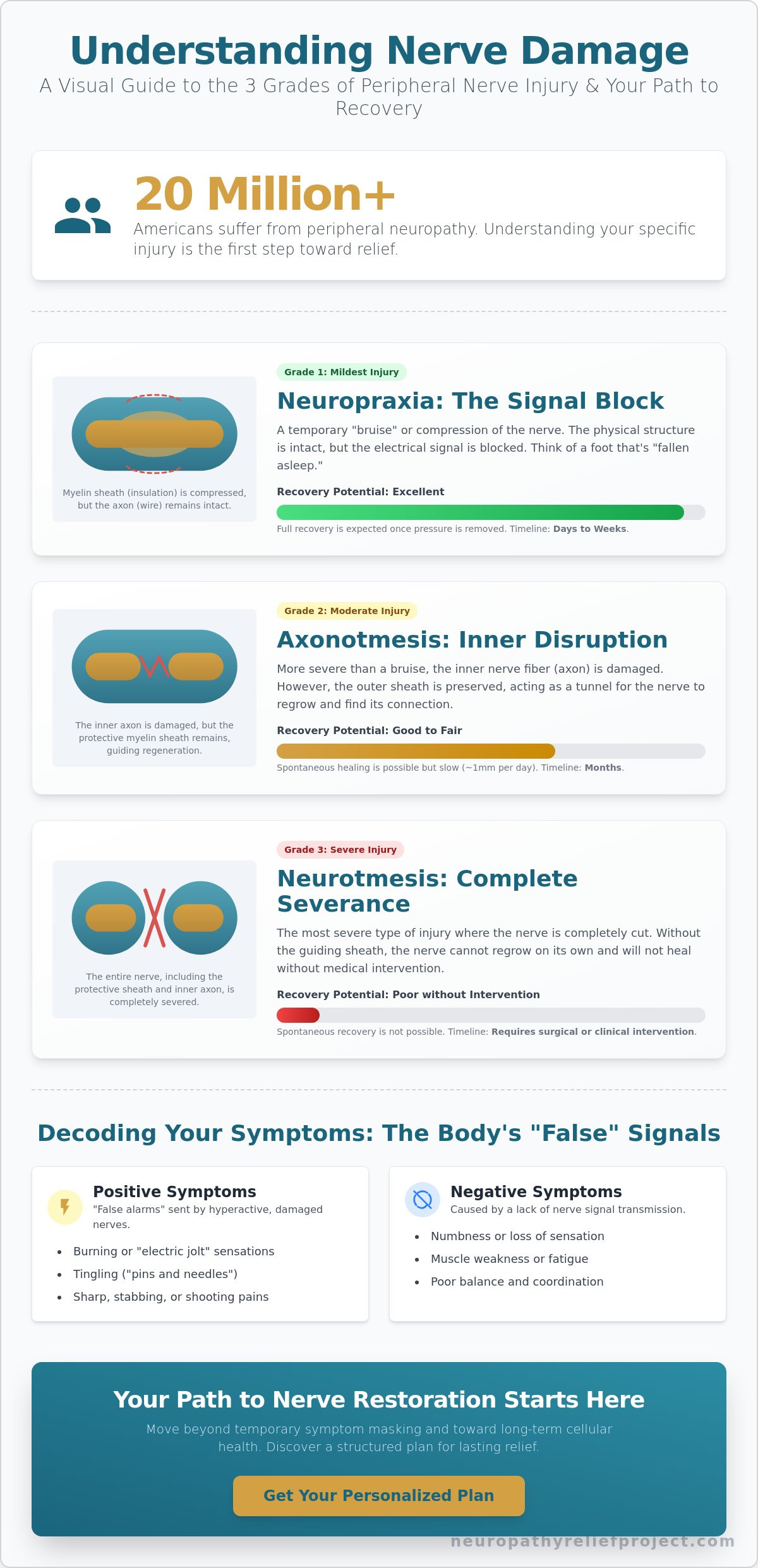
Sensory changes often manifest as either positive or negative symptoms. Positive symptoms, such as burning, tingling, or stabbing pains, are essentially false alarms sent by hyperactive nerves. Negative symptoms involve a lack of information, resulting in numbness, muscle weakness, or a dangerous loss of balance. Your brain interprets these damaged, chaotic signals as chronic pain because it doesn’t have a better way to process the internal error.
Early detection is vital for long-term health. According to data from the National Institutes of Health, over 20 million Americans suffer from some form of neuropathy; catching the degradation before it progresses to total signal loss significantly improves the chances of successful regeneration. When you recognize these false signals early, you can intervene before the damage becomes a permanent silence in your nervous system.
The Clinical Grading of Peripheral Nerve Injuries
If you’re struggling with persistent numbness or sharp pains, understanding the specific classification of your injury is the first step toward finding relief. Specialists primarily use two systems, the Seddon and Sunderland scales, to categorize Peripheral Nerve Injury. These frameworks help us determine if your body can heal on its own or if you need clinical intervention. The biological difference between a “bruised” nerve and one that’s completely severed dictates everything from your timeline for recovery to the intensity of your symptoms. While these nerve damage types are often associated with sudden trauma, they also apply to chronic sufferers who experience gradual degradation over time. By identifying the grade of damage, we can move away from guesswork and toward a structured plan for your restoration.
Neuropraxia: The Temporary Signal Block
Neuropraxia is the mildest form of injury. In this scenario, the nerve’s physical structure remains perfectly intact, but the electrical signal is temporarily halted. You might know this as “Saturday night palsy” or that heavy, “dead” feeling when you’ve compressed a limb for too long. If the source of pressure is removed quickly, you can expect a full recovery within days or a few weeks. It’s a physiological block rather than a structural break, meaning the internal wires haven’t snapped; they’re just temporarily offline.
Axonotmesis: Damage to the Internal Fibers
When the injury is more severe, we see axonotmesis. Here, the internal conducting fibers, called axons, are damaged, but the protective outer sheath stays whole. This triggers a biological process called Wallerian degeneration, where the nerve fiber breaks down before attempting to regrow. Recovery is a slow, methodical process. Clinical data shows that nerves typically regrow at a rate of about 1 inch per month, or roughly 1 millimeter per day. Because this process is so energy-intensive, your cellular health must be optimized to provide the necessary environment for successful regeneration. Without the right nutritional and circulatory support, the regrowth can stall before the signal ever reaches its destination.
Neurotmesis: Complete Structural Disruption
Neurotmesis represents the most serious of the nerve damage types. This occurs when both the nerve fiber and the surrounding connective tissue are completely severed. Without a clear path to follow, the nerve cannot bridge the gap on its own, often leading to permanent loss of function if left unaddressed. This level of damage often requires surgical repair, and the prognosis remains guarded even with the best care. It’s vital to distinguish this physical severance from the systemic breakdown seen in idiopathic neuropathy causes, where the damage is often metabolic or chemical rather than traumatic. If you feel like your symptoms are worsening or your progress has plateaued, you can explore our restoration protocols to see how we support nerve health at every stage of the recovery journey.
Sensory, Motor, and Autonomic: How Damage Affects Function
When we discuss different nerve damage types, we often focus on how the injury happened. However, the specific function of the affected nerve is what truly dictates your daily experience and your path to recovery. Your peripheral nervous system acts as a complex communication network, sending millions of signals every second. According to clinical data, many patients struggle with Peripheral Nerve Disorders that disrupt these vital messages. While some people experience damage in just one nerve, most patients face what we call mixed neuropathy. This means multiple nerve functions fail at once, creating a overlap of symptoms that can feel overwhelming.
Identifying which functions are failing helps us pinpoint the underlying trigger. If you notice that your symptoms are spreading, it’s a sign of the progressive nature of functional loss. Without addressing the root cause, the damage often moves from the extremities inward. This progression is why early intervention is so critical for nerve regeneration and long-term relief.
Sensory Nerve Damage: The Source of Burning and Tingling
If you experience a persistent buzzing or the sensation of pins and needles, your sensory nerves are likely compromised. These nerves are responsible for processing touch, temperature, and pain. In many systemic cases, patients report a stocking-glove pattern. This starts with symptoms in the toes or fingertips and slowly moves up the limbs as the condition evolves. This isn’t just about discomfort; it’s about safety. Losing proprioception, which is your body’s ability to sense its position, often leads to balance issues. Statistics show that roughly 30% of neuropathy patients experience significant gait instability due to this sensory feedback failure.
Motor Nerve Damage: Weakness and Muscle Loss
Motor nerves carry signals from your brain to your muscles to coordinate movement. When these pathways are disrupted, you might notice muscle twitching, known as fasciculations, or visible muscle wasting. A common sign of advanced motor damage is foot drop. This occurs when it becomes difficult to lift the front part of the foot while walking, which significantly increases fall risks. Clinical observations suggest that if motor signals remain blocked, the affected muscle fibers can lose 25% to 50% of their volume within several months of inactivity.
Autonomic Nerve Damage: The Involuntary Impact
These nerves manage the systems you don’t think about, such as heart rate, blood pressure, and digestion. If you notice excessive sweating, heat intolerance, or sudden lightheadedness when standing, your autonomic system may be under stress. This specific category of nerve damage types is particularly serious because it affects systemic health and organ function. Research indicates that autonomic dysfunction can impact 10 or more internal organ systems simultaneously. Restoring these pathways is essential for regaining your physical freedom and ensuring your body can regulate itself naturally again.
Common Triggers: Chronic vs. Acute Nerve Damage
Nerve injuries generally fall into two categories based on how they begin. Acute damage happens in an instant. If you’ve suffered a deep laceration, a bone fracture, or a sudden crush injury, the physical impact can sever or severely bruise the nerve fibers. These incidents create an immediate loss of sensation or motor control. Because the cause is obvious, diagnosis is usually straightforward, though the path to recovery often requires surgical intervention to realign the damaged pathways.
Chronic damage is more deceptive. It involves a slow, progressive degradation of the nerve fibers over months or years. While these nerve damage types are harder to diagnose in their infancy, they’re often the most responsive to dedicated lifestyle-based restoration. The root cause is frequently found in the “vasa nervorum,” the microscopic blood vessels that supply your nerves with oxygen. When these vessels narrow or fail, they starve the nerve of vital nutrients. Research indicates that even a 15% drop in oxygen delivery to a nerve can trigger the burning and tingling sensations that disrupt your daily life.
Metabolic and Chemical Triggers
If you experience persistent numbness in your feet, it’s often a sign of metabolic stress. High blood sugar is the leading cause of chronic nerve degradation, affecting approximately 50% of people with diabetes. This excess glucose creates oxidative stress that wears down the nerve’s protective coating. Other triggers include:
- Chemotherapy-Induced Peripheral Neuropathy (CIPN): Certain medications used in cancer treatment can be toxic to nerve cells, creating unique recovery challenges that require specialized cellular support.
- Nutritional Deficiencies: A lack of Vitamin B12 can mimic traumatic nerve damage types by preventing the body from maintaining the myelin sheath, which is essential for signal speed.
- Toxic Exposure: Prolonged contact with heavy metals or industrial chemicals can gradually “poison” the nerve’s ability to fire correctly.
Mechanical Compression and Entrapment
Mechanical triggers occur when a nerve is physically pinched by surrounding tissues. Carpal tunnel syndrome and sciatica are the most common examples of these localized issues. Repetitive stress from daily work or poor posture can reduce nerve conduction velocity by as much as 20 meters per second, leading to that heavy, “asleep” feeling in your limbs. If you’ve been told you need surgery for a pinched nerve, remember that decompression is only half the battle. While a procedure can remove the pressure, the nerve still requires a structured environment to revitalize and regain its full function. Restoration is a biological process that continues long after the physical pressure is gone.
If you’re tired of the constant frustration of nerve pain and want a clear, scientific path toward feeling like yourself again, we invite you to explore the Neuropathy Relief Project to discover our specialized recovery protocols.
Navigating Your Path to Nerve Restoration and Relief
If you experience the constant buzzing of “pins and needles” or the sharp, electric shocks of advanced neuropathy, you’ve likely been told to simply manage the condition. This “wait and see” approach is dangerous for your long-term mobility. Nerve fibers are living tissues that require constant blood flow and nutrients to survive. When these resources are restricted, the nerves don’t just stay damaged; they continue to wither. Relying solely on gabapentin or lidocaine patches often creates a false sense of security. These drugs act as a chemical veil, hiding the pain while the underlying cellular decay continues unchecked.
The Neuropathy Relief Project operates on a different philosophy. We move beyond symptom suppression to focus on the biological environment of the nerve itself. Our specialized protocols aim to revitalize dormant nerves by improving cellular health and metabolic function. By addressing the root cause, we help patients move from a state of constant survival to a state of active recovery. A professional assessment is the only way to determine which of the nerve damage types you are facing and whether your nerves are still capable of restoration.
The Science of Nerve Regeneration
The human body is built to heal, and the peripheral nervous system is no exception. While the central nervous system has limited repair capabilities, peripheral nerves can regenerate if the right environment is provided. Our clinical approach is built on three pillars of recovery: oxygenation, nutrition, and stimulation. We use these pillars to trigger the body’s natural repair mechanisms and restore function to the extremities. While severe neurotmesis is permanent, many forms of axonotmesis can see significant improvement if the protective tube of the nerve remains intact. Clinical data suggests that peripheral nerves can regrow at a rate of about 1 millimeter per day when provided with optimal oxygen and nutrient density. Identifying your specific nerve damage types allows us to tailor these pillars to your unique physical needs.
Your First Step: The 15-Minute Discovery Call
You shouldn’t have to navigate the complexities of nerve health alone. During your free phone consultation, we help you transform your daily frustrations into a structured clinical profile. We’ll analyze your symptoms, whether it’s burning, numbness, or loss of balance, to help categorize your condition into actionable data. This call is designed to provide clarity and a sense of direction for those who feel lost in the traditional medical system. We’ll explain how our mission-driven “Project” works to restore your freedom and help you regain the quality of life you deserve.
Schedule your 15-minute FREE phone Consultation to discuss your nerve health.
Your Path to Lasting Nerve Restoration
Your journey toward relief starts with a precise understanding of how your body communicates distress. Identifying specific nerve damage types through clinical frameworks like the Sunderland Classification system allows for a targeted approach to healing. Whether you’re navigating the burning sensations of sensory damage or the weakness of motor dysfunction, these biological signals are your body’s request for specialized care. You don’t have to accept chronic discomfort as a permanent part of your life.
Led by Dr. Michael J. Sclafani, DC, the Neuropathy Relief Project focuses on these intricate cellular health needs using non-invasive, drug-free protocols designed for peripheral neuropathy restoration. By addressing the root cause of your symptoms, it’s possible to revitalize your mobility and reclaim the freedom you’ve lost. Our mission-driven project provides a structured bridge between scientific evidence and natural recovery. If you’re ready to stop the cycle of numbness and pain, take the first step toward a clearer future today. Book Your 15-Minute FREE Nerve Pain Consultation and begin your personalized recovery plan. You deserve a life defined by comfort and movement.
Frequently Asked Questions
What are the 3 main types of nerve injury?
The three primary nerve damage types, according to the Seddon classification system established in 1943, are neuropraxia, axonotmesis, and neurotmesis. Neuropraxia is the mildest form where the nerve structure remains intact but signal conduction stops temporarily. Axonotmesis involves damage to the internal nerve fibers while the outer sheath stays whole. Neurotmesis is the most severe, occurring when the entire nerve is completely severed. Understanding these distinctions helps our project team determine the most effective path toward your recovery.
Can nerve damage be permanent?
Nerve damage can become permanent if the cell body is destroyed or if the gap between severed ends is too wide for natural regeneration. However, the peripheral nervous system has a remarkable ability to heal at a rate of approximately 1 millimeter per day. If you experience chronic symptoms, early intervention is vital. Research from the Mayo Clinic indicates that prompt treatment significantly improves the likelihood of restoring function and finding long-term relief from persistent burning or numbness.
How do I know if my nerve damage is sensory or motor?
You can distinguish between these nerve damage types by identifying whether your symptoms involve physical sensations or muscle control. If you experience tingling, pins and needles, or a loss of temperature sensitivity, your sensory nerves are likely affected. Conversely, motor nerve damage manifests as muscle weakness, cramping, or twitching. Many patients in our project report a combination of both, which requires a comprehensive approach to revitalize the entire neural pathway and restore your freedom of movement.
What is the difference between neuropraxia and axonotmesis?
Neuropraxia is a temporary conduction block where the nerve remains physically whole, while axonotmesis involves the actual breakdown of the internal axon. In neuropraxia, recovery often occurs within 6 to 12 weeks as the protective myelin sheath repairs itself. Axonotmesis is more complex because the nerve fiber must regrow from the point of injury. This distinction is a cornerstone of clinical neurology, helping specialists predict whether your healing journey will take several weeks or many months.
How long does it take for a damaged nerve to heal?
Peripheral nerves typically regrow at a consistent rate of 1 millimeter per day, which equates to roughly 1 inch every month. This means if you have an injury in your upper arm, it might take 6 to 12 months for sensations to return to your fingertips. This methodical pace requires patience and a structured recovery protocol. We focus on supporting your cellular health during this window to ensure the regenerating fibers reach their targets successfully and restore your vitality.
Can you have nerve damage without a specific injury or accident?
Yes, nearly 30 percent of neuropathy cases are linked to metabolic issues like diabetes, which causes damage through high blood sugar rather than a physical accident. Other non-traumatic causes include vitamin B12 deficiencies, autoimmune conditions, or exposure to environmental toxins. If you experience unexplained burning or numbness, it’s often a sign of an underlying systemic issue. Identifying these triggers is the first step in our project to stop further degradation and begin the process of nerve regeneration.
Is tingling a sign that a nerve is healing or getting worse?
Tingling can indicate healing through a phenomenon called Tinel’s sign, where a “pins and needles” sensation moves down the limb as the nerve regrows. However, if the tingling is accompanied by increasing numbness or spreading pain, it may suggest the damage is progressing. It’s important to track these sensory changes closely. A 2021 study in the Journal of Neurology suggests that the direction and intensity of these sensations are key indicators of your specific recovery progress.
What happens if nerve damage is left untreated?
Untreated nerve damage can lead to permanent muscle atrophy and irreversible loss of sensation in the affected area. Over time, the lack of signal transmission causes muscles to shrink, and the brain may rewire itself to process constant pain signals, leading to chronic complex regional pain syndrome. By addressing these issues early, you protect your long-term mobility. Our project emphasizes proactive care to prevent these stages of degradation and help you maintain your independence and comfort.