

What if the most powerful tool for cooling the fire in your feet isn’t found in a prescription bottle, but flows directly from your kitchen tap? If you’re among the 13.5% of U.S. adults over 40 living with peripheral neuropathy, you likely know the exhaustion of waking up to burning sensations or the agonizing feeling that you’re walking on glass. It’s easy to feel frustrated when medications only mask the symptoms without addressing your underlying cellular health. You deserve a clear strategy that targets the root of your discomfort.
We understand that the critical link between water and nerve pain is often overlooked in traditional medical settings. At the Neuropathy Relief Project, we view hydration as a physiological necessity for nerve signal clarity and cellular waste removal. By reading this guide, you’ll learn how to implement a drug-free hydration strategy to reduce the intensity of nerve flares and improve your daily balance. We’ll provide a practical checklist based on 2026 clinical standards, including the recommended 15.5 cups of fluid for men and 11.5 cups for women, to help you revitalize your nerves and reclaim your freedom.
Key Takeaways
- Learn how essential minerals like potassium and calcium act as the “spark” for nerve signals, preventing the electrical misfires that cause tingling.
- Understand why the physiological link between water and nerve pain means even minor dehydration can significantly intensify burning sensations in your feet.
- Master the “First 16” protocol to front-load your hydration and protect your peripheral nerves before the day’s physical demands begin.
- Discover the specific “cellular lock-in” foods that help your body retain moisture and support nerve regeneration more effectively than plain water alone.
- Identify the signs that your neuropathy requires a specialized, research-driven clinical protocol to address the root cause of nerve damage.
The Biological Connection Between Water and Nerve Pain
If you experience a sharp, electric jolt in your toes or a persistent “pins and needles” sensation, your body’s internal wiring is likely struggling with a communication breakdown. Your nerves aren’t dry, static wires; they’re living tissues submerged in a specialized fluid environment. For the 13.5% of U.S. adults over 40 living with peripheral neuropathy, the relationship between water and nerve pain is a matter of basic biological signaling. Water acts as the essential medium for every electrical impulse that travels from your brain to your limbs. Without adequate hydration, the delicate balance of ions required for these signals becomes unstable, leading to the erratic sensations that disrupt your daily life.
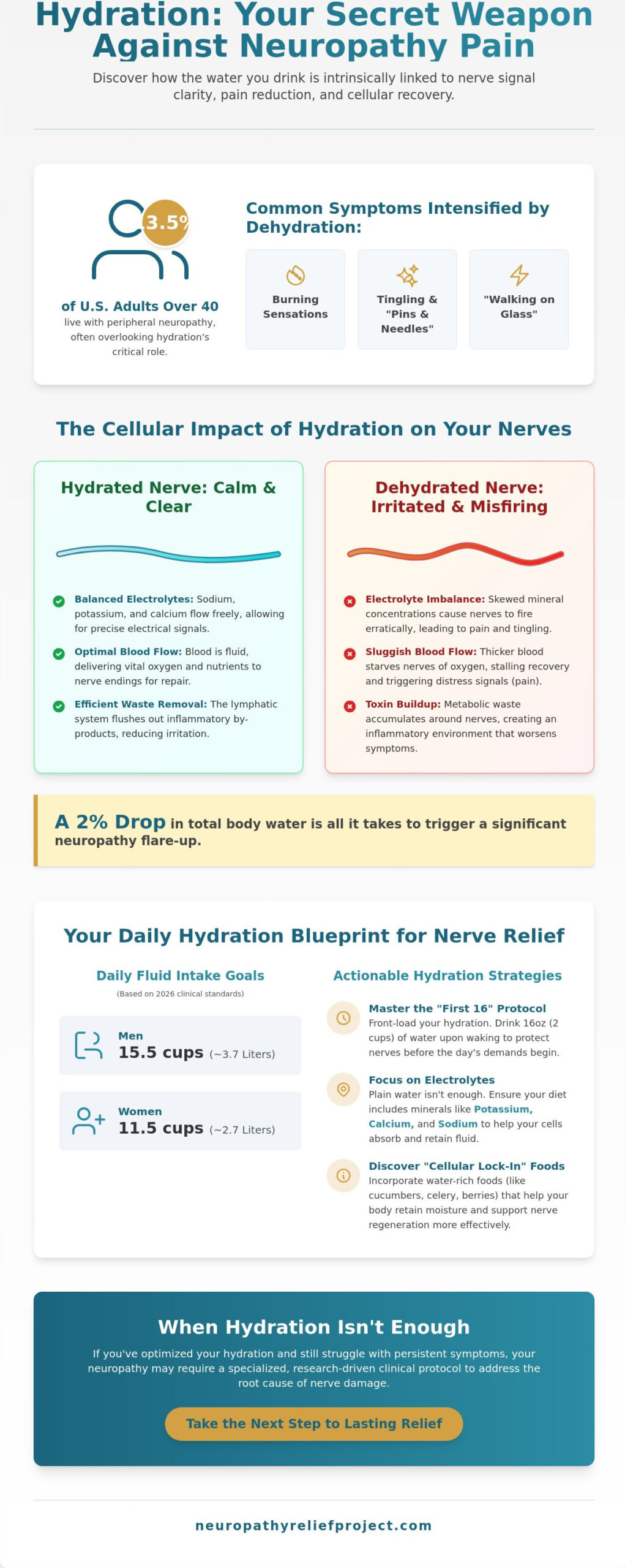
The “firing” of a nerve signal depends on the rapid movement of electrolytes, specifically sodium, potassium, and calcium, across the nerve cell membrane. These minerals carry electrical charges that must flow through water-filled channels to create a signal. When you’re dehydrated, the concentration of these electrolytes becomes skewed. This imbalance causes nerves to fire spontaneously or “leak” electrical signals. Your brain interprets this chaotic activity as burning, stinging, or tingling. Beyond signal clarity, hydration is the engine behind micro-circulation. Your blood is approximately 90% water; when fluid levels drop, blood becomes more viscous. This sluggish flow makes it difficult for oxygen and nutrients to reach the tiny capillaries that feed your damaged nerve endings, stalling the recovery process.
Nerve Conduction and the Role of Fluids
Nerve cells use microscopic ion channels to maintain an electrical gradient, much like a battery holding a charge. Fluid loss disrupts this gradient, which significantly slows down the speed at which signals travel. If the fluid environment is too depleted, the signal may fail to reach its destination entirely, resulting in the heavy, deadened feeling of numbness. Nerve conduction is the movement of electrical impulses facilitated by fluid balance. By maintaining optimal hydration, you ensure that these “biological batteries” can recharge and fire with the precision required for balance and movement.
Flushing Metabolic Waste from Nerve Tissues
Your nerves are constantly producing metabolic by-products that must be cleared away to prevent inflammation. The lymphatic system, which acts as your body’s drainage network, relies entirely on water to transport these inflammatory “trash” products out of your system. If you aren’t drinking enough, these toxins build up around the nerve fibers, creating a high-stress environment that exacerbates symptoms. This toxic buildup is particularly damaging to the myelin sheath, the protective coating around your nerves. Proper hydration helps reduce oxidative stress in this sheath, supporting the “Project” of long-term nerve regeneration and providing a natural, drug-free path toward relief.
How Dehydration Triggers Neuropathy Flares
If you’ve ever felt the intensity of your nerve pain spike on a hot day or after a long afternoon without a drink, you’ve witnessed the direct correlation between water and nerve pain. Even a minor 2% drop in total body water can trigger a significant flare. This happens because your nerves are highly sensitive to the concentration of fluids surrounding them. When fluid levels dip, the concentration of salt and other minerals in your blood rises, creating a hypertonic environment that irritates damaged nerve endings. This irritation manifests as the “walking on glass” sensation that many patients find so debilitating.
A common frustration we hear from the 13.5% of U.S. adults over 40 living with this condition is, “I drink water all day, but my feet still burn.” The reality is that volume alone isn’t always the solution. The role of electrolytes in nerve function is the missing piece of the puzzle for many. Without the correct balance of minerals to “hold” that water in your cells, the fluid simply passes through your system, leaving your nerves just as parched and irritable as before. This lack of hydration reduces your total blood volume, which slows down the delivery of oxygen-rich blood to your extremities. When your nerves are starved of oxygen, they send out distress signals in the form of sharp, stabbing pains.
Dehydration also creates a hidden danger: increased fall risks. When you’re dehydrated, the speed of your proprioceptive signals-the messages that tell your brain where your feet are in space-slows down. For the 26.8% of adults over 70 who suffer from neuropathy, this delay in communication can lead to stumbles and loss of balance. This same sensory disconnect that affects your footing at home can also impact critical daily tasks like driving with nerve damage, where the inability to feel the position of your foot on the brake becomes a serious safety concern. If you find that your balance is worsening during a flare, it’s a clear sign that your nerves are struggling to communicate through a depleted fluid medium.
The Nighttime Flare: Why Hydration Matters Before Bed
Many patients experience their worst symptoms at night. This occurs because your body naturally loses fluid through respiration and skin evaporation while you sleep, leading to a physiological dip in hydration. As blood vessels constrict to manage lower fluid levels, it creates a “throb” sensation in the feet. To manage this without waking up for frequent bathroom trips, try sipping 4 to 6 ounces of room-temperature water 30 minutes before bed. This small, intentional amount provides the baseline fluid your nerves need to stay calm until morning.
Dehydration and Sensory Overload
A lack of water makes your entire nervous system more hypersensitive to external touch. When your skin is dry and dehydrated, it loses its protective elasticity, making even the weight of a bedsheet feel like sandpaper against your feet. This sensory overload is a hallmark of peripheral damage. Understanding what helps neuropathy in feet involves more than just topical creams; it requires hydrating from the inside out to soothe these overactive sensors. If these flares continue to disrupt your life, scheduling a 15 minute FREE phone Consultation can help you develop a more personalized approach to your recovery.
The Ultimate Hydration Checklist for Nerve Health
If you’re tired of guessing how much fluid your body needs to stay ahead of the “pins and needles,” you need a structured daily protocol. While the general recommendation for daily fluid intake is 15.5 cups (3.7 liters) for men and 11.5 cups (2.7 liters) for women, chronic nerve sufferers often require more precise monitoring. Understanding the biological link between water and nerve pain is about more than just hitting a number; it’s about the quality and timing of your intake. In discussions on how dehydration can impact chronic pain, experts consistently note that fluid loss directly impairs the nervous system’s ability to function properly. By following a specific checklist, you can move from reactive pain management to a proactive recovery strategy.
Daily Intake and Timing Guidelines
A foundational rule for nerve health is consuming half your body weight in ounces of water daily. For example, a 180-pound individual should aim for 90 ounces. You shouldn’t drink it all at once; sip consistently throughout the day to ensure cellular absorption. Chugging large amounts triggers the kidneys to flush fluid before your nerves can benefit. You must drink 16 ounces of water within 30 minutes of waking. This “First 16” rule rehydrates your system after the natural nighttime depletion we discussed previously. To monitor your status, check your urine color; it should be pale straw or clear. You can also test your skin turgor by pinching the skin on the back of your hand; if it takes more than a second to snap back, you’re likely dehydrated.
The “Hydration Saboteurs” to Avoid
Effective management of water and nerve pain requires identifying the factors that strip your body of moisture. Coffee and caffeinated sodas act as diuretics, which can worsen nerve pain by flushing out essential minerals. The Dietary Guidelines for Americans (2025-2030), released in January 2026, emphasize consuming less than 2,300 mg of sodium per day. High sodium levels pull water out of your cells and into your bloodstream, leaving your nerve tissues parched and hypersensitive. Indoor heating during winter months also accelerates fluid loss through your skin, requiring an extra 8 to 12 ounces of intake. Use this checklist to stay on track:
- Limit Alcohol: Alcohol is a known neurotoxin and potent dehydrator that can trigger immediate flares.
- Reduce Processed Sodium: Keep daily intake under 2,300 mg to prevent cellular dehydration.
- Monitor Environment: Increase fluid intake if you’re in a climate-controlled room with low humidity.
- Check Medication Side Effects: Some neuropathy medications act as diuretics; consult your specialist if you notice increased thirst.
Beyond the Glass: Electrolytes and Hydrating Foods
If you’re drinking the recommended 11.5 to 15.5 cups of fluid daily but still feel the “pins and needles,” you’re likely experiencing a mineral gap. Plain water can sometimes flush out the very minerals your nerves need to stay stable. The relationship between water and nerve pain is a two-part equation: intake and retention. To “lock in” moisture at a cellular level, your body requires specific electrolytes that act as gatekeepers for your nerve membranes. Without these minerals, water passes through your system without ever reaching the parched tissues that need it most.
This cellular hydration is a cornerstone of the Neuropathy Relief Project’s approach. We focus on how your body utilizes fluid to support nerve regeneration. As of February 2026, many patients find success by supplementing their intake with targeted electrolyte mixes. Prices for common options like Body Armor Flash IV are currently listed at $19.98, while Liquid IV Hydration Multiplier is priced at $23.46. These tools help maintain the delicate electrical balance required for clear signal transmission, ensuring your efforts to hydrate actually translate into physical relief.
Essential Minerals for Nerve Signal Clarity
Magnesium is the “calming” mineral for your nervous system. It helps regulate the overactive firing of damaged nerves by blocking excessive calcium from entering the nerve cells. Potassium works in tandem to maintain the electrical charge of your cells, preventing the painful cramping sensations that often accompany peripheral damage. If you’re struggling to keep these levels balanced through diet alone, adding trace mineral drops or a pinch of high-quality sea salt to your water can improve absorption. These small adjustments help stabilize the “misfiring” signals that your brain interprets as burning or stinging.
The Best Hydrating Foods for Neuropathy
Eating your water is often more effective than drinking it because the cellular structure of plants releases fluid slowly. Cucumbers, celery, and radishes are excellent low-sugar options that provide “structured water” along with essential fiber. This fiber slows down the absorption process, providing your nerves with a steady stream of hydration over several hours. Berries, such as blueberries and raspberries, offer a dual benefit; they are approximately 85% water and packed with antioxidants that protect the myelin sheath from oxidative stress. Integrating these nutrient-dense foods creates a powerful synergy with other non-drug nerve relief strategies. When your cells are properly hydrated and mineralized, your body is better equipped for the long-term work of recovery. If you’re ready to move beyond temporary fixes, we invite you to schedule a 15 minute FREE phone Consultation to discuss a tailored plan for your recovery.
When Hydration Isn’t Enough: Taking the Next Step
While mastering your daily intake is a vital first step, it’s essential to recognize when your nerves require more than just cellular hydration. The link between water and nerve pain is foundational, but for many of the 589 million adults living with diabetes globally, the damage to the peripheral system has often progressed beyond what lifestyle changes alone can resolve. If you’ve been diligent with your water intake and still feel like you’re walking on glass, it’s a signal that your nerves need a more targeted, clinical intervention. Management only keeps you from sinking; restoration is what allows you to move forward.
At the Neuropathy Relief Project, our philosophy shifts the focus from masking symptoms to addressing the root cause of nerve decay. We believe that cellular health is the starting point, but nerve regeneration requires a structured, scientific protocol. For the 50% of people with diabetes who develop neuropathy, waiting too long to seek specialized care can lead to irreversible loss of function. You shouldn’t have to settle for a life of “coping” when the potential for recovery exists through modern precision medicine. If you want to understand what living with peripheral neuropathy can look like when restoration takes center stage over symptom management, our 2026 guide outlines the clinical protocols designed to wake your nerves back up.
Identifying the Limits of Lifestyle Changes
If you experience certain “Red Flag” symptoms, hydration alone will likely be insufficient to repair the underlying damage. These indicators suggest that the myelin sheath or the nerve fibers themselves have sustained significant trauma. Watch for these signs:
- Muscle Atrophy: Visible thinning of the muscles in your feet or hands.
- Complete Numbness: A total loss of sensation that increases your risk of unnoticed injuries.
- Frequent Stumbles: A decline in your ability to sense where your feet are, which is critical for mobility safety with neuropathy.
- Unrelenting Night Pain: Burning that prevents sleep despite proper evening hydration.
Early intervention is the most effective way to prevent the progression of these symptoms. While water and nerve pain management can reduce the frequency of flares, long-term restoration requires a collaborative effort between the patient and a dedicated specialist.
Your 15-Minute Path to Clarity
If you feel lost in a healthcare system that only offers temporary fixes, we invite you to take a different path. A discovery call with the Neuropathy Relief Project is a chance to speak with a team that understands the sensory-focused reality of your pain. Led by the expertise of specialists like Dr. Michael Sclafani, we provide a calm, expert-led narrative that focuses on your specific recovery goals. During this brief conversation, we’ll assess the current state of your nerve health and determine if our research-driven protocols are the right fit for your needs. It’s a risk-free way to stop managing the pain and start focusing on your freedom. Schedule your 15-minute free consultation today and take the first step toward revitalizing your nerves.
Your Path to Lasting Nerve Recovery
If you experience the daily frustration of “walking on glass,” remember that your cellular health is within your control. You’ve learned how the “First 16” rule and proper electrolyte balance can soothe irritable nerve endings. While the link between water and nerve pain is a powerful starting point, severe damage often requires a more specialized, scientific approach to achieve true liberation from symptoms. This drug-free strategy ensures that your nerves have the fluid environment necessary for clear communication and efficient waste removal.
The Neuropathy Relief Project offers a clear path forward for those who’ve felt lost in the healthcare system. Our mission, led by Dr. Michael J. Sclafani, DC, is to provide national support through non-invasive, drug-free protocols that prioritize long-term results over temporary masks. We’re dedicated to helping you revitalize your nerves and reclaim the freedom of movement you deserve. You can Book Your Free 15-Minute Neuropathy Discovery Call to begin your personalized recovery strategy. There’s a hopeful future waiting where burning and tingling no longer dictate your day; let’s take that first step together.
Common Questions About Hydration and Nerve Relief
Can drinking more water really help with my nerve pain?
Yes, increasing your fluid intake directly stabilizes the electrical environment surrounding your nerves. The physiological link between water and nerve pain is clear; when your cells are properly hydrated, they can transmit signals with greater clarity and precision. This reduces the frequency of those spontaneous “misfires” that your brain interprets as the sharp burning or stinging sensations common in peripheral damage.
How much water should a person with neuropathy drink daily?
You should aim for the 2026 clinical standard of 15.5 cups for men and 11.5 cups for women as a baseline. If you experience active flares, it’s often helpful to follow the “half your body weight in ounces” rule for a more personalized approach. This ensures your system has enough volume to flush out the metabolic waste that can irritate sensitive nerve endings.
Does dehydration make peripheral neuropathy symptoms worse at night?
Yes, nighttime is when many of the 13.5% of adults with neuropathy feel the most discomfort due to natural fluid loss. As you breathe and sweat during sleep, your blood volume dips, which causes your vessels to constrict. This restriction reduces oxygen delivery to your feet, triggering the intense throbbing or “pins and needles” that often disrupts your rest.
What are the best electrolytes for nerve health?
Magnesium and potassium are the most critical minerals for calming overactive nerve signals. Magnesium acts as a natural gatekeeper, preventing excessive calcium from entering nerve cells and causing them to fire uncontrollably. Potassium maintains the electrical charge of the cell membrane, which is essential for preventing the cramping and sharp jolts associated with nerve damage.
Can I drink coffee if I have nerve pain, or will it dehydrate me too much?
You can enjoy coffee in moderation, but you must remember that caffeine acts as a mild diuretic. If you drink a cup of coffee, it’s best to follow it with 8 to 12 ounces of plain water to maintain your fluid balance. High caffeine intake can flush out the trace minerals your nerves need, potentially increasing your hypersensitivity to touch.
Is there a difference between “water weight” and cellular hydration for nerves?
Yes, cellular hydration refers to water entering the nerve cells to support signal transmission, while “water weight” is often extracellular fluid trapped in tissues. If your feet are swollen but still burn, you likely have fluid in the wrong places. Electrolytes act as the “keys” that move water into the cells where it can actually support recovery and regeneration.
What happens to my nerves if I am chronically dehydrated?
Chronic dehydration leads to a persistent state of oxidative stress that can damage the myelin sheath. This protective coating is essential for fast signal conduction. Without it, your nerves become hypersensitive and slow, which increases the risk for the balance issues and falls that affect 26.8% of adults over age 70 living with this condition.
Are there specific foods that help hydrate my nerves better than water?
Foods like cucumbers, celery, and berries are often more effective than plain water because they provide “structured water.” This fluid is bound to plant fiber, which slows down the absorption process and provides a steady stream of hydration to your nerves. These foods also contain antioxidants that help revitalize damaged tissues and support the Project’s goal of long-term recovery.