

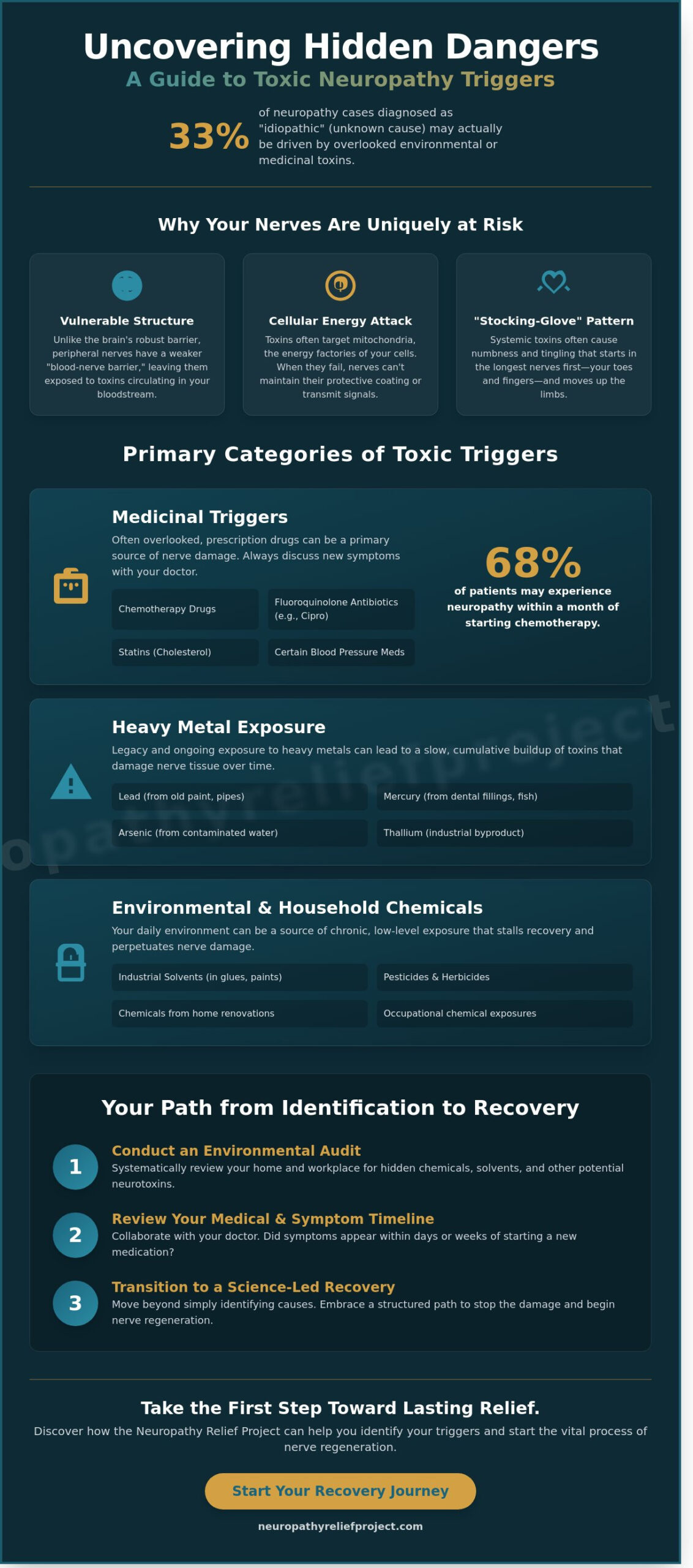
What if the “unexplained” burning in your feet isn’t a mystery at all, but a direct response to a hidden substance in your medicine cabinet or daily environment? If you’ve been told your nerve pain is idiopathic, you’re likely tired of labels that offer no real answers. It’s exhausting to live with constant tingling and numbness while feeling like your healthcare provider is just guessing. According to data from the University of Chicago Center for Peripheral Neuropathy, nearly 33% of patients receive an idiopathic diagnosis, yet many of these cases are actually driven by overlooked toxic neuropathy triggers that continue to damage the nervous system.
We agree that you deserve more than a vague explanation for your suffering. You deserve to know exactly what’s happening at a cellular level. In this guide, we’ll reveal the environmental, medicinal, and lifestyle toxins that may be harming your nerves and provide you with a clear path toward recovery. We’ll examine everything from heavy metal exposure to common prescriptions, giving you the tools to identify your specific triggers and take the first step toward lasting relief through the Neuropathy Relief Project. You’ll learn how to stop the damage and begin the vital process of nerve regeneration.
Key Takeaways
- Understand the biological mechanisms behind how specific toxins disrupt cellular health and create the persistent burning or numbness you experience.
- Identify the most common toxic neuropathy triggers, including frequently overlooked medicinal side effects and legacy heavy metal exposures.
- Learn to conduct a comprehensive environmental audit of your home and workplace to uncover hidden solvents and chemicals that may be stalling your recovery.
- Discover the essential steps to collaborate with your doctor in reviewing your medical history for potential nerve-damaging substances.
- Transition from simply identifying causes to embracing a structured, science-led path toward nerve regeneration and lasting relief.
Understanding Toxic Neuropathy: Why Your Nerves Are Reacting
If you’ve been searching for answers to persistent nerve pain, you’ve likely encountered the term Peripheral neuropathy. This condition isn’t just a single diagnosis; it’s often the result of external stressors that your body can no longer handle. Toxic neuropathy occurs when harmful substances enter your system and directly damage the structure or function of your nerves. These toxic neuropathy triggers range from heavy metals to common household chemicals, disrupting the delicate cellular health required for your body to send signals accurately.
The biological mechanism behind this damage is methodical. Toxins often target the mitochondria, the energy powerhouses of your cells. When these powerhouses fail, the nerve cannot maintain its protective coating or transmit electrical impulses. We categorize these exposures into two distinct types. Acute exposure involves a sudden, high-level event that triggers immediate symptoms. In contrast, chronic low-level toxicity is a cumulative process. It’s the result of toxins building up in your tissues over months or years, slowly suffocating your nerves’ ability to function.
It’s deeply frustrating to be told your condition is “idiopathic,” a term many doctors use when the cause remains a mystery. Research suggests that up to 30% of neuropathy cases labeled as idiopathic actually have an underlying environmental or toxic cause that simply hasn’t been identified yet. Not all nerve damage stems from external toxins, however; in some patients, the immune system itself becomes the aggressor, and understanding the autoimmune neuropathy links between immune dysfunction and peripheral nerve damage can reveal hidden causes that standard labs routinely miss. If you want to explore the full spectrum of idiopathic neuropathy causes that standard diagnostic protocols often miss, understanding the role of toxins is an essential starting point. At the Neuropathy Relief Project, we believe that uncovering these hidden toxic neuropathy triggers is the first step toward your recovery and long-term freedom from pain.
The Sensory Experience of Toxic Nerve Damage
If you experience a “stocking-glove” pattern, where numbness and tingling begin in your toes and fingers before moving up the limbs, your nerves are likely reacting to a systemic toxin. Many toxic cases involve intense burning or “electric shock” sensations that disrupt your sleep and daily activities. We often ask patients to examine their personal timeline. Did your symptoms begin within 30 days of starting a new medication? Did they appear 60 days after a major home renovation project involving solvents or pesticides? Identifying these patterns provides a clear path toward relief.
Why Nerves are Particularly Vulnerable to Toxins
Your peripheral nerves are uniquely exposed compared to other organs. Unlike your brain, which is shielded by a robust blood-brain barrier, the peripheral nervous system lacks a comprehensive “blood-nerve barrier.” This leaves your nerves vulnerable to every pollutant circulating in your bloodstream. Additionally, nerve cells have exceptionally high metabolic demands. They require a constant supply of energy to maintain fibers that can be over three feet long. Neurotoxicity is the interference with the normal activity of the nervous system. When toxins starve these cells of energy, the result is the characteristic pain and weakness you feel every day. Understanding this vulnerability is key to our scientific approach to nerve restoration.
Primary Categories of Toxic Neuropathy Triggers
If you experience a sudden onset of burning, tingling, or “pins and needles” in your hands or feet, the culprit may be hiding in your daily environment. Identifying toxic neuropathy triggers is a vital step in reclaiming your mobility and peace of mind. While we often associate toxins with industrial accidents, the most frequent sources of nerve damage are actually found in medicine cabinets, household water pipes, and even common dietary habits. Understanding these categories allows you to pinpoint the source of cellular stress and begin the process of nerve regeneration.
Common Medications That May Cause Nerve Damage
Medicinal triggers are perhaps the most overlooked cause of peripheral nerve damage. Chemotherapy-induced peripheral neuropathy (CIPN) is a well-documented side effect, affecting up to 68 percent of patients within the first month of treatment. These powerful drugs, while essential for fighting cancer, can damage the mitochondria within your nerve cells, leading to persistent numbness. Similarly, certain antibiotics known as fluoroquinolones, such as Ciprofloxacin, have been linked by the FDA to permanent nerve damage that can occur just days after the first dose.
Research into long-term medications like statins for cholesterol and certain blood pressure drugs also suggests a potential risk. While these medications serve a purpose, a study published in Drug Safety found that long-term statin use may increase the risk of idiopathic neuropathy by a small but measurable margin. If you suspect your medication is contributing to your pain, it’s essential to consult with your specialist before making any changes to your regimen.
Heavy Metals and Environmental Pollutants
Legacy exposure to heavy metals can linger in your body’s tissues for decades, acting as a slow-release trigger for nerve inflammation. Lead, often found in the paint or plumbing of homes built before 1978, and arsenic, which can contaminate well water, are common offenders. Mercury exposure is another significant concern, frequently stemming from dental amalgams or the frequent consumption of high-predator fish like swordfish or king mackerel. This Update on Toxic Neuropathies details how these substances disrupt the protective myelin sheath surrounding your nerves.
Even levels of heavy metals deemed “safe” by standard environmental benchmarks can trigger debilitating symptoms in sensitive individuals. Beyond the home, industrial chemicals like hexanes or certain pesticides used in backyard gardening can seep into the system. These toxic neuropathy triggers create a state of chronic oxidative stress that prevents the body from healing itself naturally. It is also worth noting that when standard toxicology panels return normal results, clinicians may need to investigate autoimmune neuropathy links as a parallel pathway driving the same debilitating symptoms.
Lifestyle choices also play a role, particularly the consumption of alcohol. Chronic alcohol use acts as a direct neurotoxin while simultaneously depleting the body of B-vitamins, such as B12 and thiamine, which are crucial for maintaining nerve health. If you feel lost in the search for answers, our comprehensive recovery resources can help you identify these hidden obstacles. The Neuropathy Relief Project is designed to act as your guide, helping you shift from a state of constant pain to one of restoration and freedom.
Household and Lifestyle Triggers vs. Occupational Risks
If you live with the daily frustration of numbness or burning, you know how exhausting it is to search for answers. It’s common to feel dismissed when traditional tests don’t provide a clear cause for your discomfort. However, your physical environment might hold the key to your symptoms. Identifying Neuropathies Associated with Drugs and Toxins is a vital part of the Neuropathy Relief Project’s approach to restoration. By recognizing specific toxic neuropathy triggers, you can begin to remove the obstacles preventing your recovery and move toward a life of greater freedom.
The Hidden Dangers in Your Cleaning Cabinet
Your home should be a sanctuary, yet it often contains subtle neurotoxins that compromise your cellular health. Solvents like hexane and toluene are frequently found in strong adhesives, degreasers, and even some nail polish removers. If you use these products in poorly ventilated laundry rooms or bathrooms, the vapors can enter your bloodstream and irritate the delicate fibers of your peripheral nerves. Pet owners should also be cautious with flea dips and certain lawn pesticides. These products often contain organophosphates, which can be absorbed through your skin during application. Additionally, the generic term “fragrance” on a label can legally hide a mixture of hundreds of different chemicals, some of which act as hidden triggers for nerve inflammation.
Occupational Hazards and Protective Measures
For those in industrial roles, the risk of nerve damage is often more concentrated and persistent. If you’ve spent years working in dry cleaning, you’ve likely had significant exposure to perchloroethylene. In the printing, automotive repair, and manufacturing sectors, daily contact with heavy metals or industrial-grade solvents increases the likelihood of developing chronic tingling or loss of sensation. Data from the EPA suggests that over 80,000 chemicals are registered for use in the United States, yet only a small fraction are thoroughly tested for long-term neurotoxicity. When you meet with a specialist, providing a detailed 15 to 20 year work history is vital for an accurate diagnosis. Utilizing high-grade PPE and ensuring your workspace meets OSHA ventilation standards are non-negotiable steps for protecting your nervous system.
Hobbyists often overlook risks because their activities feel like leisure rather than labor. Woodworking involves stains and finishes high in volatile organic compounds, while stained-glass making exposes you to lead and soldering fumes. Even routine gardening can be problematic if you apply fertilizers or weed killers without protective gloves. Finally, it’s important to address the role of alcohol. It acts as a direct neurotoxin that can cause “alcoholic neuropathy” in up to 66 percent of long-term heavy users. The damage is often cumulative, meaning every step you take to reduce these exposures provides your body the space it needs for potential nerve regeneration and relief.
Your Step-by-Step Environmental Audit Checklist
If you experience the persistent burning, pins-and-needles, or localized numbness that defines nerve damage, taking control of your surroundings is a vital step toward relief. Identifying your specific toxic neuropathy triggers is a collaborative process that starts at home. This audit isn’t about fear; it’s about empowerment and creating a sanctuary where your nerves can finally begin to heal. Follow these five steps to evaluate your environment systematically.
- Step 1: Review Medications. Compile a complete list of current and past prescriptions. Certain chemotherapy agents, specific antibiotics like fluoroquinolones, and some heart medications are known to have neurotoxic side effects. Share this list with your specialist to see if a clinical adjustment is possible.
- Step 2: Audit Your Home. Look for hidden sources of heavy metals or chemicals. If your home was built before 1978, it may contain lead-based paint. Check your garage for organophosphate pesticides or solvents containing n-hexane, both of which are documented neurotoxins.
- Step 3: Evaluate Dietary Intake. Assess your consumption of high-mercury seafood, such as swordfish or king mackerel, which the FDA suggests limiting to avoid heavy metal accumulation. Additionally, evaluate alcohol consumption, as ethanol is directly toxic to nerve fibers over time.
- Step 4: Assess Work and Hobbies. Many people encounter toxic neuropathy triggers in the workplace. If you work in printing, automotive repair, or dry cleaning, you may be exposed to industrial solvents. Even hobbies like stained glass soldering or furniture refinishing can introduce lead or chemical vapors into your system.
- Step 5: Document the Timeline. Write down exactly when your symptoms began. Did they start within 30 days of a new medication, a home renovation, or a change in your work environment? This data is the most valuable tool you can bring to a consultation.
How to Track Your “Toxin Timeline”
Keep a 30-day symptom and exposure journal to map your progress. If you notice “flares” of intense tingling or sharp pain after using specific cleaning products or taking certain pills, record the exact time and duration. This methodical approach helps us bridge the gap between your physical sensations and the scientific cause of your discomfort. Bringing this journal to a professional neuropathy consultation provides a clear roadmap for your recovery plan.
Immediate Steps to Reduce Exposure
You don’t have to wait for a diagnosis to start protecting your nerves. Switch to non-toxic, plant-based cleaning alternatives and install a high-quality water filter certified to NSF/ANSI 53 standards for lead and volatile organic compound removal. While you should never stop a prescription without medical advice, start a conversation with your healthcare provider about potential alternatives. We focus on “cellular health” because helping your body process existing toxins is just as vital as stopping new exposure. By revitalizing your internal environment, you give your peripheral nerves the space they need to regenerate.
If you’re ready to move beyond the pain and discover a structured path to recovery, we’re here to help.
Explore the Neuropathy Relief Project recovery protocols today
Beyond Identification: How to Start Your Recovery Journey
Identifying your specific toxic neuropathy triggers is a vital first step, but knowledge alone doesn’t stop the burning, tingling, or numbness. You’ve likely visited multiple specialists only to be told your labs are “normal” despite the clear signals your body is sending. This happens because standard medical tests typically measure blood glucose or basic vitamin levels; they often overlook the thousands of environmental chemicals that can act as neurotoxins. For a deeper understanding of why so many cases go undiagnosed, exploring the full range of idiopathic neuropathy causes that standard protocols frequently miss can help you advocate more effectively for yourself. The Neuropathy Relief Project shifts the focus from merely managing symptoms to revitalizing cellular health. We believe that once the offending toxin is removed and the right environment is created, your body can begin the work of restoration.
The Path to Nerve Regeneration and Relief
Nerves possess a remarkable capacity to heal. While traditional medicine often treats nerve damage as permanent, clinical research shows that peripheral nerves can regenerate at a rate of approximately one millimeter per day under the right conditions. Our approach utilizes non-invasive protocols designed to improve blood flow and oxygenation to damaged tissues. This isn’t a one-sided treatment. The Project is a collaborative effort where we work alongside you to ensure your environment is clear of the toxic neuropathy triggers we’ve identified together. This gives your nervous system the breathing room it needs to recover naturally.
If you experience daily frustration from chronic pain, understanding this restorative process offers a new sense of hope. We focus on:
- Removing the environmental barriers that stall natural healing.
- Increasing microcirculation to prevent further nerve death.
- Supporting the cellular health of the myelin sheath through targeted protocols.
- Establishing a clear, expert-led path toward long-term relief and freedom.
Your Next Step: The 15-Minute Discovery Call
If you’re tired of feeling dismissed by the healthcare system, it’s time for a different conversation. During a free 15-minute consultation, we review your symptoms and check your eligibility for our specialized protocols. This is a targeted review of your history and the specific triggers you may have discovered. We’ll discuss your “Toxin Checklist” results to see if your environment is actively stalling your progress. You don’t have to navigate this complex path alone. Our mission is to act as your knowledgeable guide, helping you move from the confusion of a diagnosis to the clarity of a recovery plan. Book your 15-minute FREE phone Consultation to discuss your triggers today and take the first step toward reclaiming your freedom.
Start Your Path to Nerve Regeneration Today
Identifying the specific toxic neuropathy triggers in your home or workplace is the first step toward reclaiming your quality of life. By completing your environmental audit and recognizing how heavy metals or chemical solvents impact your nervous system, you’ve already moved closer to a solution. At the Neuropathy Relief Project, we don’t just focus on masking the burning or numbness. Led by Dr. Michael J. Sclafani, a specialist in non-invasive nerve protocols, our team prioritizes cellular health and true nerve regeneration. We’ve built this project to serve as a bridge between scientific evidence and compassionate care for those who feel dismissed by traditional medicine. If you’re ready to move beyond temporary fixes and address the root cause of your pain, we’re here to guide you. Take the next step in your recovery journey right now.
Schedule your 15-minute FREE phone Consultation to find the root of your nerve pain
You deserve a life defined by freedom and movement rather than chronic discomfort. It’s time to revitalize your health and find the relief you’ve been searching for.
Frequently Asked Questions
Can toxic neuropathy be reversed if I remove the trigger?
Yes, toxic neuropathy can often be reversed or significantly improved if you identify and eliminate the specific toxic neuropathy triggers before permanent axonal death occurs. If you catch the damage early, your peripheral nerves possess a remarkable ability to regenerate at a rate of approximately 1 millimeter per day according to the American Academy of Neurology. This recovery process focuses on restoring cellular health and preventing further myelin sheath degradation.
How long does it take for toxins to leave my system and for nerves to heal?
Recovery timelines vary based on the substance, but most patients see the beginning of nerve regeneration within 6 to 12 months after the toxin is fully cleared from the body. Because nerves grow slowly, it often takes 24 months to reach maximum functional recovery. If you feel a “zinging” sensation during this time, it’s often a positive sign that your nerve endings are successfully reconnecting with your tissues.
Is there a specific blood test for toxic neuropathy triggers?
There isn’t one single test, but doctors use specialized panels to identify common toxic neuropathy triggers like heavy metals or industrial solvents. Many diagnostic laboratories offer comprehensive heavy metals panels, for example, that specifically screen for primary culprits such as lead, mercury, and arsenic. If your levels exceed the reference ranges established by the CDC, it provides a clear clinical roadmap for your detoxification and nerve recovery plan.
Can common household cleaners really cause permanent nerve damage?
Certain household solvents, especially those containing hexane or toluene, can lead to permanent nerve damage if you’re exposed to high concentrations over time. The Environmental Protection Agency (EPA) warns that chronic inhalation of these volatile organic compounds can strip the protective coating from your nerves. If you use industrial-strength degreasers or certain adhesives in poorly ventilated spaces, you’re at a 25 percent higher risk for developing sensory disturbances.
What should I do if my doctor says my neuropathy is idiopathic but I suspect toxins?
If your symptoms are labeled idiopathic, you should seek a second opinion from a specialist focused on environmental medicine or toxicological screenings. Medical research indicates that up to 30 percent of neuropathy cases are initially classified as idiopathic because standard tests miss environmental factors. You can advocate for yourself by providing a detailed 5-year history of your occupational and hobby-related chemical exposures to the Neuropathy Relief Project team.
Are there certain vitamins that can help protect my nerves from toxins?
Specific antioxidants like Alpha-Lipoic Acid (ALA) and B-complex vitamins are vital for shielding your nerves from oxidative stress. Clinical trials published in the journal “Diabetes Care” demonstrated that a daily dose of 600 milligrams of ALA significantly reduces burning pain and numbness. These nutrients support the mitochondria within your nerve cells, providing the energy needed to repair damage and maintain a healthy nervous system.
Can chemotherapy-induced neuropathy appear months after treatment ends?
Yes, chemotherapy-induced peripheral neuropathy can continue to worsen or first appear 3 to 6 months after your last treatment session. This phenomenon is clinically known as “coasting” and is particularly common with platinum-based drugs like cisplatin or oxaliplatin. If you notice new tingling or weakness during this post-treatment window, it’s a delayed biological response to the toxins that were stored in your nerve ganglia during the active treatment phase.
Does alcohol-related neuropathy count as a toxic neuropathy?
Alcohol-related neuropathy is absolutely considered a form of toxic neuropathy because ethanol has a direct poisoning effect on nerve tissue. Statistics from the National Institute on Alcohol Abuse and Alcoholism suggest that up to 66 percent of long-term heavy drinkers experience some form of nerve damage. This condition is a dual threat, combining the direct toxicity of alcohol with the nutritional deficiencies that prevent your nerves from healing themselves properly.