

After months of feeling like her feet were encased in lead, Martha realized that her standard “management” plan was actually a slow retreat from her life. Like nearly 50% of Americans with diabetes who face peripheral neuropathy, she was tired of the brain fog caused by nerve medications and the fear that her next step might be her last. Everything changed when she discovered the specific questions to ask during a neuropathy phone consultation that focus on biological restoration rather than just dulling the pain.
You’ve probably felt that same sinking sensation, wondering if you’re just a number in a system that prioritizes prescriptions over actual healing. It’s exhausting to be told that masking symptoms is your only option while you worry about losing your independence. You deserve to understand the root cause of your damage and see a drug-free path to regaining sensation. This article provides a strategic roadmap to move your care toward nerve repair. We’ll detail 15 essential questions to help you evaluate a specialized protocol, providing the confidence you need to transition from a 15-minute introductory call to a comprehensive, in-person diagnostic plan.
Key Takeaways
- Shift your perspective from simply managing burning or tingling to targeting the biological restoration of blood flow and the health of the myelin sheath.
- Identify the critical questions to ask during a neuropathy phone consultation to ensure your provider focuses on cellular repair rather than temporary symptom masking.
- Distinguish between standard treatments like basic TENS units and advanced, non-invasive technologies designed to stimulate actual nerve regeneration.
- Learn how to request objective measurements and realistic recovery timelines so you can confidently track the physical return of sensation in your feet and hands.
- Organize your specific sensory triggers and medical history to transform a 15-minute consultation into a collaborative first step toward liberation from chronic nerve pain.
Why Your Previous Neuropathy Consultations May Have Failed
John spent three years circulating through waiting rooms, hoping each new specialist held the key to the fire in his feet. Like many, he was trapped in a cycle of clinical appointments where the conversation always ended with a higher dosage of medication rather than a plan for recovery. He had been given a formal diagnosis, but he felt like a number in a system that viewed his condition as a permanent decline. This experience is common because traditional neurology often stops once the name of the condition is identified. While a peripheral neuropathy overview provides the foundational science of nerve damage, it rarely offers a functional roadmap for healing. John finally found relief when he changed his strategy, realizing that the specific questions to ask during a neuropathy phone consultation could have saved him years of failed neuropathy treatments.
The Trap of Symptom Masking
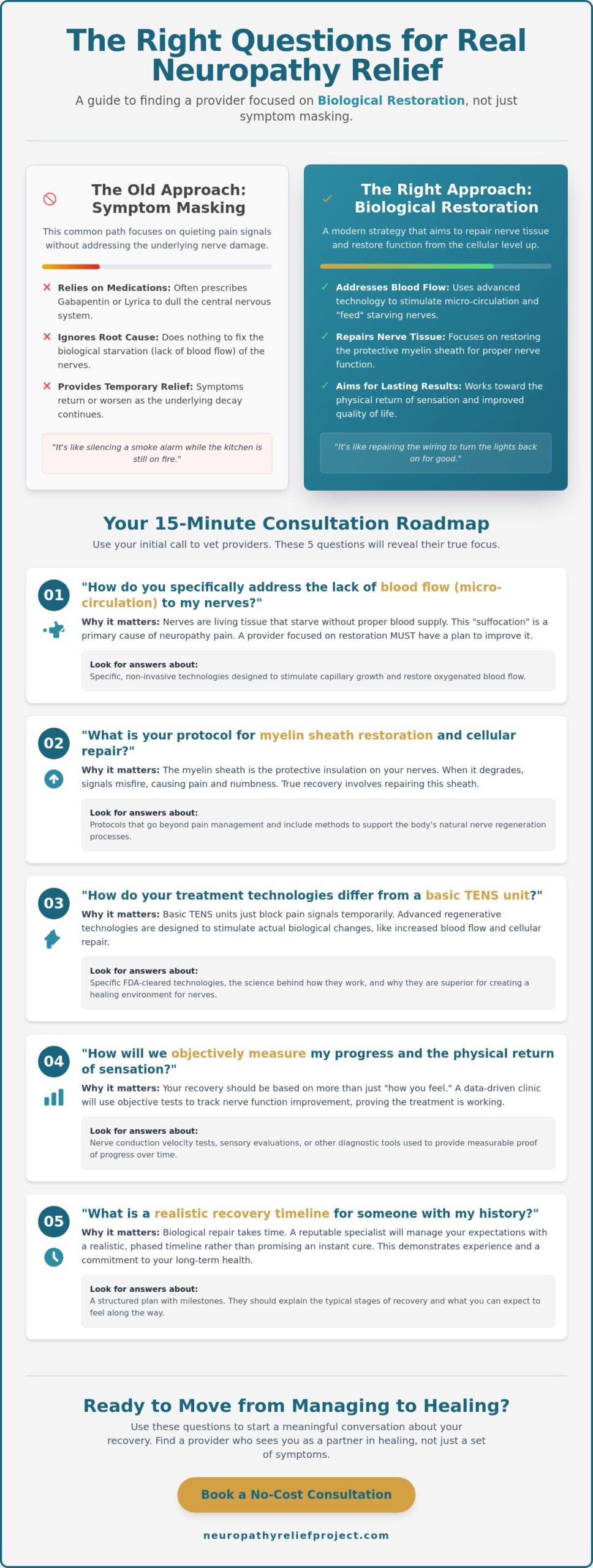
If you’ve been prescribed Gabapentin or Lyrica within minutes of meeting a provider, you’ve experienced the “symptom management” mindset. These medications work by quietening the central nervous system, essentially turning down the volume on the pain signals. However, they do nothing to address the biological starvation of the nerve tissue itself. When nerves lose access to oxygenated blood, they begin to wither and misfire. Relying solely on drugs to mask this sensation is like silencing a smoke alarm while the kitchen is still on fire. You can identify a provider’s true focus by observing whether they discuss the “what” of your symptoms or the “why” of your nerve decay. A restoration-centered approach looks past the surface to see if the underlying cellular environment can be revived.
The Turning Point in John’s Recovery
John’s perspective shifted during a brief, focused conversation where the specialist mentioned micro-circulation. For the first time, someone explained that his nerves weren’t just “broken”; they were suffocating. This realization led him to seek a drug-free nerve pain management plan that prioritized biological repair over chemical suppression. He used a 15-minute discovery call as a strategic vetting tool to ensure he was joining a collaborative effort rather than just another standard facility. By preparing the right questions to ask during a neuropathy phone consultation, he was able to verify the provider’s expertise in nerve restoration before ever stepping foot in the office. This proactive vetting is the bridge between feeling dismissed and finding a dedicated advocate for your health.
Questions to Ask About Root Causes and Biological Restoration
If you’ve spent years managing pain without seeing improvement, it’s time to change the nature of your inquiry. The most critical questions to ask during a neuropathy phone consultation should focus on the biological environment of your nerves. A specialist who truly understands restoration won’t just talk about pain levels; they’ll talk about the life-support systems of your nervous system. You need to know if the provider is prepared to treat the underlying cause or if they’re simply offering a different way to hide the symptoms.
Understanding the Role of Micro-Circulation
Question 1: “How do you specifically address the lack of blood flow to my nerves?” Nerves are living tissue. They require a constant supply of oxygen and glucose delivered through microscopic blood vessels. When these vessels constrict or die off, your nerves begin to starve. This biological “suffocation” is often the reason you feel like you’re walking on glass or hot embers. While a standard MRI or EMG might document the existence of damage, these tests often miss the functional starvation happening at the capillary level. A quality answer from a specialist should involve specific methods to stimulate micro-circulation. If they can’t explain how they plan to bring “food” back to the nerve, they aren’t treating the root cause of your distress.
Demanding a Path Toward Myelin Repair
Question 2: “What is your protocol for myelin sheath restoration and cellular repair?” Think of the myelin sheath as the protective insulation on an electrical wire. When this coating erodes, the signal “leaks” out, causing the agonizing tingling and sharp shocks you experience daily. According to the NIH on Peripheral Neuropathy, damage to these coverings is a hallmark of the condition. You should ask: “What specific technologies do you use to stimulate cellular signaling?”
A restorative specialist will distinguish between permanent nerve death and dormant, repairable tissue. Many patients are told their damage is permanent when, in reality, the nerves are simply “off-line” due to a lack of metabolic support. You should also ask: “Are we treating the idiopathic cause or just the sensory symptoms?” If the answer focuses on numbing the area, it’s a red flag. A true restoration protocol explains the biological science behind a drug-free approach, focusing on how to trigger the body’s innate ability to repair the myelin sheath. To see if your symptoms align with a restorative path, you can examine our collaborative approach to nerve health. Preparing these questions to ask during a neuropathy phone consultation ensures you don’t settle for another round of failed management, but instead find a bridge to actual healing.
Evaluating Treatment Technology and Restoration Protocols
Once you understand the biological requirements for nerve repair, you must evaluate the tools a specialist uses to achieve those results. Not all technology is created equal. Many patients spend hundreds of dollars on home devices that offer nothing more than a temporary distraction from their pain. Your 15-minute discovery call is the ideal time to distinguish between gadgets that mask symptoms and clinical-grade technology designed for restoration. Using the right questions to ask during a neuropathy phone consultation will help you determine if a clinic is equipped with the specialized instruments necessary to stimulate dormant nerve fibers.
Question 5: “What non-invasive technologies do you utilize in your restoration protocol?” A dedicated specialist should be able to name specific modalities that go beyond the standard offerings found in a general practitioner’s office. It’s also vital to ask Question 6: “How do these technologies differ from standard TENS units or basic physical therapy?” While Johns Hopkins on neuropathy notes that various therapies can help manage the condition, restoration requires a more targeted approach. While standard home units like TENS simply scramble pain signals to provide temporary relief, specialized light and electrical signaling therapies utilize specific frequencies to trigger mitochondrial activity and cellular regeneration within the nerve.
Beyond Standard Physical Therapy
General exercise is often recommended for neuropathy, but for many, it leads to a painful “flare” that sets recovery back weeks. This happens because physical activity increases the metabolic demand on nerves that are already starving for oxygen. If micro-circulation isn’t addressed first, the nerves can’t handle the increased load. A specialized nerve-re-education protocol is different because it focuses on restoring the functional connection between the brain and the extremities before demanding high-intensity movement. This methodical pacing ensures that your recovery journey is steady rather than a series of painful setbacks.
Customization vs. Cookie-Cutter Care
John’s previous experience was a perfect example of the “cookie-cutter” trap. He realized his doctor gave every patient the same prescription regardless of whether their neuropathy was caused by diabetes, chemotherapy, or was idiopathic. To avoid this, you must ask Question 7: “What is the typical success rate for patients with my level of sensory loss?” and Question 8: “Is this protocol customized based on my specific metabolic health and history?”
You should also feel empowered to ask how the provider adjusts the protocol if you don’t see results in the first 30 days. Nerve restoration is not a “set it and forget it” process. It requires a collaborative effort between you and the specialist to monitor how your body responds to the signaling therapies. If a provider cannot explain how they tailor their approach to your unique biological needs, they may be offering a standardized program that ignores the complexities of your specific nerve damage. Preparing these questions to ask during a neuropathy phone consultation ensures you are entering a partnership focused on your long-term liberation from pain.
Questions Regarding Progress Tracking and Recovery Timelines
One of the most frustrating aspects of chronic nerve pain is the feeling that you are moving through a dark tunnel without a map. If your current provider only asks you to rate your pain on a scale of one to ten, they are missing the most vital data points for true restoration. Subjective pain levels can fluctuate based on stress, sleep, or weather, but objective sensation is a concrete biological marker. When preparing your questions to ask during a neuropathy phone consultation, you must focus on how the specialist intends to prove that your nerves are actually healing. You need to know that your progress is being measured by the return of function, not just the temporary suppression of discomfort.
Measuring Sensation, Not Just Pain Suppression
Question 9: “What objective measurements do you use to track the return of nerve sensation?” A collaborative effort toward health requires clear data. In John’s journey, we moved beyond his reports of “less burning” to utilize sensory mapping. This process allows us to visualize exactly where the nerve signals are returning. When John began, he had roughly 10% functional sensation in his feet, a state that left him feeling disconnected from the ground beneath him. Over six months of dedicated care and specialized signaling therapy, his sensation improved to 80%. This wasn’t just a reduction in pain; it was a restoration of his ability to feel his grandson’s hand or the texture of the carpet. Identifying these milestones helps you stay committed when the biological pace of healing feels slow.
The Reality of the Recovery Timeline
Nerves are remarkable, but they do not repair themselves overnight. A specialist should be honest about the biological process, which often takes months rather than days. Ask Question 10: “What is a realistic timeline for me to feel a significant reduction in burning?” and follow up with, “What are the early signs that the treatment is successfully repairing tissue?” Often, the first sign of repair is a change in the type of sensation you feel, which can sometimes be mistaken for a flare-up if not properly explained. This is why the neuropathy consultation process must include a clear expectation-setting phase.
You should also secure peace of mind by asking Question 11: “Will I have direct access to the specialist if I experience a flare-up during care?” and Question 12: “How do we transition from clinic-based care to home-based maintenance?” Knowing that you have a guide through the peaks and valleys of recovery reduces the anxiety that often accompanies chronic conditions. If you are ready to see how these objective metrics can be applied to your specific symptoms, you can request your 15-minute discovery call to begin your own roadmap to restoration. By prioritizing these questions to ask during a neuropathy phone consultation, you ensure that your path forward is based on evidence and clinical authority rather than vague promises.
Preparing for Your Consultation: The Path to Nerve Restoration
Stepping into a discovery call with a specialist is a significant moment in your journey toward liberation from pain. To ensure this time is used effectively, you must arrive prepared to act as a collaborative partner in your own care. While we have discussed the biological science of repair, the practical success of your recovery depends on how clearly you can communicate your history and your hopes. By organizing your thoughts beforehand, you maximize the value of the questions to ask during a neuropathy phone consultation and set the stage for a specialized protocol that fits your specific needs.
- Step 1: Organize your medical history. Compile a list of past diagnoses and every failed medication you’ve tried. Knowing why a treatment was discontinued is just as important as knowing what it was.
- Step 2: Document your specific sensory triggers. Pay close attention to when your symptoms flare. Is the burning worse at night? Does cold weather trigger sharp shocks?
- Step 3: Define your “Number One Goal.” Think beyond “less pain.” Do you want to walk to the mailbox without a cane? Do you want to sleep six hours without waking up?
- Step 4: Use the free nerve pain consultation. This is your opportunity to put these 15 questions to work and vet the specialist’s approach to restoration.
Your Neuropathy Restoration Folder
We recommend creating a dedicated folder to track your progress and keep your records in one place. Include a detailed list of medications, noting if they caused brain fog or simply failed to provide relief. Use specific sensory descriptors to mirror your lived experience. If your feet feel “wooden” or like they’re wrapped in tight bandages, write that down. If you feel “electric” zaps that make you jump, document the frequency. This level of detail helps a specialist understand the specific type of nerve fiber damage you’re facing and how it impacts your daily mobility and independence.
Booking Your 15-Minute Discovery Call
The mission of the Neuropathy Relief Project is to provide you with clinical clarity before you make any long-term commitment. We believe you should never feel like a number in a crowded medical system. During your scheduled 15-minute window, a specialist will listen to your history and help you determine if your damage is dormant and repairable. This call is a focused, methodical first step designed to reduce your anxiety and provide a clear path forward. You’ll leave the conversation knowing whether a restorative protocol is the right bridge for your recovery. Schedule your 15-minute FREE phone Consultation today to get your questions answered.
Reclaim Your Mobility and Independence
Living with the constant fire of neuropathy can make you feel like your world is shrinking every day. You’ve learned that true recovery requires moving past simple symptom masking and focusing on the biological restoration of micro-circulation and the protective myelin sheath. By preparing the right questions to ask during a neuropathy phone consultation, you shift from being a passive patient to an active participant in your healing journey. This strategic vetting ensures you find a provider who prioritizes your long-term nerve health over temporary chemical suppression.
The Neuropathy Relief Project, led by Dr. Michael J. Sclafani, DC, specializes in non-invasive, drug-free restoration protocols designed to revive dormant nerve tissue. With a national reach for patient assessments and discovery calls, we’re dedicated to helping you find a clear, evidence-based path forward. You don’t have to navigate this complex medical system alone; a collaborative effort is waiting to guide you toward regaining the sensation you thought was lost forever. Schedule Your Free 15-Minute Nerve Restoration Consultation today and start your own roadmap to restoration. You deserve a future defined by liberation from pain rather than the limitations of your symptoms.
Frequently Asked Questions
What is the single most important question to ask a neuropathy specialist?
The most vital inquiry is asking how they plan to address the underlying biological cause of your nerve starvation. While many providers focus on pain levels, a restorative specialist will explain how they intend to repair the myelin sheath and improve micro-circulation to the nerve fibers. This helps you distinguish between a clinic that simply manages symptoms and one that offers a strategic path toward actual healing.
Can a specialist tell me if my nerve damage is permanent during a phone call?
A definitive diagnosis of permanent nerve death cannot be made without a physical examination and diagnostic testing. However, during your 15-minute free phone consultation, a specialist can evaluate your history and sensory triggers to determine if your nerves are likely dormant rather than dead. Dormant nerves often respond well to signaling therapies, whereas permanent death is much rarer than most patients are led to believe.
Why do most doctors only offer medication for peripheral neuropathy?
Traditional medical systems often prioritize symptom suppression because standard insurance models are built around pharmaceutical management. These systems are frequently unequipped to provide the time-intensive, specialized technologies required for biological restoration. Consequently, patients are often prescribed drugs like Gabapentin to mask the burning sensations while the underlying nerve decay continues to progress unchecked; this leaves the root problem unaddressed for years.
How do I know if a specialist is focused on restoration or just management?
You can identify their focus by listening for keywords like “cellular repair,” “micro-circulation,” and “objective sensory mapping.” If the provider’s primary solution is a prescription or a basic TENS unit, they are likely focused on management. A restoration-focused specialist will discuss non-invasive technologies designed to trigger the body’s innate healing mechanisms and provide a roadmap for regaining functional sensation in your feet or hands.
What medical records should I have ready for my neuropathy consultation?
You should prepare a list of your current medications, past neurological tests like EMGs, and a timeline of your sensory changes. Having these documents ready allows you to maximize the value of the questions to ask during a neuropathy phone consultation. It’s particularly helpful to note which medications failed to work or caused side effects, as this information helps the specialist refine your potential restoration protocol.
Is it possible to see results if I have suffered from neuropathy for over a decade?
Many patients who have struggled for ten years or more still possess dormant nerve fibers that can be revived. The duration of your symptoms is often less important than the current biological state of your nerves. By focusing on restoring blood flow and metabolic support, even long-term damage can often be mitigated. This leads to a significant reduction in burning and a return of physical independence.
How does the Neuropathy Relief Project differ from a standard neurology clinic?
We operate as a collaborative initiative focused specifically on non-invasive, drug-free restoration rather than just diagnostic labeling. Unlike standard clinics that may spend only minutes with you before issuing a prescription, we prioritize research-driven protocols that target the root cause of nerve decay. Our goal is to provide a specialized guide for those who feel lost in traditional systems; we offer a clear path toward improvement.
What happens if the specialist says my neuropathy is “idiopathic”?
An “idiopathic” label simply means the cause is currently unknown, but it does not mean the damage is untreatable. Many patients find that their unknown cause is actually related to chronic micro-circulation issues that standard tests overlooked. Regardless of the label, the biological requirements for nerve repair remain the same. Our restoration protocols focus on providing the oxygen and nutrients necessary for your nerves to heal themselves.