

What if the invisible tension in your shoulders is actually a biological toxin that is starving your nerves of oxygen? You know the sensation all too well. It’s that sudden, burning flare-up or the sharp feeling of walking on glass that always seems to intensify just as your life gets more demanding. You’ve likely mentioned this connection to doctors before, only to feel unheard or dismissed, as if the link between your mental state and your physical agony is purely coincidental. It’s deeply frustrating to feel like your own body is overreacting to the world around you while you search for answers that make sense.
We’re here to validate your experience. Stress induced neuropathy pain is a documented physiological reality driven by a complex cortisol-nerve connection that physically restricts blood flow to your extremities. This article provides the clinical clarity you’ve been seeking by detailing the biological link between chronic stress and nerve damage. You’ll learn actionable, drug-free steps to soothe your nervous system and find a clear path toward restoration. As we recognize 2026 as the Global Year on Neuropathic Pain, it’s time to move toward liberation from these unpredictable flares and reclaim the steady, pain-free life you deserve through this collaborative journey.
Key Takeaways
- Understand the biological mechanism of how cortisol triggers inflammation and restricts vital blood flow to your nerves.
- Learn how to distinguish between a temporary flare of stress induced neuropathy pain and signs of progressing structural damage.
- Discover immediate, non-invasive techniques like vagus nerve stimulation to break the cycle of sympathetic nervous system overactivity.
- Identify why traditional medications may only mask symptoms and how to address the underlying “starvation” of the nerve.
- Gain a structured, step-by-step roadmap for restoring nerve function through the collaborative efforts of the Neuropathy Relief Project.
Can Stress Actually Cause Neuropathy Pain?
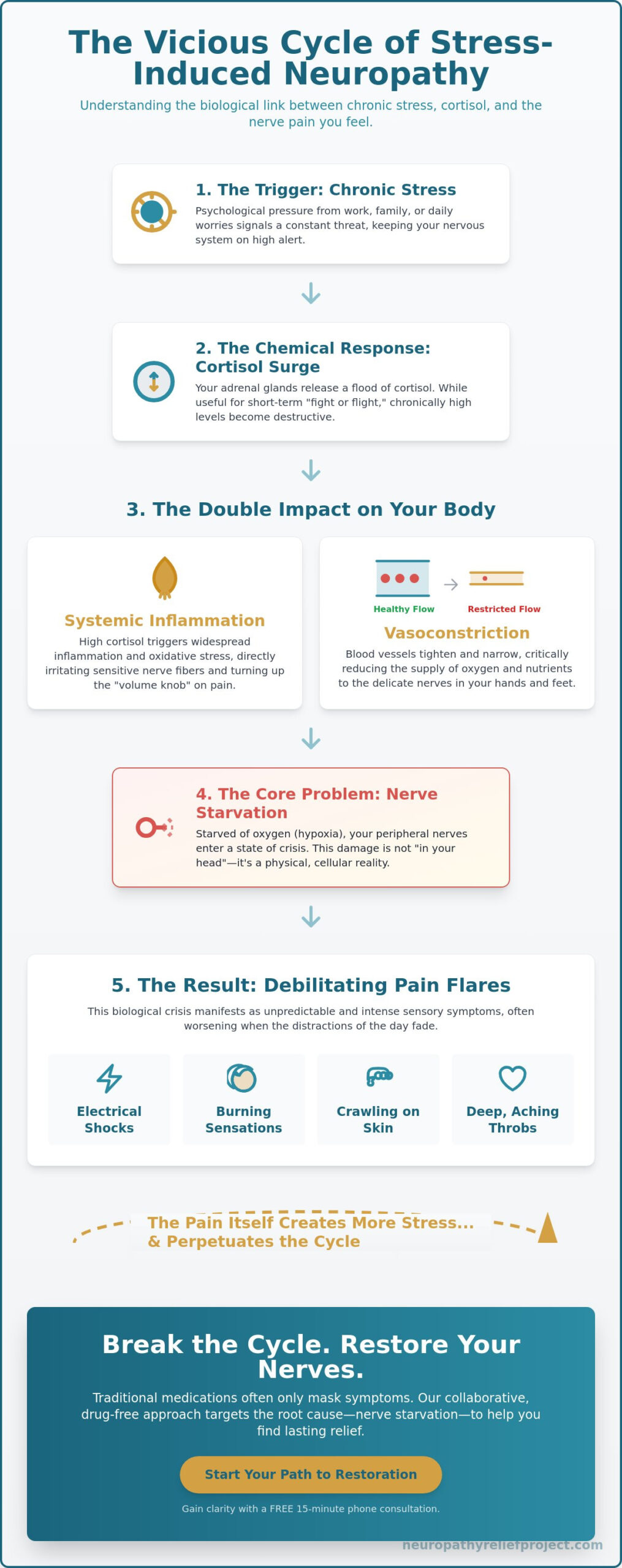
Have you ever noticed that the burning sensation in your feet or the tingling in your hands intensifies the moment a work deadline looms or a personal conflict arises? This isn’t a coincidence, and it certainly isn’t “all in your head.” Stress induced neuropathy pain is a tangible, physiological reaction to elevated cortisol levels within the body. When you experience chronic pressure, your adrenal glands flood your system with cortisol. While this hormone is essential for the “fight or flight” response, sustained high levels trigger systemic inflammation and oxidative stress that directly irritate already sensitive nerve fibers.
We understand how isolating it feels to describe “invisible” pain that flares during times of tension, especially when traditional tests don’t always capture these fluctuations. It’s important to distinguish between the emotional feeling of anxiety and the actual physical firing of damaged nerve endings. When your nervous system stays on high alert, your biological “volume knob” for pain is turned up. This state of hyper-vigilance means that even minor stimuli, which might usually go unnoticed, are interpreted by your brain as significant physical threats. You aren’t just imagining the increase in discomfort; your nerves are physically reacting to a chemical environment that is hostile to their stability.
The Mind-Body Connection in Nerve Health
The brain and the peripheral nerves exist in a constant feedback loop. When the brain interprets psychological stress as a threat, it can lead to a “wind-up” phenomenon. In this state, the central nervous system becomes hypersensitive, amplifying signals of neuropathic pain until they become overwhelming. This cycle makes living with peripheral neuropathy in a high-stress world feel like an uphill battle. By understanding that your brain is attempting to protect you by over-reporting pain signals, we can begin to look at restoration through the lens of calming that biological alarm system.
Identifying Your Stress-Induced Sensory Symptoms
Stress doesn’t just make existing pain feel worse; it often introduces specific sensory “flares” that mirror your internal state of tension. You might recognize these common sensations during a difficult week:
- Sharp, electrical shocks that seem to jump across the skin.
- A persistent burning or “hot” sensation in the extremities.
- The feeling of insects crawling on the skin, known as formication.
- Deep, aching throbbing that intensifies during quiet moments.
Many of our patients report that these symptoms peak at night. This happens because, as the distractions of the day fade, the mind focuses on the body’s internal signals, and the cortisol rhythm naturally shifts. Unlike a localized injury that stays in one spot, a systemic stress flare can feel more diffuse, affecting multiple areas simultaneously as your entire nervous system reacts to the chemical surge. If you’re struggling to manage these unpredictable spikes, a 15 minute FREE phone consultation can help you identify if your symptoms are tied to these biological stress triggers.
The Biological Mechanism: How Cortisol Impacts Nerve Repair
If you’ve ever felt like your pain is “starving” for relief, you’re closer to the biological truth than you might realize. While we’ve explored how the brain interprets stress, we must look deeper at the cellular level to understand why stress induced neuropathy pain becomes so debilitating. The primary culprit is cortisol. Under normal circumstances, cortisol helps regulate your body’s functions, but when it remains chronically elevated, it acts as a catalyst for systemic inflammation. Research has shown that Stress Exacerbates Neuropathic Pain by sensitizing the pathways that carry pain signals, making your nerves significantly more reactive to every stimulus.
This chemical surge also triggers vasoconstriction, a process where your blood vessels tighten and narrow. For your peripheral nerves, especially the delicate small fibers in your hands and feet, this creates a localized crisis. These nerves rely on a constant supply of oxygen and nutrients delivered through microscopic blood vessels. When stress restricts this flow, it creates a state of hypoxia, or oxygen starvation. Without oxygen, the nerve cannot produce the energy required for basic maintenance, let alone repair. This environment is often worsened by a compromised gut; chronic stress disrupts the delicate balance of your microbiome, allowing inflammatory markers to leak into your bloodstream and further irritate your already vulnerable nervous system.
Inflammation and Micro-Circulation Under Pressure
Your body’s ability to heal depends on healthy micro-circulation. Think of it as a delivery service that brings vital “repair kits” to damaged tissues. When you are under constant pressure, your body stays in a pro-inflammatory state that acts like a roadblock for these nutrients. Maintaining proper hydration is one of the simplest ways to support this system. Understanding the link between water and nerve pain management can help you maintain the fluid volume necessary to keep blood moving through those constricted vessels. If you’re unsure if your current habits are supporting your recovery, you might find clarity through a 15 minute FREE phone consultation to discuss your specific sensory symptoms.
The Role of the Myelin Sheath in Stress Responses
The myelin sheath is the protective insulation that wraps around your nerves, much like the plastic coating on an electrical wire. Its job is to ensure that signals travel quickly and accurately without “short-circuiting.” When cortisol levels are high, the body’s natural regenerative processes are deprioritized in favor of immediate survival. This means the cellular machinery responsible for repairing the myelin sheath essentially stalls, leaving the nerve fiber exposed. Nerve restoration requires a calm internal environment to succeed. Without this physiological peace, your nerves remain vulnerable to the very “short-circuits” that manifest as burning, tingling, or sharp electric shocks.
Stress-Induced Flare vs. Permanent Damage: How to Tell
If you’ve ever wondered why your symptoms seem to vanish during a peaceful weekend only to return with a vengeance on Monday morning, you’re experiencing the hallmark of stress induced neuropathy pain. Distinguishing between a temporary “flare” and progressing structural damage is one of the most common challenges our patients face. To understand where you stand, it’s helpful to track your “baseline” pain level versus your “peak” pain level. Your baseline is the consistent, low-level discomfort you feel during calm moments. If this baseline is slowly creeping upward over months, it suggests your neuropathy may be progressing regardless of your anxiety levels. Conversely, a peak is a sharp, temporary spike in intensity that usually subsides once the immediate pressure is removed.
Don’t fall into the trap of thinking that because your pain is intermittent, the damage isn’t real. Nerves that are already compromised are far more vulnerable to the chemical fluctuations of stress. A “flare” is often your body’s way of signaling that your nerves are operating at the edge of their capacity. Using stress as an excuse to ignore these signals is a dangerous strategy. It’s easy to blame a burning sensation on a difficult week at the office, but doing so might cause you to overlook underlying idiopathic causes, such as vitamin deficiencies or metabolic shifts, that require clinical attention. If you’re struggling to determine if your symptoms are a passing flare or a sign of something deeper, a 15 minute FREE phone consultation can provide the expert perspective you need to find a clear path forward.
Recognizing the Signs of a “Nerve Flare”
A stress flare often follows a predictable pattern, such as the “sunsetting” effect. This occurs when the physical and mental tension of the day accumulates, causing pain to intensify as the evening approaches. You might notice specific trigger events, like a heated argument or a looming deadline, that precede a sudden spike in numbness or tingling. During these high-intensity moments, your coordination can also suffer. For instance, driving with nerve damage can become significantly more difficult and dangerous when a stress flare reduces your ability to feel the pedals or react quickly to traffic changes.
When Stress Masking Hides Underlying Issues
Chronic stress can act as a powerful distraction, pulling your attention away from the gradual loss of sensation in your feet. This “masking” is particularly concerning because you might not notice that your balance is worsening until a fall occurs. It’s essential to perform regular checks for mobility safety with neuropathy regardless of how busy or pressured you feel. Waiting for the stress to pass before addressing your nerve health allows the underlying “starvation” of the nerves to continue unchecked. Restoration is a collaborative effort that must begin now, rather than being postponed for a “calmer” time that may never arrive.
How to Reduce Stress-Induced Nerve Pain: A Step-by-Step Approach
When you feel the familiar surge of heat or the sharp prickling of stress induced neuropathy pain, your immediate goal is to interrupt the biological “fight or flight” loop. If your body remains in a state of high alert, your nerves will continue to fire erratically regardless of how much rest you get. By following a structured, physiological approach, you can physically signal to your nervous system that the threat has passed, allowing your micro-circulation to recover and your pain levels to stabilize. This process isn’t about ignoring the stress; it’s about protecting your nerves from the chemical fallout that stress creates.
- Step 1: Vagus Nerve Stimulation. Use deep, rhythmic breathing to engage the vagus nerve, which acts as a biological circuit breaker for the sympathetic nervous system.
- Step 2: Temperature Regulation. Immerse your feet or hands in cool (not ice cold) or lukewarm water. This provides a sensory “reset” for overactive nerve endings that are misfiring due to cortisol-induced sensitivity.
- Step 3: Gentle Mobility. Perform non-impact movements to encourage blood flow without overtaxing the tissue.
- Step 4: Anti-Inflammatory Support. Focus on hydration and antioxidant-rich foods to help your body clear out the inflammatory byproducts of a stress flare.
- Step 5: Nerve-Safe Sleep Prep. Create a cool, dark environment and use supportive bedding to prevent the “sunsetting” effect from disrupting your restorative sleep cycles.
Regulating the Sympathetic Nervous System
If you find your heart racing alongside your nerve pain, your sympathetic nervous system is likely overdriving your pain receptors. Deep diaphragmatic breathing is a clinical tool that physically lowers your heart rate and relaxes the tension in your blood vessels. We recommend the “4-7-8” technique: inhale quietly through your nose for four seconds, hold your breath for seven seconds, and exhale forcefully through your mouth for eight seconds. This extended exhale is the key to calming the brain, which in turn reduces the “volume” of the pain signals sent to your peripheral nerves. If you’re struggling to break this cycle on your own, you can schedule a 15 minute FREE phone consultation to discuss specific protocols for your symptoms.
Lifestyle Adjustments for Immediate Nerve Cooling
During a high-stress period, your nerves are already “simmering” in a pro-inflammatory environment. You can help clear these toxins by performing seated ankle pumps or gentle wrist circles. These movements act as a mechanical pump for your lymphatic system, helping to move stagnant fluid and inflammatory markers away from your nerve endings. It’s equally important to avoid “nerve toxins” like caffeine and alcohol during a flare, as these substances can further constrict blood vessels and increase nerve irritability. Nerve cooling is the reduction of spontaneous electrical firing in overactive nerve endings. By combining these physical adjustments with the calming techniques mentioned above, you provide your body with the quiet environment it needs to begin the journey of restoration.
Beyond Stress Management: Restoring Nerve Health with the Neuropathy Relief Project
If you have spent months or years attempting to manage your stress induced neuropathy pain through traditional channels, you have likely been offered medications designed to dampen your nervous system’s response. While these prescriptions can provide a temporary reprieve, they often act as a chemical veil that merely masks the underlying distress of your nerves. At the Neuropathy Relief Project, we view recovery as a collaborative effort toward true restoration rather than just symptom suppression. Our primary goal is to address the biological “starvation” of the nerve by restoring the micro-circulation and myelin sheath integrity that we explored in previous sections. Masking the pain with medication doesn’t fix the lack of oxygen and nutrients reaching your small fiber nerves; it simply silences the alarm while the damage continues to progress.
Why a Drug-Free Protocol is Essential for Restoration
The traditional “numbing” approach of many pharmacological treatments can be frustrating for patients who want to understand why their bodies are failing them. We believe a “nourishing” approach is essential for those seeking lasting results. By utilizing specific non-invasive protocols, it’s possible to stimulate the nerve tissue’s natural repair mechanisms and break the cycle of systemic inflammation. This shift from suppression to stimulation is what allows for the potential restoration of function and the reduction of those unpredictable, stress-triggered flares. As dedicated specialists and compassionate advocates, we’re committed to providing you with a clear, evidence-based path that avoids the side effects and limitations of long-term drug dependency.
Your Path Forward: The 15-Minute Expert Nerve Review
Taking the first step toward liberation from chronic pain shouldn’t be an added source of stress. During your discovery call, we’ll conduct a methodical review of your specific sensory symptoms and check your eligibility for our restoration protocols. This expert review is designed to help you determine if your current spikes in stress induced neuropathy pain are temporary flares or signs of structural damage that require immediate intervention. It’s vital to take action before these periods of intense sensitivity transition into permanent numbness or a complete loss of balance. Book your 15-minute FREE phone consultation today to begin your journey toward a steady, pain-free future during this Global Year on Neuropathic Pain.
Reclaiming Your Path to Restoration
You now understand that the burning and tingling of stress induced neuropathy pain aren’t just psychological reactions. They’re physical responses to a biological environment often starved of oxygen and flooded with cortisol. By distinguishing between temporary flares and progressing damage, you’ve taken the first step toward reclaiming control over your health. True relief requires moving beyond masking symptoms and focusing on the underlying restoration of your nervous system’s delicate micro-circulation and protective myelin sheath.
If you’re ready to transition from merely surviving your symptoms to actively nourishing your nerves, we’re here to guide you. Led by Dr. Michael J. Sclafani, DC, our collaborative initiative utilizes non-invasive restoration protocols developed over 15 years of clinical experience in nerve health. You don’t have to navigate this complex system alone. We invite you to Schedule your FREE 15-Minute Neuropathy Consultation today to discuss your sensory experience and explore your eligibility for a structured path to relief. There’s real hope for improvement, and your journey toward liberation starts with a single, informed conversation.
Frequently Asked Questions
Can anxiety cause physical nerve pain in the hands and feet?
Yes, anxiety triggers a biochemical cascade that results in physical nerve irritation. When you’re anxious, your body releases high levels of cortisol that cause blood vessels to constrict. This process reduces the oxygen supply to the small fiber nerves in your hands and feet. The resulting “starvation” of the nerve tissue manifests as very real burning, tingling, or sharp sensations that mirror your internal state of tension.
How long does a stress-induced neuropathy flare typically last?
The duration of a flare depends on how quickly your nervous system can return to a resting state. A temporary spike in discomfort might last only a few hours after a specific trigger. However, if you’re experiencing chronic, ongoing pressure, the flare can persist for days or even weeks. Recovery only begins when the sympathetic nervous system is calmed and micro-circulation is restored to the affected areas.
Is stress-induced nerve damage permanent or reversible?
Many patients find that stress induced neuropathy pain is tied to functional issues that can be improved through targeted restoration. If the nerves are merely “starved” due to poor blood flow or a thinning myelin sheath, they can often be nourished back to health. The danger lies in ignoring chronic flares. Sustained inflammation can eventually lead to permanent structural damage, which is why early intervention is so critical for long-term nerve health.
Does cortisol directly damage the myelin sheath?
Cortisol doesn’t physically “dissolve” the myelin sheath, but it creates a hostile internal environment that prevents repair. High levels of this hormone signal the body to prioritize immediate survival over routine maintenance. Consequently, the cellular processes required to rebuild the protective insulation around your nerves are stalled. This leaves your nerve fibers exposed and vulnerable to the “short-circuits” that cause intense sensory pain during high-pressure periods.
What is the fastest way to calm a neuropathy flare caused by stress?
The most effective way to interrupt a flare is to break the “fight or flight” loop through vagus nerve stimulation. You can achieve this by practicing deep diaphragmatic breathing combined with gentle temperature regulation, such as a lukewarm foot soak. These actions physically signal your brain to lower your heart rate and dilate blood vessels. This allows oxygen-rich blood to reach the nerve endings and reduces spontaneous electrical firing almost immediately.
Can deep breathing exercises really reduce the burning sensation in my feet?
Deep breathing is a clinical tool that shifts your body from a sympathetic to a parasympathetic state. This transition reduces the production of pro-inflammatory markers and reverses the vasoconstriction caused by cortisol. By improving the volume of blood reaching your extremities, you address the hypoxia that triggers the burning sensation. It effectively turns down the biological “volume” on your pain signals by calming the entire nervous system.
When should I seek professional help for stress-related nerve pain?
You should seek a clinical evaluation if your flares are becoming more frequent or if you notice a gradual loss of sensation between spikes. If your pain disrupts your sleep or affects your balance, it’s time to move beyond self-management. A 15 minute FREE phone consultation can help you determine if your stress induced neuropathy pain requires a structured, drug-free restoration protocol to prevent temporary flares from becoming permanent structural loss.