

Imagine waking up at 3:00 AM to a fire that isn’t actually there. Your palms are searing, your fingertips are tingling, and no matter how much you shake your wrists, the burning sensation in fingers and hands refuses to cool down. It’s a lonely, frustrating experience that makes even the simplest tasks, like gripping a coffee mug or typing an email, feel like a monumental challenge. If you’re worried that this “electrical” pain is a sign of permanent damage or a future of lost mobility, you’re part of the 30 million Americans navigating the complexities of nerve health in 2026.
We understand that living with this daily discomfort is exhausting, especially when traditional systems often offer little more than temporary numbing agents or invasive surgical options. You deserve a path that focuses on restoration rather than just masking the symptoms. This guide explores why your nerves are sending these distress signals and how our collaborative initiative helps restore nerve health and stop the fire. We will examine the latest 2026 clinical insights into carpal tunnel and peripheral neuropathy, discuss the shifting landscape of non-invasive care, and introduce you to protocols designed to help you reclaim the function and freedom you’ve been missing.
Key Takeaways
- Understand why a persistent burning sensation in fingers and hands acts as a neurological “fire alarm” indicating nerve starvation rather than just a temporary discomfort.
- Distinguish between mechanical compression, such as carpal tunnel syndrome, and systemic biological failures like peripheral neuropathy to identify the root cause of your pain.
- Learn why traditional medications like NSAIDs or gabapentinoids may only mask symptoms while the underlying nerve damage continues to progress.
- Explore the science of nerve restoration, focusing on how improved oxygenation and Myelin sheath health can help stop the burning at its source.
- Discover how a specialized, non-invasive assessment can provide a clear path toward functional liberation and long-term relief without a dependency on drugs.
Understanding the Burning Sensation in Fingers and Hands
If you feel like your skin is searing or describe the sensation as “fire under the skin,” you’re experiencing a highly specific neurological distress signal. A burning sensation in fingers and hands is rarely a problem with the skin itself. Instead, it’s a message from your peripheral nervous system. When your nerves are compressed, damaged, or deprived of essential nutrients, they begin to misfire. Your brain tries to interpret these chaotic electrical impulses, and it often defaults to the most urgent sensory translation it knows: intense heat.
Patients often describe this experience using vivid, sensory-focused imagery. You might feel “electric shocks” that jump from your wrist to your fingertips, or perhaps a constant sensation of “scalding water” poured over your palms. Identifying the specific pattern of this burn is the first step toward restoration. For example, if the heat is localized only to your thumb and index finger, it suggests a mechanical issue like a pinched nerve. If the burning feels like a “glove” covering the entire hand, it often points toward a systemic biological failure where the nerves are starving for oxygen.
Is It Paresthesia or Something More?
Most people are familiar with the transient “pins and needles” that occur when a limb “falls asleep.” This is medically known as Paresthesia, and it’s typically painless and short-lived. However, when these sensations transition into a persistent, painful burn, you may be experiencing dysesthesia. This shift marks a critical point where the nerve is no longer just irritated; it’s actively struggling to survive. If you notice that your “pins and needles” are becoming a permanent fixture of your day, seeking an expert review of your symptoms is essential to prevent a permanent loss of function.
The “Fire Alarm” Analogy
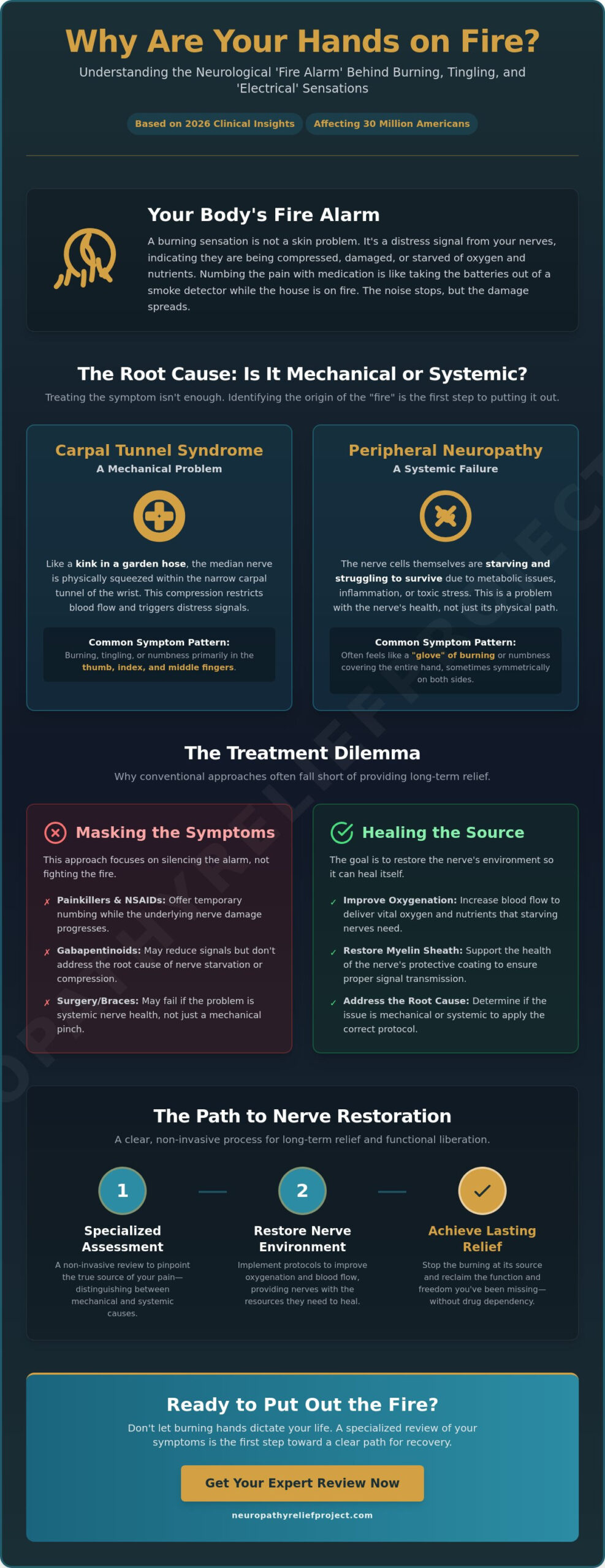
Think of the burning sensation in fingers and hands as a fire alarm for your nervous system. Nerves require a constant supply of oxygen and blood flow to function correctly. When that supply is constricted by mechanical pressure or systemic inflammation, the nerve sends out a frantic signal. Using heavy medication to “numb” this pain is often like taking the batteries out of a smoke detector while the house is still on fire. It stops the noise, but the underlying damage continues to spread. Chronic inflammation acts as the fuel, keeping the nerves in a state of high alert and preventing the natural healing processes that lead to liberation from pain. As a collaborative initiative focused on long-term results, we believe in addressing the fire, not just silencing the alarm.
Common Causes: Is It Carpal Tunnel or Peripheral Neuropathy?
When you seek answers for a persistent burning sensation in fingers and hands, you’ll likely encounter two primary diagnoses: Carpal Tunnel Syndrome (CTS) or Peripheral Neuropathy. While both can leave your hands feeling like they’re on fire, their origins are fundamentally different. Carpal Tunnel is a mechanical issue, similar to a kink in a garden hose, where the median nerve is physically squeezed as it passes through the wrist. In contrast, Peripheral Neuropathy is a systemic biological failure where the nerve cells themselves are struggling to survive due to metabolic or toxic stress.
Distinguishing between these two is vital because a treatment that fixes a mechanical pinch won’t resolve a biological starvation. If you’ve been searching for clarity, a specialized review of your specific symptoms can help determine if your pain is a localized structural problem or a sign of a broader health challenge.
The Carpal Tunnel Trap
Many patients fall into the “Carpal Tunnel Trap” by assuming every hand pain stems from the wrist. If your burning is strictly limited to your thumb, index, and middle finger, the median nerve is likely the culprit. However, 2024 clinical guidelines from the AAOS indicate that while surgery can provide relief, it doesn’t always address the underlying nerve health. If you’ve already had a carpal tunnel release but the burning persists, the problem may not have been the “tunnel” at all, but rather the health of the nerve fibers themselves. Relying solely on wrist braces often provides a temporary reprieve but fails to restore the nerve’s internal environment.
Systemic Triggers for Hand Burning
When the burning sensation spreads across the entire hand or feels like a “glove” of heat, we must look toward Peripheral Neuropathy. This condition affects an estimated 30 million Americans in 2026, with diabetes being the leading cause. High blood sugar acts as a toxin to delicate nerve endings, but it isn’t the only trigger. Vitamin B12 deficiencies, B6 toxicities, and the lingering effects of chemotherapy can all strip away the protective coating of your nerves. Small Fiber Neuropathy is particularly deceptive; it often doesn’t show up on standard EMG tests, yet it causes intense, “invisible” burning sensations that make the skin feel hypersensitive to even the lightest touch.
Circulatory vs. Neurological Burning
It’s important to distinguish between nerve damage and poor circulation. Conditions like Raynaud’s phenomenon cause color changes, turning fingers white or blue, followed by a burning sting as blood returns. Neurological burning is different; it’s often deep, persistent, and unrelated to external temperature. Micro-circulation is the delivery system for nerve-repairing oxygen. When these tiny blood vessels fail to nourish the nerves, the resulting “nerve starvation” triggers the burning signal. Without restoring this essential flow, the nerves cannot begin the journey toward liberation and lasting health.
Why Traditional Treatments for Hand Pain Often Fail
If you’ve spent months or years cycling through different prescriptions and wrist braces with little to no improvement, you aren’t alone. Many people living with a burning sensation in fingers and hands feel like they’re simply managing a slow decline rather than actually getting better. This frustration often stems from a fundamental mismatch between the treatment provided and the biological reality of the nerve. Standard medical protocols frequently prioritize symptom suppression over cellular restoration, leaving the underlying “starvation” of the nerve unaddressed.
Relying on Non-Steroidal Anti-Inflammatory Drugs (NSAIDs) like ibuprofen or naproxen is a common first step, but these are designed to reduce tissue inflammation, not repair neurological distress. Nerves are highly specialized tissues with unique metabolic needs. When the problem is a failing Myelin sheath or a lack of micro-circulation, an anti-inflammatory pill is like trying to fix a broken computer by cleaning the screen. Similarly, gabapentinoids are often prescribed to block pain signals. While they can provide a temporary reprieve, they may mask the symptoms while the underlying damage continues to progress. This creates a dangerous “wait and see” situation where the window for effective nerve restoration begins to close.
While surgery for Carpal Tunnel Syndrome might be necessary in advanced mechanical cases, it’s a structural fix for a problem that is often biological. If the burning sensation is caused by systemic issues like Small Fiber Neuropathy or metabolic imbalances, cutting the transverse carpal ligament won’t stop the fire. It’s a localized solution for a systemic signal, which is why many patients still experience burning and sensitivity long after their surgical scars have healed.
The Medication Plateau
Many patients find themselves on a medication plateau, where the dosage of pain relievers keeps increasing but the quality of life keeps decreasing. You might experience “drug-induced” numbness, which is a far cry from actual healing. This chemical fog often comes with side effects like fatigue and cognitive clouding, making it difficult to engage with your daily life. It’s about finding non-drug nerve relief that focuses on restoration rather than just turning down the volume on your body’s distress signals. True liberation comes from healing the nerve environment, not just silencing the brain’s perception of pain.
The Limitations of Physical Therapy Alone
Physical therapy is a cornerstone of recovery, but it requires the right timing. If your nerves are currently in a state of metabolic crisis, aggressive stretching or strengthening exercises can actually increase the burning sensation. Think of a starving nerve like a frayed wire; pulling on it only causes more sparks. Before you can successfully move through mechanical rehabilitation, your body needs biological restoration. We’ve seen many patients arrive frustrated by “failed” therapy simply because their nerves didn’t have the oxygen or nutrient supply required to handle the physical demands of the exercises.
The Path to Restoration: Healing the Nerve Environment
Shifting your focus from “managing” pain to “restoring” function requires a fundamental change in how you view your health. If you’ve been living with a persistent burning sensation in fingers and hands, your nerves aren’t just sending a message of pain; they’re signaling a state of biological distress. In 2026, the clinical focus has moved away from simply numbing these signals and toward creating a physiological environment where nerves can actually heal. This involves addressing the two primary pillars of neurological health: consistent oxygenation and the integrity of the protective Myelin sheath.
True liberation from chronic burning is not found in a pill bottle, but in the restoration of the nerve’s natural support systems. By utilizing advanced, non-invasive protocols that target cellular health, we can begin to reverse the cycle of starvation and damage. If you are ready to move beyond temporary relief and begin your own journey toward functional liberation, you can request a professional review of your symptoms to see if you are a candidate for these restorative protocols.
Oxygenating the Extremities
Nerves are the most oxygen-dependent tissues in your body. When the tiny blood vessels, or capillaries, that surround your nerves become dormant or constricted, the nerve begins to “suffocate,” triggering that familiar searing heat. Specialized restorative protocols in 2026 focus on re-opening these dormant pathways without the need for surgery or injections. By stimulating micro-circulation, we can reintroduce a steady stream of oxygen and nutrients to the site of the damage. Nerve repair is a biological process requiring specific environmental conditions. Once these conditions are met, the “fire alarm” of the burning sensation often begins to quiet because the underlying threat has been addressed.
Rebuilding the Protective Shield
Think of your nerves like high-speed data cables. They are wrapped in a fatty insulating layer called the Myelin sheath, which ensures signals travel clearly and quickly. When this insulation becomes “frayed” due to metabolic stress or chronic inflammation, the electrical signals leak, resulting in the “shocks” and burning you feel in your fingertips. A critical part of understanding nerve damage recovery is recognizing that this sheath can be supported and rebuilt through precise physiological and nutritional interventions.
The timeline for this restoration varies, but the shift toward personalized medicine in 2026 allows for more predictable outcomes. Unlike the immediate, temporary numbing of a drug, biological repair is a methodical process. Most patients begin to notice a change in the “quality” of their sensations first, as the intense burning gives way to a more natural feeling. This transition marks the beginning of true restoration, moving you away from a life of dependency and toward a future of regained function and comfort.
Next Steps: Get an Expert Review of Your Symptoms
If you’ve followed this guide through the complexities of nerve health, you likely recognize that your burning sensation in fingers and hands is more than a simple nuisance. It’s a specific, urgent signal from your body that requires a specialized response. Settling for a generic diagnosis or a “wait and see” approach is often the biggest obstacle to recovery. In 2026, we have the tools and the clinical insights to look deeper into the biological environment of your nerves, but the journey toward restoration cannot begin until you take that first decisive step toward a professional assessment.
You’ve likely spent a significant amount of time feeling dismissed by traditional systems that offer nothing but temporary numbing agents. We believe you deserve a path that respects your daily struggle and prioritizes your long-term function. Your hands are your primary tools for interacting with the world, and protecting their sensitivity is vital for your independence. By seeking an early, expert review, you move from a state of uncertainty and fear to a structured plan built on specialized knowledge and clinical authority.
The Neuropathy Relief Project Philosophy
Our collaborative initiative is built on a mission-driven identity that views every patient as a partner in a journey toward health. We don’t just see a “symptom” or a “burning hand”; we see a person whose quality of life has been restricted by chronic neurological distress. Our focus is on providing a steady, methodical path that bridges the gap between holistic care and evidence-based clinical protocols. We are deeply committed to our drug-free peripheral neuropathy reversal programs, which are designed to address the root causes of nerve starvation rather than just masking the pain. This person-centered approach ensures that your specific history and biological needs are the foundation of your care.
Your 15-Minute Discovery Call
We understand that navigating chronic health challenges is exhausting, and the last thing you need is a high-pressure sales tactic. Instead, we offer a calming, instructional 15-minute discovery call to help clarify your path forward. This conversation is your opportunity to feel heard by a specialist who understands the sensory details of your experience. To make the most of this time, we recommend identifying your specific triggers, noting the times of day when the burning is most intense, and gathering a brief history of the treatments you’ve tried in the past. This information allows us to provide a more tailored perspective on your potential for restoration. If you’re ready to explore a life without constant hand pain, the next step is simple: Schedule your 15-minute FREE phone Consultation today and begin your journey toward functional liberation.
Reclaim Your Hands and Your Future
The persistent burning sensation in fingers and hands is more than just a discomfort; it’s your nervous system’s way of signaling that it’s starving for oxygen and nutrients. Relying on medications to mask these signals often allows the underlying damage to progress, creating a cycle of dependency. True restoration requires a shift in focus toward healing the biological environment of the nerve, specifically by supporting the Myelin sheath and improving micro-circulation. By moving away from temporary numbing, you open the door to functional liberation and long-term relief.
Led by Dr. Michael J. Sclafani, a specialist in non-invasive nerve protocols, our collaborative initiative focuses on drug-free, science-backed nerve restoration. We offer a national reach for patients who feel lost in traditional systems and are seeking expert neuropathy guidance. You don’t have to navigate this journey alone or accept a life of constant pain. We invite you to schedule your 15-minute FREE phone Consultation to discuss your hand symptoms and discover how a personalized approach can help you reclaim your independence. There is hope for a future where your hands feel like your own again.
Frequently Asked Questions
Can a burning sensation in my hands be a sign of a stroke?
A sudden burning sensation in fingers and hands can occasionally signal a stroke, especially if it occurs only on one side of the body and is accompanied by facial drooping, arm weakness, or slurred speech. If these symptoms appear abruptly, you should seek emergency medical attention immediately. However, if your burning is chronic, persistent, or occurs in both hands, it’s more likely related to a localized nerve compression or a systemic neurological issue like peripheral neuropathy.
Is burning in the fingers and hands always caused by diabetes?
Diabetes is the leading cause of nerve damage, with 60% to 70% of diabetics developing some form of neuropathy, but it isn’t the only trigger. Many people experience searing hand pain due to carpal tunnel syndrome, vitamin B12 deficiencies, or even the toxic effects of certain medications like chemotherapy. Identifying the root cause is essential because the path to restoration for a metabolic issue differs significantly from the treatment for a mechanical nerve pinch.
Why does the burning sensation in my hands get worse at night?
Nerve pain often intensifies at night because your body’s natural anti-inflammatory levels, specifically cortisol, drop during the evening hours. Additionally, when the distractions of the day fade away, your brain becomes more attuned to the “fire alarm” signals coming from your extremities. If you find yourself waking up to shake your hands or run them under cold water, it’s a clear sign that your nerves are in a state of high distress and require a specialized review.
How do I know if my hand pain is carpal tunnel or neuropathy?
Carpal tunnel syndrome typically follows a specific map, affecting the thumb, index, and middle fingers because of pressure on the median nerve at the wrist. Peripheral neuropathy is often more diffuse, creating a “glove-like” sensation of heat that covers the entire hand and palm. While carpal tunnel is a mechanical blockage, neuropathy is often a biological failure where the nerves are starving for oxygen. A professional assessment can help you distinguish between these two distinct conditions.
Can nerve damage in the hands be reversed without surgery?
Many patients achieve significant relief and functional restoration without ever going under the knife. In 2026, non-invasive protocols focus on healing the nerve environment by stimulating micro-circulation and supporting the repair of the Myelin sheath. Surgery is often a structural fix for a biological problem, which is why it frequently fails to stop the burning. By addressing the underlying “starvation” of the nerve, we can help the body’s natural healing processes take over.
What vitamins are best for stopping the burning sensation in fingers?
Vitamin B12 is vital for maintaining the protective coating of your nerves, and a deficiency can lead directly to intense burning sensations. However, it’s important to be cautious with supplementation, as excessive intake of Vitamin B6 can actually cause toxicity and worsen nerve damage. You should always consult with a specialist to determine your specific nutritional needs rather than self-prescribing, as the goal is to create a balanced environment for nerve liberation.
Is it normal for my hands to feel hot but look normal on the outside?
Yes, this is a hallmark symptom of a neurological “misfire.” Even though your skin looks healthy and is cool to the touch, your brain is receiving panicked electrical signals that it interprets as extreme heat or scalding. This sensory disconnect happens because the damaged nerve fibers are sending “false” alarms. It’s a frustrating experience that validates the need for a treatment approach that focuses on the internal health of the nerve rather than just the external symptoms.
How long does it take to feel relief from burning hand pain?
Nerve restoration is a steady, methodical process rather than an overnight fix. Most patients begin to notice a shift in the quality of their sensations, such as a decrease in the “sharpness” of the burn, before the intensity fully fades. Because nerves heal slowly, usually about one millimeter per day under ideal conditions, consistency with your restorative protocol is key. We focus on long-term results that move you away from drug dependency and toward lasting functional freedom.