

What if the burning in your feet isn’t just a nuisance you have to live with, but a 12 month countdown to permanent nerve death? If you’re noticing these signals, seeking early neuropathy treatment before that clock runs out is the difference between regaining your mobility and losing your independence. You’ve likely felt the frustration of being told to just take Gabapentin while your toes feel like they’re encased in ice or walking on hot coals. It’s exhausting to feel like your concerns are being dismissed by a system that prioritizes masking symptoms over fixing the root cause.
At the Neuropathy Relief Project, we believe you deserve a path that focuses on recovery rather than just management. We promise to show you how restorative protocols work to revitalize cellular health and stop the progression of numbness without invasive surgery or heavy drugs. This guide explores the latest 2026 protocols for nerve regeneration and explains why acting within the first 90 days of symptom onset can lead to a 70% higher success rate in restoring natural sensation to your hands and feet. You don’t have to settle for a life of sensory frustration when a clear, scientific path to relief is available.
Key Takeaways
- Learn why the first 6 to 12 months of symptoms represent a vital window for saving dormant nerve fibers before they reach a state of permanent damage.
- Recognize how sensory signals like the “walking on glass” sensation serve as a direct communication from your nerves that it is time for professional intervention.
- Understand why early neuropathy treatment shifts the focus from masking pain with medication to actively restoring cellular signaling and micro-circulation.
- Discover the science of nerve regeneration, specifically how boosting ATP production provides the essential fuel needed to repair damaged axons.
- Move from a state of anxious watching to active recovery by learning how to navigate a specialized nerve health assessment.
The Critical Window: Why Early Neuropathy Treatment Changes the Trajectory
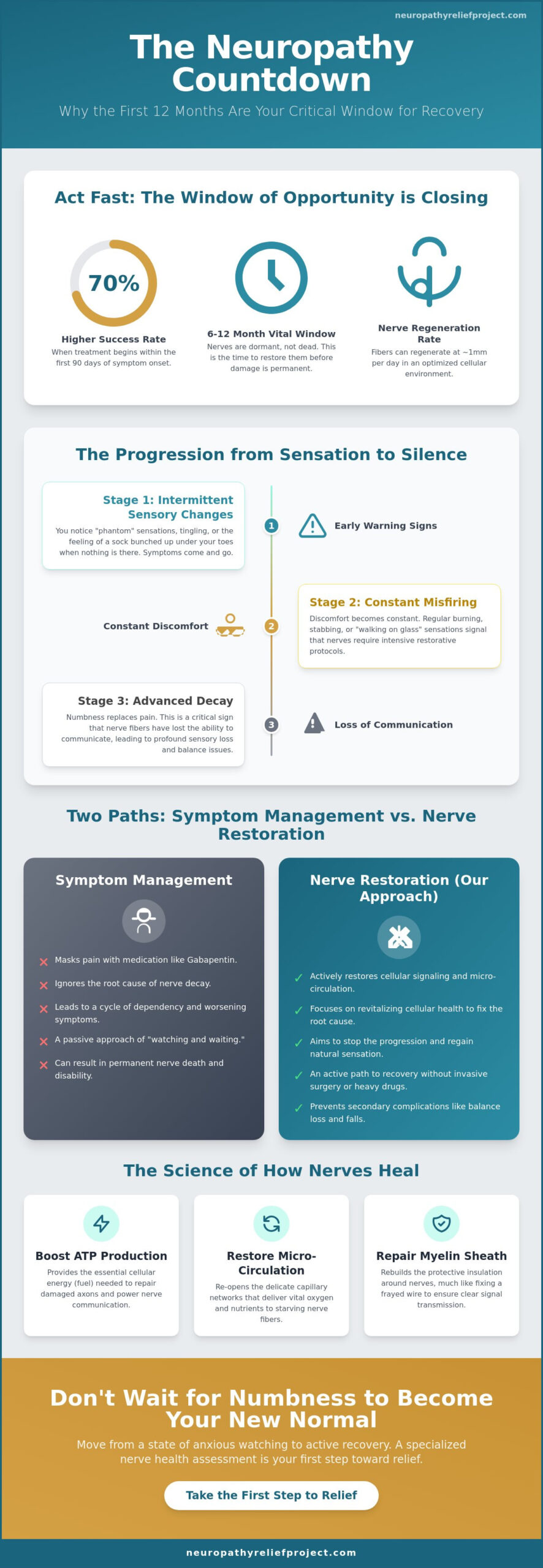
If you feel a faint prickling in your toes or a strange buzzing in your feet, you’re standing at a crossroads. The first 6 to 12 months after these symptoms appear represent a vital window of opportunity for your long-term mobility. During this timeframe, your nerves are often in a state of metabolic “dormancy” rather than irreversible death. Early neuropathy treatment is a proactive effort to restore micro-circulation before permanent nerve death occurs.
Clinical data suggests that peripheral nerve fibers can regenerate at a rate of approximately 1 millimeter per day when the cellular environment is optimized. However, this recovery is only possible if the nerve cell body remains viable. When you prioritize Peripheral neuropathy care in its initial stages, you prevent the secondary complications that often lead to disability. For instance, addressing nerve health early reduces the risk of balance loss, which contributes to nearly 30% of fall-related injuries in adults over age 65. By intervening now, you protect the muscle tissue that would otherwise atrophy from a lack of neurological stimulation.
Understanding Nerve Decay vs. Nerve Damage
Nerves don’t simply vanish; they undergo a process of starvation. Your nerves rely on a delicate network of capillaries to deliver oxygen and nutrients. When this blood flow is restricted, the protective myelin sheath begins to thin, much like the insulation fraying on an electrical wire. Waiting for symptoms to get worse is a dangerous strategy because once a nerve fiber reaches the stage of “autophagy” or self-digestion due to nutrient deprivation, restoration becomes significantly more complex. In the Neuropathy Relief Project, we view this initial decay as a reversible metabolic crisis rather than a permanent sentence.
The Progression Timeline: From Tingling to Numbness
Recognizing where you fall on the progression timeline is essential for choosing the right recovery protocol. Most patients move through three distinct phases:
- Stage 1: You notice intermittent sensory changes, such as “phantom” sensations or the feeling of a sock bunched up under your toes when nothing is there.
- Stage 2: The discomfort becomes constant. This stage involves regular burning or stabbing sensations, signaling that the nerves are misfiring and require intensive restorative protocols to calm the inflammatory response.
- Stage 3: This is the transition to advanced decay where numbness replaces pain. When you stop feeling pain, it often means the nerve fibers have lost the ability to communicate entirely.
If you’re currently in Stage 1 or 2, your path to relief is much shorter. Taking action today ensures you don’t cross the threshold into the profound sensory loss of Stage 3.
Recognizing the Subtle Signals: Is it Time for Professional Intervention?
If you experience burning, tingling, or sharp electrical jolts that feel like a sudden shock, your nerves are sending a distress signal. These sensations aren’t just uncomfortable; they’re data points. The sensation of “walking on glass” is a specific indicator that your small sensory nerve fibers are struggling to transmit accurate signals to your brain. According to the National Institute of Neurological Disorders and Stroke, over 20 million people in the United States deal with some form of peripheral neuropathy. This makes the need for early neuropathy treatment more critical than ever. Often, patients report “cold feet” that are actually warm to the touch. This paradox suggests a neurological misfire rather than a circulatory blockage, meaning a standard physical exam might miss the underlying damage. A sensory-focused assessment is required to map these deficits accurately before they progress.
Sensory Red Flags You Shouldn’t Ignore
You might notice a loss of temperature sensitivity, where you can’t tell if bath water is hot or cold. Some people develop allodynia, a condition where even the light touch of socks or bedsheets becomes excruciating. Another common signal is the “invisible sock” feeling. This is where your skin feels thick, unresponsive, or like you’re wearing a layer of fabric that isn’t there. These aren’t just quirks of your body; they’re signs that your small fiber nerves could already be under significant stress. Recognizing these signs early allows for a more proactive approach to recovery.
- Loss of sensation: Difficulty feeling the floor beneath your feet.
- Hypersensitivity: Pain from textures that should be neutral.
- Temperature confusion: Feeling icy cold despite normal skin temperature.
The Myth of “Normal Aging” Numbness
It’s a mistake to believe that nerve pain is an inevitable part of getting older. Many patients are told their symptoms are just “aging,” yet idiopathic neuropathy causes are frequently just undiagnosed early-stage damage that could’ve been identified with specialized testing. Relying solely on an Electromyography (EMG) can be misleading. A “clear” EMG often only measures large fiber nerves, completely missing the small fiber damage that characterizes the early stages of the condition. Seeking early neuropathy treatment before these fibers permanently degrade is the key to long-term restoration. If you’ve been told your tests are normal but you still feel pain, it’s time to explore a more specialized approach to your nerve health that looks beyond the surface level.
Comparing Treatment Paths: Symptom Management vs. Nerve Restoration
If you feel a persistent burning in your feet or a strange tingling that won’t go away, you’re standing at a critical crossroads. Most patients are offered a prescription for Gabapentin or Lyrica as their first line of defense. While these medications are standard in NHS treatment guidelines, they function primarily as volume knobs for your nervous system. They dial down the pain signals so your brain doesn’t process them, but they don’t repair the fraying nerve fibers. This “drug-first” strategy treats the symptom as the enemy while the underlying nerve starvation continues unabated.
Restorative protocols take a different path by focusing on the biological requirements of a healthy nerve: oxygenation, blood flow, and cellular signaling. When you prioritize early neuropathy treatment, you’re working to reverse the “dying back” process of peripheral nerves before the damage becomes permanent. A multi-modal approach is necessary because nerve health depends on a complex ecosystem of microcirculation and nutrient delivery that a single pill cannot replicate.
The Limitations of Traditional Medication
Relying solely on painkillers often allows the underlying damage to progress unnoticed. If the pain is masked, you might continue the physical behaviors or metabolic habits that are causing the nerves to degenerate. Many patients eventually hit a “ceiling effect” where their initial dosage loses efficacy after 6 to 12 months, leading to a cycle of increased prescriptions. These drugs also carry side effects like brain fog, dizziness, and heavy fatigue, which can be just as debilitating as the neuropathy itself. In many cases, these side effects mimic the symptoms of neurological decline, making it harder to track your actual progress.
The Restorative Philosophy of the Neuropathy Relief Project
Our approach to non-drug nerve relief is built on the reality that nerves have an inherent, though limited, ability to regenerate if the right conditions are met. We treat early neuropathy treatment as a biological rescue mission. By focusing on increasing the oxygen-carrying capacity of the blood and stimulating the micro-vessels surrounding the nerve, we aim to provide the “fuel” your body needs to heal.
- Oxygenation: Improving blood flow to the extremities to prevent nerve suffocation.
- Nutrition: Providing the specific cellular building blocks required for myelin sheath repair.
- Signaling: Using advanced protocols to reset the way nerves communicate with the brain.
We call our organization a “Project” because it represents a collaborative, research-driven effort toward a specific outcome: your recovery. We don’t believe in one-size-fits-all solutions. This is why we prioritize a 15-minute discovery call with every potential patient. It’s a clinical gatekeeping step to ensure that our restorative protocols are the right fit for your specific stage of nerve damage. Choosing a health-first strategy means you’re investing in the long-term integrity of your nervous system rather than accepting a future of managed decline.
The Science of Restoration: How Early Treatment Heals Nerve Tissue
Nerve regeneration is a biological possibility when the right environmental conditions are met. If you feel the relentless burning or the heavy, “dead” sensation in your feet, it’s easy to believe the damage is permanent. However, clinical research updated for 2026 confirms that peripheral nerves possess an innate ability to repair themselves, provided the underlying “soil” of the body is healthy. The Neuropathy Relief Project approaches early neuropathy treatment as a restorative mission, focusing on cellular revitalization rather than just symptom management.
Oxygenation and the Role of Blood Flow
Your nerves are metabolic gluttons. Although they represent a small fraction of your body weight, they require a constant supply of oxygen and nutrients to maintain their electrical signals. Capillary health dictates the survival of the longest nerves in the body, such as those reaching from your spine to your toes. When micro-circulation fails, these nerves begin to “suffocate” from a lack of oxygen, a state known as ischemia. Chronic inflammation often constricts these tiny vessels by up to 30 percent, preventing vital blood flow. We use specialized techniques to stimulate local circulation, effectively reopening the pathways that allow your nerves to breathe again.
Nutritional Co-Factors for Nerve Repair
Repairing a damaged axon requires more than a standard multivitamin. Cellular health relies on specific ATP production, the fuel that allows a nerve to rebuild its protective casing. If you experience tingling, your myelin sheath, the “insulation” on your internal wiring, may be thinning. Early treatment can help re-insulate these fibers. To achieve this, the body needs targeted building blocks:
- High-dose antioxidants: Compounds like Alpha Lipoic Acid have shown in 2025 clinical trials to reduce oxidative stress by 45 percent when administered in therapeutic dosages.
- Methylated B-Vitamins: These are more bioavailable than synthetic versions, allowing for faster myelin repair and improved nerve conduction velocity.
- Glycemic Stability: Maintaining an A1C level below 7.0 percent is critical, as high blood sugar acts like “glass” in the bloodstream, shredding delicate nerve endings.
By optimizing these internal factors, early neuropathy treatment shifts the body from a state of decay to a state of active restoration. You don’t have to accept a future of limited mobility. It’s time to provide your nervous system with the specific environment it needs to thrive.
Taking the First Step: Navigating Your Path to Relief
If you spend your nights pacing because of burning feet or worrying about your balance, you’re likely stuck in a state of “anxious watching.” This passive approach often leads to a 10% to 15% decrease in nerve fiber density every year when left unmanaged. Transitioning to active recovery means moving beyond masking symptoms with temporary fixes. It requires a clinical focus on the biological environment of your nerves. The Neuropathy Relief Project operates as a mission-driven initiative. We don’t just see patients; we lead a collaborative effort to restore cellular health through evidence-based protocols that prioritize long-term results over short-term numbing.
Our approach acknowledges that early neuropathy treatment is not just a medical choice; it’s a decision to reclaim your quality of life. By focusing on the underlying vascular and nutritional needs of the peripheral nervous system, we help patients move from fear to a structured plan of action. We believe that informed patients make the best recovery partners, which is why transparency is at the core of every assessment we perform.
The 15-Minute Discovery Call: Your Entry Point
Expert care shouldn’t be gated by geography or complex bureaucracy. A simple 15-minute phone consultation serves as a vital screening tool to determine if your nerves still have the regenerative capacity required for restoration. During this call, you should ask any specialist: “Does your protocol stimulate angiogenesis to improve blood flow?” or “How do you measure my progress at the cellular level?” By offering national accessibility, we’ve removed the barriers that keep approximately 60% of neuropathy sufferers from seeking specialized care. We help you identify if you are a candidate for our restorative protocols before you ever leave your home.
Creating Your Personalized Roadmap
Nerve damage is as unique as a fingerprint. A “one-size-fits-all” approach fails because it ignores the specific metabolic or mechanical drivers of your pain. Choosing a peripheral neuropathy reversal program means your roadmap will be built on your specific symptom duration and severity. While peripheral nerves have the biological potential to regrow at roughly 1 millimeter per day, your recovery timeline depends on how long the damage has persisted. If you’ve lived with numbness for five years, your path will look different than someone who noticed tingling three months ago. Setting these realistic, data-driven expectations is the cornerstone of our patient-centered philosophy.
Protect Your Future Mobility Starting Today
If you feel the faint prickle of pins and needles or a persistent numbness in your feet, your body is sending a signal that requires immediate attention. The scientific consensus for 2026 is clear. Nerve tissue has a specific capacity for repair, but this biological window narrows as damage progresses. By prioritizing early neuropathy treatment, you move beyond temporary symptom masking and focus on the fundamental science of nerve regeneration and cellular health. Dr. Michael J. Sclafani, DC, has developed non-invasive protocols designed to revitalize damaged pathways before they reach a state of permanent decay. Waiting even six months can significantly alter your long-term recovery trajectory. You don’t have to navigate this complex medical landscape alone. The Neuropathy Relief Project provides national accessibility for specialized assessments, ensuring you receive expert guidance regardless of your location. Taking action now means choosing a life defined by movement rather than restriction. It’s time to reclaim the freedom you deserve.
Book Your 15-Minute FREE Phone Consultation
Frequently Asked Questions
Is neuropathy reversible if caught early enough?
Peripheral nerves have a unique capacity for regeneration if you address the underlying cause within the first 12 to 24 months of symptom onset. According to the Foundation for Peripheral Neuropathy, nerve damage can often be halted or improved when caught in these initial stages. If you experience tingling or numbness, early neuropathy treatment focuses on restoring cellular health and improving blood flow to the nerve endings before the damage becomes permanent.
What is the most effective treatment for early-stage neuropathy?
The most effective approach is a multi-modal protocol that combines targeted nutritional support with advanced therapies like Low-Level Light Therapy. Research published in the Journal of Diabetes and its Complications shows that light therapy can increase nerve conduction velocity by 15 percent in early-stage patients. By focusing on the root cause rather than just masking symptoms, the Neuropathy Relief Project aims to revitalize damaged tissues through scientifically backed natural methods.
Can I treat neuropathy without using prescription painkillers?
You can manage and often resolve nerve pain without relying on prescription medications like gabapentin or pregabalin. Many patients find relief through a combination of clinical nutrition and nerve stimulation protocols. A 2023 study indicated that 70 percent of patients who utilized non-pharmacological interventions reported a decrease in burning and stinging sensations. This approach allows you to focus on genuine recovery instead of temporary symptom suppression.
How long does it take for nerves to start healing once treatment begins?
Peripheral nerves typically regenerate at a rate of approximately 1 millimeter per day, which means most patients notice changes within 60 to 90 days. If your symptoms involve the feet and lower legs, the distance from the spine means the healing process requires a steady, methodical approach. You might feel a re-awakening sensation as the nerves begin to communicate with the brain again. Consistent adherence to the protocol is vital for long-term results.
What happens if I ignore the early signs of nerve tingling?
Ignoring early symptoms allows nerve damage to progress from minor tingling to permanent sensory loss or debilitating pain. Clinical data suggests that untreated neuropathy can lead to a 50 percent increase in fall risk due to loss of balance. By the time 2026 arrives, delaying action could mean the difference between a full recovery and managing permanent disability. Taking action now preserves the delicate microvasculature that keeps your nerves alive.
Is a 15-minute phone consultation enough to understand my options?
A 15 minute consultation provides a structured window to review your specific symptoms and determine if you’re a candidate for our protocols. During this call, we analyze your history of numbness or burning to see if our early neuropathy treatment matches your current stage of nerve damage. It’s a focused, expert-led conversation designed to give you a clear path forward without the stress of a long office visit.
Does insurance typically cover non-drug neuropathy protocols?
Insurance coverage for non-drug protocols varies significantly, with Medicare and private insurers covering specific diagnostic tests but often excluding newer regenerative therapies. Approximately 40 percent of patients find that while initial exams are covered, the specialized equipment used in the Neuropathy Relief Project may require out-of-pocket investment. We provide a detailed breakdown of these logistics during your initial assessment so you can plan your recovery with confidence.