

Imagine the frustration of reaching for a button on your favorite shirt, only to find your fingers feel like they belong to someone else. For many, the victory of surviving cancer is clouded by the persistent, stinging reality of chemotherapy induced peripheral neuropathy. Statistics show that roughly 56% of cancer patients face this challenge, and for half of those treated for conditions like lymphoma, the numbness persists for years after treatment ends. You aren’t imagining the “brain fog” or the heavy sensation of walking on invisible shards of glass. These are clear physical signals of a nervous system in distress.
It’s exhausting to feel like your body is failing you just as you’re supposed to be celebrating your recovery. You deserve a solution that goes beyond masking symptoms with more medication. This guide explains the biological mechanism of nerve starvation and offers a restorative, drug-free path to reclaiming your mobility. We’ll explore the 2026 landscape of nerve health and provide a structured plan to help you restore normal sensation and balance. If you’re ready to move toward liberation from these symptoms, our collaborative initiative is here to guide you through the science of restoration.
Key Takeaways
- Learn how specific oncology agents like Taxanes and Platinum-based drugs disrupt nerve axons, creating the “sock-and-glove” distribution of numbness and tingling.
- Understand why traditional medications often fail to provide lasting relief because they only mask symptoms rather than addressing underlying structural damage.
- Discover a restorative path for chemotherapy induced peripheral neuropathy that focuses on re-establishing micro-circulation and cellular nutrition to support nerve health.
- Explore the three essential pillars of recovery that help you move past a “new normal” of chronic pain toward improved balance and mobility.
- Find out how to assess your nerve viability through a professional review, helping you determine the most effective next steps for your unique healing journey.
Understanding Chemotherapy-Induced Peripheral Neuropathy (CIPN)
Surviving a cancer diagnosis is a monumental achievement, yet for many, the victory is bittersweet. If you’ve completed your oncology treatments only to find that your hands and feet are persistently numb, you’re likely experiencing chemotherapy induced peripheral neuropathy. This condition, technically known as Chemotherapy-induced peripheral neuropathy, occurs when neurotoxic oncology agents damage the delicate fibers of the peripheral nervous system. It’s a specific form of nerve injury that can feel like a betrayal by the very medicine that saved your life.
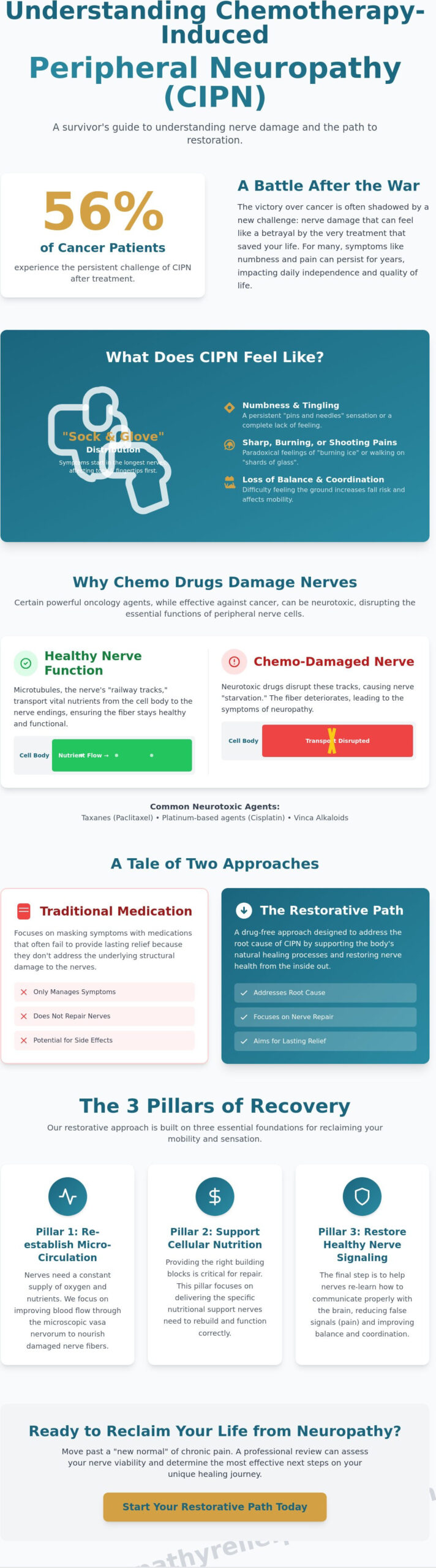
Symptoms typically follow a “sock-and-glove” distribution pattern. Because the longest nerve fibers in your body are the most vulnerable to toxicity, you often notice the first signs of distress in your toes and fingertips. As the damage progresses, these sensations migrate toward your ankles and wrists. Understanding the nuances of your symptoms is essential, as there’s a clear distinction between sensory neuropathy, which involves altered feelings like tingling, and motor neuropathy, which manifests as physical weakness or a lack of coordination.
The Sensory Experience: More Than Just Numbness
Living with CIPN is rarely just about a lack of feeling. Many patients describe the sensation as “walking on glass” or a paradoxical “burning ice” that makes even the softest bedsheets feel abrasive. This is known as paresthesia, a persistent state of signal interference where the nerves send frantic, incorrect messages to the brain. We recognize that this invisible pain is deeply frustrating. Others cannot see the stinging in your feet or the electric shocks in your palms, but that doesn’t make the experience any less real or exhausting. It’s a heavy emotional burden to carry while you’re trying to move forward into your post-treatment life.
How CIPN Affects Your Daily Independence
The transition from clinical patient to healthy survivor is often interrupted by the practical dangers of nerve damage. When you can’t feel the floor beneath your feet, your brain loses its primary source of balance information, which significantly increases the risk of falls in your own home. Hand neuropathy is equally disruptive, turning simple tasks like buttoning a shirt, handwriting, or engaging in long-loved hobbies into sources of deep frustration. For those looking for a comprehensive look at living with peripheral neuropathy, recognizing these daily impacts is the first step toward a restorative path. Our collaborative initiative focuses on identifying these functional losses to build a clear plan for reclaiming your independence.
Why Certain Chemotherapy Drugs Trigger Nerve Damage
While chemotherapy is designed to target rapidly dividing cancer cells, it often inadvertently strikes the peripheral nervous system. Understanding why this happens requires a look at the specific biology of your nerves. Certain classes of drugs, such as Taxanes (Paclitaxel), Platinum-based agents (Cisplatin), and Vinca Alkaloids, are known for their neurotoxic properties. These medications are a leading cause of Peripheral Neuropathy Caused by Chemotherapy because they disrupt the delicate internal structures of nerve cells.
The primary target is often the microtubule system within the nerve axon. Think of microtubules as the cellular “railway tracks” that transport nutrients and waste between the nerve cell body and the distant extremities of your hands and feet. When chemotherapy interferes with these tracks, the nerve can no longer maintain itself, leading to the “starvation” of the fiber. This damage explains why you might experience a “coasting effect,” where symptoms of chemotherapy induced peripheral neuropathy actually worsen for weeks or even months after your final infusion. The cellular damage has already been set in motion, and the nerve continues to deteriorate even after the drug is gone from your bloodstream.
The Role of Micro-Circulation in Nerve Health
Nerves are living tissue that require a constant supply of oxygen and nutrients to function. This supply is delivered through the vasa nervorum, a network of microscopic blood vessels that wrap around each nerve fiber. Chemotherapy agents can cause these tiny vessels to constrict or become damaged, effectively cutting off the nerve’s lifeline. When this micro-circulation is compromised, the nerve enters a state of metabolic crisis. Micro-circulation is the lifeline for peripheral nerve regeneration. Without restoring this flow, the nerve remains in a dormant, painful state. If you’re feeling overwhelmed by these sensations, it may be helpful to schedule a 15 minute FREE phone consultation to discuss your specific symptoms.
Taxanes vs. Platinum Drugs: Different Paths to Damage
Not all chemotherapy drugs damage nerves in the same way. Taxanes primarily focus on disrupting the cellular transport mentioned earlier, which often leads to immediate sensory changes. In contrast, Platinum-based drugs tend to accumulate in the dorsal root ganglia, the “relay stations” of the sensory nervous system. This accumulation can cause long-term, persistent damage that takes much longer to resolve. For a deeper look at these and other triggers, you can explore our guide on the causes of peripheral neuropathy. Knowing which drug caused your symptoms helps us tailor a more effective restorative approach.
Beyond Masking Symptoms: Why Traditional Medications May Not Be Enough
“I’m tired of taking pills that just make me groggy.” If you’ve found yourself saying this, you’re part of a growing number of survivors who feel let down by the standard pharmaceutical approach. Most traditional treatments for chemotherapy induced peripheral neuropathy focus almost exclusively on symptom suppression. Medications like Gabapentin or Lyrica act like a volume knob on a loud radio. They might quiet the “noise” of burning or tingling, but they don’t fix the internal circuitry that’s causing the signal interference in the first place.
This pharmaceutical management often brings its own set of challenges. Side effects like persistent dizziness, lethargy, and a frustrating cognitive fog can make you feel like you’ve simply traded one problem for another. At our collaborative initiative, we advocate for a shift in perspective. Instead of simply masking the pain, we focus on the physiological requirements of nerve restoration. We believe that true healing happens when we stop trying to silence the body and start listening to what the nerves need to repair themselves.
The “Gap” in Standard Oncological Care
Oncologists are specialists in saving lives, and their focus remains rightfully fixed on the “cure.” However, this means that post-treatment quality of life issues can sometimes be overlooked. It’s a common, painful irony to be cleared of cancer only to find that Managing peripheral neuropathy has become your new full-time struggle. You might even be told that your clinical tests look “normal,” which only adds to the frustration when your lived experience tells a different story. If you’re seeking a way to move beyond these limitations, exploring non-drug nerve relief can offer a more sustainable path toward reclaiming your daily life.
Why Nerves Require a Targeted Restoration Protocol
Nerve fibers are remarkably resilient, but they aren’t self-healing in a vacuum. Just like a deep wound requires clean edges and proper blood flow to close, damaged nerves need a specific environment to regenerate. A systemic pill distributed throughout your entire body often fails to reach the micro-vascular level of a distal nerve in your foot. These nerves are often “starving” for oxygen and nutrients due to the toxic effects of treatment. To truly recover, you need a protocol that stimulates micro-circulation and provides the specific cellular nutrition required for axon repair. True relief is not the absence of a signal, but the restoration of a healthy one.
A Restorative Approach to CIPN Recovery
If you’ve been told to simply “wait and see” while your hands and feet continue to burn, you’ve been given an incomplete picture. Recovery from chemotherapy induced peripheral neuropathy requires more than patience; it requires a strategic, physiological intervention. Our collaborative initiative focuses on three essential pillars: restoring blood flow, improving signal clarity, and providing targeted cellular nutrition. By addressing these three areas simultaneously, we aim to wake up dormant nerves that have been starved of oxygen and nutrients during your oncology treatments.
This restorative approach addresses the root cause of chemotherapy induced peripheral neuropathy rather than just quieting the symptoms. Non-invasive protocols, such as specific wavelengths of light or modulated electrical stimulation, play a vital role in this process. These technologies don’t just mask pain; they encourage the nerve fibers to regain their functional capacity. This approach represents a significant shift from traditional systems that often leave survivors feeling dismissed or stuck with permanent deficits. It’s a methodical process that requires a dedicated partnership between you and a specialist who understands the unique demands of post-chemo nerve repair.
Rebuilding the Myelin Sheath
Think of your nerves as biological wires. Just like electrical cords, they require insulation to function properly. This insulation, known as the myelin sheath, is often damaged by neurotoxic drugs. When this coating thins or breaks down, your nerves “short-circuit,” resulting in the familiar sensations of burning, stinging, or electric shocks. Restoring this insulation is a primary goal of our protocol, as detailed in our guide on understanding nerve damage recovery. When the insulation is repaired, the erratic signals often subside, replaced by normal, healthy sensation.
The Importance of Early Intervention
There’s a common misconception that you must wait years to see if your nerves will heal on their own. In reality, proactive stimulation is crucial to prevent permanent axonal degeneration. The longer a nerve remains in a state of metabolic crisis, the harder it becomes to revive. By introducing specialized nutrition and micro-circulation support early, you meet the intense metabolic demands of regenerating tissue. If you are ready to see if your nerves are still viable for this restorative path, we invite you to schedule a 15 minute FREE phone consultation today.
Reclaiming Your Quality of Life: Next Steps for Nerve Health
After the intensity of oncology treatments, it’s natural to want to put medical appointments behind you. However, you don’t have to accept the burning, tingling, or loss of balance as your permanent “new normal.” While chemotherapy induced peripheral neuropathy is a complex challenge, it isn’t necessarily a life sentence. The biological mechanisms we’ve discussed, from micro-circulation to myelin repair, offer a clear framework for improvement. Our mission at the Neuropathy Relief Project is to act as your dedicated advocate, bridging the gap between standard post-cancer care and true physiological restoration.
We view nerve health as a collaborative effort. You are the expert on your own physical sensations, and we provide the clinical authority and specialized protocols needed to address them. If you feel like your concerns have been dismissed by traditional systems, know that there is a path forward that doesn’t involve more heavy medication or invasive procedures. Taking the first step toward liberation from nerve pain starts with determining if your nerve fibers are still viable for restoration. You’ve already survived the hardest part; now it’s time to focus on the quality of your recovery.
What to Expect in a 15-Minute Nerve Review
If you’re unsure where to begin, a 15-minute discovery call is designed to provide clarity without the pressure of a formal hospital intake. This conversation is calm, professional, and entirely expert-led. During this time, we’ll evaluate your specific symptoms, the history of your treatment, and your goals for recovery. It’s a simple way to bypass the “lost in the system” feeling that often accompanies chronic health issues. We’ll help you understand the potential for your nerves to “wake up” and discuss how our non-invasive protocols might fit into your life. It’s a no-risk way to explore the science of chemotherapy induced peripheral neuropathy recovery.
Start Your Journey Toward Restoration
Your path to reclaiming sensation and mobility is a methodical journey. We’re committed to drug-free, evidence-based protocols that respect your body’s natural healing capacity. You’ve already done the hard work of surviving; now it’s time to focus on thriving. Whether you want to button your shirt with ease or walk across the room without fear of falling, that future is worth pursuing. Don’t let another day pass in frustration when a structured plan for nerve health is within reach. We’re here to guide you toward a life defined by movement and comfort rather than pain.
Schedule your 15-minute FREE phone Consultation with the Neuropathy Relief Project today.
Your Path to Restored Sensation
Living with the stinging and numbness of chemotherapy induced peripheral neuropathy can feel like an endless cycle of frustration. However, the science of 2026 shows that your nerves don’t have to remain in a state of metabolic crisis. By shifting the focus from masking signals with medication to actively restoring micro-circulation and cellular nutrition, you can begin the journey toward reclaiming your balance and fine motor skills. You’ve already overcome the challenge of a cancer diagnosis; you shouldn’t have to settle for a lifetime of chronic nerve pain as your “new normal.”
Our collaborative initiative, led by Dr. Michael J. Sclafani, specializes in non-invasive nerve protocols designed to support biological restoration. We offer a drug-free, science-backed approach with a national reach to ensure you aren’t left lost in a complex medical system. If you’re ready to explore a clear path toward improvement, take a small, no-risk step today. Book Your 15-Minute FREE Nerve Pain Consultation Now and discover if your nerves are viable for recovery. We’re here to help you move toward a future of liberation and hope.
Frequently Asked Questions
Can chemotherapy-induced peripheral neuropathy be reversed years after treatment?
Yes, it’s possible to see significant restoration even years after your final oncology treatment. Nerve fibers retain a remarkable capacity for regeneration as long as the nerve cell body remains viable. The challenge is often that the nerves have entered a dormant state due to lack of blood flow and oxygen. By re-establishing micro-circulation and providing targeted cellular nutrition, we can often “wake up” these fibers to restore sensation and mobility.
How long does it typically take for chemo-induced neuropathy to go away on its own?
While some patients see a natural reduction in symptoms within three to six months, many do not experience spontaneous recovery. Research indicates that 50% of lymphoma patients still report persistent numbness and tingling more than two years after completing treatment. If your symptoms haven’t improved significantly within the first few months, it’s unlikely they’ll resolve without a proactive, restorative intervention to address the underlying axonal damage.
Is it safe to use non-drug protocols if I am still undergoing chemotherapy?
Non-drug protocols are generally safe and can be quite beneficial during active treatment, but coordination with your oncology team is essential. Our collaborative initiative focuses on supporting the vasa nervorum and protecting nerve insulation without interfering with the effectiveness of your chemotherapy. Early support can sometimes mitigate the “coasting effect,” where chemotherapy induced peripheral neuropathy symptoms continue to worsen after your final infusion has been completed.
What are the first signs that my nerves are beginning to recover?
Recovery often begins with a change in the quality of your sensations. You might notice that complete numbness is replaced by a temporary increase in tingling or “waking up” feelings. Other early indicators include an improved ability to feel the texture of the floor or a slight increase in your temperature sensitivity. These shifts suggest that the nerve signals are starting to reach the brain more clearly, signaling that the restoration process is underway.
Why does my oncologist say there is nothing more that can be done for my neuropathy?
Oncologists are dedicated specialists focused on the critical mission of cancer eradication. Their training and tools are primarily centered on life-saving treatments rather than long-term nerve repair. Because there are currently no FDA-approved medications designed to reverse nerve damage, many doctors rely on symptom maskers like Gabapentin. Restoration is a specialized niche that requires a different set of protocols focused on micro-vascular health and cellular regeneration rather than pharmaceutical suppression.
Can vitamin supplements help with chemotherapy-induced nerve damage?
Specific nutrients play a vital role in supporting the metabolic demands of regenerating nerves. Supplements such as Alpha-lipoic acid, Acetyl-L-carnitine, and certain B-vitamins are often used to support mitochondrial function and myelin health. However, supplements alone are rarely enough to overcome the structural damage of chemotherapy induced peripheral neuropathy. They work best when integrated into a comprehensive protocol that also addresses blood flow and signal clarity to ensure nutrients actually reach the damaged tissue.
How do I know if my neuropathy is permanent or just temporary?
It’s difficult to determine the permanency of nerve damage without a professional evaluation of your nerve viability. If you’ve reached a plateau where your symptoms haven’t changed for several months, the condition is likely “stable” but not necessarily permanent. Most nerves that haven’t responded to time alone are simply stuck in a state of metabolic crisis. A structured review can help determine if those fibers are still capable of responding to restorative stimulation.
What is the difference between diabetic neuropathy and chemo-induced neuropathy?
The primary difference lies in the cause of the damage. Diabetic neuropathy is a metabolic condition where high blood sugar slowly damages the blood vessels that feed the nerves. In contrast, CIPN is caused by direct chemical toxicity to the nerve’s internal structure, specifically the microtubules and axons. While the sensations of burning and numbness may feel identical, the restorative approach for chemo-induced damage must specifically account for the unique toxic history of the nerve fibers.