

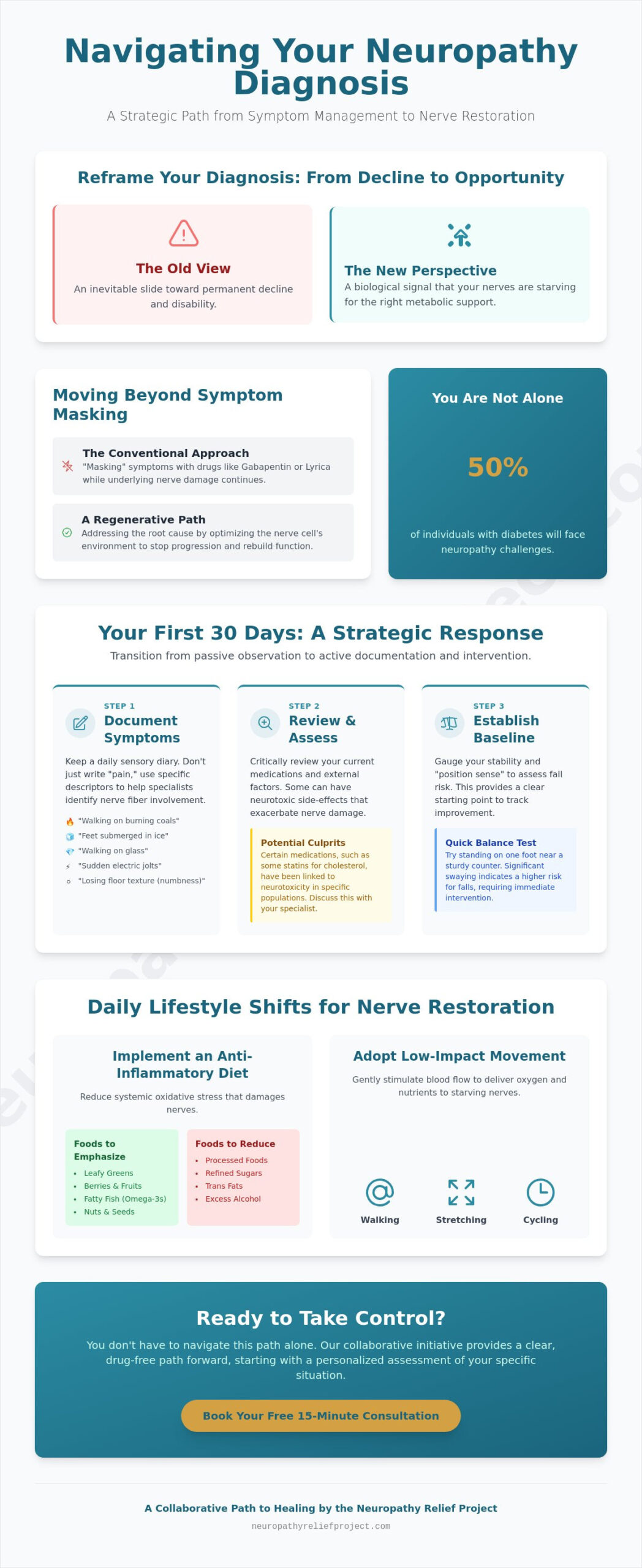
What if the burning, tingling, and numbness in your feet isn’t an inevitable slide toward disability, but a biological signal that your nerves are starving for the right support? Receiving a medical report can feel like a door closing on your independence, but coping with a neuropathy diagnosis in 2026 is no longer about simply accepting a permanent decline. You likely feel frustrated by “masking” your symptoms with medications like Gabapentin or Lyrica while the underlying damage continues. It is natural to feel anxious when you realize that approximately 50% of individuals with diabetes will face these same challenges, yet your experience remains deeply personal and deserves a specialized approach.
We understand that you want more than a temporary reprieve from the pain; you want to regain the freedom of movement. This guide will help you navigate the emotional and physical complexities of your condition while moving toward a path of genuine nerve restoration. You will discover how the latest shifts in regenerative medicine and nerve cell metabolism can help stop progression and rebuild function. By framing this process as a collaborative initiative toward healing, we will provide the clinical clarity and actionable steps you need to move from a state of fear to a position of hope.
Key Takeaways
- Reframe your diagnosis from a permanent decline to a biological signal that your nerves require targeted metabolic support for healing.
- Effectively coping with a neuropathy diagnosis begins with a sensory-focused symptom diary to identify specific triggers and track your progress toward restoration.
- Move beyond simply “masking” symptoms with medications by understanding the science behind nerve regeneration and cellular environment optimization.
- Implement daily lifestyle shifts, including an anti-inflammatory diet and low-impact movement, to stimulate blood flow and reduce systemic oxidative stress.
- Discover how a collaborative initiative provides a clear, drug-free path forward, starting with a free 15-minute phone consultation to assess your specific situation.
Processing the News: The Emotional Impact of a Neuropathy Diagnosis
Hearing the words “you have neuropathy” often brings a strange mix of dread and, surprisingly, a small sense of relief. For months or even years, you may have lived with an invisible torment. To the outside world, you look fine. Inside, your feet feel as though they’re submerged in ice water or being pricked by a thousand tiny needles. This discrepancy between how you feel and how you appear often leads to a deep sense of being misunderstood by friends, family, and even some medical professionals. Coping with a neuropathy diagnosis is not a single event; it’s a multi-stage process that begins with acknowledging this emotional weight and ends with a proactive commitment to education.
Your sensory experiences, the relentless burning, the sudden electric jolts, and the heavy numbness, are not just symptoms to be endured. They are legitimate medical signals from your nervous system. When you receive a formal diagnosis, you finally have a name for the “invisible” enemy. This name is a powerful tool because it allows you to stop guessing and start acting. It shifts you from a state of passive suffering into a position of informed control. By understanding the biology behind these signals, you can begin to bridge the gap between feeling dismissed and feeling empowered.
Moving Past the ‘Why Me?’ Phase
It’s common to feel a sense of grief for the physical freedom you once took for granted. You might miss the simple joy of a long walk or the ability to sleep without the weight of a bedsheet causing agony. Understanding that Peripheral neuropathy can stem from various sources helps remove the burden of self-blame. Whether the damage is caused by metabolic issues like diabetes, which affects roughly 50% of patients with the condition, or idiopathic triggers that remain a mystery, the cause matters less than your response. You aren’t a victim of your nerves; you are an advocate for their restoration. This shift in perspective is the first step toward long-term results.
Building Your Support Collaborative
You don’t have to navigate this path alone. True progress requires a support system that looks beyond pharmaceutical symptom masking. While many traditional systems focus on prescribing pills to dull the pain, a collaborative initiative focuses on the underlying biological health of the nerve cell. Communicating your needs to family is vital. Explain that your “good days” and “bad days” are tied to nerve fatigue, not a lack of effort. Organizations like the Neuropathy Relief Project act as a knowledgeable guide, offering a structured roadmap toward improvement. If you feel lost in the complexity of your diagnosis, a 15-minute free phone consultation can provide the initial assessment you need to start your journey toward liberation.
The First 30 Days: A Strategic Response to Your Diagnosis
The initial month following your medical report is a pivotal window for action. While the emotional weight discussed previously is significant, your physical response during these first few weeks sets the trajectory for your recovery. Coping with a neuropathy diagnosis requires a transition from passive observation to active documentation. You should begin by auditing your specific sensations in a daily diary. Instead of simply noting “pain,” use sensory descriptors to track whether you feel like you are walking on glass, stepping on burning coals, or losing the ability to feel the texture of the floor. This data is invaluable for clinical specialists to determine the specific type of nerve fiber involvement.
During this period, it’s essential to review your current medication list with a critical eye. According to the National Institute of Neurological Disorders and Stroke, various external factors can exacerbate nerve damage. Some common medications, such as certain statins used for cholesterol, have been linked to neurotoxic side effects in specific patient populations. Establishing a baseline for your balance is equally vital. Try standing on one foot near a sturdy counter to gauge your stability. If you notice significant swaying or a loss of “position sense,” you are at a higher risk for early falls, which makes immediate intervention a priority.
Evaluating Your Current Treatment Plan
Most traditional protocols focus on suppressing the central nervous system to dull pain signals. It’s crucial to distinguish between these masking agents and treatments that actually support the biological health of the nerve. When you meet with your provider, come prepared with specific questions regarding understanding nerve damage recovery and the metabolic needs of your cells. Watch for “red flag” symptoms like rapid muscle wasting or a sudden spread of numbness toward the knees, as these require an immediate shift in your clinical strategy. If you feel overwhelmed by these choices, a 15-minute free phone consultation can help you evaluate your eligibility for a restorative approach.
Home Environment Safety Audit
Safety is a form of medicine in the early stages of nerve damage. Because your brain may not be receiving accurate signals from your feet, you must rely more heavily on your environment. Start by removing all trip hazards, such as loose rugs or cluttered pathways, especially in the bedroom and bathroom. Proper lighting is non-negotiable; install motion-activated LEDs along floorboards to ensure you can see your path during the night. Your footwear should be protective but not restrictive. Choose shoes with a wide toe box that allow for natural circulation, as tight footwear can further starve damaged nerves of the oxygen-rich blood they need to survive.
Restoration vs. Management: Why ‘Permanent’ Damage is a Myth
If your doctor has told you that your nerves are dead and will never grow back, you’ve likely felt a profound sense of hopelessness. This perspective is a hallmark of the traditional “management” model, which view nerves as static wires that, once frayed, are lost forever. However, modern clinical evidence suggests a far more optimistic reality. Nerves are biological tissues with a natural capacity for repair, provided they have the right environment. When you’re coping with a neuropathy diagnosis, it’s vital to understand that what is often labeled as “dead” is actually “starving.”
The key to this shift from decline to restoration lies in micro-circulation. Your nerves rely on a vast network of tiny blood vessels, called the vasa nervorum, to deliver oxygen and essential nutrients. When these vessels become constricted or damaged, the nerve cells enter a state of dormancy to conserve energy. They don’t die immediately; they stop sending clear signals, which results in the numbness or tingling you feel. By focusing on restoring this blood flow, we can “wake up” these starving cells. While the Western Neuropathy Association provides excellent resources for the daily hurdles of this condition, the ultimate goal should be addressing the underlying vascular and metabolic health of the nerve itself.
The Science of Myelin Sheath Repair
Think of the myelin sheath as the protective insulation around an electrical cord. When this insulation wears thin, the signals “leak,” causing the chaotic sensations of burning or electric shocks. Restoration is possible when we prioritize the delivery of specific fatty acids and high-dose oxygenation to these sites. This isn’t about a quick fix; it’s about a methodical biological path to restoration that allows the body to rebuild its own defenses. When the insulation is restored, the signal clarity returns, and the phantom pains begin to subside.
Why Traditional Painkillers Often Fail
Drugs like Gabapentin or Lyrica are designed to dampen the central nervous system. They don’t fix the “leak” in the insulation; they just turn down the volume of the alarm. Over time, this reliance can lead to “brain fog” and a further loss of balance because the brain is being chemically suppressed. Choosing drug-free nerve pain management means you’re no longer just silencing the symptom. You’re addressing the cellular distress. This approach liberates you from the cycle of increasing dosages and helps you regain the cognitive clarity needed to stay active in your own recovery journey.
Lifestyle Adjustments for Daily Relief and Safety
Adjusting your daily habits is a practical extension of the restoration mindset. While previous sections focused on clinical understanding and immediate safety audits, coping with a neuropathy diagnosis also requires you to actively optimize your body’s internal environment. Think of your nerves as delicate plants in a garden. If the soil is toxic or the water is scarce, the plants will wither regardless of external support. By adopting a nerve-friendly lifestyle, you are essentially cleaning that soil and providing the metabolic fuel necessary for cellular repair and signal clarity.
Nutrition for Nerve Health
Your nerves are high-energy consumers that require specific micronutrients to maintain the myelin sheath and facilitate signal transmission. B-vitamins, particularly B12, B6, and B1, act as the primary fuel for nerve cell metabolism. Antioxidants are equally vital, as they neutralize the oxidative stress that “rusts” your nerve fibers from the inside out. Even if you aren’t diabetic, maintaining stable blood sugar is essential. Frequent glycemic spikes can damage the vasa nervorum, those tiny blood vessels we discussed earlier that feed your nerves. Proper hydration is another simple yet powerful tool. Dehydration can increase the concentration of inflammatory markers in your blood, which often intensifies the “burning” sensations in your feet or hands.
Safe Movement and Balance
Movement is a form of natural medicine because it stimulates the micro-circulation your nerves crave. However, you must choose routines that respect your current level of sensation. Low-impact activities like swimming or stationary cycling are excellent because they increase blood flow without placing excessive mechanical stress on sensitive extremities. Focus on exercises that improve ankle stability and proprioception, which is your brain’s ability to know where your feet are in space. If you struggle with diminished sensation, use visual cues to compensate. Watch your feet as you step or use a mirror to check your posture. For more detailed activity tips, you can explore our comprehensive guide on living with peripheral neuropathy.
Finally, do not overlook the restorative power of sleep and stress management. Your body performs the bulk of its nerve repair during deep sleep cycles. If you are constantly in a “fight or flight” state due to stress, your sympathetic nervous system can trigger nerve flares that mimic increased damage. Deep breathing exercises or progressive muscle relaxation can help calm these signals. If you’re finding it difficult to balance these lifestyle changes with your symptoms, we invite you to schedule a 15-minute free phone consultation to discuss a structured plan for your restoration journey.
The Collaborative Path: How the Neuropathy Relief Project Helps
Living with chronic nerve pain often makes you feel like a passenger in your own body, watching as your mobility and independence slowly drift away. Coping with a neuropathy diagnosis shouldn’t be a solitary burden or a series of disconnected appointments that only result in higher pill dosages. At the Neuropathy Relief Project, our mission is to provide a clear, drug-free path toward genuine nerve restoration. We operate as a collaborative initiative rather than a standard clinical facility, which means we work alongside you to address the root metabolic causes of your discomfort. Our focus is squarely on long-term results, aiming to help you regain the sensations and freedoms you thought were lost forever.
Traditional systems often dismiss the patient’s lived experience, focusing instead on what can be measured in a lab or suppressed with a prescription. We believe that your feedback, your sensory descriptions of “walking on glass” or persistent numbness, is the most valuable data we have. By framing our process as a partnership, we ensure that you are informed and empowered at every stage. This methodical approach is designed to build trust and reduce the anxiety that so often accompanies a new diagnosis, replacing fear with a structured, evidence-based plan for improvement.
What to Expect During Your Discovery Call
The journey toward restoration begins with a 15-minute free phone consultation. This isn’t a high-pressure sales pitch; it’s a calm, expert-led review of your specific symptoms and medical history. During this call, we listen to your history to determine if your nerve fibers are still in a state where they can be successfully supported. You will receive an honest evaluation of whether you are a viable candidate for our restoration protocols. If we believe our approach can help you, we’ll provide a transparent roadmap for your next steps. This no-pressure guidance ensures you have the information needed to make the best decision for your nerve health without feeling rushed or overwhelmed.
Taking the First Step Toward Liberation
Time is a critical factor when dealing with peripheral nerve damage. When coping with a neuropathy diagnosis, it is important to understand the biological phenomenon known as “dying back.” This occurs when the nerve endings furthest from the spine begin to wither because they are starved of nutrients and oxygen. If left unaddressed, this process can eventually lead to permanent tissue loss. However, acting while there is still viable nerve tissue provides the greatest opportunity for restoration. By joining the hundreds of individuals who have already found hope through our initiative, you are choosing a future defined by liberation rather than limitation. Your path to improvement is ready whenever you are prepared to take that first collaborative step toward healing.
Step into a Life of Restoration and Freedom
Successfully coping with a neuropathy diagnosis means recognizing that your symptoms are a call for biological support, not a permanent sentence of decline. You now understand that nerves possess a remarkable capacity for repair when provided with the right metabolic environment and restored blood flow. By choosing to move beyond masking agents, you’re taking the first step toward reclaiming the mobility and comfort you deserve. This journey isn’t just about managing pain; it’s about restoring the cellular health that allows you to live without limitation.
Led by Dr. Michael J. Sclafani, DC, our collaborative initiative specializes in non-invasive, drug-free protocols designed for lasting results. We provide a national reach with dedicated patient support, acting as your expert guide through the complexities of nerve health. If you’re ready to explore a path focused on healing rather than just “getting by,” please Schedule Your 15-Minute FREE Phone Consultation Today. Your journey toward restoration is a partnership, and we’re here to help you every step of the way. There’s a future waiting where you can walk with confidence again.
Frequently Asked Questions
Is it possible to live a normal life after a neuropathy diagnosis?
Yes, you can lead a full and active life by shifting your focus from “living with” symptoms to actively restoring nerve function. While the initial news is daunting, many patients find that early intervention allows them to maintain their independence. By addressing the root causes of nerve starvation, you can often stop the progression of damage. This allows you to regain the ability to enjoy daily walks or hobbies.
How do I explain my neuropathy symptoms to a doctor who isn’t listening?
Translate your internal sensations into clinical language by using vivid, sensory-focused terms. Instead of saying your feet hurt, describe the feeling as “stepping on hot coals” or “constant pins and needles.” Providing a written diary of these sensations helps your provider understand the severity of your condition. If your concerns are still ignored, consider a 15-minute free phone consultation with a specialist who prioritizes nerve health.
Can I drive if I have been diagnosed with peripheral neuropathy in my feet?
Your ability to drive safely depends on your current levels of sensation and motor control in your feet. If you can’t feel the difference between the brake and accelerator, or if your reaction time is slowed by numbness, driving poses a significant risk. You should undergo a professional assessment of your “position sense” to determine if vehicle modifications, such as hand controls, are necessary for your safety.
What is the difference between neuropathy management and neuropathy restoration?
Neuropathy management typically involves using pharmaceutical agents to mask pain signals, whereas restoration focuses on healing the nerve tissue itself. Restoration protocols prioritize improving micro-circulation and cellular metabolism to provide the “starving” nerves with oxygen and nutrients. Understanding this distinction is a vital part of coping with a neuropathy diagnosis, as it shifts the goal from temporary relief to long-term recovery.
Are there any specific vitamins I should take immediately after diagnosis?
B-vitamins, particularly B12, B6, and B1, are the most common supplements recommended to support nerve cell metabolism. These nutrients help maintain the protective myelin sheath and facilitate clear signal transmission. Antioxidants like Alpha-Lipoic Acid are also used to reduce the oxidative stress that damages nerve fibers. It’s essential to work with a specialist to ensure these supplements are part of a broader, evidence-based restoration plan.
How long does it typically take to see improvement in nerve sensation?
Improvement is a gradual process that typically follows a structured four to six week initial treatment plan. Because peripheral nerves require time to metabolize nutrients and rebuild tissue, you shouldn’t expect immediate changes. Significant restoration of sensation often takes several months of consistent adherence to your protocol. Patience is a key component of this journey, as your body works to repair the damage at its own biological pace.
Why does my neuropathy pain seem to get worse at night?
Nighttime flares occur because your brain has fewer sensory distractions, which heightens your awareness of nerve misfires. Changes in circulation and body temperature during sleep can also irritate damaged fibers, leading to increased burning or tingling. Coping with a neuropathy diagnosis involves managing these nocturnal symptoms through improved sleep hygiene and stress reduction. This helps calm the sympathetic nervous system and reduces the frequency of painful nighttime interruptions.
Does a diagnosis of ‘idiopathic’ neuropathy mean it can’t be treated?
An idiopathic diagnosis means the underlying cause is currently unknown, but it doesn’t mean your nerves are beyond help. The biological requirements for nerve health, such as oxygen, nutrients, and waste removal, remain the same regardless of the original trigger. By focusing on these universal metabolic needs, we can often stimulate restoration even when the primary cause of the damage remains a mystery.