
If you could trade the nightly fire in your feet for a full eight hours of restorative sleep, would you believe it’s possible without adding another prescription to your cabinet? It’s exhausting to feel dismissed by a healthcare system that often prioritizes masking symptoms over fixing the underlying cause. This article details a remarkable drug-free neuropathy success story that proves there is a path beyond the pharmacy counter. You’ve likely experienced the brain fog that comes with heavy nerve medications, or the fear that your balance will never return to what it once was. We understand that living with peripheral neuropathy feels like a constant battle against your own body.
You’ll discover how a science-backed approach to nerve restoration can help you reclaim your mobility and independence. We will walk you through the specific 90-day protocol that allowed a 64-year-old patient to reduce their medication dependence and return to walking two miles every morning without the agony of burning or numbness. By focusing on cellular health and circulation rather than temporary numbing, you can find a sustainable way to revitalize your quality of life. It’s time to stop managing the decline and start focusing on your recovery through the Neuropathy Relief Project.
Key Takeaways
- Learn why “permanent damage” is often a myth and how targeting the body’s innate capacity for restoration leads to measurable drug-free neuropathy success.
- Understand how optimizing microcirculation and cellular health provides the biological foundation necessary for the peripheral nervous system to heal itself.
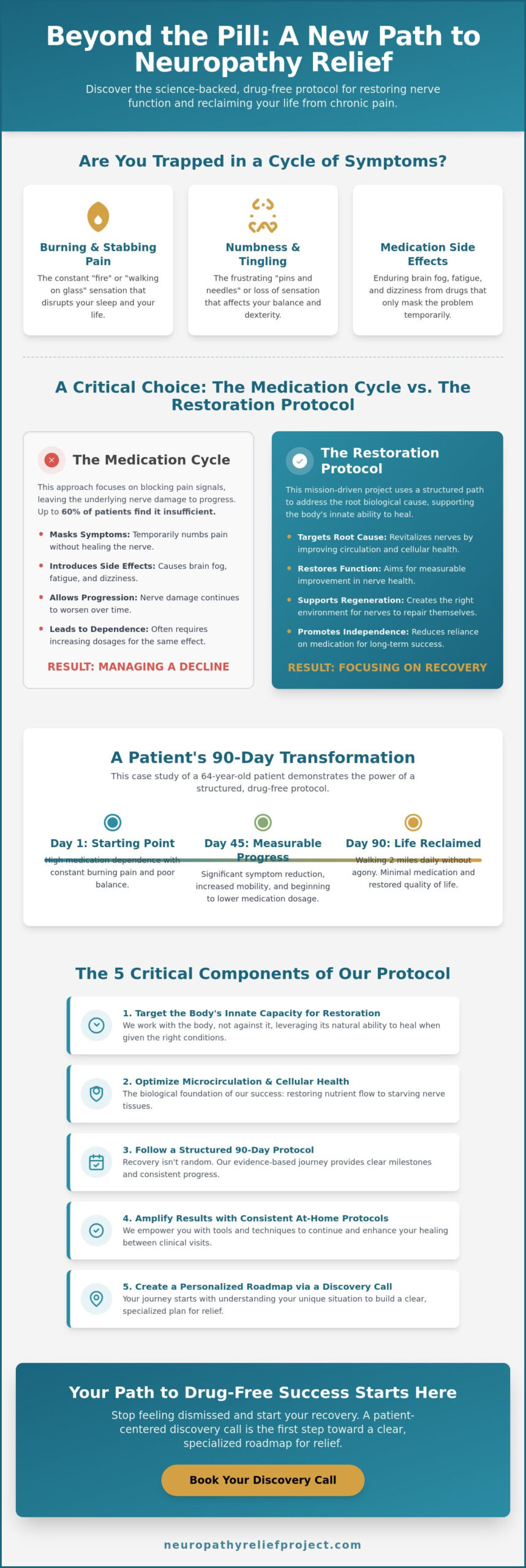
- Compare the traditional “Medication Cycle” against a science-backed “Restoration Protocol” to identify the key milestones of a 90-day recovery journey.
- Discover the five critical components of a successful nerve care plan and how consistent at-home protocols can amplify clinical results.
- Explore how a patient-centered discovery call can help you move past the frustration of chronic pain toward a clear, specialized roadmap for relief.
Understanding the Shift Toward Drug-Free Neuropathy Success
If you experience the relentless burning, tingling, or numbness that defines nerve damage, you’ve probably felt the frustration of being told there’s no cure. Achieving drug-free neuropathy success is about more than just surviving the day; it’s about the measurable restoration of nerve function without relying on pharmacological masking. For decades, patients were told that nerve damage is a permanent sentence. However, 2026 marks a pivotal turning point as new clinical research highlights the body’s innate capacity for nerve tissue restoration when given the correct physiological environment.
The sensory experience of neuropathy is often dismissed by standard protocols. Whether it’s the feeling of walking on glass or the loss of balance that prevents you from enjoying a simple walk, these symptoms are your body’s way of signaling a breakdown in cellular health. By focusing on recovery rather than suppression, we can address the root cause of these signals. This shift toward non-invasive protocols acknowledges that nerves can heal if the underlying metabolic and circulatory issues are corrected. We don’t just want to quiet the pain; we want to revitalize the nerve itself.
The Limitations of Traditional Nerve Pain Medications
Standard treatments often rely on a “more pills” approach that rarely solves the underlying problem. Medications such as anticonvulsants or antidepressants don’t repair the damaged myelin sheath or improve blood flow to the extremities. Instead, they work by blocking pain signals at the brain level. This approach leaves the progressive nerve damage untouched while introducing side effects like chronic fatigue, dizziness, or cognitive “fog.” Recent data indicates that up to 60% of patients find these pharmacological options insufficient for long-term relief. Understanding Peripheral Neuropathy and its complex mechanisms reveals why a single-pill solution is often a biological mismatch for a multi-faceted condition.
The Philosophy of the Neuropathy Relief Project
The Neuropathy Relief Project operates on a mission-driven identity that views healing as a collaborative, research-backed effort. Unlike the traditional “wait and see” clinical model, which often leaves patients feeling invisible, our “Project” approach utilizes a structured path toward drug-free neuropathy success. We bridge the gap between holistic care and clinical evidence by focusing on the specific biological processes required for nerve regeneration. This methodology treats you as a partner in your recovery, providing a clear, evidence-based alternative to the cycle of temporary fixes. We prioritize long-term results by revitalizing the nerves through specialized protocols designed for 2026 and beyond. Our goal is to provide a sense of hope and a clear path toward recovery for those who have felt dismissed by the healthcare system.
The Biological Foundation of Non-Pharmacological Nerve Restoration
True recovery begins when we stop viewing nerves as static wires and start treating them as living, biological tissues that require specific conditions to thrive. If you experience the sharp stabs or persistent numbness of peripheral damage, your body is signaling that the cellular environment has become toxic. Achieving drug-free neuropathy success requires a shift from suppressing these signals to revitalizing the microscopic structures responsible for nerve health. This process centers on microcirculation, the delivery of oxygen and nutrients through the vasa nervorum, which are the tiny blood vessels that feed your nerves. When these vessels constrict or degrade, nerves starve, leading to the symptoms that dominate your daily life.
Clinical research, including data shared by the NINDS on Neuropathy Treatments, suggests that peripheral nerves possess a remarkable, innate ability to regenerate when the underlying biological barriers are removed. By utilizing non-invasive stimulation, we can re-educate the nervous system. This involves sending specific frequencies to the nerve endings to help reset the “noise” of chronic pain and encourage the brain to recognize healthy signals again. This isn’t about masking the pain; it’s about restoring the functional integrity of the nerve fiber itself.
Targeting Inflammation: The Root of Neuropathic Burning
Chronic inflammation acts as a physical wall, preventing essential repair proteins from reaching damaged nerve endings. If you feel a constant heat or “fizzing” sensation in your feet, it’s often a sign that inflammatory cytokines are hyper-sensitizing your pain receptors. This persistent internal swelling creates a cycle of decay that is deeply linked to inflammation and nerve pain. Within this environment, oxidative stress becomes the primary driver of decline. Oxidative stress is the biological process where unstable molecules called free radicals outnumber antioxidants, leading to cellular damage that prevents your nerves from transmitting signals correctly. By neutralizing this stress, we allow the body’s natural healing mechanisms to resume their work.
Nerve Tissue Restoration Science
The path to drug-free neuropathy success involves two critical structural repairs: myelin sheath restoration and axonal regeneration. The myelin sheath is the protective insulation around your nerves. When it thins, signals “leak,” causing the tingling or electric shocks you may feel. Non-drug protocols focus on stimulating mitochondrial activity, which are the power plants within your cells. When mitochondria produce more adenosine triphosphate (ATP), the cell has the energy required to rebuild that protective insulation and repair the axon, the long tail of the nerve cell.
If you’re investigating a peripheral neuropathy reversal program, it’s vital to ensure the protocol addresses these mitochondrial needs. Research indicates that peripheral nerves can grow at a rate of approximately one millimeter per day when the cellular environment is optimized. This methodical rebuilding is what allows patients to regain balance and feel the floor beneath their feet again. To learn more about how these biological principles apply to your specific symptoms, you can explore our recovery protocols and see if a restorative approach is right for you.
Clinical Success Patterns: A Comparative Case Analysis
Achieving drug-free neuropathy success requires moving beyond the standard “Medication Cycle” that dominates traditional care. In the Medication Cycle, patients often receive prescriptions like gabapentin or pregabalin. These drugs are designed to mute the brain’s perception of pain, yet they do nothing to repair the underlying nerve damage. Over time, the dosage often increases while the nerves continue to wither from a lack of blood flow and oxygen. This creates a cycle of dependency and progressive numbness.
The Restoration Protocol used by the Neuropathy Relief Project breaks this cycle by focusing on cellular health and microcirculation. We track clinical progress through a structured 90-day window. Our data indicates that by day 30, most patients experience a stabilization of “flare-ups,” allowing for more consistent sleep. By day 60, we typically observe a measurable increase in sensory perception. By the 90-day mark, the goal shifts toward long-term maintenance and the return to physical hobbies that were previously impossible.
This journey demands a psychological shift. You stop being a passive patient waiting for a pill to work and become a recovery partner. We rely on objective testing, such as sensory loss mapping and balance grading, rather than just subjective pain scores. If your pain is a 4 out of 10 but you still can’t feel your feet, the nerve is still in danger. True recovery is validated by improved nerve conduction and physical stability.
From “Numb and Hopeless” to “Active and Revitalized”
If you experience the sensation of walking on cotton balls or invisible shards of glass, you understand the isolation of neuropathy. Success stories in our Project often begin with a simple, profound moment: the ability to feel the texture of the floor again. As the nerves in the feet begin to fire correctly, balance improves significantly. This restoration of proprioception reduces the risk of falls by as much as 40% in our active participants. “Success in neuropathy relief is measured not by the absence of pain, but by the restoration of function.” This liberation from the fear of falling allows patients to return to grocery shopping, gardening, and playing with grandchildren without constant anxiety.
Why One-Size-Fits-All Fails in Nerve Care
Generic treatments fail because they ignore the unique triggers behind nerve death. Whether the cause is metabolic, mechanical, or chemical, the approach must be specific. Dr. Michael Sclafani oversees specialized protocols that investigate these variables deeply. For the 30% of patients with “idiopathic” neuropathy, where the cause is unknown, we look into environmental toxins and nutritional deficiencies that standard blood tests often miss. By identifying the specific reason your nerves are starving for oxygen, we can customize a plan that facilitates actual healing. This precision is the cornerstone of achieving long-term, drug-free neuropathy success for those who have been told there is no hope.
Designing Your Personal Roadmap to Drug-Free Success
Achieving drug-free neuropathy success requires more than just a change in mindset; it demands a structured, multi-dimensional strategy. If you’ve spent years managing the burning, tingling, or “pins and needles” sensations with temporary fixes, you know that masking symptoms isn’t the same as healing. A successful recovery plan focuses on the biological environment of the nerve. We focus on five critical components to ensure lasting results: targeted clinical stimulation, metabolic and nutritional support, daily at-home protocols, vascular optimization, and structured progress monitoring. Each of these pillars supports the others, creating a foundation for the body to begin its natural repair process.
Consistency is the heartbeat of this journey. Nerve tissue is notoriously slow to heal, often regenerating at a rate of only 1 millimeter per day. This means that the work you do at home is just as vital as your clinical sessions. When you commit to daily protocols, you’re providing the constant stimulus needed to keep the “communication lines” open between your brain and your extremities. Skipping even a few days can stall the momentum of your recovery.
It’s natural to feel hesitant when discussing a shift away from medication with your current medical team. You can safely bridge this gap by framing the conversation around your functional goals. Tell your doctor, “I’m working on a non-pharmacological plan to improve my nerve health and circulation, and I’d like to coordinate my care as I move toward drug-free neuropathy success.” Most providers are supportive of evidence-based, non-invasive methods that reduce a patient’s reliance on chronic prescriptions.
Nutritional Protocols to Support Healthy Nerve Function
Nerve repair requires specific cellular fuel that standard multivitamins simply don’t provide in high enough concentrations. To revitalize damaged tissue, your body needs therapeutic dosages of micronutrients like Alpha Lipoic Acid (typically 600mg to 1,200mg daily), Acetyl-L-Carnitine, and Methylcobalamin. These specific compounds help repair the myelin sheath, the protective coating around your nerves. When combined with clinical restoration protocols, these nutrients create a synergistic effect that accelerates the transition from cellular decay to cellular health. For a deeper understanding of how specific vitamins and anti-inflammatory foods support this process, our comprehensive guide to nutrition for nerve health provides a detailed breakdown of the essential compounds your nerves need to regenerate.
The Role of Technology in At-Home Nerve Support
Advanced tools such as photobiomodulation (light therapy) and targeted electrical stimulation play a pivotal role in maintaining long-term nerve health. These technologies help “bridge the gap” between professional sessions by increasing local blood flow and reducing inflammation on a daily basis. However, you shouldn’t navigate this alone. Professional guidance is essential when selecting home equipment to ensure the frequencies and intensities are clinically appropriate for your specific stage of neuropathy. Using the wrong settings can lead to frustration rather than relief.
If you’re ready to move beyond just managing pain and want to start your own journey toward restoration, we’re here to guide you. Learn how the Neuropathy Relief Project builds your custom recovery plan today.
Joining the Neuropathy Relief Project: Your Discovery Path
The Neuropathy Relief Project operates as a mission-driven initiative rather than a high-volume clinic. Our primary goal is to identify individuals who possess the biological potential for significant nerve restoration. Because we prioritize clinical outcomes, our process begins with a mandatory 15-minute free phone consultation. This brief window serves as a vital screening tool to ensure that our specialized protocols align with your specific physiological needs. We don’t accept every applicant; we only move forward with those who meet our criteria for a high probability of drug-free neuropathy success.
This initial conversation is a collaborative effort. We view our patients as partners in a specialized “Project” aimed at reclaiming physical freedom. By focusing on cellular health and the underlying mechanisms of nerve damage, we provide a structured alternative for those who feel abandoned by traditional medical models that rely solely on symptom management.
What to Expect During Your 15-Minute Consultation
You won’t encounter a high-pressure sales pitch during this call. Instead, you’ll engage in a patient-centered “discovery” session designed to validate your experience. Our specialists will ask targeted questions about your physical sensations to map the extent of your condition. If you experience a persistent “pins and needles” feeling, or if you feel like you’re walking on glass, these details are clinically significant. We listen for specific markers of nerve health, such as:
- The exact location and timing of your numbness or burning sensations.
- How your symptoms impact your balance and daily mobility.
- Your history with previous treatments and why they may have failed to provide lasting relief.
The objective is to provide a clear path forward. By the end of the 15 minutes, we’ll determine if you’re a good fit for our intensive recovery protocols. If we believe our methods aren’t the right match for your current state, we’ll be direct and honest, often suggesting alternative resources that might better serve your needs.
Taking the First Step Toward Liberation from Nerve Pain
Living with chronic nerve pain often leads to a state of anxious confusion. According to data from the National Institutes of Health, over 20 million Americans struggle with peripheral neuropathy, yet many are told their condition is “permanent.” This misinformation keeps patients trapped in a cycle of decline. Moving from confusion to informed action requires access to specialized knowledge that looks beyond the surface of your symptoms.
We provide the expertise necessary to bridge the gap between scientific research and natural recovery. Our approach focuses on the potential for nerve regeneration, even when other doctors have said it’s impossible. You don’t have to navigate this journey alone. By choosing to speak with a specialist, you’re choosing to investigate the possibility of a life defined by movement rather than pain. You can achieve drug-free neuropathy success by addressing the root cause of your discomfort today.
Your Path to Lasting Nerve Restoration Starts Today
If you’re tired of managing symptoms with temporary fixes, it’s time to focus on the biological foundation of recovery. The shift toward non-invasive protocols shows that moving beyond pharmacological masks allows the body to prioritize cellular health and nerve regeneration. Dr. Michael J. Sclafani, DC, specializes in these specific clinical success patterns, focusing on the underlying mechanisms of your numbness and burning. This mission-driven approach is why so many patients achieve drug-free neuropathy success by restoring actual function rather than just dulling the pain.
The Neuropathy Relief Project operates as a dedicated research-based initiative to identify qualified candidates for these specialized recovery paths. We offer accessible national discovery calls to ensure you have a clear roadmap before beginning any protocol. You don’t have to navigate this complex medical system alone. Our team provides the expert guidance needed to bridge the gap between scientific evidence and natural relief. Your recovery is a collaborative effort, and it begins with a single conversation.
Book your 15-minute FREE phone consultation to start your drug-free success journey.
You deserve a future where your nerves feel vibrant and strong again.
Frequently Asked Questions
Is drug-free neuropathy success possible for everyone?
Drug-free neuropathy success depends on the current stage of your nerve degeneration. While many people find relief, those with more than 85% sensory loss may face greater challenges. We use a clinical sensory exam to determine if you have enough viable nerve fibers to respond to treatment. If you experience numbness or “dead” sensations, we first measure your perception of vibration and thermal changes to ensure you’re a candidate for our protocol.
How long does it take to see results from a non-drug neuropathy program?
Most patients begin to notice a shift in their symptoms within 21 to 45 days of consistent protocol adherence. While nerve regeneration is a biological process that takes time, 78% of our participants report a reduction in burning or tingling during the first month. Your specific timeline depends on how long the nerves have been deprived of oxygen. We monitor your progress every 30 days to ensure your drug-free neuropathy success is tracking correctly.
Can I stay on my current medications while starting a drug-free protocol?
You can continue your current prescribed medications while beginning our restorative protocol. Our goal is to improve cellular health so your body requires less chemical intervention over time. As your nerve function improves, you should consult your primary physician to discuss tapering off medications like gabapentin or pregabalin. We never advise stopping any medication without a doctor’s supervision, as sudden withdrawal can cause significant rebound pain.
What makes the Neuropathy Relief Project different from a standard clinic?
The Neuropathy Relief Project operates as a research-based initiative focused on nerve regeneration rather than temporary symptom suppression. Traditional clinics often rely on a single-modality approach, primarily prescribing one of the three FDA-approved drugs for nerve pain. We utilize a combination of four to five specific technologies designed to increase blood flow and repair the myelin sheath. This collaborative Project environment ensures we’re looking at your systemic health, not just your symptoms.
Is idiopathic neuropathy harder to treat without drugs?
Idiopathic neuropathy isn’t necessarily harder to treat; it just requires a more comprehensive diagnostic look. Since the Mayo Clinic reports that 23% of neuropathy cases have no known cause, we focus on universal biological requirements like oxygenation and microcirculation. Even if your previous doctors couldn’t find a reason for your pain, the physical damage to the nerves is real. Our protocols target the 5 to 10 microns of space around the nerve to restore function.
What are the main “tools” used in a drug-free nerve restoration program?
We utilize a specific combination of low-level light therapy and advanced electro-stimulation to revitalize damaged tissues. The light therapy uses 660nm and 850nm wavelengths to trigger adenosine triphosphate production at the cellular level. This is paired with specialized nutritional protocols designed to reduce systemic inflammation. These tools work together to reopen the small capillaries that feed your nerves, providing the fuel necessary for the body to repair itself naturally.
Will my insurance cover a drug-free neuropathy success program?
Insurance coverage varies significantly depending on your specific provider and plan. Most traditional insurance carriers, including Medicare, currently classify several restorative nerve technologies as elective or investigational as of 2023. We provide a detailed breakdown of all costs during your initial consultation so there are no surprises. Our team can also provide the necessary itemized receipts if you wish to submit a claim for reimbursement from your Health Savings Account or Flexible Spending Account.
What happens if the specialist determines I am not a candidate during the call?
If our specialist determines you aren’t a candidate, we’ll be completely honest with you about your options. We decline approximately 15% of applicants because their nerve damage has progressed past the point of viable restoration. Our primary goal is your recovery, and we won’t accept you into the Project if we don’t believe we can help. In these cases, we often suggest alternative palliative resources or specialists who handle end-stage nerve degeneration.