

What if the persistent burning on your skin isn’t just a lingering symptom, but a sign that your nerves have been physically restructured? For many, the aftermath of a viral outbreak is more than a memory; it’s a daily battle with allodynia where even a light breeze feels like a blowtorch. You’ve likely been told that your only options are higher doses of anticonvulsants or antidepressants. If you feel dismissed by a system that prioritizes silencing alarms over fixing the wiring, you aren’t alone. Understanding the biological reality of nerve damage from shingles treatment is the first step toward moving beyond temporary suppression.
We understand that living with postherpetic neuralgia, which affects up to 20% of shingles patients according to 2026 data, requires more than just another prescription. This article will show you why your pain persists and how a restorative, drug-free approach can help rebuild nerve architecture. We’ll preview the science behind nerve repair and offer a clear path to reducing burning intensity so you can return to wearing normal clothing. Through this collaborative effort, you’ll discover how to shift from merely surviving to reclaiming your quality of life. If you’re ready to explore a different path, we offer a 15 minute FREE phone Consultation to discuss your specific journey toward restoration.
Key Takeaways
- Understand why the varicella-zoster virus physically attacks the myelin sheath, causing the “short-circuiting” sensations you feel every day.
- Discover why conventional medications often fail to provide lasting relief because they don’t address the underlying nerve damage from shingles treatment.
- Learn the two-step biological process for restoration, starting with the reduction of regional inflammation to halt ongoing nerve fiber destruction.
- Explore how stimulating micro-circulation can deliver the oxygen and nutrients needed to rebuild and nourish “starved” nerve tissues.
- Gain a clear understanding of the collaborative path available to candidates who are ready to move beyond temporary numbing effects toward true restoration.
Understanding Postherpetic Neuralgia (PHN): Why Shingles Pain Lingers
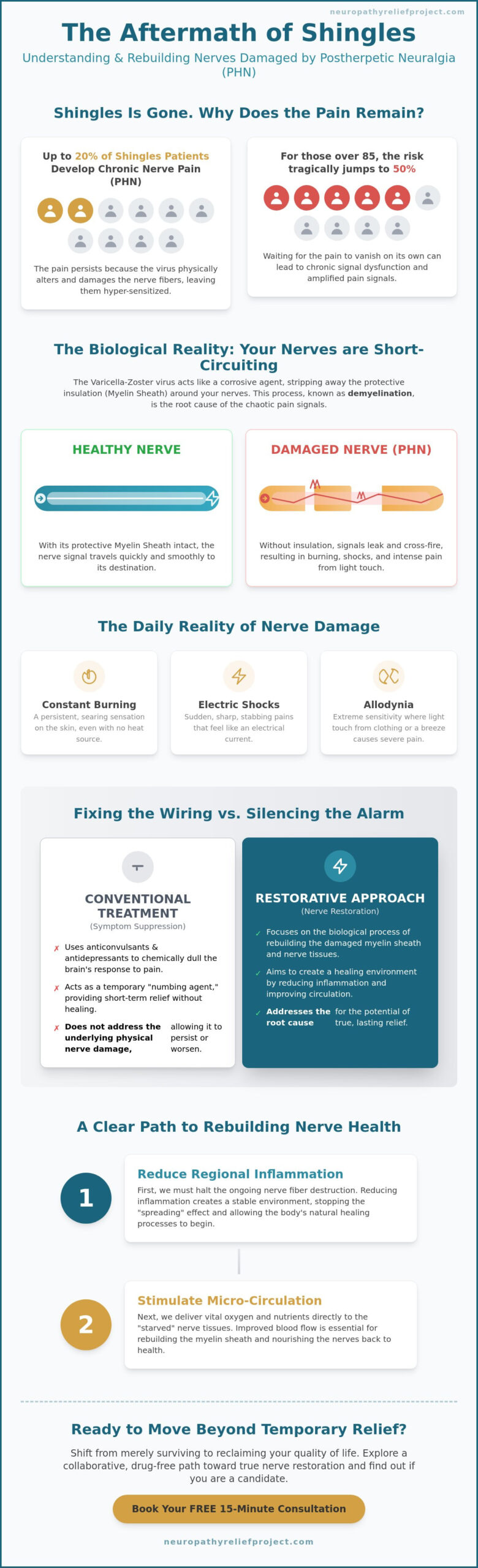
If you’ve noticed that your skin remains painfully sensitive long after the shingles blisters have faded, you’re experiencing a condition known as Postherpetic Neuralgia (PHN). This isn’t just a slow recovery; it’s a specific clinical complication where the pain persists for months or even years. Understanding Postherpetic Neuralgia involves recognizing it as a chronic state where the varicella-zoster virus has left your nerve fibers hyper-sensitized and physically altered. When the virus reactivates, it travels along the nerve pathways to reach the skin, often leaving a trail of cellular destruction in its wake. This results in a nervous system that stays on “high alert,” sending intense pain signals to the brain even when no external threat exists.
The “wait and see” approach often suggested by general practitioners can be a dangerous gamble. While some cases of shingles resolve fully, approximately 10% to 20% of patients develop PHN. For those over the age of 85, that risk jumps to 50%. Waiting for the pain to vanish on its own can lead to chronic signal dysfunction, where the brain becomes “wired” to expect and amplify pain. Many individuals find that while the initial antiviral medications cleared the rash, they are left with significant nerve damage from shingles treatment that didn’t address the underlying structural harm to the nerve fibers. Reclaiming your quality of life requires looking past the surface and addressing this internal architecture.
The ‘Second Wave’ of Shingles
Many patients describe a frustrating “honeymoon period” where the rash heals and they feel a brief sense of relief, only to have a second wave of intense, searing pain crash over them weeks later. This transition marks the shift from an active viral infection to chronic peripheral neuropathy. During this phase, long-term inflammation doesn’t just affect the primary site; it begins to impact surrounding healthy nerve tissue. This “spreading” effect explains why the area of pain often feels larger than the original rash site. It’s a sign that the nerve damage from shingles treatment protocols focused solely on the virus has evolved into a more complex, regional issue.
Common Symptoms That Signal Nerve Damage
Identifying the specific hallmarks of nerve damage is the first step toward a restorative path. You might experience a constant burning sensation, or perhaps you’re plagued by sudden, sharp shocks that feel like an electrical current. A common but distressing symptom is allodynia, where the weight of a light sheet or the touch of clothing becomes unbearable. You may also notice a loss of temperature regulation in the affected area, where the skin feels unnaturally cold or hot to the touch. Beyond the physical agony, the psychological toll of this invisible pain is immense. It often leads to severe sleep deprivation and a sense of isolation, especially when you feel your concerns are being dismissed by the traditional medical system. If you’re ready to explore a different path, we offer a 15 minute FREE phone Consultation to discuss how we can work together on your restoration.
The Biological Reality of Shingles Nerve Damage
If you imagine your nerves as high-speed data cables, the myelin sheath is the protective insulation that ensures signals reach their destination clearly and quickly. The varicella-zoster virus doesn’t just cause a temporary rash; it acts as a corrosive agent that strips away this vital coating. This process, known as demyelination, is the foundation of the biological reality of shingles nerve damage. Without this insulation, the electrical impulses within your nerves begin to leak and cross-fire, leading to the chaotic sensations that dominate your daily life. It’s a physical breakdown of the body’s communication system that requires a structural solution.
Many patients find that while the initial viral infection is gone, the nerve damage from shingles treatment remains because the underlying insulation hasn’t been restored. Standard care often ignores this structural degradation, focusing instead on chemically dulling the brain’s response to the pain. Chronic inflammation persists in the area, creating a “toxic environment” that actively prevents the nerves from beginning their natural healing process. This cycle of inflammation and signal chaos keeps the nervous system in a state of perpetual alarm.
Myelin Sheath Degradation and Signal Chaos
When nerve fibers lose their myelin, they become “naked” and hyper-excitable. These exposed fibers begin to fire spontaneous pain signals without any external trigger. This is why you might feel a sudden jolt of electricity while sitting perfectly still. It also explains allodynia, where a light breeze or the weight of a silk shirt is misinterpreted by the brain as intense, searing pain. To move forward, understanding nerve damage recovery is essential to set realistic expectations for how long it takes to rebuild this delicate architecture. It’s a methodical process of calming the “short-circuiting” signals through physical restoration.
Micro-Circulation and Nerve ‘Starvation’
Nerves are living tissues that require a constant, high-volume supply of oxygen and nutrients to maintain their structure and function. They are fed by a network of tiny blood vessels called the vasa nervorum. Viral damage often causes these microscopic vessels to constrict or become damaged, effectively “starving” the nerves of the resources they need to repair the myelin sheath. This lack of micro-circulation is a primary reason why nerve damage from shingles treatment can become permanent if left unaddressed. Without adequate blood flow, the nerves remain in a state of metabolic crisis, unable to clear out inflammatory waste or rebuild damaged membranes. If you feel stuck in this cycle of pain, we invite you to schedule a 15 minute FREE phone Consultation to see if our restorative approach is the right fit for your recovery journey.
Why Traditional Shingles Nerve Pain Treatments Often Fall Short
If you’ve sought help for the relentless burning that follows a shingles outbreak, you’ve likely walked out of a clinic with a prescription for gabapentin or pregabalin. These medications are the mainstays of conventional care, yet many patients find they don’t actually fix the problem. These drugs are anticonvulsants designed to dampen the central nervous system’s response to pain signals. While they might lower the volume of the alarm, they do nothing to repair the physical nerve damage from shingles treatment that is causing the alarm to sound in the first place. This creates a fundamental gap between a numbing effect, which is temporary, and a restorative effect, which aims to return the nerve to its healthy state.
Topical treatments like lidocaine patches or capsaicin creams often present a similar hurdle. While they can offer localized relief by desensitizing the skin’s surface, the damage often resides deeper within the peripheral nervous system. Understanding Postherpetic Neuralgia (PHN) means recognizing that the pain is a result of structural changes within the nerve fibers themselves. Relying solely on surface-level solutions often leaves the deeper signal chaos unaddressed, leading to a cycle of frustration where the pain never truly dissipates.
The Problem with Symptom Masking
When you rely on medications to mask symptoms, you’re essentially putting a piece of tape over your car’s check engine light. The pain often returns with even greater intensity once the dose wears off because the underlying demyelination and micro-circulation issues haven’t changed. This cycle of temporary relief followed by a return of agony leads many to seek non-drug nerve relief. If we ignore the root cause, we risk further nerve degradation as the tissues remain in a state of metabolic crisis, potentially worsening the nerve damage from shingles treatment over time.
The Side Effect Trade-off
For many, the cost of pharmaceutical relief is simply too high. The side effects of heavy nerve-blocking medications often include significant brain fog, fatigue, and a persistent sense of dizziness. You shouldn’t have to choose between living in pain and losing your cognitive sharpness or mobility. The trade-off is steep. Many patients eventually stop their medication because they’d rather deal with the burning than feel like they’re floating through their day. This frustration is exactly why we focus on a path that supports the body’s natural restorative processes instead of just adding more pills to the cabinet.
Restoration Strategies: Rebuilding Nerve Health After Shingles
Moving beyond the temporary numbing of pharmaceuticals requires a structured, multi-step strategy. If you’ve been struggling with the aftermath of a viral outbreak, the path to relief involves more than just waiting. True recovery focuses on changing the internal environment of the nerve. By addressing the physical environment where the damage occurred, we can shift the body from a state of preservation to a state of active repair. This process is methodical and requires a commitment to a specific biological sequence.
The first step in this journey involves reducing regional inflammation. This is critical because ongoing inflammation acts as a chemical barrier to healing, keeping the nerve in a state of high alert. Step two focuses on stimulating micro-circulation. As we explored in previous sections, the vasa nervorum must be open and functional to deliver the building blocks of repair. Step three is the physical rebuilding of the myelin sheath through targeted protocols that support cellular regeneration. Finally, step four is re-educating the nervous system. This process helps your brain stop misinterpreting normal sensations, like the touch of a shirt, as pain. Addressing nerve damage from shingles treatment isn’t about a single pill but a comprehensive shift in how we treat the peripheral nervous system.
Oxygenation and the Recovery Process
Increasing blood flow is the most effective way to re-awaken dormant or damaged nerve fibers. When nerves are starved of oxygen, they retreat into a state of metabolic dysfunction. We utilize specialized, non-invasive technology to promote deep tissue repair and improve the metabolic health of the affected dermatome. It’s important to remember that this is a methodical journey. Nerve fibers grow at a very slow rate; therefore, consistency in your protocol is the only way to see long-term results. You didn’t lose your nerve health overnight, and rebuilding it requires a steady, guided effort.
Lifestyle Habits That Support Nerve Repair
Your daily choices act as the foundation for your clinical progress. Hydration and specific nutrition are vital for maintaining the integrity of the myelin sheath. Without proper fats and antioxidants, the body lacks the raw materials for insulation repair. Gentle movement also plays a role by maintaining circulation without triggering the flares often associated with high-intensity activity. Integrating these habits into a drug-free nerve pain management plan ensures you are supporting your body’s natural restorative processes 24 hours a day. If you are ready to stop masking your symptoms and start rebuilding your health, we invite you to schedule a 15 minute FREE phone Consultation to discuss your specific restoration goals.
A Collaborative Path to Relief: The Neuropathy Relief Project
The Neuropathy Relief Project isn’t a standard facility; it’s a mission-driven initiative focused on those who feel abandoned by traditional protocols. We view your recovery as a collaborative mission. This approach is essential because generic, one-size-fits-all treatments often fail to account for the unique way your body responded to the initial viral load. While some systems suggest that pain lasting beyond a year is permanent, we believe in the potential for nerve health to be reclaimed through evidence-based, restorative protocols. If you’ve been told to simply live with the nerve damage from shingles treatment, we offer a different perspective centered on long-term liberation from pain.
Our focus remains on identifying candidates who have the highest potential for nerve restoration. We don’t accept every case because our commitment is to results. By conducting a personalized review, we can determine if the underlying biological architecture of your nerves is still capable of responding to our micro-circulation and oxygenation strategies. This specialized entry point is designed specifically for those who have already “talked to their doctor” and found the answers lacking. We act as a knowledgeable guide for those lost in complex systems, appearing authoritative yet approachable, and deeply committed to this specific niche of health.
The 15-Minute Discovery Consultation
Your journey begins with a 15 minute FREE phone Consultation. During this call, we’ll listen to your story and assess the severity of your shingles-induced nerve damage. We don’t use high-pressure tactics; instead, we provide a calm, expert-led narrative to help you understand your options. We’ll discuss your symptoms, from the intensity of the burning sensations to the areas of allodynia, to determine if our non-invasive protocols are the right fit for your specific situation. This is a time for you to feel heard and for us to establish if a collaborative effort can lead to the outcomes you’re seeking. It’s a methodical and calming process designed to build trust and reduce the anxiety often associated with chronic issues.
Moving Toward a Future Without Burning Pain
There is a profound emotional shift that happens when you move from simply coping with pain to actively pursuing restoration. It’s the difference between surviving your day and reclaiming your life. While the recovery timeline after shingles varies for everyone, the goal is a steady, methodical reduction in symptoms. You can expect a clear, instructional path that guides you through the biological stages of repair. If you’re tired of feeling dismissed and are ready to explore a science-backed path to relief, take the first step. Book your 15-minute free phone consultation today and see if you’re a candidate for our restorative protocols. We are ready to help you move toward a future where you can wear normal clothing and sleep through the night without the intrusion of burning pain.
Reclaiming Your Life from Shingles Pain
You don’t have to accept a future defined by the constant, searing heat of nerve dysfunction. We’ve explored how shingles physically alters your nerve architecture by stripping away the myelin sheath and restricting vital micro-circulation. While traditional systems often focus on masking these signals with medications that leave you feeling foggy and fatigued, a restorative path is possible. Addressing the underlying nerve damage from shingles treatment requires a methodical shift toward rebuilding tissue health and re-educating your nervous system’s response to touch.
Led by Dr. Michael J. Sclafani, DC, the Neuropathy Relief Project offers specialized support with a national reach. Our non-invasive, drug-free protocols focus on the biological repair of your peripheral nerves. We view this journey as a collaborative effort designed for long-term liberation rather than temporary numbing. If you’re ready to move beyond coping and begin pursuing true restoration, we invite you to Schedule Your 15-Minute FREE Nerve Pain Consultation Today. You deserve to wear your favorite clothes and sleep through the night without the intrusion of burning pain. Your path to restoration begins with a single conversation.
Common Questions About Shingles Nerve Recovery
Is nerve damage from shingles permanent?
Nerve damage is not always permanent, even if you have been told otherwise by other providers. While the varicella-zoster virus can cause significant structural harm, the peripheral nervous system possesses a remarkable capacity for restoration when the right biological conditions are met. Success depends on addressing the underlying demyelination and restoring micro-circulation to the affected area. By shifting the focus from masking symptoms to rebuilding nerve architecture, many individuals find they can reclaim their quality of life.
How do I know if my shingles pain has turned into postherpetic neuralgia?
You are likely experiencing postherpetic neuralgia (PHN) if your pain persists for more than 90 days after the initial shingles rash has healed. This condition affects approximately 10% to 20% of all shingles patients, with the risk increasing significantly for those over age 50. If you still feel burning, sharp jolts, or extreme sensitivity in the dermatome where the rash first appeared, your nervous system has likely transitioned into a chronic state of signal dysfunction.
Can I heal my nerves after shingles without using gabapentin?
Yes, it is possible to pursue a restorative path that does not rely on central nervous system suppressants like gabapentin. Healing the nerve damage from shingles treatment involves moving beyond pharmaceutical numbing to address the physical environment of the nerve fibers. Our drug-free protocols focus on reducing regional inflammation and stimulating the vasa nervorum to deliver oxygen and nutrients. This approach aims to fix the “short-circuiting” at the source rather than just silencing the brain’s pain receptors.
Why is my skin so sensitive to touch even after the shingles rash is gone?
This extreme sensitivity, known as allodynia, occurs because the protective myelin sheath around your nerves has been stripped away by the virus. When these fibers are exposed, they become hyper-excitable and begin to misinterpret harmless sensations, such as the brush of a bedsheet or a light breeze, as intense pain. It is a sign that your nerves are physically damaged and requires a methodical, restorative effort to rebuild the insulation and calm the signal chaos.
What is the best way to sleep with shingles nerve pain?
Improving sleep quality often requires a combination of environmental adjustments and addressing the metabolic needs of your nerves before bed. Using silk or high-thread-count cotton sheets can reduce the friction that triggers allodynia flares. Many patients also find relief by wearing loose-fitting clothing that doesn’t compress the sensitive area. However, the most effective long-term solution is to reduce the underlying regional inflammation that typically intensifies during the night when the body is at rest.
How long does it typically take for nerves to heal after a shingles outbreak?
Nerve restoration is a methodical journey rather than an overnight fix because peripheral nerve fibers generally grow at a slow, steady rate. While some patients notice a reduction in burning intensity within the first few weeks of a structured protocol, significant structural repair often takes several months of consistency. The timeline depends heavily on the severity of the initial damage and how effectively the micro-circulation to the nerve tissue can be restored to support ongoing cellular repair.
Can a change in diet or vitamins help with shingles nerve damage?
Hydration and specific nutritional choices provide the raw building blocks your body needs to maintain the integrity of the myelin sheath. Healthy fats and antioxidants are particularly important for supporting the nervous system’s natural repair processes. While these lifestyle habits are essential, they are most effective when integrated into a comprehensive clinical protocol. Nutrition alone often cannot overcome the severe micro-circulation restrictions and chronic inflammation associated with long-term nerve damage from shingles treatment.
What happens during a free neuropathy phone consultation?
During your 15 minute FREE phone Consultation, we conduct a focused review of your current symptoms and your history with shingles. We’ll discuss the specific physical sensations you’re experiencing to assess the severity of your nerve damage. This call is a collaborative effort to determine if you are a candidate for our restorative protocols. Our goal is to provide a clear, expert-led narrative so you can understand if our non-invasive approach is the right fit for your recovery goals.