

If the goal of your spinal fusion was to find relief, why do you still feel a searing, electrical heat in your feet months later? It’s deeply frustrating to be told to “just wait” while your mobility disappears and your sleep is stolen by persistent burning. Recent 2025 data shows that nearly 29% of patients still experience neuropathic pain three months after lumbar fusion surgery. If you’re struggling with neuropathy after back surgery, you likely fear that the procedure failed or that another operation is your only path forward.
We understand this daily struggle and want to offer a sense of hope. You’ll discover why your nerve pain persists as a biological “stall” in the healing process rather than a permanent surgical failure. We’ll explore a collaborative path toward restoration that avoids heavy narcotics and more surgery. This guide previews the latest 2026 clinical insights, from non-invasive magnetic stimulation to the first new class of non-opioid medications, helping you build a structured plan to reclaim your independence. To discuss your specific situation and explore a clear path toward improvement, we offer a 15 minute FREE phone Consultation to help guide your journey.
Key Takeaways
- Identify specific sensory signs like burning or “heavy sock” sensations that signal your nerves haven’t fully transitioned into a restorative phase.
- Understand the biological impact of surgical trauma on the myelin sheath and why neuropathy after back surgery requires a healthy micro-environment to heal.
- Learn the critical difference between masking pain with traditional medications and actively supporting tissue restoration for long-term relief.
- Discover how non-invasive methods that prioritize oxygenation and micro-circulation can help nerves recover without the need for additional surgery.
- Gain a clear perspective on how a collaborative, research-driven approach can help you move from chronic frustration to active restoration.
Recognizing Neuropathy After Back Surgery: When Healing Feels Like Pain
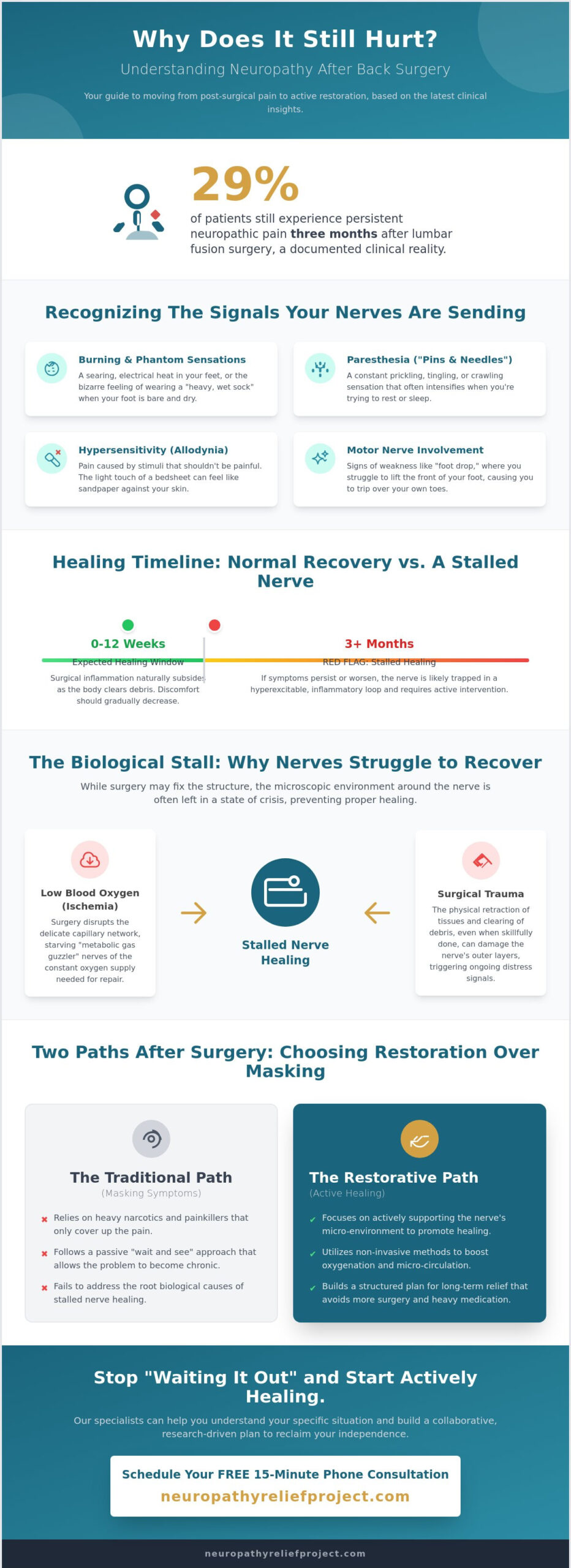
Waking up from a spinal procedure should feel like the start of a new chapter. For many, however, the silence of recovery is interrupted by a familiar, searing companion. When you experience persistent nerve irritation following a spinal procedure, it’s often classified as Persistent Spinal Pain Syndrome (PSPS). This condition isn’t just a physical hurdle; it’s an emotional weight that makes you wonder if the surgery “took” or if your body is simply failing to heal. Research from 2025 indicates that 29% of patients continue to face neuropathic pain three months after fusion surgery, proving that your experience is a documented clinical reality, not an isolated failure.
If you’re dealing with neuropathy after back surgery, the sensations you feel are your nerves’ way of communicating distress. It isn’t always a sharp ache. Sometimes, it’s a bizarre feeling of wearing a heavy, wet sock when your foot is actually bare. Other times, it’s a sudden jolt of electricity that makes you jump. These signals suggest that while the structural issue may have been addressed, the delicate neural tissue is still struggling to find its baseline.
Common Sensory Indicators of Nerve Irritation
Nerve distress often manifests in ways that feel “unreal” or difficult to describe to others. You might notice:
- Paresthesia: This is the classic “pins and needles” sensation that prickles across your legs or feet, often intensifying when you try to rest.
- Phantom Sensations: Your skin might feel icy cold or damp, yet when you touch the area, it’s perfectly dry and warm to the touch.
- Motor Nerve Involvement: If you notice a “foot drop,” where you’re tripping over your toes or struggling to lift the front of your foot, it’s a clear sign that the motor nerves are under pressure.
- Hypersensitivity: Even the light touch of a bedsheet can feel like sandpaper against an open wound.
Temporary Inflammation vs. Chronic Nerve Damage
It’s normal to feel some discomfort immediately after a surgeon moves muscle and bone. Most practitioners look for a 6 to 12 week window where surgical inflammation should naturally subside as the body clears debris from the site. If your symptoms persist beyond this three month mark, or if they begin to worsen after an initial period of relief, these are red flags that the nerve is under ongoing distress.
We see this often in our collaborative work. When the healing process stalls, the nerve doesn’t just “stay hurt.” It changes. Post-surgical neuropathy is a state where the nerve remains trapped in a hyperexcitable inflammatory loop. Recognizing this early allows us to shift from a “wait and see” approach to an active plan for restoration.
The Biological Triggers: Why Nerves Struggle to Recover Post-Operation
To move forward, we must look beneath the surface of the surgical site. While a surgeon may successfully decompress a disc or stabilize a joint, the microscopic environment surrounding the nerve often remains in a state of crisis. The biological path to understanding nerve damage recovery begins with acknowledging that nerves are metabolic “gas guzzlers.” They require a constant, rich supply of oxygen and nutrients to repair themselves. When surgery disrupts the delicate network of capillaries, a state of local ischemia, or low blood oxygen, can occur. This lack of micro-circulation is one of the primary causes of neuropathic pain after spinal surgery, as it prevents the nerve from accessing the resources it needs to heal.
Beyond blood flow, the physical structure of the nerve is often compromised during the procedure. Even with the most skilled surgical hands, the act of retracting tissues or clearing debris can cause “surgical trauma” to the nerve’s outer layers. If your recovery feels like it has hit a wall, it’s often because the biological environment isn’t yet supportive of cellular repair. This is where many patients feel lost. If you’re struggling to find answers, scheduling a 15 minute FREE phone Consultation can help you identify if your healing has simply stalled.
The Myelin Sheath and Signal Interference
Think of your nerves like high-speed data cables. Each one is wrapped in a fatty protective coating called the myelin sheath. During the physical manipulation of a procedure, this “insulation” can become frayed or thinned. When the myelin is compromised, the electrical signals don’t just travel from point A to point B. Instead, they “leak” into surrounding tissues. Your brain interprets these stray signals as the burning, stinging, or buzzing sensations commonly associated with neuropathy after back surgery. Rebuilding this insulation is an energy-intensive process that cannot happen if the nerve is constantly fighting off oxidative stress.
Inflammatory Cascades and Nerve Sensitivity
Even after the physical pressure of a herniated disc is gone, the nerve may remain trapped in an inflammatory loop. This prolonged irritation can lead to “central sensitization,” where your spinal cord and brain become hyper-reactive to even minor stimuli. In this state, the nerves stay “on” long after the initial trauma has passed. Systemic factors can also play a role; high blood sugar or elevated stress hormones can act like fuel on a fire, amplifying these post-surgical flares and making the neuropathy after back surgery feel more intense than the original condition.
Finally, we must consider the role of epidural fibrosis, or scar tissue. As your body heals, it naturally produces collagen to close the surgical wound. However, if this tissue becomes excessive, it can physically tether the nerve root to the surrounding bone. Instead of gliding smoothly during movement, the nerve is tugged and irritated with every step you take, maintaining a cycle of pain that traditional painkillers often fail to reach.
Beyond Painkillers: Why Traditional Post-Surgical Treatments Often Stall
The labels used in clinical settings can often feel like a final judgment. If you’ve been told you have Failed Back Surgery Syndrome (FBSS), it’s vital to recognize that this is often a misnomer for unresolved neuropathy after back surgery. This label suggests the procedure was a failure, when in reality, the structural repair may have been successful while the nerve restoration process simply stalled. Traditional systems often respond to this stall by increasing dosages of neuropathic medications or suggesting physical therapy, yet these approaches frequently fail to address the underlying biological crisis.
Physical therapy is a cornerstone of recovery, but it has significant limitations if the nerve environment remains toxic. If a nerve is trapped in an inflammatory loop or “choked” by poor micro-circulation, aggressive exercise can actually increase irritation. We believe in a “restoration first” philosophy. By focusing on tissue restoration before demanding high levels of physical performance, we allow the nerve to stabilize. Without this sequence, many patients find themselves in a cycle of “one step forward, two steps back,” where every attempt at rehabilitation triggers a painful flare.
The Limitations of Neuropathic Medications
Drugs like gabapentin or pregabalin are the standard first line of defense, but they don’t function as repair agents. Instead, they act as volume knobs that dull the brain’s perception of pain signals. While this can provide temporary relief, it does nothing to fix the frayed myelin sheath or the ischemic environment we discussed earlier. Many patients also struggle with side effects such as “brain fog,” dizziness, or extreme fatigue. These symptoms don’t just affect your mood; they hinder your ability to participate in the very restorative activities your body needs. Shifting from chemical suppression to biological support is the only way to achieve lasting liberation from the burning and tingling.
Why More Surgery Isn’t Always the Answer
When pain persists, the instinctive reaction is often to look for another structural fix. However, every subsequent procedure carries the risk of “cumulative trauma.” Multiple spinal surgeries can lead to extensive scar tissue formation, also known as epidural fibrosis. This scar tissue can physically tether the nerves even more tightly than the original injury. Before considering a second or third revision, it’s essential to explore whether the issue is structural or biological. If your structural hardware is sound but your nerves are still screaming, more surgery may only trigger more inflammation. If you feel lost in this decision-making process, a 15 minute FREE phone Consultation can provide a knowledgeable guide to help you weigh your options and prioritize restoration over further trauma.
A Path to Restoration: Supporting Nerve Health Without Further Surgery
If your recovery has stalled, the solution isn’t necessarily a higher dose of medication or a return to the operating table. Instead, we focus on transitioning from surgical trauma to active restoration. This shift requires a structured approach to drug-free nerve pain management, which prioritizes the biological needs of your neural tissue. When you address the specific reasons why your healing has plateaued, you can begin to see improvements in mobility and sleep that once seemed out of reach.
Supporting neuropathy after back surgery involves more than just waiting for time to pass. It requires intentional support for the cellular processes that were disrupted during your procedure. By creating a collaborative plan that focuses on the nerve’s micro-environment, you can help your body move past the hyperexcitable state we identified earlier and toward a state of liberation. If you’re ready to explore these non-invasive options, you can schedule a 15 minute FREE phone Consultation to discuss a personalized path forward.
Oxygenation and Micro-Circulation
Nerves are notorious “oxygen hogs.” They consume a disproportionate amount of the body’s energy and oxygen relative to their size. If the micro-circulation around your surgical site was compromised, your nerves are essentially starving for the resources they need to rebuild. Targeted, non-invasive protocols can help stimulate dormant blood vessels and improve capillary flow to the extremities. Restoring blood flow is the fuel for nerve fiber regeneration. Without this essential oxygenation, the repair of the myelin sheath remains at a standstill.
Calming the Inflammatory Loop
Once the central nervous system has become sensitized, it stays on high alert. You can calm this overactive state through specific lifestyle adjustments and nutritional foundations. Nerves require optimal hydration to maintain the electrical balance needed for clear signal transmission. Incorporating foundations that support cellular energy, such as B-complex vitamins and alpha-lipoic acid, provides the building blocks for myelin repair. By keeping a methodical log of your sensations, you can identify the early signs of a “flare” before it becomes debilitating.
Reducing systemic inflammation through an anti-inflammatory diet also helps lower the “volume” of the pain signals. When the body isn’t fighting generalized inflammation, it can dedicate more energy to the specific site of your neuropathy after back surgery. This methodical approach ensures you’re treating the cause, not just the symptom, allowing for a more predictable journey toward recovery.
Reclaiming Your Quality of Life: The Neuropathy Relief Project Approach
If you have been told your surgery was a success yet you still live with the phantom heat of burning feet, you’re likely caught in the post-surgical gap. This is the space where traditional surgeons often stop and patients are left to manage their own chronic symptoms. The Neuropathy Relief Project acts as a dedicated advocate for individuals in this exact position. Our mission is centered on research and long-term results, moving beyond the standard “wait and see” advice. We believe that achieving non-drug nerve relief should be your primary recovery goal, allowing you to reclaim your quality of life without becoming dependent on narcotics or facing the risks of additional procedures.
Dealing with neuropathy after back surgery requires a specialist who looks beyond the structural hardware to the health of the nerve fibers themselves. We operate as a collaborative initiative rather than a standard clinical facility, focusing on the biological restoration of the micro-environment. This approach bridges the divide between alternative care and clinical evidence, ensuring that your path toward improvement is both science-backed and deeply compassionate. By prioritizing the restoration of the myelin sheath and local circulation, we help shift the narrative from managing a disability to active healing.
The 15-Minute Expert Nerve Review
To help you determine if your healing has stalled, we offer a discovery call that serves as a focused assessment of your current nerve health. This is not a standard surgical follow-up where a doctor checks your incision; it’s a dedicated review of your sensory symptoms and history. During this call, we evaluate your eligibility for our restorative protocols by discussing the specific sensations you experience and the treatments you’ve tried so far. To make the most of this time, you should prepare a brief list of your primary symptoms, such as where the burning or numbness is most intense, and a timeline of your post-surgical recovery. This methodical review helps us understand the unique biological triggers affecting your neuropathy after back surgery.
Your Journey Toward Restoration
Recovery is rarely a straight line, but you don’t have to navigate it alone. Our project is designed as a collaborative effort, meaning we work alongside you to monitor your progress and adjust your restoration plan as your nerves begin to stabilize. We prioritize long-term results over the temporary masking of symptoms. By focusing on the underlying causes of nerve irritation, we aim to help you achieve a state of liberation from chronic pain. If you’re ready to take the first step toward a more active, restful life, schedule your free 15-minute phone consultation today and discover how we can support your journey toward restoration.
Reclaim Your Freedom from Post-Surgical Nerve Pain
Living with the constant “electric heat” or numbness of neuropathy after back surgery can make you feel like you’re out of options. We’ve explored how these sensations are often a biological stall in healing rather than a permanent failure of your procedure. By shifting your focus from masking symptoms with narcotics to actively restoring the nerve’s micro-environment through oxygenation and micro-circulation, you can begin to move toward lasting liberation.
Led by Dr. Michael J. Sclafani, DC, our collaborative initiative specializes in non-invasive protocols backed by clinical evidence. We’re committed to helping you bridge the gap between surgical trauma and active nerve tissue restoration. We offer a zero-cost initial assessment to evaluate your specific sensory symptoms and determine your eligibility for our restorative approach. You don’t have to navigate this complex system alone. Schedule Your FREE 15-Minute Nerve Discovery Call Today to start your journey toward a life defined by mobility rather than pain. There is a clear path forward, and it begins with understanding the true needs of your nervous system.
Frequently Asked Questions
Is it normal to have nerve pain after back surgery?
It is very common to experience some degree of nerve pain during the initial healing phase. Research indicates that between 10% and 40% of patients experience chronic neuropathic pain after surgery. While temporary inflammation is expected, pain that persists beyond the three month mark suggests the nerve has entered a hyperexcitable state rather than a restorative one. This transition from acute healing to chronic irritation is a signal that the nerve requires additional biological support.
How long does neuropathy last after spinal surgery?
The duration of neuropathy depends on the degree of surgical trauma and your body’s ability to restore micro-circulation. Typical post-operative inflammation should subside within 6 to 12 weeks. If symptoms of neuropathy after back surgery continue past this window, it often indicates a stall in the biological healing process. Without targeted restoration, this pain can become chronic and last for years, though early intervention can help restart the recovery cycle.
Can nerve damage from back surgery be reversed?
Many cases of post-surgical nerve damage can be significantly improved by addressing the nerve’s micro-environment. While total reversal depends on the severity of the trauma, nerves possess a degree of plasticity and can regenerate if provided with adequate oxygen and nutrients. Our collaborative approach focuses on supporting the myelin sheath and restoring capillary flow to facilitate this natural repair process, helping the nerve move from a state of distress to one of restoration.
What does post-surgical neuropathy feel like?
Post-surgical neuropathy often manifests as sensory distortions rather than simple muscle aches. You might feel a searing, electrical heat in your feet, sharp jolts, or a persistent “pins and needles” sensation. Some patients describe a bizarre feeling of coldness or wetness on dry skin, or the sensation of wearing a heavy sock. These signals indicate that the nerve’s protective insulation is frayed and sending “leaky” signals to the brain that are interpreted as pain.
Why is my nerve pain worse after surgery than before?
Pain can intensify after surgery due to surgical trauma or a sudden change in nerve pressure. When a long-compressed nerve is suddenly released, it can become hyper-reactive as it attempts to resume normal signaling. Additionally, if the procedure disrupted local blood flow, the nerve may be screaming for oxygen. This temporary spike in sensitivity is often part of an inflammatory cascade that requires a methodical approach to calm the central nervous system.
When should I worry about numbness or weakness after surgery?
You should seek an expert review if you experience a sudden loss of bowel or bladder control, or if muscle weakness like “foot drop” worsens. While some numbness is common in the first few weeks, any new or progressive weakness suggests a motor nerve is under significant distress. Identifying these red flags early is crucial for preventing long-term mobility issues and ensuring that your recovery journey stays focused on active restoration rather than permanent damage.
Can scar tissue cause neuropathy years after surgery?
Yes, excessive scar tissue, known as epidural fibrosis, can physically tether a nerve root long after the initial procedure. As this tissue matures, it can contract and pull on the nerve during normal daily movements. This mechanical irritation keeps the nerve in a state of chronic distress. If you find that your pain returns or intensifies years later, scar tissue is a likely biological trigger that has disrupted the nerve’s healthy micro-environment.
What is the best treatment for neuropathy after back surgery?
The most effective approach involves a transition from symptom masking to active tissue restoration. Rather than relying solely on heavy narcotics, a structured plan focusing on oxygenation and micro-circulation often yields better long-term results. We offer a 15 minute FREE phone Consultation to help you evaluate your specific symptoms and explore non-invasive protocols. This focused assessment helps determine if your nerves are eligible for a restorative plan designed to calm the inflammatory loop and support fiber regeneration.