

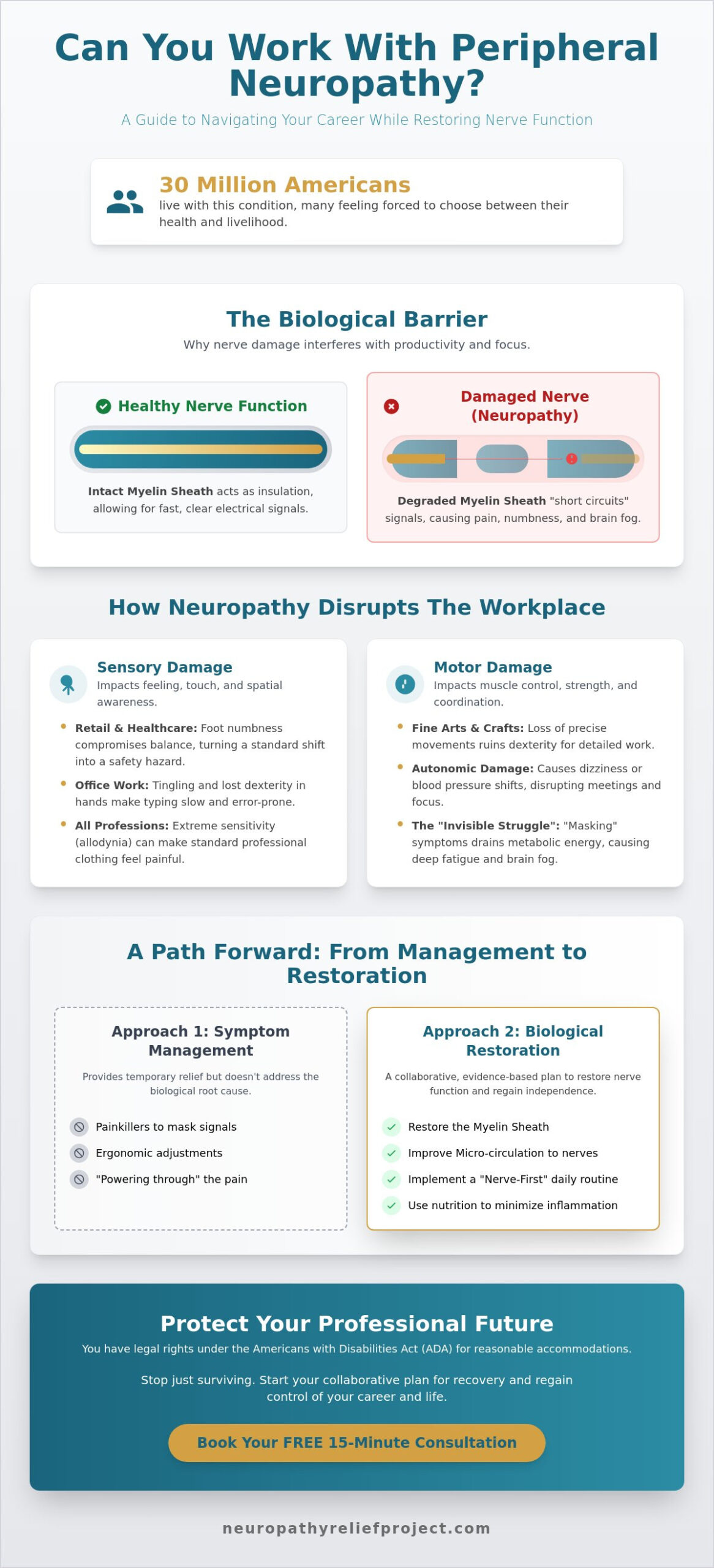
What if the sharp, electric sensations in your feet or the persistent numbness in your hands didn’t have to signal the end of your career? If you’ve spent your workdays masking physical exhaustion while fearing that a single balance issue might compromise your safety, you aren’t alone. You’re likely asking yourself, can you work with peripheral neuropathy, while simultaneously worrying about your future financial stability. It’s a valid concern for the estimated 30 million Americans living with this condition, many of whom feel forced to choose between their health and their livelihood.
We believe that working with neuropathy should be a transition state rather than a permanent decline. This guide provides a clear path forward by explaining your legal rights under the Americans with Disabilities Act and detailing practical accommodations that can help you stay productive. Beyond just managing symptoms, we’ll explore the evidence-based protocols aimed at restoring nerve function so you can regain your independence. You’ll discover how to balance the demands of your profession with a structured plan for biological restoration through this collaborative journey toward recovery.
Key Takeaways
- Learn how to assess the specific ways sensory and motor damage impact your daily tasks to answer the vital question: can you work with peripheral neuropathy while maintaining your professional standards?
- Understand the biological role of the myelin sheath and micro-circulation in maintaining the focus and rapid decision-making required for a productive workday.
- Explore your legal rights under the ADA and discover practical workplace modifications, from ergonomic standing desk protocols to specialized footwear, that support your physical safety.
- Implement a “Nerve-First” daily routine and nutritional strategies designed to minimize workplace inflammation and maintain nerve signal clarity throughout your shift.
- Identify the first steps toward a collaborative restoration plan, starting with a 15-minute free phone consultation to evaluate your specific path to professional recovery.
Can You Work with Peripheral Neuropathy? Assessing the Impact
The short answer is yes. Many people successfully maintain their careers while managing nerve damage, but it requires a transition from a “power through” mindset to a strategic approach. If you’ve been asking yourself, can you work with peripheral neuropathy, you’re likely already feeling the friction between your professional demands and your body’s limitations. Success depends on identifying exactly how your specific nerve damage interferes with your tasks. It isn’t just about pain; it’s about the biological interference with your productivity.
Understanding what is Peripheral Neuropathy? involves recognizing that it’s a disruption of the communication lines between your brain and your body. Whether the damage is sensory, motor, or autonomic, the metabolic cost of performing even simple tasks increases. Autonomic damage, for instance, might cause unexpected dizziness or blood pressure shifts during a meeting. This often leads to a persistent “brain fog” as your mind works overtime to process distorted signals, leaving less mental energy for professional focus and complex decision-making.
Sensory vs. Motor Damage in the Workplace
The impact of neuropathy varies depending on which nerves are most affected. Consider how these specific symptoms disrupt different professional environments:
- Retail and Healthcare: Sensory numbness in the feet can turn a standard shift into a safety hazard by compromising balance and spatial awareness.
- Office Work and Fine Arts: Tingling and a loss of dexterity in the hands make typing, writing, or precise movements frustratingly slow and prone to error.
- General Professionalism: Sensory overload, or allodynia, can make the fabric of standard professional clothing feel excruciatingly painful against the skin.
The Invisible Struggle of the Working Patient
Many patients engage in “masking,” where they hide their symptoms from employers to avoid appearing unreliable or “broken.” This constant performance is physically and mentally exhausting. Chronic nerve signals are a massive drain on your metabolic energy, leading to a level of workplace fatigue that simple sleep cannot fix. If you’re wondering can you work with peripheral neuropathy while your symptoms are worsening, remember that ignoring these signals often leads to accelerated nerve degradation rather than a temporary hurdle. Powering through a safety risk or a high-stress task without a plan doesn’t just hurt your performance; it can jeopardize your long-term career restoration.
We view your career management as a collaborative effort. By recognizing these barriers early, we can move toward a path of restoration rather than just survival. This involves moving beyond mere “management” and looking at the biological path to restoring your ability to function in a professional environment.
The Biological Barrier: Why Nerve Damage Interferes with Productivity
If you’ve found yourself staring at a computer screen while a sharp, electric sensation pulses through your feet, you know that willpower alone isn’t enough to maintain professional focus. The fundamental reason behind this struggle is biological. When asking, can you work with peripheral neuropathy, it’s essential to understand the role of the myelin sheath. This fatty layer acts as the insulation for your nerves, allowing electrical impulses to travel at lightning speeds. When this insulation degrades, your internal communication lines begin to “short circuit.” This doesn’t just cause pain; it creates a lag in your cognitive processing and physical response times, making rapid workplace decision-making feel like an uphill battle.
Many employees seek out Workplace Accommodations for Neuropathy to manage the daily discomfort, yet these adjustments often fail to address the underlying signal clarity. Traditional painkillers may mask the burning or tingling, but they do nothing to restore the functional capacity needed for high-level tasks. If your nerves are misfiring, your brain is forced to spend valuable metabolic energy trying to interpret distorted data. This biological “noise” is the primary driver of the mental errors and physical clumsiness that can jeopardize your professional reputation.
Micro-Circulation and Occupational Stasis
Your workstation might be inadvertently starving your nerves of the oxygen they need to survive. Whether you’re sitting in a corporate office or standing on a production floor, prolonged stasis leads to ischemia, a condition where blood flow to the nerve tissues is significantly restricted. Micro-circulation is the lifeblood of nerve signal transmission. Without this constant flow of oxygenated blood, your nerves become increasingly resilient to repair and more prone to rapid degradation. If you’re struggling to maintain your output, a 15-minute free phone consultation can help you explore a structured path toward restoration.
Myelin Sheath Degradation and Reaction Time
In high-stakes environments, a split-second delay can be the difference between safety and a workplace accident. Nerve conductivity is directly tied to the health of the myelin sheath. When this coating is compromised, your reaction time slows down, which is a major concern for anyone in a physically demanding or safety-sensitive role. Moving beyond simple symptom management requires a focus on understanding nerve damage recovery and the specific biological requirements for rebuilding that insulation. Restoring the myelin sheath isn’t just a medical goal; it’s a prerequisite for returning to your full professional capacity and protecting your career longevity.
Workplace Accommodations vs. Career Restoration
The Americans with Disabilities Act (ADA) provides a legal safety net for those wondering, can you work with peripheral neuropathy, by requiring employers to provide reasonable accommodations. These rights are vital. They ensure that your physical environment adapts to your needs rather than forcing you to endure unnecessary pain. For office workers, this might involve ergonomic chairs that reduce pressure on sensitive nerves or standing desk protocols that encourage blood flow. For those in more active roles, specialized footwear can provide the stability needed to prevent falls. While these adjustments are necessary, they’re often just the first step in a much larger journey toward professional liberation.
Accommodations are designed to minimize your daily struggle, yet they rarely address the underlying biological decline. Shifting your focus from “getting by” to “thriving” requires you to look beyond furniture and footwear. The ultimate goal isn’t just to stay employed while suffering; it’s to restore your functional capacity so that your career is no longer defined by your limitations. Restoration represents a proactive strategy where you move from a defensive posture to one of active recovery. It’s about reclaiming the professional identity that chronic pain has slowly eroded.
Standard Accommodations for Nerve Pain
Effective workplace adjustments are highly specific to your role. If you experience morning stiffness or nighttime flare-ups that leave you exhausted, flexible scheduling can be a game-changer. Assistive technologies, such as voice-to-text software or high-grip tools, can support those with diminished hand sensitivity. When you speak with your HR department, it’s helpful to come prepared with evidence-based suggestions regarding what helps neuropathy in feet and how these tools will maintain your productivity. This approach frames the conversation around your value to the company rather than your condition.
Why Accommodations Aren’t a Cure
Relying solely on workplace modifications can create a false sense of security. While a softer floor mat might dull the burning sensation in your feet, the underlying nerve tissue may still be struggling to receive oxygen and nutrients. This is why a collaborative restoration effort is far more effective than simple modifications. By transitioning the conversation from “what I can’t do” to “how I am recovering,” you reclaim your narrative. You stop being a patient who is barely managing and start being a professional who is actively restoring their health to ensure they can you work with peripheral neuropathy for years to come.
Strategies for Maintaining Professional Function
If you’ve questioned whether can you work with peripheral neuropathy while your symptoms persist, the answer often lies in your daily habits. Adopting a “Nerve-First” daily routine means prioritizing the biological needs of your nervous system before the inflammation of a long workday takes hold. This approach focuses on minimizing the metabolic stress that triggers flare-ups. By monitoring your “Functional Threshold,” you can learn to recognize the subtle shift between productive effort and the point where pain begins to compromise your cognitive clarity. Knowing when to take a strategic five-minute micro-break to restore circulation can prevent the physical exhaustion that often leads to early career termination.
Hydration and nutrition also play a silent but pivotal role in maintaining nerve signal clarity during work hours. Your nerves require a specific balance of electrolytes and antioxidants to fire correctly. When you’re dehydrated or consuming high-inflammatory foods at your desk, you’re essentially adding “static” to your internal communication lines. Maintaining a stable internal environment helps ensure that your brain isn’t fighting through unnecessary biological noise while you’re trying to meet a deadline or manage a team.
Non-Drug Management During the Workday
Finding immediate relief from burning or tingling sensations doesn’t always require a trip to the pharmacy. Simple techniques, such as specific desensitization exercises or targeted temperature shifts, can be performed right at your workstation to calm overactive nerves. Prioritizing drug-free nerve pain management is essential for anyone who needs to remain sharp and decisive in a professional setting. Avoiding sedating nerve medications is critical for maintaining the sharp reflexes and physical coordination required for workplace safety. If you’re looking for a personalized strategy to stay productive, a 15-minute free phone consultation can provide a starting point for your recovery.
The Restoration Protocol: A Long-Term Career Strategy
Moving beyond temporary fixes requires a commitment to a structured restoration program. Targeted protocols can stimulate nerve regeneration by addressing the underlying lack of oxygen and nutrients that caused the damage in the first place. This isn’t a quick fix, but rather a methodical journey toward reclaiming lost sensation and motor control. Most patients begin to see shifts in their functional capacity as they commit to the process, eventually reaching a point where work is no longer a source of dread. Because non-drug nerve relief addresses the root cause rather than masking the symptoms, it serves as the foundation for long-term career longevity and a future free from the fear of job loss.
The Neuropathy Relief Project: Protecting Your Professional Future
If you’ve spent months or years wondering, can you work with peripheral neuropathy, you’ve likely received plenty of advice on how to apply for disability or “cope” with the pain. Standard care often stops at management, which is essentially a strategy for a slow professional decline. Our mission at the Neuropathy Relief Project is fundamentally different. We view your career through the lens of restoration. By focusing on the biological rebuilding of nerve tissue, we aim to move you past the need for masking symptoms so you can return to a state of full professional engagement and physical independence.
This collaborative initiative was born from the recognition that patients are often dismissed by traditional systems once basic tests are completed. We provide the expert guidance and specialized second opinion that are frequently missing from high-volume medical facilities. Instead of a generic recommendation to just “live with it,” we offer a structured, research-driven path designed to evaluate your eligibility for a customized, non-invasive nerve recovery program. This process is about shifting your perspective from what you’ve lost to what can be reclaimed in your professional life.
Your 15-Minute Discovery Call
The first step in reclaiming your career is a 15-minute discovery call. During this free phone consultation, you’ll speak with a specialist who understands the intersection of nerve health and career demands. This isn’t a high-pressure conversation; it’s a methodical assessment of your current situation. We’ll work to identify the specific workplace triggers, such as occupational stasis at a desk or the physical demands of manual labor, that are currently stalling your recovery. Preparing a list of your most frequent sensory symptoms and how they fluctuate during your shift will help you get the most value from this initial assessment.
Taking the Next Step Toward Restoration
Feeling “stuck” in a cycle of medication and worsening symptoms is a common experience, but it doesn’t have to be your permanent reality. Our mission-driven approach prioritizes long-term results over temporary fixes, providing a clear alternative to the standard medical model that often ignores the goal of returning to work. If you’re ready to stop asking can you work with peripheral neuropathy and start planning your return to peak performance, the next step is simple. Book your 15-minute FREE phone Consultation today to discuss your path back to professional health and discover how our restoration protocols can help you protect your professional future.
Reclaiming Your Professional Independence
Living with nerve pain often feels like a full-time job in itself, leaving you exhausted before your actual shift even begins. We’ve explored how moving beyond simple workplace accommodations toward a biological path of restoration can fundamentally change the answer to the question: can you work with peripheral neuropathy. By focusing on the health of the myelin sheath and improving micro-circulation, you can move from merely masking your symptoms to reclaiming the functional capacity required for a successful career.
Under the guidance of Dr. Michael J. Sclafani, our collaborative initiative specializes in non-invasive, drug-free protocols designed to restore nerve signal clarity without the cognitive fog of traditional medications. This specialized approach ensures you remain sharp and safe in your professional environment. Your career doesn’t have to be a casualty of chronic illness. To take the first step toward a future of professional health and liberation, schedule your 15-minute FREE phone Consultation to protect your career today. You deserve a path forward that focuses on your long-term recovery and professional potential.
Frequently Asked Questions
Is peripheral neuropathy considered a disability under the ADA?
Peripheral neuropathy is recognized as a disability under the Americans with Disabilities Act if it substantially limits major life activities like walking, standing, or concentrating. This legal protection requires your employer to engage in an interactive process to find solutions that help you stay productive. By focusing on these rights, you can answer the question of can you work with peripheral neuropathy with greater confidence and legal backing.
Can I be fired if my neuropathy affects my job performance?
You cannot be fired solely for having a medical condition, but you must still be able to perform the essential functions of your role. If your symptoms interfere with your output, your employer is required to offer reasonable accommodations before taking disciplinary action. It’s important to document your condition early so that your performance is evaluated in the context of your health challenges and the support you’re receiving.
What are some reasonable accommodations for someone with foot neuropathy?
Reasonable accommodations for foot neuropathy include anti-fatigue floor mats, permission to wear specialized orthopedic footwear, and the use of a sit-stand stool. These modifications help manage the biological barrier of poor micro-circulation mentioned earlier in this guide. Providing a private space for brief circulation-restoring exercises can also be a vital adjustment that keeps you functional throughout a long shift without increasing your pain levels.
How do I explain my nerve pain to my employer without sounding incapable?
Frame the conversation around your commitment to productivity and specific environmental needs rather than your pain levels. You might explain that you have a neurological condition that requires specific workstation adjustments to ensure maximum focus and accuracy. By presenting a clear plan for how these changes will support your professional output, you demonstrate that you’re a proactive problem-solver rather than an employee who is unable to perform.
Can I work a manual labor job with peripheral neuropathy?
Working a manual labor job is possible, but it requires a rigorous assessment of your physical safety and balance. If your role involves operating heavy machinery or climbing ladders, sensory loss in your feet or hands could pose a significant risk. You should prioritize restoration protocols that improve your reaction time and coordination to ensure that you can you work with peripheral neuropathy in a high-stakes environment safely.
Are there specific professions that are higher risk for neuropathy flares?
Professions that involve occupational stasis, such as long-haul driving, nursing, or assembly line work, are at a higher risk for symptom flares. The lack of movement or repetitive strain starves the nerves of essential oxygen and nutrients, leading to increased burning or numbness. Recognizing these triggers allows you to implement a Nerve-First routine, including frequent micro-breaks, to counteract the specific physical demands of your chosen field.
What happens if I can no longer perform my essential job functions?
If essential functions become impossible, your employer should first look for an alternative vacant position that fits your current physical capacity. If no such role exists, you might explore short-term disability while focusing on a restoration program. We believe that many patients who feel they’ve reached their limit can actually regain function through targeted, non-invasive protocols that address the root cause of their nerve degradation rather than just masking symptoms.
How can I manage nighttime nerve pain so I’m rested for work the next day?
Managing nighttime pain is critical for workplace success because it prevents the brain fog caused by sleep deprivation. Using non-drug desensitization techniques and maintaining proper hydration throughout the day can reduce the intensity of nocturnal flares. By calming your nervous system before bed, you ensure that you arrive at work with the mental clarity and metabolic energy needed to handle your professional responsibilities effectively and safely.