

Imagine waking up at 3:00 AM, the soles of your feet feeling as though they are pressed against shards of broken glass, while the rest of the world sleeps in quiet comfort. If you’ve spent years cycling through prescriptions like gabapentin only to find the numbness spreading, you aren’t alone. You’ve likely been told that managing these flares is the best you can hope for, yet the anxiety about losing your mobility remains a constant shadow. Getting help for neuropathy pain shouldn’t feel like a dead end where you’re forced to choose between heavy sedation and agonizing discomfort.
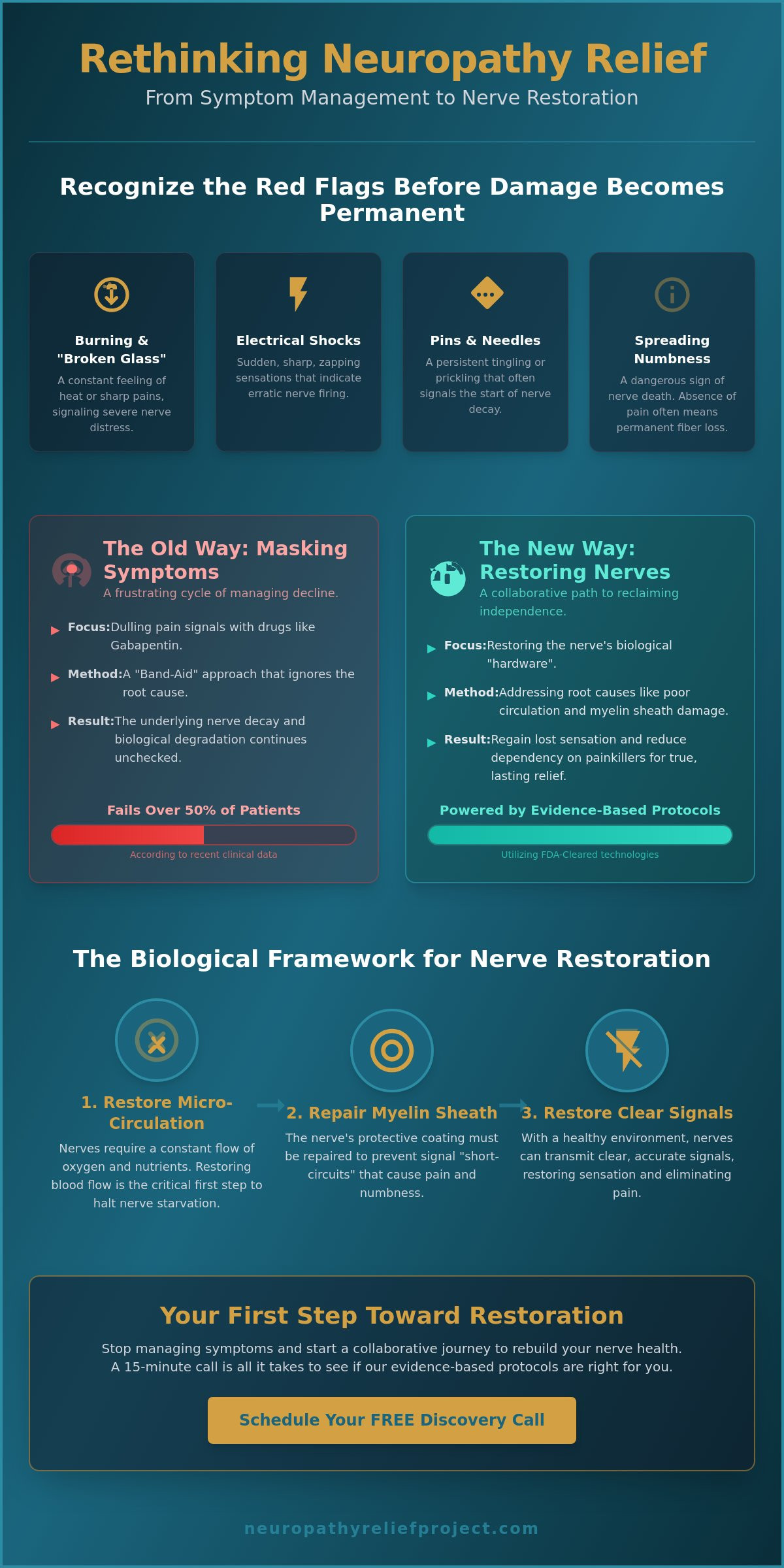
It’s time to shift the focus from merely silencing your nerves to actively restoring them. In 2026, the landscape of care has evolved, moving away from traditional oral medications that fail over 50% of patients according to recent clinical data. This guide provides a structured, evidence-based path to understanding how new, FDA-cleared technologies and regenerative protocols help you regain lost sensation. We will examine the biological requirements for nerve health and the specific steps you can take to reduce your dependency on painkillers. By framing your recovery as a collaborative effort, we can move toward a future where you aren’t just surviving the day, but reclaiming your independence.
Key Takeaways
- Learn to identify red flag sensations like electrical shocks and burning that signal the need for immediate intervention before nerve fiber loss becomes permanent.
- Discover why traditional pharmaceuticals often act as a temporary mask and how getting help for neuropathy pain requires a shift toward addressing the underlying biological hardware.
- Understand the critical role of restoring micro-circulation and myelin sheath integrity to ensure your nerves receive the oxygen and nutrients necessary for clear signal transmission.
- Gain a clear framework for evaluating recovery programs, prioritizing providers who emphasize evidence-based protocols and professional discovery calls.
- Find out how a 15 minute free phone consultation can serve as your initial step toward a collaborative journey of nerve restoration.
Recognizing When It’s Time to Seek Specialized Neuropathy Help
If you find yourself constantly checking the soles of your feet for shards of glass that aren’t there, or if a simple bedsheet feels like sandpaper against your skin, your nervous system is sounding an alarm. These sensations, often described as burning, buzzing, or sudden electrical shocks, are the red flags of nerve distress. While it’s tempting to hope these symptoms will simply fade away with rest, waiting often leads to a silent, irreversible loss of nerve fiber density. In the context of peripheral neuropathy, the absence of pain doesn’t always mean improvement; frequently, it means the nerve has lost the ability to send any signal at all.
Distinguishing between a localized injury, like a pinched nerve in the back, and systemic peripheral neuropathy is the first step toward recovery. Localized issues usually follow a specific path of a single nerve, whereas neuropathy often presents in a “stocking-glove” pattern, affecting the furthest extremities first. Getting help for neuropathy pain requires moving beyond general care. While a primary physician is excellent for overall health, they often rely on broad-spectrum medications that mask symptoms. Specialized help focuses on the hardware of the nerve, investigating why the signals are failing and what the biological environment needs to begin the restoration process.
The Progressive Nature of Nerve Damage
Nerve decay is rarely a sudden event. It’s a methodical progression where minor tingling or “pins and needles” slowly evolves into a profound, heavy numbness. By 2026, clinical observations have increasingly linked this sensory loss to heightened fall risks and a decline in balance, as the brain can no longer accurately map where the feet are in space. This loss of feedback is often more hazardous than the pain itself. When you can no longer feel the ground, your independence is at stake. Addressing these changes early is the only way to halt the transition from intermittent discomfort to permanent physical impairment.
Validating the ‘Invisible’ Struggle
There is a unique psychological toll that comes with “invisible” chronic pain. It’s exhausting to explain to family or friends why you can’t walk through a grocery store when your legs look perfectly normal. This frustration is compounded by nighttime flares that steal your sleep and leave you depleted. If you’ve been dismissed with the outdated advice to “just live with it,” it’s important to realize that your experience is biologically real and deserving of a targeted solution. Getting help for neuropathy pain isn’t just about physical relief; it’s about reclaiming the peace of mind that comes with knowing you have a structured, collaborative plan for your future health.
Why Traditional Medical Approaches to Nerve Pain Often Fail
If you feel like your current treatment plan is a revolving door of pharmacy visits and increasing dosages, you aren’t alone. Most standard medical models treat neuropathy as a signal problem rather than a hardware problem. By focusing on dulling the pain signals with antidepressants or anti-seizure medications, the underlying decay of the nerve continues unchecked. This “Band-Aid” approach might provide temporary relief, but it does nothing to stop the biological degradation occurring in your extremities. Getting help for neuropathy pain requires a strategy that looks past the symptoms to the actual health of the nerve tissue.
Many patients find that despite following their doctor’s orders perfectly, their quality of life continues to diminish. This happens because traditional interventions often ignore the metabolic and circulatory needs of the nervous system. When the hardware of the nerve is physically damaged or starving for blood flow, simply numbing the brain’s perception of that damage doesn’t solve the crisis. It’s a frustrating cycle that leaves many feeling dismissed by a system that seems to have run out of options for them. You’re left managing a decline rather than pursuing a recovery.
The Problem with Symptom Suppression
Relying solely on pharmaceuticals often creates a dangerous false sense of security. While your brain may register less pain, the nerves themselves are still struggling in a toxic or nutrient-depleted environment. A primary reason why nerve drugs fail is due to their inability to address micro-circulation; they simply cannot repair the damaged blood vessels that feed your nerve endings. Over time, you may find yourself needing higher doses to achieve the same numbing effect, all while your balance and actual sensation continue to deteriorate. This escalation doesn’t represent a cure. It represents a mask that is losing its effectiveness as the biological damage progresses.
The Gap in Standard Diagnostic Models
It is incredibly disheartening to be told your tests are “normal” when your feet feel like they are on fire or encased in ice. Standard Electromyography (EMG) and Nerve Conduction Velocity (NCV) tests are often too blunt to detect early-stage small fiber neuropathy. These tests primarily measure the large, insulated nerve fibers, often missing the damage to the tiny, uninsulated fibers responsible for pain and temperature regulation. You can find in-depth information on neuropathy that highlights how these diagnostic gaps leave many patients without a clear path forward.
This lack of diagnostic sensitivity frequently leads to a diagnosis of “idiopathic,” a term that essentially means the cause is unknown. If you are struggling with idiopathic neuropathy causes, it’s essential to look deeper than standard blood work. Getting help for neuropathy pain means finding a specialist who understands that “normal” labs don’t negate your lived experience. If your progress has stalled, it may be time for a different approach. You can start this journey with a 15 minute free phone consultation to discuss how to move beyond signal suppression toward true nerve restoration.
A Framework for Nerve Restoration: The Path to Lasting Relief
Getting help for neuropathy pain often begins with a fundamental realization: your nerves are not dead, they are starving. While current medical treatments for neuropathy primarily target the brain’s perception of pain, lasting relief requires focusing on the peripheral environment where the damage actually lives. True restoration hinges on the ability to bring oxygen and vital nutrients back to these struggling tissues. By improving micro-circulation, we can provide the biological resources necessary for the hardware of your nervous system to stabilize and eventually begin the process of repair.
This path involves more than just blood flow; it requires the restoration of the myelin sheath. Think of this sheath as the protective insulation on an electrical wire. When it thins or degrades, signals become garbled, leading to the erratic shocks and burning sensations that disrupt your life. A multi-pronged approach is superior to any single “miracle” supplement because it addresses the complexity of nerve health. We must simultaneously decrease systemic inflammation to lower the “noise” in your nervous system, allowing your body’s natural healing mechanisms to engage without interference.
Biological Requirements for Nerve Healing
At the cellular level, repair is an energy-intensive process. Damaged nerves require a significant increase in Adenosine Triphosphate (ATP) production to fuel the reconstruction of cellular membranes. If your cells cannot produce this energy, recovery stalls regardless of what medications you take. Properly understanding nerve damage recovery means recognizing that glucose stability is equally critical. Fluctuating blood sugar levels act like sandpaper on delicate nerve fibers, making a stable internal environment the foundation upon which all other clinical protocols are built.
Non-Invasive Protocols for 2026
Modern advancements have moved us toward highly specialized, non-invasive technologies that stimulate the nerves without the need for surgery. Photobiomodulation, or advanced light therapy, uses specific wavelengths to trigger mitochondrial activity, while targeted electro-stimulation helps re-educate the nerves to send clear, rhythmic signals again. The shift toward non-drug nerve relief represents a departure from standard physical therapy or general chiropractic care. These protocols are specifically engineered for nerve tissue, focusing on the unique physiological needs of the peripheral system to foster a sense of liberation from chronic symptoms. Getting help for neuropathy pain in this collaborative setting ensures you are following a structured, evidence-based roadmap rather than guessing at your care.
Navigating Your Search for Help: What to Look For
Finding the right specialist is often as exhausting as the condition itself. When you’re getting help for neuropathy pain, you need more than a general clinic; you need a collaborative initiative focused on long-term restoration. Choosing a peripheral neuropathy reversal program requires careful vetting to ensure you aren’t simply entering another cycle of symptom management. Prioritize providers who offer a preliminary discovery call. This initial conversation allows you to gauge their clinical authority and empathetic approach before you invest your time and emotional energy in a full evaluation.
Red flags are common in this specialized field. If a provider promises a “100% guaranteed cure” or uses high-pressure sales tactics, it’s a sign to proceed with caution. Biology doesn’t work in certainties; it works in protocols and probabilities. Ask specific questions about their clinical approach. You want to know if they address the root causes like micro-circulation and myelin sheath repair, or if they rely solely on the same medications you’ve already tried. A transparent provider will be happy to explain the science behind their specific path to recovery.
Evaluating Provider Expertise
The value of a specialist who focuses exclusively on neuropathy cannot be overstated. General pain clinics often treat neuropathy as a secondary concern, applying the same broad treatments they use for back or joint pain. You deserve a guide who understands the unique sensory experiences of nerve damage. Look for evidence of patient-reported outcomes and “before and after” sensory maps. These tools provide a concrete, data-driven way to visualize your progress, moving the conversation from vague feelings to measurable restoration of sensation.
Preparing for Your Consultation
Documenting your experience is vital for a productive first meeting. Track your symptoms for several days, noting the specific timing of nighttime flares and what triggers your “walking on glass” sensations. Getting help for neuropathy pain is a collaborative process that starts with clear communication about your history. Be ready to discuss the treatments you’ve already attempted, including dosages and any side effects that diminished your quality of life. Finally, define your primary goal. Whether it’s restoring balance to prevent falls or reducing your dependency on painkillers, having a clear objective helps your specialist tailor a plan to your specific needs. You can begin this journey by scheduling a 15 minute free phone consultation to discuss your unique situation.
The Neuropathy Relief Project: Your First Step Toward Restoration
The journey toward nerve health doesn’t have to be a solitary struggle through a fragmented medical system. After years of navigating temporary fixes and masked symptoms, you deserve a clear, evidence-based roadmap. The Neuropathy Relief Project was established as a collaborative initiative to bridge the gap between traditional care and modern restoration protocols. Our mission is to move you beyond the “walking on glass” sensation and toward a life defined by mobility and independence. Getting help for neuropathy pain begins with a simple, low-barrier entry point: a 15 minute free phone consultation designed to provide clarity without the immediate stress of a clinical office visit.
We view our organization as more than just a facility; it’s a mission-driven effort focused on long-term results and research. During your discovery call, you’ll speak with a nerve health professional who understands the specific sensory descriptors of your lived experience. We don’t use high-pressure tactics or generic promises. Instead, we engage in a steady, methodical evaluation of your history to see if our specialized restoration protocols are the right fit for your unique situation. This conversation is the first step in shifting the narrative from “living with it” to actively repairing the biological environment your nerves need to thrive.
Why a 15-Minute Call Changes Everything
It’s a conversation that prioritizes your voice. By reviewing your specific history and the treatments that have failed you in the past, we can determine if your nerves still possess the biological potential for repair. This screening process is essential for getting help for neuropathy pain because it ensures that we only move forward with candidates who have a high likelihood of responding to our micro-circulation and myelin sheath restoration efforts. You’ll receive direct professional access that bypasses the “lost in the system” feeling, providing you with a sense of hope backed by clinical authority.
Your Path Forward Starts Today
Every day you wait is another day your nerves may spend in a nutrient-depleted state. While the damage can feel overwhelming, the science of 2026 suggests that the biological path to recovery is possible when you address the hardware of the nervous system. You’ve spent enough time suppressing signals; it’s time to start restoring the tissue. Our collaborative journey is focused on measurable outcomes and reclaiming the quality of life you thought was gone. Take the first step toward a structured action plan and find out if your path to relief is closer than you think.
Book your 15-minute free phone consultation now.
Reclaiming Your Mobility and Independence
Living with the persistent buzz of nerve pain or the unsettling numbness in your feet doesn’t have to be your permanent reality. You’ve seen how shifting from temporary signal suppression to active biological restoration can change the trajectory of your health. By focusing on micro-circulation and cellular energy, you address the hardware of your nervous system rather than just the symptoms. Getting help for neuropathy pain is about finding a guide who understands that your “invisible” struggle requires a structured, evidence-based roadmap.
The Neuropathy Relief Project, led by Dr. Michael J. Sclafani, DC, provides a national reach for those seeking specialized nerve health guidance through non-invasive, drug-free protocols. You don’t have to navigate this complex system alone. Our collaborative initiative is dedicated to helping you move beyond the “walking on glass” sensation toward lasting relief and liberation from chronic discomfort.
Schedule Your FREE 15-Minute Neuropathy Discovery Call Today
Take this moment to prioritize your future. Your path to restoration is waiting, and we are ready to help you take that first decisive step toward healing.
Frequently Asked Questions
How do I know if my nerve pain is actually peripheral neuropathy?
Peripheral neuropathy usually presents in a symmetrical “stocking-glove” pattern, typically starting in the toes and fingers. If you experience burning, buzzing, or sudden electrical shocks in both feet simultaneously, it’s likely a systemic issue rather than a localized injury like a pinched nerve. Specialists use specific sensory mapping tools to confirm the extent of nerve fiber loss and distinguish it from other mechanical conditions.
Can I get help for neuropathy if I’ve had it for over 10 years?
Getting help for neuropathy pain is still a viable option even after a decade of living with the condition. While long-term damage is certainly more complex, nerves often retain a remarkable capacity for repair if the correct biological environment is restored. We focus on evaluating your current nerve function to determine if you are a candidate for our collaborative restoration protocols, regardless of how long you’ve suffered.
What is the difference between getting help from a podiatrist versus a neuropathy specialist?
A podiatrist typically manages the structural and mechanical health of your feet, addressing issues like bunions, gait, or skin integrity. In contrast, a neuropathy specialist focuses on the internal hardware and metabolic needs of the nervous system itself. This specialized approach is necessary to address the root causes of nerve decay, such as micro-circulation failures, rather than just treating the external foot mechanics.
Are there any drug-free options that actually work for burning foot pain?
Modern non-invasive protocols like photobiomodulation and targeted electro-stimulation provide effective, drug-free alternatives for managing burning foot pain. These technologies work by stimulating mitochondrial activity and improving blood flow to starving nerve endings. By addressing the underlying biological environment, these options help reduce painful sensations and promote tissue restoration without the systemic side effects associated with traditional nerve medications.
How much does a neuropathy consultation cost at the Neuropathy Relief Project?
The initial discovery phase at the Neuropathy Relief Project begins with a 15 minute free phone consultation. This allows you to speak directly with a nerve health professional to discuss your unique symptoms and history without any financial commitment. It’s a low-barrier way to determine if our specialized protocols are the right path for your specific needs before you invest in a full clinical evaluation.
What happens if my neuropathy is caused by something other than diabetes?
Whether your symptoms stem from chemotherapy, autoimmune issues, or are classified as “idiopathic,” the biological requirements for nerve health remain consistent. We investigate the specific triggers affecting your nervous system and work to stabilize the environment around your nerves. Our restoration protocols are designed to support the repair of the myelin sheath and blood vessels regardless of the initial cause of the damage.
Can nerve damage be reversed, or can I only manage the pain?
While traditional medicine often suggests that you can only “manage” the pain, current clinical evidence in 2026 highlights the potential for nerve restoration. By focusing on improving micro-circulation and the integrity of the myelin sheath, it’s possible to support the body’s natural repair mechanisms. The goal is to move beyond simple pain suppression and work toward regaining lost sensation and physical independence.
How quickly can I expect to see results once I start a restoration program?
Biological healing is a methodical process that follows a specific physiological timeline for every individual. Some individuals notice changes in their sensory patterns within the first several weeks of treatment, while others require a longer period of consistent protocol application to see significant tissue repair. Getting help for neuropathy pain is a collaborative journey that requires patience and adherence to a structured, evidence-based plan.