

If you wake up every night to a searing heat that makes sleep impossible, you likely feel like your body has become a stranger. You’ve probably spent years cycling through generic prescriptions or feeling dismissed by practitioners who suggest that “walking on glass” is just your new reality. It’s exhausting to face this isolation while 1 in 4 adults in the United States struggle with chronic pain that feels invisible to the outside world. You deserve more than just a repetitive strategy for managing debilitating nerve pain; you deserve a direct path back to the sensations and mobility you’ve lost.
We understand the fear of losing your independence and the deep frustration that comes with temporary fixes. This guide provides a science-backed, drug-free framework designed to move you beyond symptom masking toward true nerve health and restoration. We will preview the latest 2026 clinical developments and outline a structured, expert-led recovery plan that prioritizes your long-term results. By shifting our focus from suppression to biological healing, we can begin a collaborative effort to reclaim your quality of life and replace constant discomfort with lasting relief.
Key Takeaways
- Understand why the “pill trap” can create a false sense of security while nerves continue to degenerate beneath the surface.
- Explore the Restoration Model, which addresses the biological needs of nerve cells through improved micro-circulation and oxygenation.
- Learn how to apply a science-backed framework for managing debilitating nerve pain that targets the root cause rather than just the sensation.
- Discover practical daily adjustments, including hydration habits and footwear choices, that help you navigate extreme sensitivity with greater confidence.
- Access a mission-driven path toward recovery by learning how a 15-minute free phone consultation can help you establish a clear, expert-led plan.
Understanding Debilitating Nerve Pain: More Than Just a Sensation
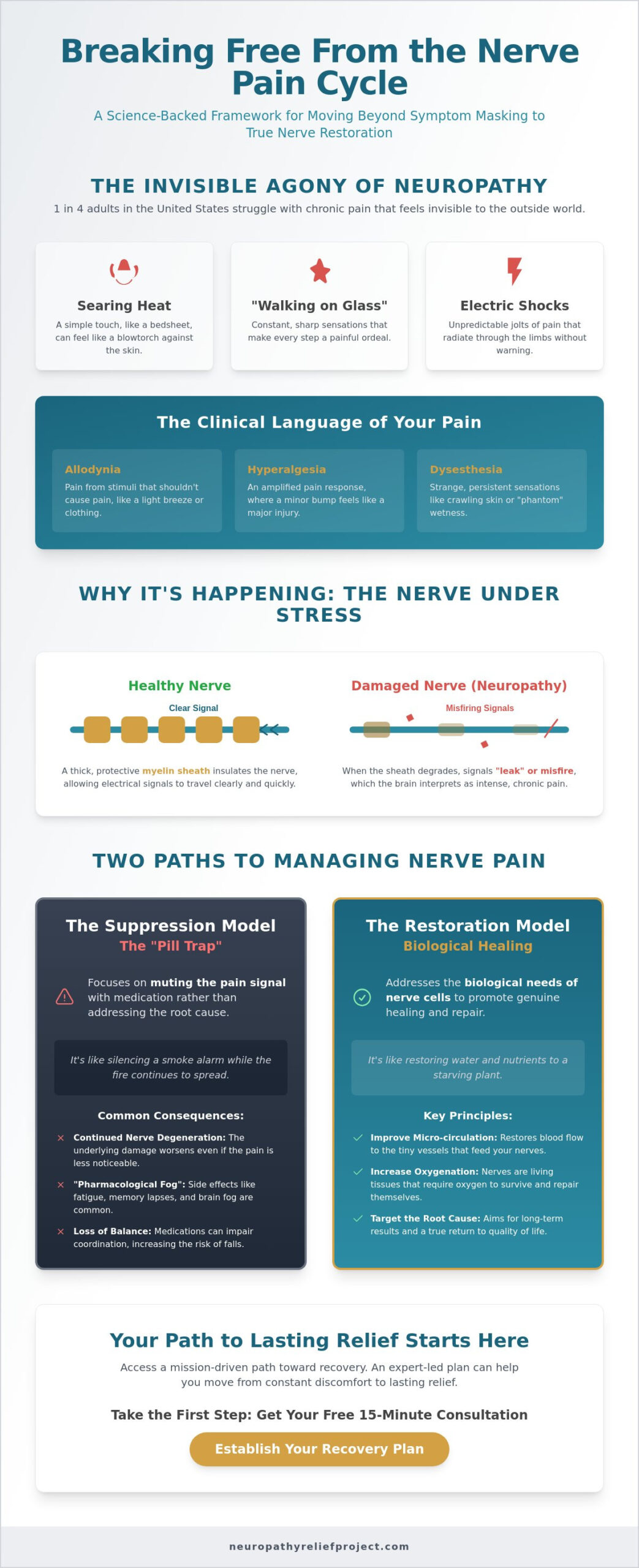
If you find that the simple act of pulling a bedsheet over your feet feels like a blowtorch against your skin, you aren’t just experiencing “discomfort.” You’re dealing with debilitating nerve pain. This level of distress goes far beyond a temporary ache; it’s a condition that actively interrupts your ability to walk to the kitchen, focus on a conversation, or achieve a single hour of restorative sleep. For many, the sensation feels like walking on shards of broken glass or enduring constant, unpredictable electric shocks that radiate through the limbs. These experiences are not in your head; they are the physical manifestations of a nervous system under extreme stress.
At its biological core, this agony often stems from the degradation of the myelin sheath, the protective insulation surrounding your nerves. When this coating wears thin, the electrical signals intended for your brain begin to “misfire” or leak, creating chaotic messages that the brain interprets as intense pain. By Understanding Neuropathic Pain, we can see that these signals aren’t just false alarms. They’re evidence of a biological system in distress. Living with this invisible illness carries a heavy emotional weight, as the lack of visible wounds often leads to feeling misunderstood by friends, family, and even healthcare providers. This isolation can be just as exhausting as the physical burning itself.
The Clinical Language of Your Pain
To move toward restoration, it helps to name what you’re feeling with clinical precision. If a light breeze or the touch of clothing triggers a burning sensation, you’re experiencing allodynia. If a small stub of the toe feels like a catastrophic injury, that’s hyperalgesia, where your nervous system amplifies every painful stimulus. You might also feel dysesthesia, which describes those strange, persistent sensations like crawling skin or “phantom” wetness that never seem to fade. Identifying these specific patterns is a vital step in managing debilitating nerve pain effectively and finding a plan that addresses your unique sensory profile.
Why ‘Debilitating’ Requires a Specialized Approach
A pinched nerve from sitting poorly is a temporary inconvenience, but chronic peripheral neuropathy is a systemic challenge. When pain remains severe for long periods, your central nervous system can actually turn up its “volume control,” a process that makes the entire body more sensitive to stimuli. This isn’t a problem that a standard “wait and see” approach can solve. Traditional systems often fail here because they focus on masking the signal rather than repairing the transmitter. Debilitating neuropathy is a progressive condition that requires immediate intervention to stop further nerve decay and begin the process of biological restoration.
Why Traditional Management Often Fails for Severe Neuropathy
If you’ve spent months or years relying on a rotating cabinet of prescriptions, you’ve likely encountered the “Pill Trap.” This occurs when the primary focus of your care shifts toward muting the pain signal rather than addressing the biological reason the signal exists in the first place. Medications like anti-seizure drugs or antidepressants are frequently the first line of defense in Peripheral Neuropathy Management, but they act as a physiological mute button. While your brain might perceive less burning or tingling, the underlying nerve fibers often continue to degenerate. It’s like silencing a smoke alarm while the fire continues to spread through the walls.
True restoration requires looking past neurotransmitter blockers and focusing on micro-circulation. Your nerves are living tissues that require a constant supply of oxygen and nutrients to survive. When the tiny blood vessels that feed your nerves begin to fail, the nerves starve. Simply blocking the pain doesn’t restore this vital blood flow. Many patients find that while they are managing debilitating nerve pain with pills, they are also struggling with a “pharmacological fog” characterized by fatigue, memory lapses, and a troubling loss of physical balance. These side effects can sometimes be as life-altering as the neuropathy itself, creating a cycle where your quality of life continues to diminish even as your pain scores supposedly improve.
The Limits of Pharmaceutical Intervention
Nerve medications often follow a predictable pattern of diminishing returns. You might start with a low dose that provides temporary relief, only to find that your body adapts, requiring higher and higher amounts to achieve the same effect. This escalation frequently leads to the failed neuropathy treatments that leave patients feeling hopeless. When the chemical burden on your system increases, it can interfere with your daily clarity and independence. If you feel that your current regimen is only masking the problem, it may be time to explore a more collaborative approach. You can start this journey by scheduling a 15 minute free phone consultation to discuss your specific history and goals.
The Danger of the ‘Wait and See’ Approach
Delaying a shift in strategy can have permanent consequences for your mobility. Peripheral neuropathy is often a progressive condition; every month spent “watching and waiting” is time where nerve fiber loss can become irreversible. This isn’t just about sensation. As nerves in the feet die off, your brain loses the data it needs to maintain balance, significantly increasing your risk of falls. Managing debilitating nerve pain effectively means refusing to accept a slow decline. It requires a proactive framework that prioritizes the biological restoration of the nerve environment before the damage crosses a critical threshold.
Restoration vs. Suppression: A New Framework for Nerve Health
If you’ve been told that your nerves are incapable of repair, you’ve been given a map that ends at a dead end. The Restoration Model challenges this by prioritizing the biological needs of the nerve cell over the simple desire to silence its cries for help. While suppression focuses on the neurotransmitters that carry pain, restoration focuses on the micro-circulation and oxygenation required to sustain life within the nerve. By improving the environment in which your nerves live, we tap into the body’s inherent neuroplasticity. This is the nerve’s natural ability to reorganize and heal itself when the right conditions are met. This shift is essential for anyone currently managing debilitating nerve pain who wants to move beyond the limitations of pharmaceutical dependency.
The Biological Path to Restoring Sensation
Restoring sensation starts with the tiny blood vessels that feed each nerve fiber. When these vessels fail, the myelin sheath begins to break down, leading to the misfiring signals we discussed previously. Utilizing a framework of non-drug nerve relief, we focus on circulation-boosting protocols that provide the raw materials for repair. It’s not enough to hope for improvement; you must provide the specific nutrients that allow the nerve to rebuild its protective coating. It’s a biological fact that regenerating nerve tissue requires a significantly higher metabolic rate than healthy tissue, necessitating a precise and consistent delivery of oxygen and glucose to fuel the energy-intensive process of axonal regrowth. When this metabolic demand is met, the “walking on glass” sensation can begin to recede as the nerves stabilize.
A Collaborative Effort Toward Liberation
Moving beyond the standard medical model requires you to step into the role of a collaborator rather than just a patient. This collaborative effort involves following a structured, evidence-based protocol that has been refined through research and clinical observation. By taking an active role in your recovery, you move away from the frustration of being dismissed by traditional systems. This approach is the key to achieving the drug-free nerve pain management that offers a path out of the pharmacy and back into your life. When you stop merely suppressing signals and start restoring tissue, you begin a journey toward lasting liberation from chronic health challenges. This isn’t a quick fix, but a methodical path toward reclaiming your independence and mobility.
Daily Strategies for Navigating Life with Severe Nerve Damage
When you’re managing debilitating nerve pain, your daily routine requires more than just willpower; it requires a tactical approach to minimize sensory overload. Simple biological factors like hydration play a surprisingly large role in how your nerves communicate. Dehydration can lead to increased concentration of inflammatory markers and reduced signal clarity, making your nerves more likely to misfire. Aiming for consistent water intake throughout the day helps maintain the fluid balance around nerve endings, which can slightly dampen the intensity of that constant “buzzing” sensation. While hydration isn’t a cure, it’s a foundational habit that supports the more intensive restoration work happening beneath the surface.
Nighttime often brings the most significant challenges, as the lack of external distractions makes the burning or “crawling” sensations feel amplified. A structured “Nighttime Protocol” can help signal your nervous system to downshift. This might include using a bed cradle to keep heavy blankets from touching hypersensitive feet or maintaining a slightly cooler room temperature to offset the internal heat sensations common in neuropathy. Pairing these environmental shifts with deep-breathing techniques helps lower cortisol levels. High stress keeps your nervous system in a state of “high alert,” which directly lowers your pain threshold and makes every flare feel more catastrophic.
Safe Movement and Mobility
Exercise is often a double-edged sword for those with nerve damage. If you push too hard, you risk triggering a “nerve storm” that can leave you bedridden for days. The key is low-impact, rhythmic movement that encourages blood flow without overtaxing the nervous system. If you experience significant numbness, balance becomes a primary safety concern. Incorporating seated stretches or using a stable surface for support during light standing exercises can help maintain muscle tone without increasing fall risks. For those specifically struggling with the sensation of walking on glass, choosing the right support is vital. You can find detailed guidance on what helps neuropathy in feet to ensure your footwear isn’t accidentally contributing to your discomfort.
Environmental Adjustments for Comfort
Your home should be a sanctuary, not a series of sensory triggers. If you struggle with temperature sensitivity, using localized heating or cooling pads can help, but always check the skin frequently to prevent burns in areas with reduced sensation. Safety checks are equally important; removing throw rugs and ensuring high-traffic areas are well-lit can prevent the stumbles that occur when your feet can’t properly feel the floor. For bed linens, many find that silk or high-thread-count bamboo sheets reduce the friction that triggers allodynia. If these daily hurdles feel overwhelming, remember that you don’t have to navigate this journey alone. You can schedule a 15 minute free phone consultation to discuss how to tailor these strategies to your specific needs.
The Path Forward: Collaborative Nerve Relief and Restoration
If you’ve spent countless hours searching for answers online, you’ve already taken the first step toward reclaiming your health. The Neuropathy Relief Project operates as a mission-driven collaborative initiative rather than a standard medical facility. We recognize that the traditional healthcare system often leaves patients feeling like a number in a crowded waiting room. If you’ve felt dismissed or rushed during previous appointments, you know how discouraging it is to leave without a clear plan. Our goal is to act as your knowledgeable guide, helping you bridge the gap between alternative care and clinical evidence. By focusing specifically on restoration, we move beyond the limitations of symptom suppression to address the underlying biological needs of your nerve tissue.
A specialized discovery call serves a different purpose than a standard clinical visit. Instead of a brief diagnostic overview, this is a dedicated time to review your history and determine if your situation aligns with our restoration framework. If you’re tired of simply managing debilitating nerve pain and want to explore a science-backed path to improvement, this conversation is where your journey truly begins. It’s an opportunity to feel heard and understood by specialists who focus exclusively on the complexities of nerve health. This deliberate pacing is designed to build trust and ensure you feel informed rather than rushed into a decision.
Why an Initial Consultation is Critical
Identifying whether your specific symptoms are a match for our protocols is the first step in reducing the anxiety that often accompanies a new treatment path. Many patients come to us after being told their condition is “idiopathic,” a term that essentially means the cause is unknown. However, exploring idiopathic neuropathy causes often reveals hidden triggers that traditional systems overlook. This 15-minute expert review allows us to look at the sensory patterns you’re experiencing and provide a preliminary perspective on your potential for recovery. It’s about finding a clear, expert-led plan that replaces fear with a sense of direction.
Take the First Step Toward Restoration
Empowerment comes from knowledge, and we want you to feel fully informed before you commit to any program. Scheduling a free phone consultation is a low-friction way to gain clarity on your condition without the pressure of a formal clinical intake. During this call, we’ll discuss your goals for restoration and outline how a structured, evidence-based protocol can help you regain the mobility you fear losing. If you’re ready to move from searching for answers to taking a proactive step, Schedule your 15-minute free phone consultation today and begin your collaborative effort toward lasting relief. You don’t have to navigate this complex system alone; let’s find the path back to your independence together.
Reclaiming Your Mobility and Peace
Living with the constant fire of nerve damage shouldn’t be your permanent reality. We’ve explored how moving beyond the “pill trap” toward a restoration framework allows your body to address the biological needs of starving nerve cells. By prioritizing micro-circulation and providing the specific metabolic support your nerves require, it’s possible to move away from simply managing debilitating nerve pain and toward a life defined by restoration. This shift requires a collaborative effort and a structured protocol that respects the complexity of your nervous system.
Under the guidance of Dr. Michael J. Sclafani, DC, the Neuropathy Relief Project offers national reach for those seeking specialized nerve health guidance. Our focus remains strictly on non-invasive, drug-free protocols designed to support your body’s natural ability to heal. If you’re ready to stop the cycle of temporary fixes and start a clear, expert-led recovery plan, the next step is simple. Book Your FREE 15-Minute Neuropathy Consultation Now to discuss your unique situation. You’ve carried this burden long enough; it’s time to begin your journey toward liberation and lasting relief.
Frequently Asked Questions
Is debilitating nerve pain permanent?
Nerve damage isn’t always a life sentence because your nervous system possesses a remarkable degree of neuroplasticity. While traditional systems often suggest that nerves can’t heal, clinical evidence shows that providing the right biological conditions can trigger repair. By focusing on the restoration of the myelin sheath and improving micro-circulation, many people find they can reclaim lost sensation. It’s about moving toward a collaborative effort that supports the nerve’s natural ability to regenerate.
Can I manage severe neuropathy without heavy medications?
Yes, you can move away from pharmaceutical dependency by adopting a framework that prioritizes the biological health of the nerve. Many individuals successfully transition to drug-free protocols that focus on oxygenation and specialized nutrition to fuel repair. This approach avoids the common side effects of brain fog and fatigue often associated with traditional prescriptions. Managing debilitating nerve pain without heavy drugs requires a structured, evidence-based plan that addresses the root cause rather than just the signal.
What is the difference between managing pain and restoring nerves?
Managing pain typically involves using medications to “mute” the signals traveling to your brain, which often leads to a trap where damage continues unnoticed. Restoration focuses on repairing the physical structure of the nerve and its surrounding environment. While management is a temporary shield, restoration is an active journey toward biological healing. The goal of restoration is to reduce the need for suppression by fixing the underlying transmitter issues at the source.
How do I know if my nerve pain is considered ‘debilitating’?
Your pain is considered debilitating if it actively prevents you from performing daily tasks, maintaining a steady sleep schedule, or walking without significant distress. If the sensation of “walking on glass” or electric shocks makes you fear for your independence, you’re dealing with a severe condition. This level of pain signifies that the nervous system is in a state of crisis and requires a more specialized, restorative approach than simple lifestyle management can provide.
Why does my nerve pain get worse at night?
Nerve sensations often feel more intense at night because your brain has fewer external distractions to process, allowing it to focus entirely on the pain signals. Additionally, your body’s cortisol levels drop and your core temperature changes, which can heighten the sensitivity of damaged nerve endings. This nocturnal flare-up is a common struggle for those managing debilitating nerve pain and often leads to the chronic sleep deprivation that complicates the healing process.
Can diet and lifestyle really impact severe nerve damage?
Specific lifestyle adjustments are vital because nerve repair is an energy-intensive process with high metabolic demands. Proper hydration ensures clear signal transmission and helps flush out inflammatory markers that aggravate sensitive tissues. While generic “healthy eating” isn’t enough, a targeted nutritional protocol provides the raw materials needed for the myelin sheath to rebuild. These habits create the stable foundation necessary for more advanced clinical restoration protocols to succeed and provide lasting relief.
How long does it take to see results from a restoration protocol?
The timeline for restoration varies based on the current level of nerve fiber loss and how consistently the protocol is followed. Because biological repair is a methodical process of cellular regrowth, you shouldn’t expect an overnight transformation. Most people begin to notice subtle shifts in sensation or sleep quality as the micro-circulation improves. This is a journey toward long-term results rather than a quick fix that only masks the underlying problem temporarily.
What happens if I leave my neuropathy untreated?
Leaving neuropathy untreated usually leads to progressive nerve degeneration and a higher risk of permanent fiber loss. Over time, the lack of sensory feedback from your feet can cause significant balance issues and increase your risk of dangerous falls. As the damage spreads, the pain can become more resistant to traditional interventions. Early action is critical to stop this decline and begin the collaborative effort toward reclaiming your mobility and your independence.